Editorial standards: editorial policy · Affiliate disclosure: affiliate disclosure · Family-tested archive — updated 2026-07.
Heat, flavor and kitchen uses
What Is Guajillo Chili?
Dried mirasol with tangy berry heat — how we select, toast, and soak guajillos from Oaxaca markets to Hua Hin rental kitchens Victor will actually eat from, July 2026.
What is guajillo chili?
Guajillo chili is the dried form of the mirasol pepper—deep reddish-brown pods with fruity berry sweetness and mild-to-moderate 2,500–5,000 SHU heat. Toast lightly, soak twenty minutes, then blend for salsas, adobos, and moles. Mayerhoffer field notes from July 2026 Southeast Asia kitchens.
Oliver writes from Southeast Asia fieldwork through July 2026; Natalia reviews safety and nutrition notes; Victor is the final vote on family plates.
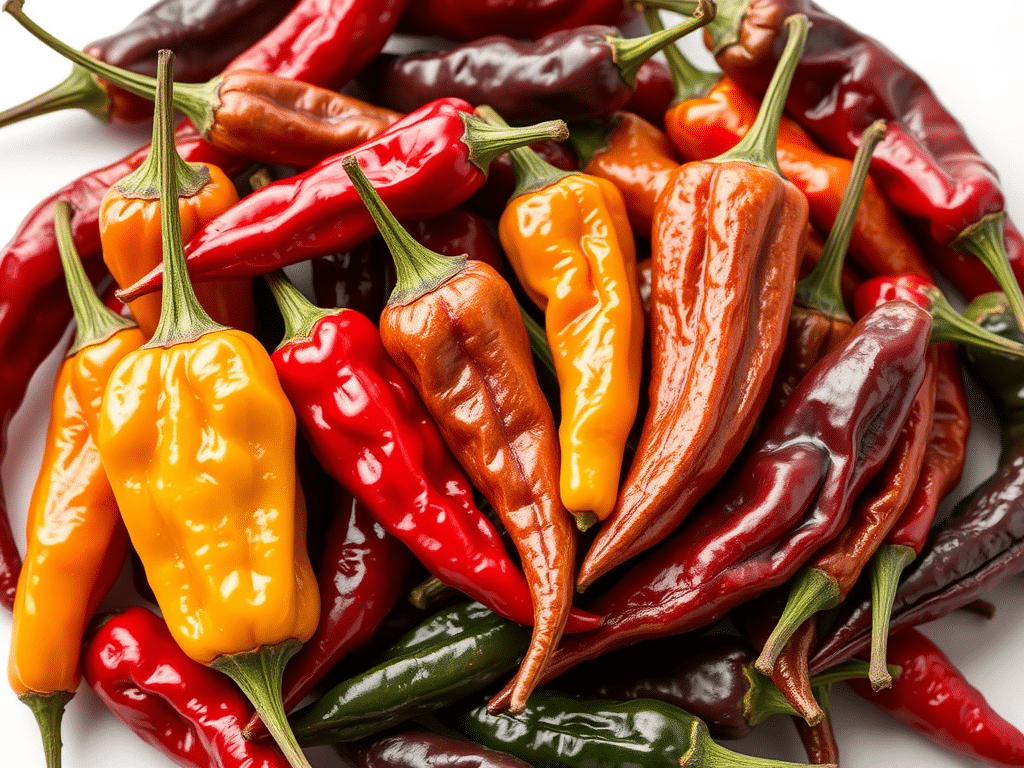
What Is Guajillo Chili? Definition, Origins & Cultural Significance
Guajillo chiles represent culinary sophistication and authentic Mexican tradition. These deep reddish-brown dried chiles—prized across Mexico for over 400 years—deliver complex fruity sweetness paired with mild heat (2,500-8,000 Scoville Heat Units or SHU) that builds layered flavor without overwhelming palates. For anyone serious about authentic Mexican cooking , understanding guajillos transforms your sauce-making capability from home-cook to restaurant-quality professional.
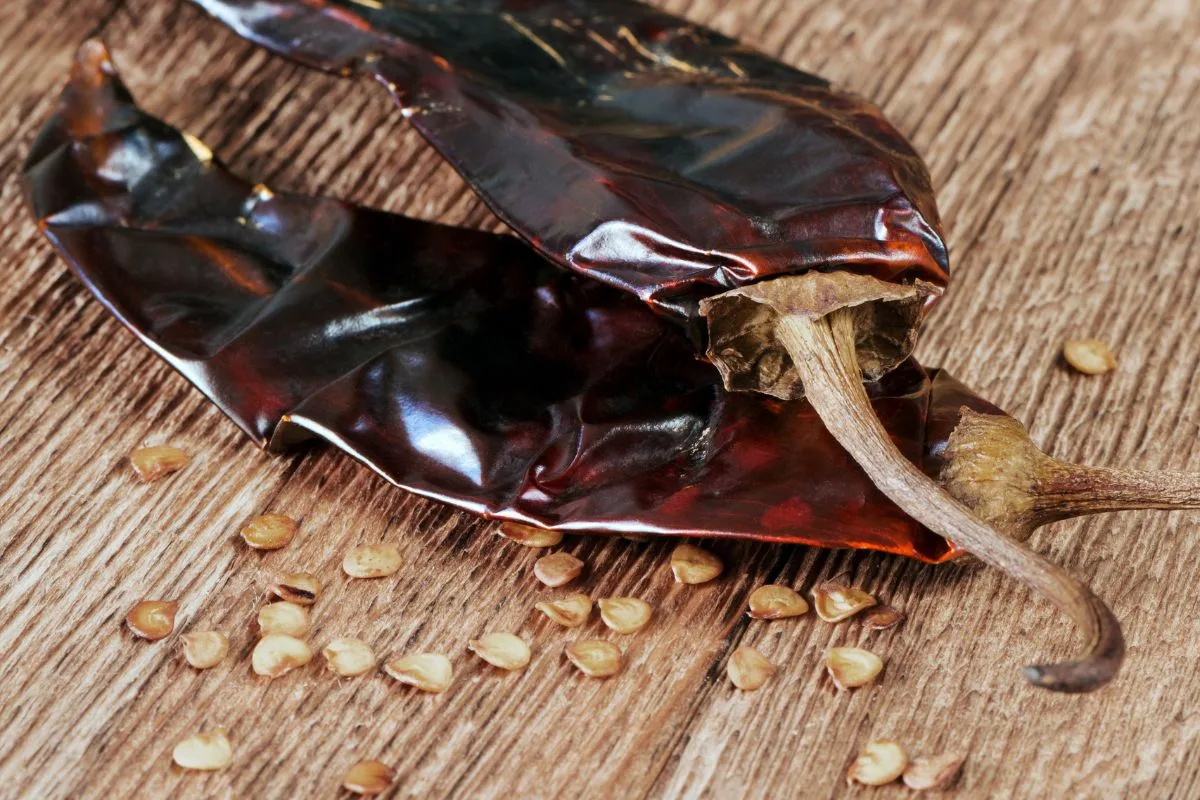
The guajillo (genus Capsicum , species Capsicum annum ) descends from the mirasol pepper—a name meaning “look at the sun” in Spanish for how these chiles point skyward while ripening on the plant. When fully ripe and sun-dried using traditional methods, mirasols transform into guajillos, becoming a staple across Mexico’s central and southern regions, particularly in Jalisco, Nayarit, and Zacatecas states. The name “guajillo” derives from the Nahuatl word “huajillo” meaning rattle—referencing the distinctive sound seeds make inside dried pods when shaken.
See Wikipedia’s guajillo chili entry for cultivar naming and regional use.
Historical Significance: From Aztec Civilization to Modern Mexican Kitchens
Archaeological evidence suggests chile cultivation in Mesoamerica dates back thousands of years—predating maize in many regions. Wikipedia’s chili pepper history traces how Aztec cooks sun-dried pods for two to three weeks so flavor carried through the off-season. Guajillos later became essential across central Mexico and remain export staples today.
Geographic concentration and terroir: Guajillos thrive specifically in Mexico’s high-altitude regions—Zacatecas, Durango, and Chihuahua dominate commercial production. These regions’ specific soil composition (mineral-rich volcanic soils), altitude (3,000-6,000 feet above sea level), seasonal climate patterns, and water irrigation techniques create ideal growing and drying conditions. Oliver notes that even slight regional variations—irrigation water salinity, harvest timing differences (September-October vs.
October-November), drying duration (14-21 days), and humidity levels—influence final flavor complexity, sweetness, and heat intensity. This terroir concept parallels wine regions: identical chile varieties produce dramatically different flavor profiles based on growing conditions, much like Burgundy vs. Bordeaux.
Heat Profile Explained: Scoville Heat Units & Comparative Analysis
Understanding Scoville Heat Units (SHU) & Capsaicinoids
Heat in chiles comes from capsaicinoids —alkaloid compounds (primarily capsaicin and dihydrocapsaicin) that bind to pain receptors (TRPV1 channels) in your mouth and throat, creating the sensation of heat. The Scoville Heat Unit (SHU) scale, developed by American chemist Wilbur Lincoln Scoville in 1912, quantifies this heat by measuring how many dilutions of capsicum extract are needed before trained taste testers no longer perceive heat. One SHU represents one part capsaicinoid per one million parts water.
Pure capsaicin measures 16 million SHU; bell peppers measure 0 SHU (no capsaicinoids); jalapeños measure 2,500-8,000 SHU. For scale context, see Wikipedia’s Scoville scale.
Guajillos measure 2,500-8,000 SHU —placing them squarely in the mild-to-moderate range, perfect for cooks seeking authentic Mexican flavor without discomfort. Heat varies based on growing conditions, harvest timing, and individual plant genetics. Interestingly, guajillos overlap exactly with jalapeños on the heat scale, but differ dramatically in flavor profile.
Where jalapeños deliver immediate, front-loaded heat, guajillos offer subtle heat that builds gradually through the palate, accompanied by fruity sweetness and earthy undertones.
| Chile Type & Scientific Name | SHU Range | Heat Intensity |
|---|---|---|
| Bell Pepper | 0 SHU | No heat—pure sweetness |
| Guajillo (Dried Mirasol) | 2,500-8,000 SHU | Mild-Moderate (Fruity) |
| Jalapeño | 2,500-8,000 SHU | Hot—immediate, front-loaded |
| Serrano | 10,000-23,000 SHU | Very hot—intense burn |
| Chipotle (Smoked Jalapeño) | 5,000-10,000 SHU | Moderate—smoky profile |
| Habanero | 100,000-350,000 SHU | Extremely hot—lingering burn |
| Thai Chili | 50,000-100,000 SHU | Very hot—numbing sensation |
Why guajillo’s mild heat matters for home cooks: Heat-sensitive cooks can enjoy authentic Mexican flavor without discomfort or digestive issues. Professional chefs layer guajillos with other chiles—pairing mild guajillos with hot serranos or spicy chipotles—to create nuanced, complex heat profiles that build gradually rather than shock the palate immediately. This flavor-over-heat philosophy distinguishes authentic Mexican cooking from generic “spicy” cuisines.
How we toast and soak guajillos in a family kitchen
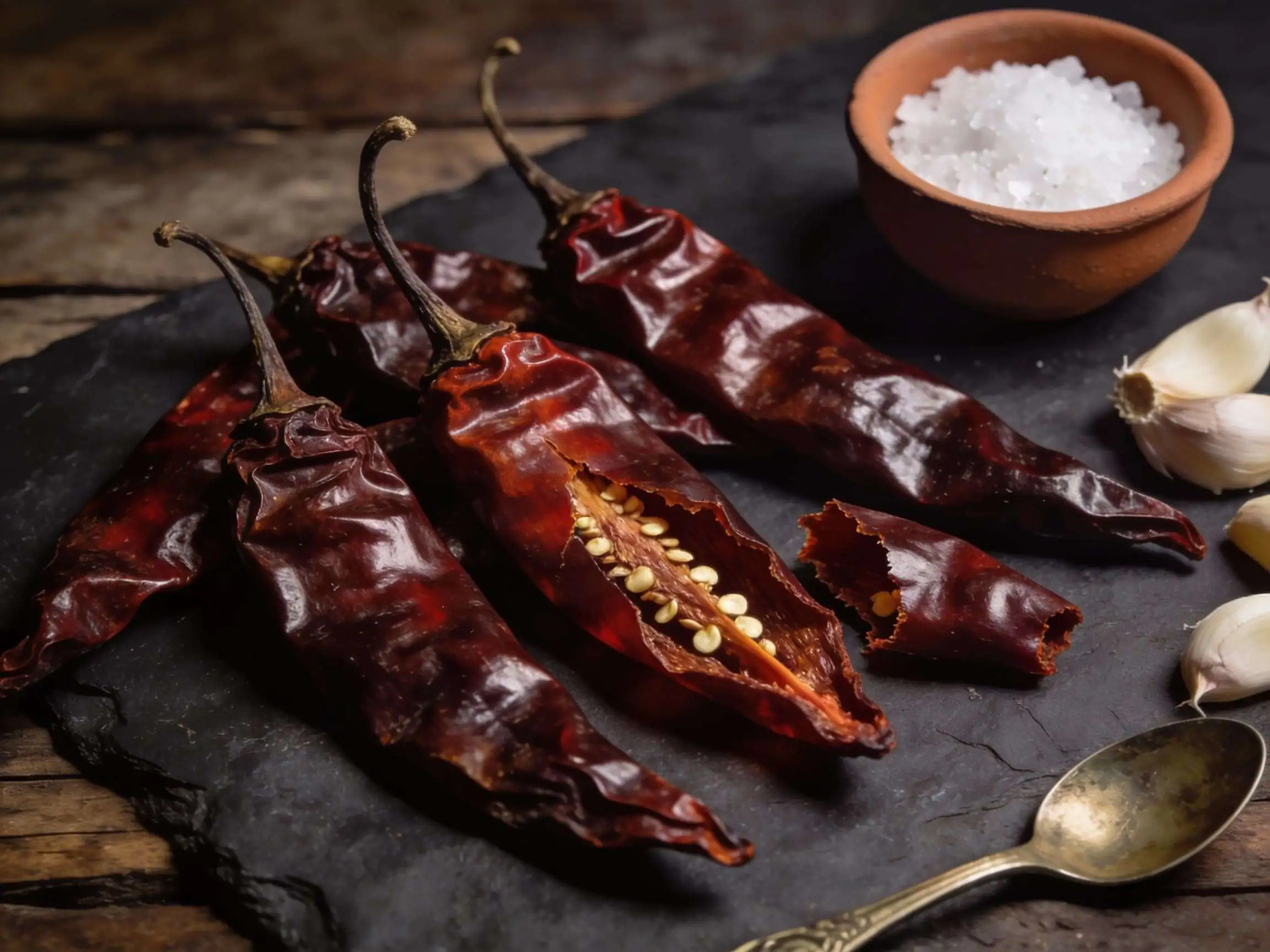
Guajillos reward patience more than brute force. Oliver stems and shakes seeds into the compost bin, wipes each pod with a damp towel (Natalia’s rule after dusty market bags), then toasts them in a dry skillet just until they smell like dried fruit—not blackened. A twenty-minute soak in just-boiled water softens the skin; the soaking liquid becomes part of the sauce, not sink water you throw away.
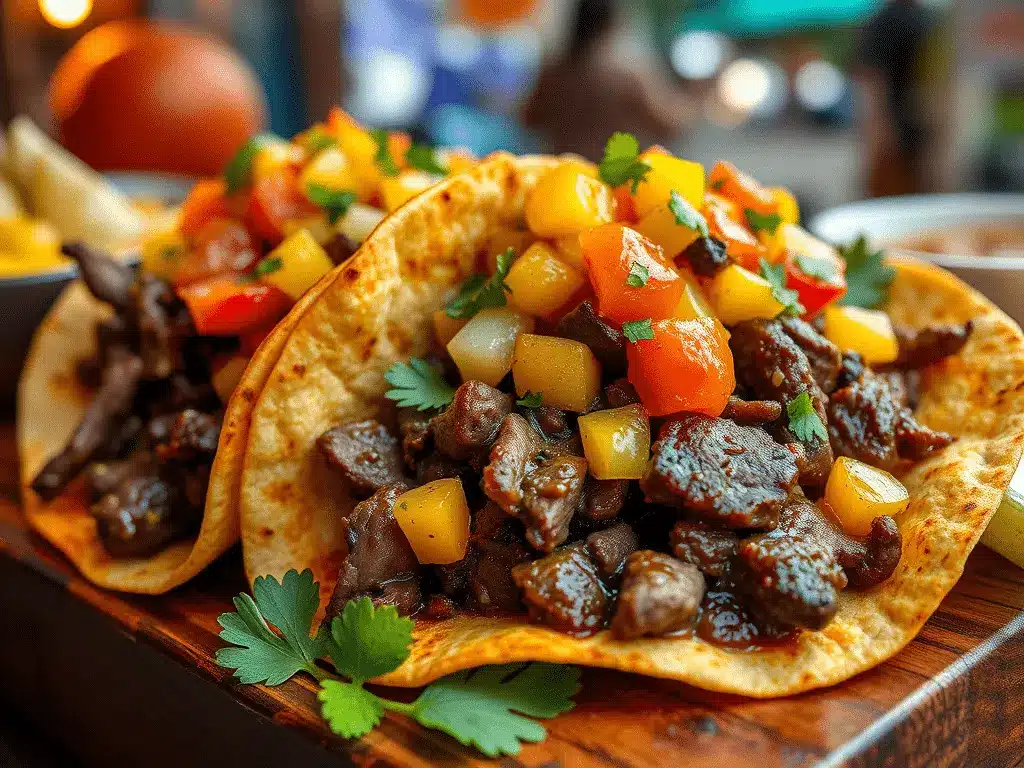
From a rental kitchen in Hua Hin we blend soaked guajillos with garlic, cumin, and a splash of vinegar for weeknight salsa roja. Victor signs off when heat stays in the “flavor-spicy” lane; we keep guajillo beef tacos on rotation because the chile reads sweet before sharp. For cultivar close-ups, see our guajillo pepper guide and the wider chili heat atlas.
What common mistakes should you avoid?
- Skipping toast: Dried swaps need brief dry heat before soaking.
- Wrong ratio: Start mild, taste, then scale heat.
- When markets run short: Check the chili library for the closest dried match.
How should you store dried chiles?
Airtight containers in a cool, dark pantry; freeze backup bags in humid kitchens. See our evidence vault for FDA produce storage context.
What is a guajillo chile in plain terms?
Guajillo is the dried form of the mirasol pepper—mild, tea-like, and tart with roughly 2,500–5,000 SHU. We reach for it when salsa needs red color without scorching kids; see dried guajillos for buying cues.
How hot is guajillo compared with jalapeño?
Guajillo usually reads milder and fruitier than a typical jalapeño on the Scoville scale—better for long simmers than quick raw heat.
Where do guajillos show up in everyday cooking?
Salsa roja, enchilada sauce, and birria-style braises—we pair this page with guajillo sauce and substitute routing when bags run empty.
How should you store dried guajillos?
Airtight glass away from stove steam; pods should snap. Humid rental kitchens: label the jar and freeze overflow—same discipline as our guajillo peppers guide.
“Guajillo salsa is the red one I want on tacos—not the super spicy skinny chiles.”
— Victor Mayerhoffer, age 9
What should you remember about guajillo chiles?
- Identity: Dried mirasol—tangy, berry-sweet, roughly jalapeño heat without the sharp bite.
- Prep: Wipe, toast lightly, soak twenty minutes, blend with soaking liquid.
- Next reads: Guajillo substitutes · California vs guajillo · Chili library.
Keep exploring after this guajillo guide
More guides we reach for in Mexican, Thai, and weeknight kitchens—grouped so you can compare heat, swap dried chiles, or jump to a family recipe.
- Start here: Chili pepper library · Ultimate guides hub · Recipes archive
- Compare & swap: California vs guajillo · Guajillo substitutes · Serrano vs jalapeño · Thai chili guide · Árbol chili
- Cook tonight: Guajillo beef tacos · Ancho pepper recipes · Chipotle in adobo · Pad kra pao
- Who we are: Oliver Mayerhoffer · Natalia Mayerhoffer · Editorial policy · Affiliate disclosure
Questions we hear often
What is the heat level of guajillo chili?
How long do dried guajillos last?
Can you substitute ancho or pasilla for guajillo?
What is guajillo chili used for?
Meet the Mayerhoffers
“Free-spirited food adventurers, culture-seekers, and the guardians of 15 years of global memories.”

Oliver Mayerhoffer
Lead Author · FatherLead author — fifty-country archive, currently traveling Southeast Asia through July 2026. Oliver brings field-tested recipe structure and honest weeknight notes from family kitchens abroad.

Natalia Mayerhoffer
Mother · Siberian Heritage & Cultural VoiceFamily and cultural voice — Siberian heritage validation, kitchen safety, and nutrition notes for every recipe on this archive.
“Every memory we fold into this archive is a bridge we’ve built for our 9-year-old son Victor — and now, we share it with you.”
Explore Our Full Family ArchiveWhat sources back this guajillo guide?
Family kitchen tests first; cross-check heat, handling, and storage with the references below.
Wikipedia — Guajillo chili
Dried mirasol context
Read sourceWikipedia — Chili pepper
Americas cultivation context
Read sourceWikipedia — Scoville scale
Heat measurement reference
Read sourceFDA — selecting produce
Dried chili selection and storage
Read sourceUSDA FSIS
Safe handling reference
Read sourceEditorial field notes
Mayerhoffer guajillo selection and prep — July 2026 kitchen season
Enjoying our content? Make Mangoes & Palm Trees a preferred source on Google.
Explore next


Where to read next on guajillos
Sauce recipes, swap guides, and trust pages we link when you are buying dried mirasols or planning taco night.