Editorial standards: editorial policy · Affiliate disclosure: affiliate disclosure · Family-tested archive — updated 2026-07.
One-pot Gulf spice, 165°F
Chicken Kabsa Rice
Chicken kabsa layers spiced rice and chicken to 165°F in one pot for six family servings — steamed and layered in Muscat apartment kitchens where kabsa nights meant one pot and a crowded table.
How do you make chicken kabsa rice?
Sear bone-in chicken, bloom onion with Gulf spices and tomatoes, then simmer with pierced black lime. Add rinsed basmati and carrots, cover tight, and cook until the rice is tender and the chicken reaches one hundred sixty-five degrees Fahrenheit. Six servings finish in about one hour.
Oliver develops the plate from Middle East and Gulf kitchen notes; Natalia reviews safety; Victor is the final vote on spice level.
Serving scaler
Scale this chicken kabsa
Adjust servings — chicken, rice, and spices update instantly.
Scent of the Souk: A Culinary Memory
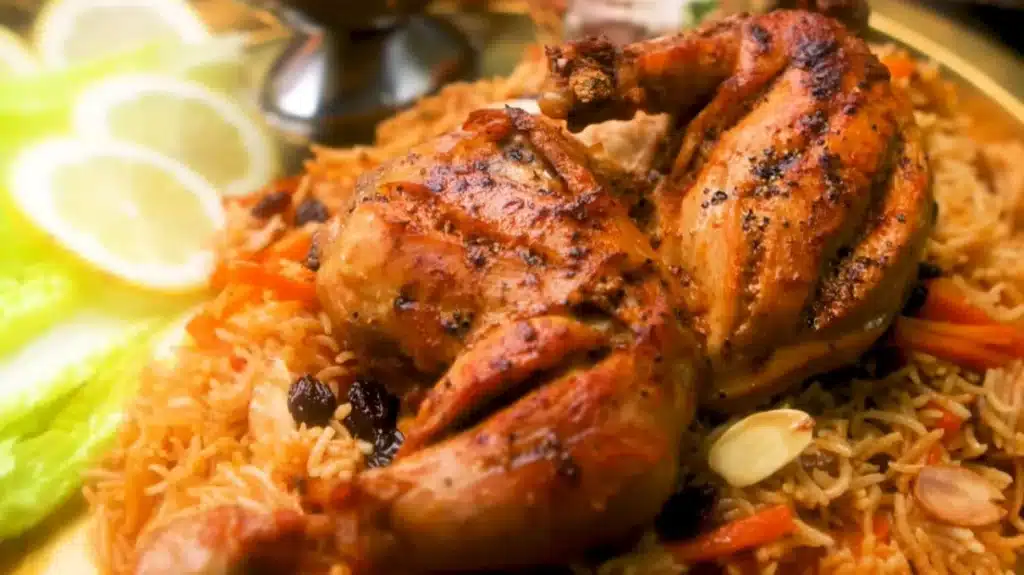
First-Hand Experience: During my three years cooking in Oman, the aroma of Kabsa was the scent of welcome. It wasn’t just food; it was a communal event, served on massive platters where colleagues and friends gathered to eat with their hands, sharing stories and laughter.
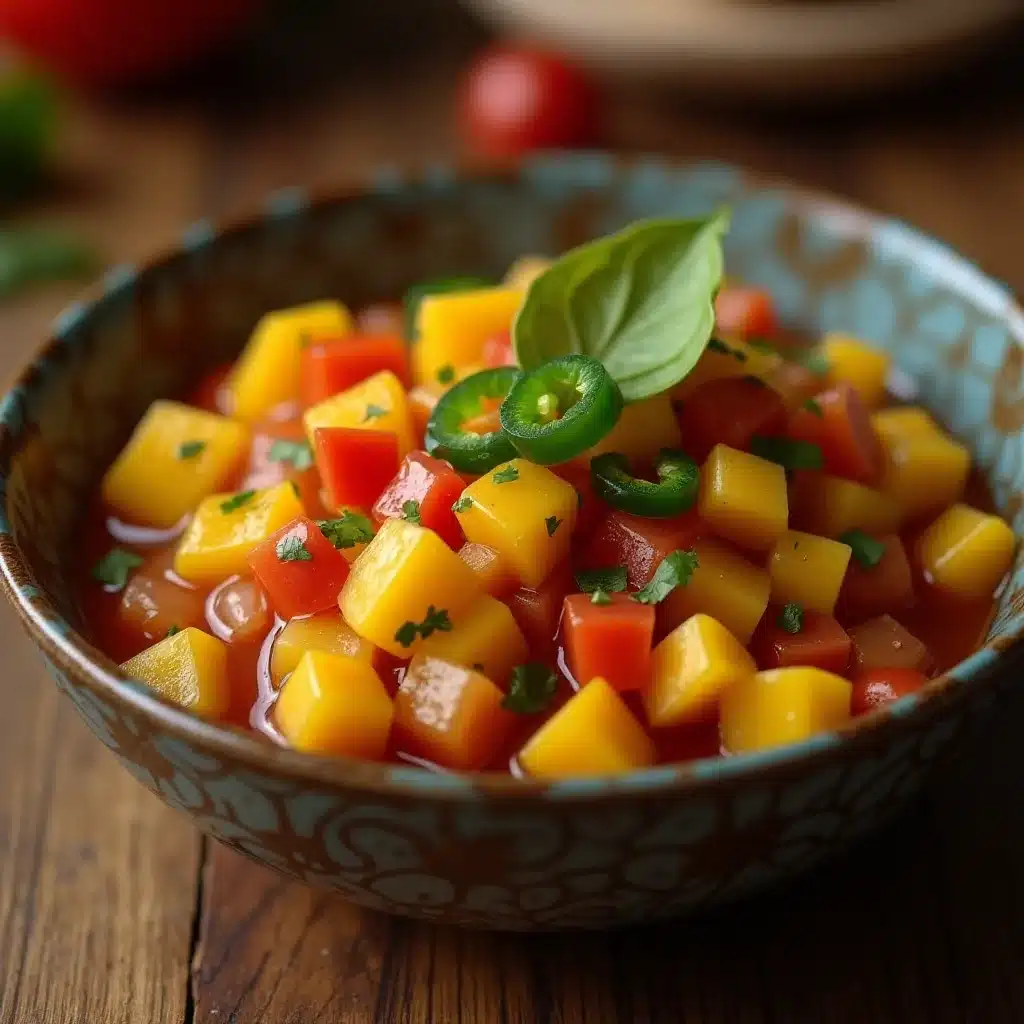
This Chicken Kabsa Rice recipe is my homage to those nights in the Arabian Peninsula. I’ve adapted the traditional method for the home kitchen without sacrificing the depth of flavor that comes from the Dried Black Lime (Loomi) and the warmth of cardamom. While traditionally served with a spicy tomato sauce (Dakkous), I’ve added a Mango Salsa twist to reflect our family’s tropical journey.
Discover more regional dishes in our Middle Eastern Chicken Recipes collection.
What is Kabsa? (Al-Kabsa)
The King of Arabian Rice Dishes
Kabsa (Arabic: كبسة) is widely considered the national dish of Saudi Arabia, though its variations span the entire Gulf region (GCC). Unlike Biryani (where rice and meat are often cooked separately and layered), Kabsa is a true one-pot marvel. The meat is cooked in water to create a rich, spiced broth, and the raw rice is then simmered directly in that liquid, absorbing every ounce of flavor.
According to culinary historians at TasteAtlas, the defining characteristic of Kabsa is its spice blend, often containing black lime, cloves, cardamom, saffron, cinnamon, black pepper, and nutmeg. This dish is a testament to the region’s history as the hub of the Spice Route.
The Grand Finale: Garnish & Serve
Texture Contrast: In Oman, a Kabsa isn’t finished without the crunch. While the rice rests, quickly sauté 1/4 cup slivered almonds or pine nuts and 1/4 cup golden raisins in a little butter or oil until golden. This adds a necessary textural layer to the soft rice and tender chicken.
️ Communal Plating
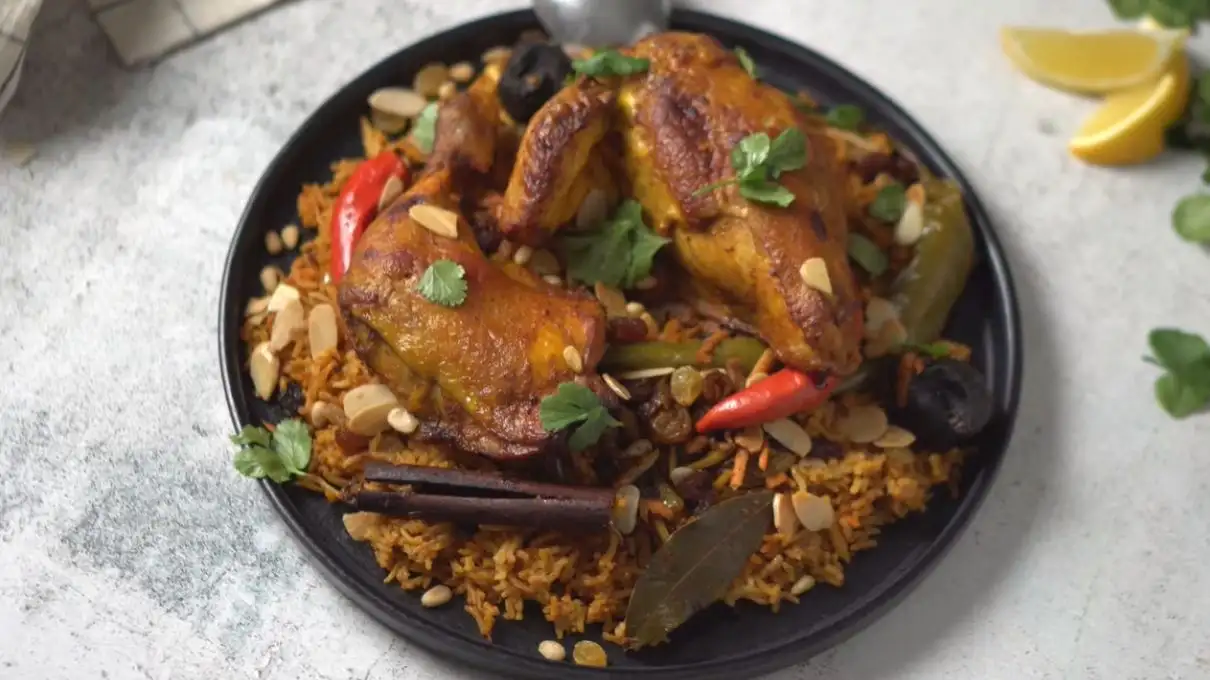
Tradition dictates serving Kabsa on a massive communal platter (called a sahan). Fluff the rice onto the platter, arrange the chicken pieces on top, and scatter the toasted nuts, raisins, and fresh cilantro or parsley. Place the Mango-Avocado Salsa and a side of yogurt in bowls around the edge.
Pro Tip: Serve with a crisp Green Salad to cut through the richness.
Nutrition Facts
Kabsa is a balanced meal, providing lean protein, complex carbohydrates, and anti-inflammatory spices.
| Nutrient | Amount per Serving | Benefit |
|---|---|---|
| Protein | 28g | Muscle repair; high satiety. |
| Carbohydrates | 45g | Energy from Basmati rice (lower GI than short grain). |
| Spices | High | Turmeric & Ginger provide antioxidants. |
*Based on a 2,000 calorie diet. For more on the benefits of spices, visit Johns Hopkins Medicine.
Explore More Global Flavors
Continue your culinary journey through the Middle East and beyond with these guides.

About Oliver Mayerhoffer
A culinary explorer with formal kitchen training in Austria and three years managing kitchens in Oman. Oliver specializes in decoding authentic global recipes—from the spice markets of Muscat to your family table.
Chicken kabsa rice
Ingredients
- 2 lb bone-in chicken thighs or pieces
- 2 cups aged basmati rice, rinsed
- 1 large onion, diced
- 4 garlic cloves, minced
- 2 tomatoes, chopped
- 3 tbsp olive oil
- 4 cups water or chicken stock
- 1 dried black lime (loomi), pierced; bay leaves
- 1 tsp cumin · 1 tsp coriander · ½ tsp cardamom · ½ tsp cinnamon · ¼ tsp cloves · ½ tsp turmeric
- Carrots, toasted almonds, golden raisins, optional mango salsa
Method
- Sear: Brown chicken in oil 5–7 minutes; set aside.
- Bloom: Sauté onion, garlic, spices, and tomatoes in the same pot.
- Simmer broth: Return chicken with loomi and bay; add liquid; simmer 20 minutes.
- Rice: Stir in rinsed basmati and carrots; cover tight; cook 20–25 minutes until tender. Confirm chicken 165°F. Rest, fluff, garnish with nuts, raisins, optional mango salsa.
How do you store chicken kabsa?
Cool within two hours. Reheat with a splash of water so the rice steams back to fluffy, and confirm 165°F.
| Method | Instructions | Duration |
|---|---|---|
| Refrigerator | Airtight container | 3–4 days |
| Reheat | Splash of water, covered, to 165°F | Same day best |
| Black lime swap | 1 tsp lime zest if loomi is missing | Same cook |
One pot, Gulf spice route
Kabsa cooks rice in the chicken broth so every grain takes on loomi, cardamom, and fond — not a layered biryani build.
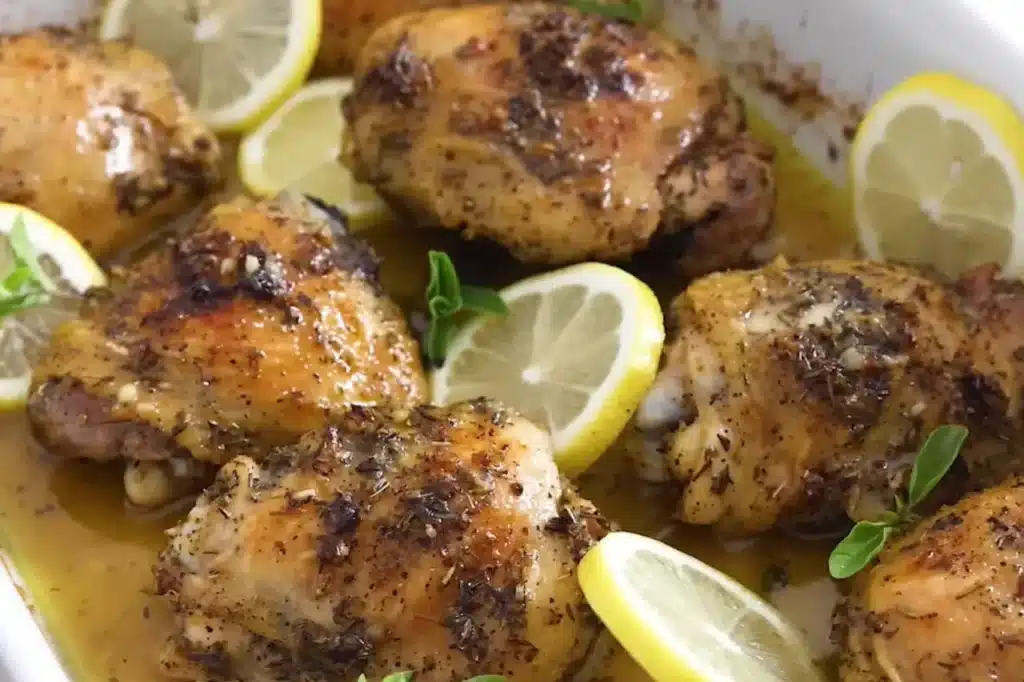
For more Gulf and Levant plates, see Middle Eastern chicken recipes, shawarma vs shish tawook, or shish tawook.
What we learned
- Oman banquet kitchens taught us loomi (dried lime) depth — zest swap works but whole pierced loomi perfumes the rice layer.
- Simmer rice in the chicken fond, not layered biryani-style — every grain should read gold without stirring mid-cook.
- 165°F thigh pull before rice finish keeps USDA-safe poultry without drying breast — rest chicken while rice absorbs last broth.
Keep exploring after chicken kabsa
Gulf chicken routing—Middle Eastern hub, shish tawook, shawarma, and recipe index.
- Gulf: Middle Eastern chicken · Shish tawook
- More: Lebanese shawarma · Mango avocado salsa
- Archive: Lemon sumac chicken · Recipe index
- Who we are: Oliver Mayerhoffer · Natalia Mayerhoffer · Editorial policy
Questions we hear often
What is the difference between kabsa and mandi?
Can I use brown rice?
How long do leftovers keep?
What if I cannot find black lime?
Do I need a Dutch oven?
Can I swap chicken breasts?
Victor tested it. Here is the honest verdict.
What Victor said
Victor is the final vote on family plates — age 9 in 2026.
Oliver's honest note
Structural testing and reflux-safe ingredient choices — editorial field notes only.
Meet the Mayerhoffers
“Free-spirited food adventurers, culture-seekers, and the guardians of 15 years of global memories.”
Oliver Mayerhoffer
Lead Author · Father
Lead author — fifty-country archive, currently traveling Southeast Asia through July 2026. Oliver brings field-tested recipe structure and honest weeknight notes from family kitchens abroad.

Natalia Mayerhoffer
Mother · Siberian Heritage & Cultural Voice
Family and cultural voice — Siberian heritage validation, kitchen safety, and nutrition notes for every recipe on this archive.
“Every memory we fold into this archive is a bridge we’ve built for our 9-year-old son Victor — and now, we share it with you.”
Sources and safety notes
USDA FSIS — safe food handling and preparation
165°F poultry
USDA FoodData Central
chicken and rice nutrition
FDA — selecting and serving produce safely
tomato and produce handling
Editorial field notes
Family field notes — Mayerhoffer chicken kabsa tests from Omani kitchen years through July 2026 season
Enjoying our content? Make Mangoes & Palm Trees a preferred source on Google.
Explore next


Gulf chicken routing
Chicken kabsa linked to Middle Eastern chicken hub, shish tawook, shawarma, and recipe index.