
Our approach: read the editorial policy · Questions or corrections? contact the editors.
Thailand · dishes, regions and family food notes
Thailand Food Guide 2026: What to Eat by Region
From Bangkok photographs to a Hua Hin lunch hall and a bowl of noodles in Koh Samui, follow Thai food through the places, people and dishes that give it context.
What should you eat in Thailand?
Start with a few dishes that reflect where you are: khao soi and northern dips in the North; som tam, larb and grilled dishes in Isan; central Thai curries, noodle dishes and rice plates around Bangkok; and southern sour curries, turmeric-seasoned dishes and seafood in the South. Then look beyond the familiar names. Thailand’s food changes between provinces, markets, cooks and households, so this guide pairs a regional overview with our Bangkok family photographs and dated food notes from Hua Hin and Koh Samui.
Use this guide to plan your next plate
- Choose by place. The four broad regions are a useful starting point, not fixed menus.
- Mix dish types. Try a noodle dish, a rice plate, a curry or salad, and something fresh or sweet.
- Read the date on a price. Our Hua Hin and Koh Samui prices are historic field notes, not today’s menu prices.
- Separate taste from safety. A queue, a hot wok or clear ice cannot prove that food or water has been handled safely.
Thai food by region: four useful starting points
Thailand is often introduced through a short list of familiar dishes: pad Thai, green curry, tom yum and mango sticky rice. They are worth knowing, but they are not the whole story. The Government of Thailand’s regional food overview groups examples across Northern, Central, Northeastern and Southern Thailand. It is a helpful orientation, not a complete catalogue: ingredients, recipes and preferences vary within each region and from one household to another.
North: noodles, dips and northern sausages
For a first look at Northern Thai food, seek out khao soi, a curry noodle dish, alongside sai ua (Northern Thai sausage) and nam phrik noom (a roasted green-chilli dip). The Thailand Foundation also lists gaeng hung lae among the North’s well-known dishes and describes sticky rice as the regional staple. Its overview traces the region’s food influences through long-standing trade and movement across neighbouring areas. These are useful starting points, not a fixed menu for every northern province. Read the Thailand Foundation’s Northern Thai cuisine overview.
Central Thailand and Bangkok: a broad menu, not one signature flavour
Central Thai cooking covers a wide range of dishes. The Thailand Foundation highlights green curry and massaman curry among its well-known examples, with mango sticky rice as a familiar dessert. It also describes meals built from several dishes that balance different tastes, reflecting the region’s agricultural and river-trade history. Bangkok adds another layer: people and food traditions from across Thailand and beyond meet in the capital, so a menu here can move between central dishes and regional cooking. Read the Thailand Foundation’s Central Thai cuisine overview.
Northeast / Isan: salads, grilled food and regional ingredients
The Northeast is often introduced through som tam (papaya salad), larb (a seasoned meat salad) and gai yang (grilled chicken). The Thailand Foundation describes sticky rice as a regional staple and pla ra (fermented fish paste) as an important source of savoury flavour in Isan cooking. Pla ra can appear in som tam and other preparations; recipes vary, so ask directly if you need to avoid fish or fermented fish. Bamboo-shoot soup, mushroom curries and long-bean salad also appear in the Thai government’s regional overview. Read the Thailand Foundation’s Northeast Thai cuisine overview.
South: sour curries, turmeric and coastal cooking
Southern food has its own regional range, shaped in part by maritime trade and local ingredients. The Thailand Foundation’s overview names khua kling (a dry curry), gaeng tai pla (a strongly flavoured fish-based curry) and Hat Yai-style fried chicken among its examples. The Thai government’s regional list also includes sour curry, turmeric-seasoned dishes and bitter-bean preparations. Seafood is important in many coastal areas, but “Southern Thai food” is not one uniform menu; the province, cook and ingredients all matter. Read the Thailand Foundation’s Southern Thai cuisine overview.
Read the Government of Thailand’s regional food overview for its wider list of examples.
What to order in Thailand when you do not know where to begin
Rather than ordering five dishes that all arrive in the same format, build a small meal around different preparations. A first-time visitor might try one of each, sharing where that suits the meal:
- A noodle dish: pad Thai, a bowl of noodles in broth, or khao soi when you are exploring Northern Thai cooking.
- A rice plate: fried rice, a stir-fried dish over rice, or another made-to-order plate.
- A curry or soup: choose a regional version and ask how much chilli it contains if heat is a concern.
- A salad or shared side: som tam is one example; ask about fish sauce, fermented fish, dried shrimp and peanuts when relevant.
- Something fresh or sweet: fruit or a dessert gives the meal a different finish. For drinks, follow the food-and-water guidance later in this article.
This is a way to explore, not a set menu or a claim that these dishes are available at every stall. The Tourism Authority of Thailand describes a range of local eating formats, from street-food stalls and specialist vendors to made-to-order restaurants and food centres. The format changes with the place, time of day and kind of meal.
See the Tourism Authority of Thailand’s overview of local food formats.
Bangkok: begin with the plate, then look around it
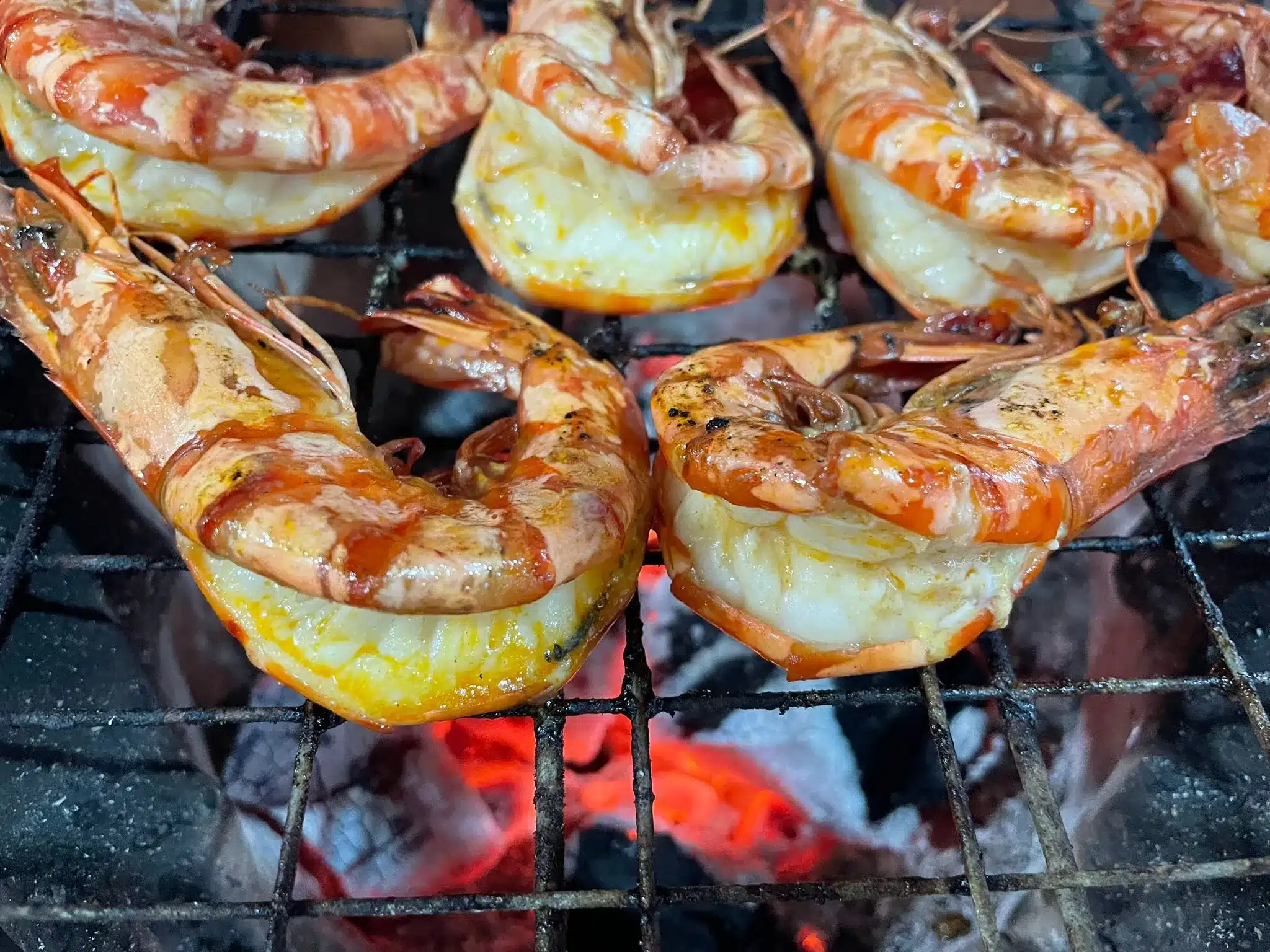
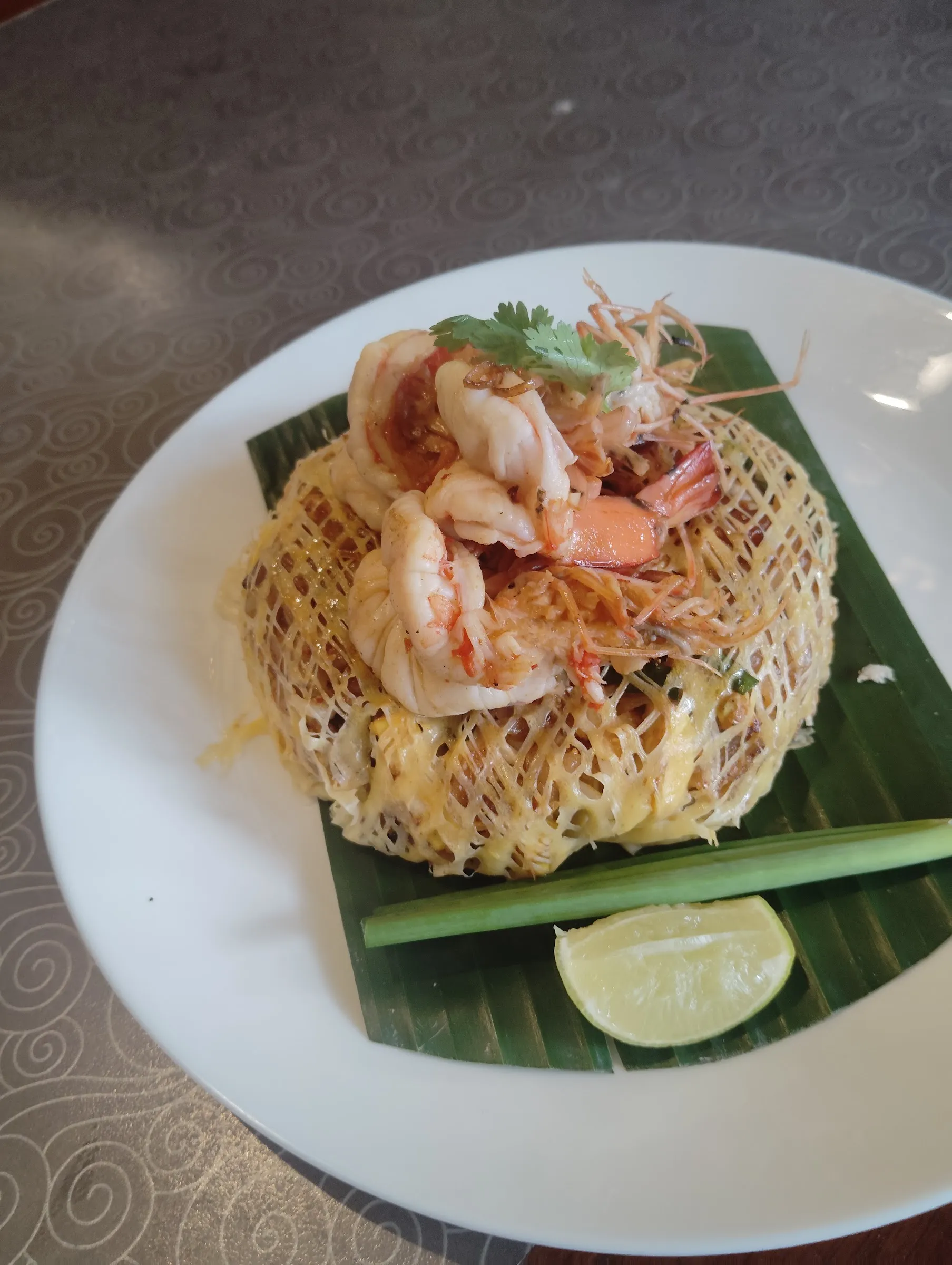
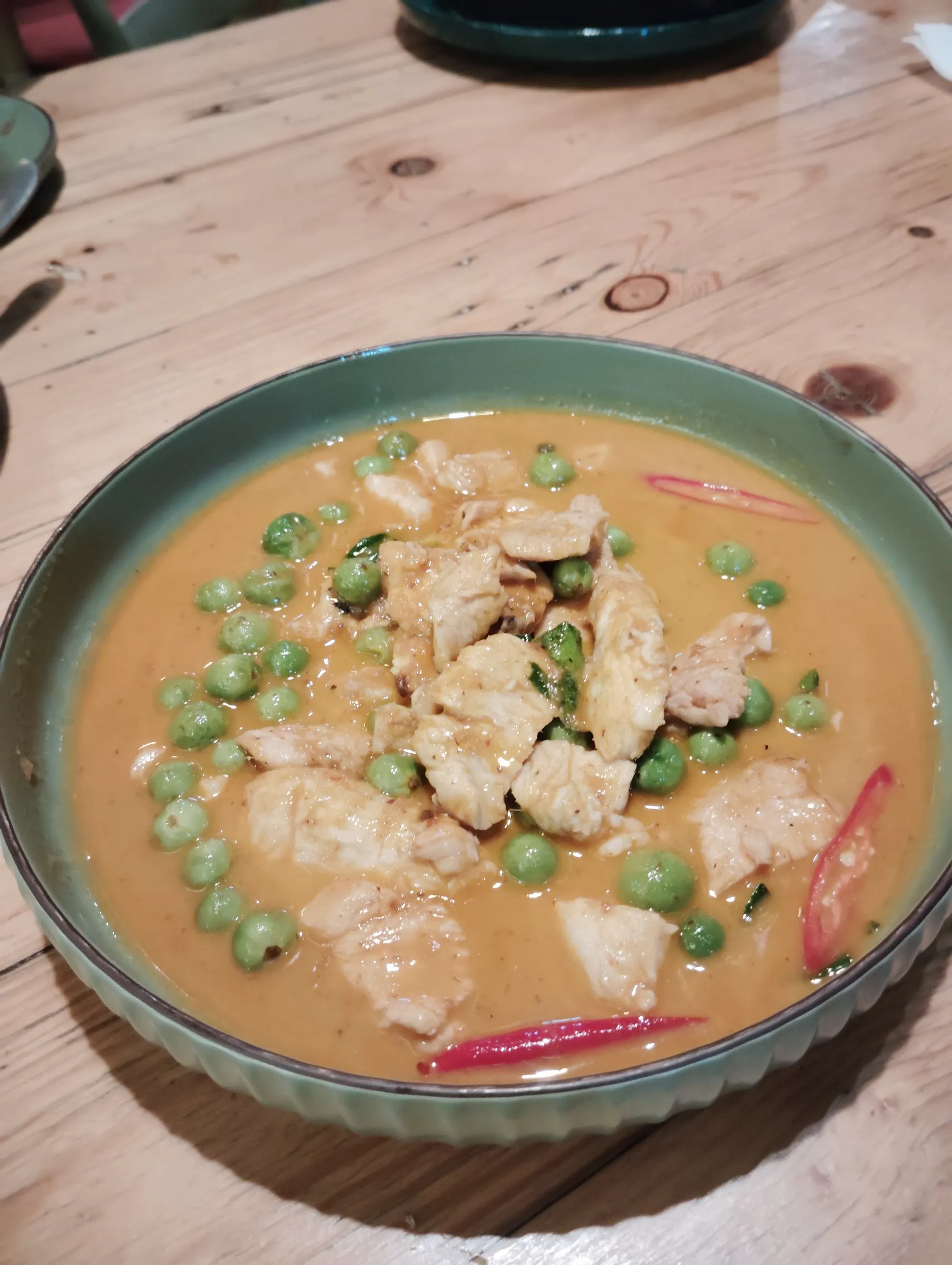
Our Bangkok photographs give this guide its first-hand starting point: prawns cooking over charcoal, Pad Thai Kung, red curry, Natalia and Victor in the city, and Oliver and Natalia aboard a traditional boat. They are a small family photo essay, not a directory of Bangkok restaurants or a complete guide to the capital’s street-food districts.

A plate can tell you what was served; it cannot explain every ingredient, the cook’s method or the history of a dish. Pad Thai Kung and red curry are familiar names, but the version on one table should not stand in for every version across Thailand.

The boat photograph moves the story away from the table. Food belongs to the life around it: the streets, waterways, working kitchens and daily routines of the city. For a much closer look at individual stalls and street-food areas, use a dedicated Bangkok guide once that supporting page has completed its own editorial and safety review.
Hua Hin: a practical lunch stop at Market Village
One useful contrast to Bangkok’s street-food scenes is the basement Street Food Market at Market Village in Hua Hin. On our April 2026 return visit, the hall announced itself before the card kiosk: wok heat, garlic, chilli smoke and steam. We found shared seating and several counters, which made it possible for everyone to choose a different lunch without settling on one restaurant menu. It is an observation from our own visit, not a claim that the hall is quiet or works the same way at every time of day.
On those April visits, many of the plates we chose were around 40–60 THB. That is a dated observation from our own notes, not a current price list or a promise about what a stall will charge now. Menus, portions and payment arrangements can change. Check the stall and any central payment counter before ordering rather than assuming every Thai food court uses the same system.
The dishes recorded in our notes include Rad Na (wide rice noodles with a thick gravy), fruit shakes, fried rice and rice served with toppings. The specific hall and its payment system belong in a dedicated venue guide; this national article keeps the observation short and date-bound.
For this national guide, the point is the format: a food hall can offer choice, shelter and shared seating; a roadside stall or a made-to-order shop offers a different way to eat. Neither format is a guarantee of food safety. Use the same practical food-and-water judgement wherever you are.
Koh Samui: a bowl of ba mee kiew moo daeng
Ba mee kiew moo daeng (บะหมี่เกี๊ยวหมูแดง) brings together yellow egg noodles, pork wontons and roasted red pork, often served in a clear broth. The bowl can arrive before the diner has adjusted its seasoning. Chilli vinegar, fish sauce, dried chilli and sugar may be available at the table, allowing the balance to be changed to taste.
Natalia’s account of her first bowl connects two very different soup memories: the borscht she grew up with in Krasnoyarsk and the thin noodles and pale dumplings she encountered in Thailand. She describes watching nearby diners season their bowls before trying the same sequence herself. That is one person’s first-hand memory, not a claim that every Thai diner seasons noodles in the same way.
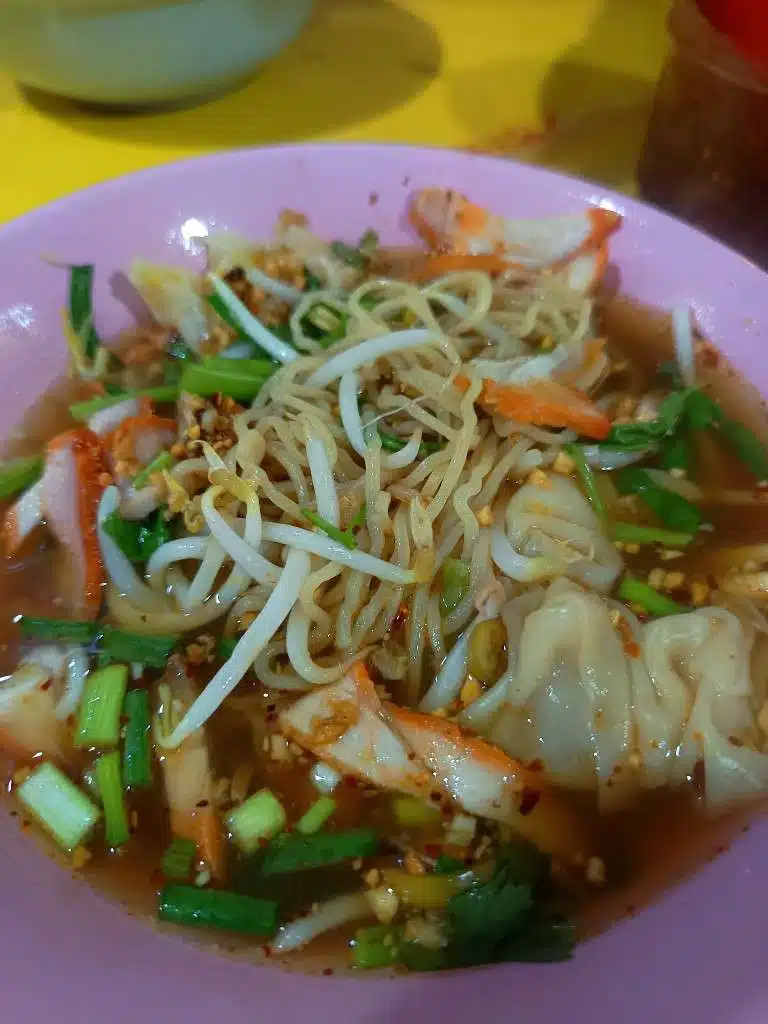
Our July 2026 field notes put a bowl near Mae Nam at about 40–60 THB, depending on portion and additions. That is a dated local observation, not a current island-wide price. The dish, the vendor and the portion all matter; check the menu on the day.
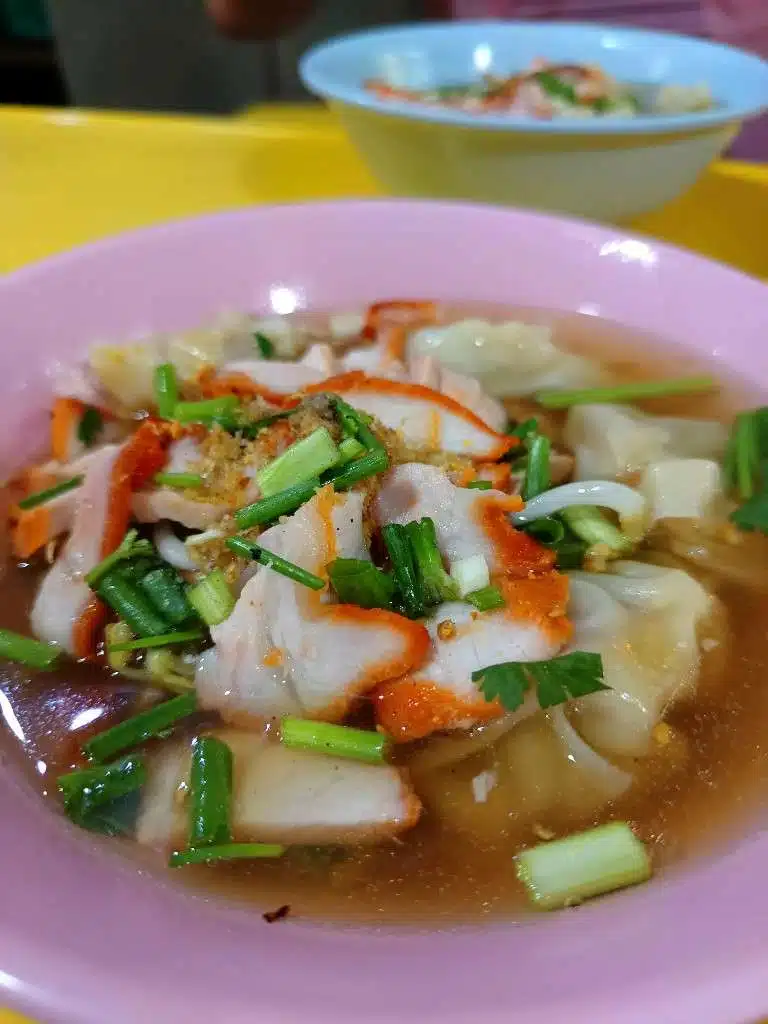
The dish-specific story is one small part of the wider archive. This page keeps the national view: how one bowl can open a window onto a place without pretending it represents the whole island or the whole country.
Street food, drinking water and what a photograph cannot tell you
Food is one of the pleasures of travelling, but a photograph of a grill or a full row of diners cannot establish how water was treated, how ingredients were stored or whether raw food was kept separate. A busy queue is not a food-safety test. Neither is a clear ice cube, a particular ice shape or the sight of high heat.
The CDC’s Yellow Book 2026 chapter for Thailand advises travellers to choose food cooked to order and served steaming hot; avoid raw or undercooked meat, seafood and eggs; avoid raw garnishes; eat fruit that you can peel yourself; drink bottled or filtered water; choose sealed drinks; and avoid ice. Its wider food-and-water guidance explains the importance of safe water in food preparation. These are risk-reduction precautions, not a guarantee that an individual meal is risk-free.
- Choose fully cooked food served hot and avoid raw or undercooked dishes when following CDC traveller advice.
- Be cautious with raw garnishes and produce you cannot wash or peel yourself.
- Use bottled or reliably filtered water, choose sealed drinks and follow the CDC’s Thailand-specific advice on ice.
- Do not treat a crowded stall, visible cooking or clear ice as proof of safe handling.
Read the CDC’s Thailand travel-health chapter and its broader food and water precautions for the full context. Health advice can change; check the current guidance before travel and speak with a qualified clinician about individual medical needs.
Spice, allergies and dietary requests are different questions
The phrase mai phet (ไม่เผ็ด) means “not spicy” and can be used to request less chilli heat. It does not tell a cook that a dish is free from a specific ingredient, allergen or cross-contact. A mild dish may still contain fish sauce, shrimp paste, dried shrimp, peanuts, oyster sauce, egg or another ingredient that matters to you.
For an allergy or strict dietary requirement, explain the ingredient that must be avoided, ask the cook directly and do not rely on a chilli-level request. Recipes and sauces vary, and a menu translation may not list every component. When the consequences of a mistake are serious, choose a setting where staff can clearly confirm the ingredients and preparation.
A national starting point, supported by specific family notes
This page combines three kinds of material, and they should not be confused:
- First-hand family photographs and field notes: the Bangkok images, the Market Village visit notes from April 2026, and the Mae Nam noodle observations from July 2026.
- Research-led regional context: the examples of dishes associated with Thailand’s four broad regions, drawn from a Thai government source and the Tourism Authority of Thailand.
- Official practical guidance: food-and-water precautions from the CDC Yellow Book 2026.
It is not an exhaustive list of Thai dishes, a nationwide restaurant ranking, a live price database or a guarantee about any stall. We have not presented every regional dish as personally tasted, and we do not claim that every destination page in the wider archive has been updated to this article’s current editorial standard.
Follow the food into the wider travel archive
The national overview is only the beginning. Browse the Asia travel collection for destination-specific stories and use each article’s own date, evidence notes and scope when planning a visit.
Enjoying our content? Make Mangoes & Palm Trees a preferred source on Google.
Explore more Thailand and Asia food travel
These cards are drawn only from our selected Thailand Food Travel Picks collection. Each card retrieves the article’s own WordPress Featured Image, media-library alt text, title and permalink when the page is rendered. We add a guide to this collection only after its evidence, author details and reader guidance meet our current editorial standard.
[mpt_collection category=”thailand-food-travel-picks” taxonomy=”post_tag” count=”6″ heading=”More Thailand and Asia food travel” anchor=”mpt-thailand-food-travel-picks” description=”Explore selected destination food stories and practical travel notes from the Mangoes & Palm Trees archive.”]
Thailand food guide: common questions
What are the best foods to try in Thailand for the first time?
Start with a mix rather than one national “must-eat” list: try a noodle dish, a rice plate, a curry or soup, and a salad or side. Then use the region you are visiting to choose more specific dishes, such as khao soi in the North or papaya salad in the Northeast.
What food is Thailand known for by region?
A useful broad guide is Northern, Central, Northeastern (Isan) and Southern Thailand. Government examples include khao soi and northern sausage in the North; soups, salads and rice dishes in the Central region; papaya salad and bamboo-shoot soup in the Northeast; and kaeng som, turmeric chicken and other southern preparations in the South. These are examples, not exhaustive menus.
Is Bangkok food different from food in the rest of Thailand?
Bangkok has central Thai food traditions as well as dishes and cooking brought by people from other regions and communities. You can find familiar central dishes alongside regional food, so the city is not represented by one fixed menu.
What is ba mee kiew moo daeng?
It is a Thai-Chinese-influenced noodle bowl with yellow egg noodles, pork wontons and roasted red pork, often served in a clear broth. Diners may adjust the seasoning at the table, depending on what the vendor provides.
What is pla ra in Thai food?
Pla ra (ปลาร้า) is fermented fish paste used as a savoury ingredient in many Isan preparations, including some versions of papaya salad. Recipes differ, so ask specifically about fermented fish if you avoid it; do not assume a dish is free of it from its menu name alone.
How can I ask for less chilli in Thailand?
Mai phet (ไม่เผ็ด) means “not spicy” and is a useful request about chilli heat. It is not an allergy statement and does not confirm that a dish is free from a particular ingredient or cross-contact.
What food and water precautions does the CDC recommend for Thailand?
The CDC Yellow Book 2026 Thailand chapter advises food cooked to order and served steaming hot, avoiding raw or undercooked food and raw garnishes, eating fruit you can peel, choosing bottled or filtered water and sealed drinks, and avoiding ice. Check the current CDC chapter before travelling.
Are the prices in this guide current?
No. The Hua Hin price range is from our April 2026 visit notes and the Mae Nam noodle range is from July 2026. They are dated observations, not live prices or a guide to current costs. Check menus and payment arrangements on the day.
The people behind these food and travel notes

Oliver Mayerhoffer
Lead Author · PublisherOliver writes about food, hospitality and travel, using practical observation and family field notes while distinguishing personal experience from facts that need independent research or a current check.

Natalia Mayerhoffer
Co-founder · Contributing AuthorBorn in Krasnoyarsk, Siberia, Natalia contributes family food heritage, cooking, recipe development, cultural research, writing and photography where those perspectives belong in the story.
Sources behind the regional and practical information
Official Thai sources inform the regional examples and eating formats. The CDC supports the food-and-water guidance. These sources do not validate a particular family visit or prove that any individual food stall is safe.
CDC Yellow Book 2026: Thailand
Thailand-specific travel-health advice, including food and water precautions.
Read the CDC chapterFood and Water Precautions for Travelers
General guidance for travellers on food preparation, drinking water and ice.
Read the guidanceFeatured food of each region
A Government of Thailand list of representative regional dishes, published in 2023.
Read the regional overviewNorthern Thai Cuisine
Regional context on khao soi, sai ua, nam phrik noom and Northern food traditions.
Read the Northern Thai overviewCentral Thai Cuisine
Regional context on meal composition, green curry, massaman curry and mango sticky rice.
Read the Central Thai overviewNortheast Thai Cuisine
Regional context on sticky rice, pla ra, som tam, larb and gai yang.
Read the Isan overviewSouthern Thai Cuisine
Regional context on southern ingredients and dishes including khua kling and gaeng tai pla.
Read the Southern Thai overviewLocal food in Thailand
Tourism Authority of Thailand overview of everyday food formats and local dining.
Explore local foodFive Thai cities, five street-food dishes
A destination-specific editorial selection that adds city context to dish discovery.
Read the city guideFor our wider publishing approach, read the Mangoes & Palm Trees editorial policy. For a correction or a question about a specific passage, contact the editors.