
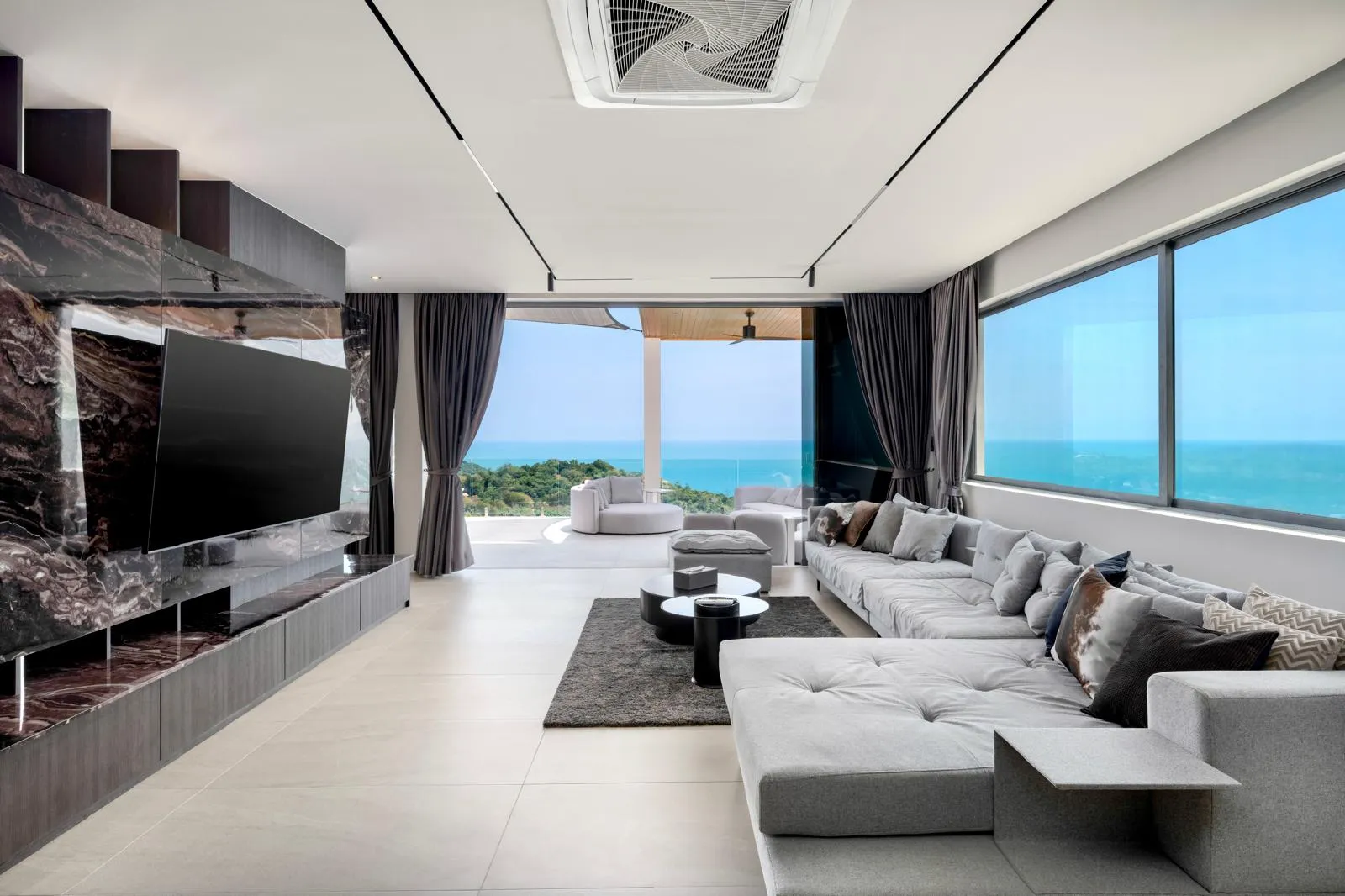
Safest Way to Book a High-End Villa in Koh SamuiLong-stay lease discipline, deposit hygiene, and neighborhood fit—from our fifty-country archive and Samui field contracts
Oliver has signed more than twenty long-term island leases—from Bophut walk-street eras to Maenam hillside compounds. This page retargets how to book safely before the long-stay math below.
Currently traveling Southeast Asia; no domicile claim. Pair with our Koh Samui travel guide for ferries, hospitals, and schools.
Key takeaways
- Safest channel: TAT-licensed agent or established management company—not wire-only to a personal account.
- Deposit rule: One month security is common; question anything higher without a written schedule.
- Verify management: Video walkthrough or site visit before a six-month lease; photograph the electric meter at handover.
- Neighborhood fit: Match elevation and driveway gradient to daily movement—see archetypes below.
- Electricity clause: Negotiate per-kWh rate in writing; landlord markup is the surprise line item.
- Pillar link: Arrival logistics live in our Koh Samui travel guide.
What is the safest way to book a high-end villa in Koh Samui?
The safest way to book a high-end Koh Samui villa is through a licensed agent or established management company with a written lease, meter photos, and staged payments—not a single wire to an unknown individual. Verify the property on video or in person, take a short protected stay before a long lease, and confirm electricity per-kWh rates in writing.
Planning note: Visa rules, utility tariffs, and rental quotes change without warning. This is a planning guide—not legal, tax, or investment advice. How we monetize is explained in our Affiliate Disclosure.
Koh Samui villa booking safety checklist
| Step | What to verify | Red flag |
|---|---|---|
| Agent or manager | TAT-licensed agency or named management office with street address | Wire-only to personal account; no company registration |
| Property proof | Live video walkthrough or in-person visit; dated photos of pool and bedrooms | Drone stills only; refusal to show meter or fuse box |
| Lease PDF | Signed lease listing rent, deposit, notice, inclusions | WhatsApp promises without written kWh rate |
| Meter baseline | Photograph electric meter at handover; kWh rate in contract | Refusal to disclose per-unit surcharge |
| Staged payments | Short protected stay before long lease; escrow where available | Full six-month wire before keys |
| Insurance | Policy names Samui hospitals; covers scooter clause if riding | No evacuation cover on an island lease |
Red flags we walk away from
- Wire-only deposit to an individual with no management company on the lease.
- No video walkthrough or site visit before a multi-month commitment.
- Refusal to put electricity per-kWh rate and water source in writing.
- Airbnb rack pricing quoted for a six-month ask without negotiation room.
- Pool maintenance and pest control left entirely to the tenant with no schedule.
Field-tested villa gallery
Original photos from Koh Samui luxury villa stays—living areas, interiors, and Gulf views used to sanity-check listings before signing.
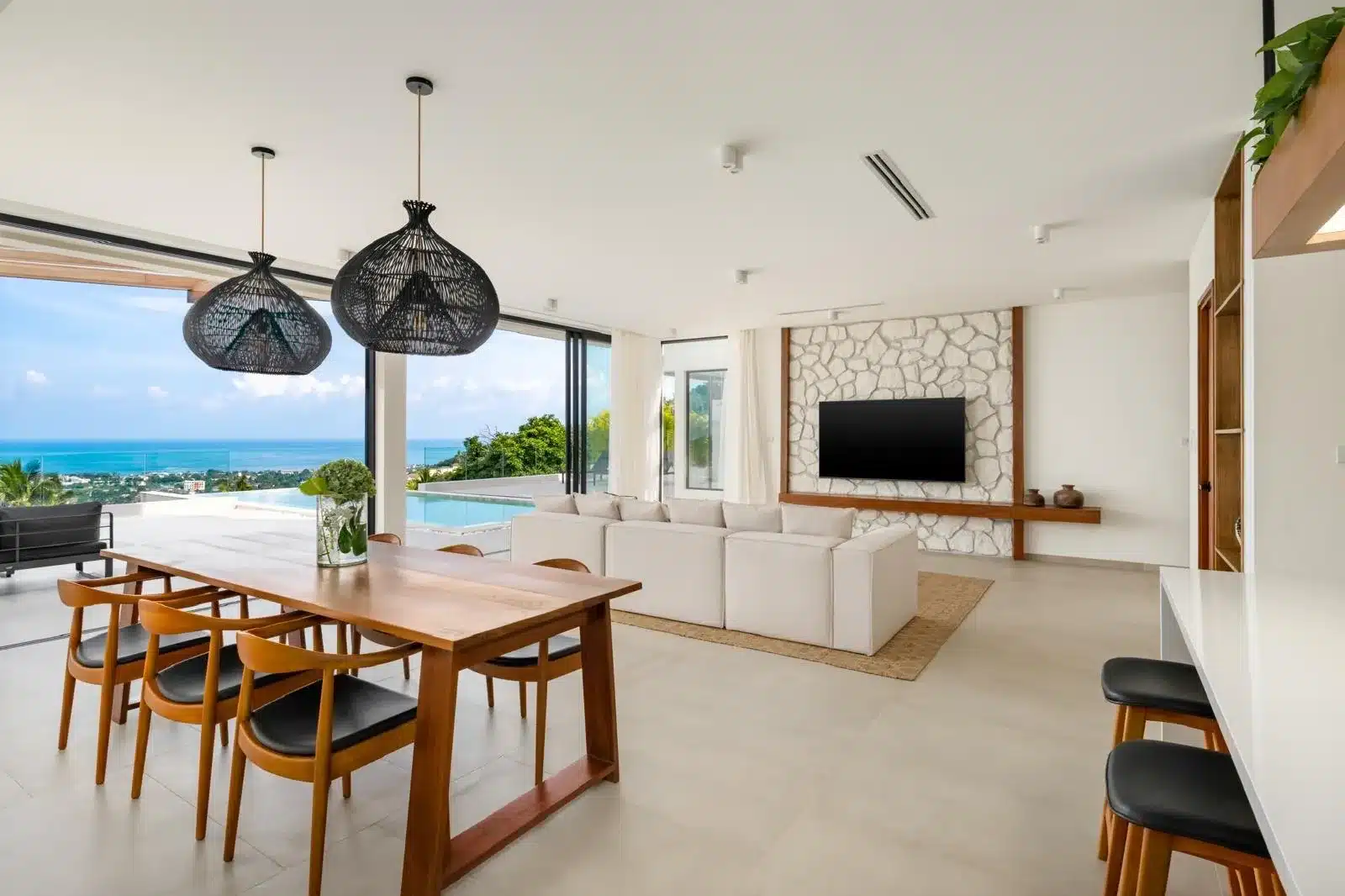
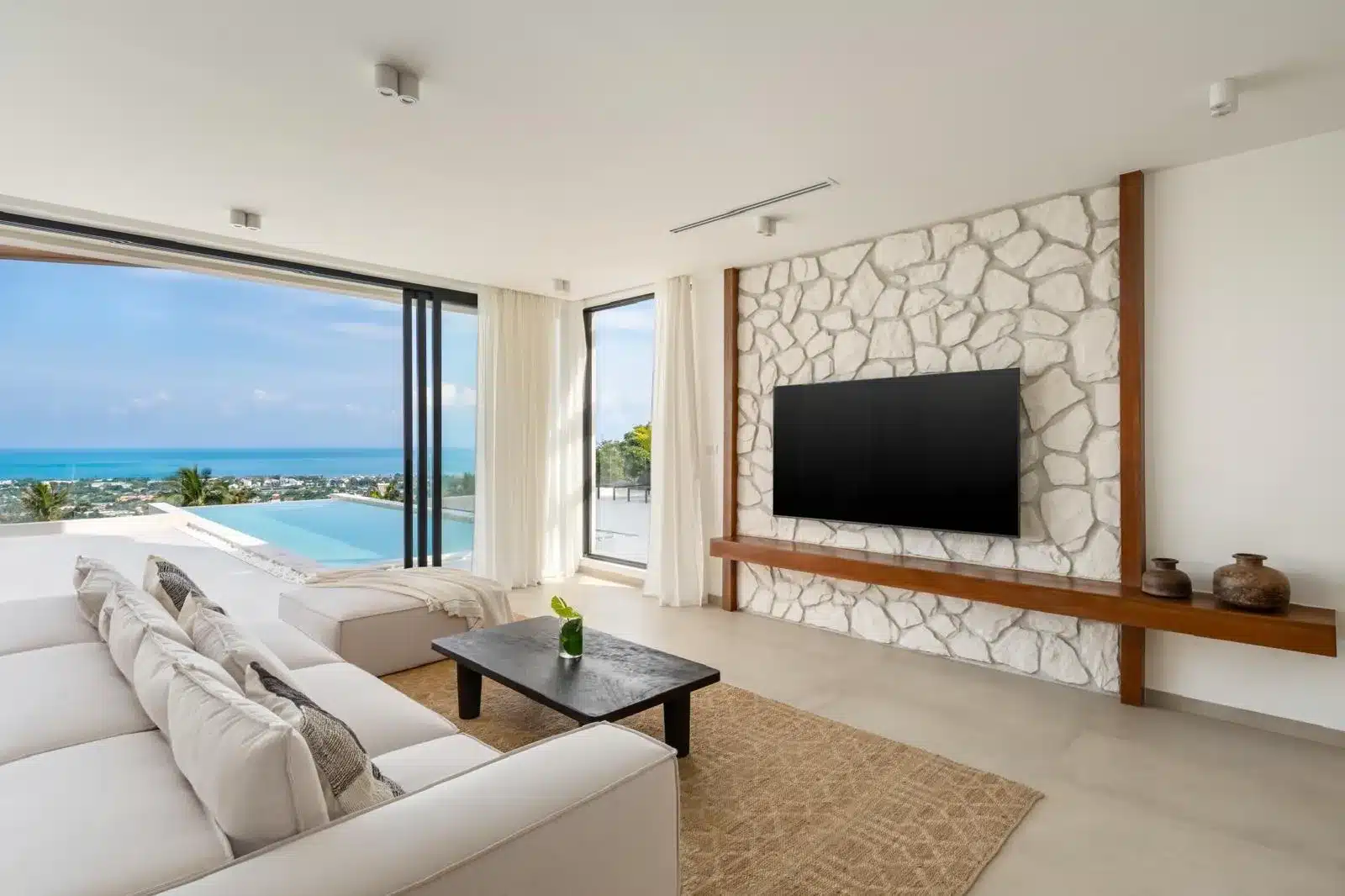
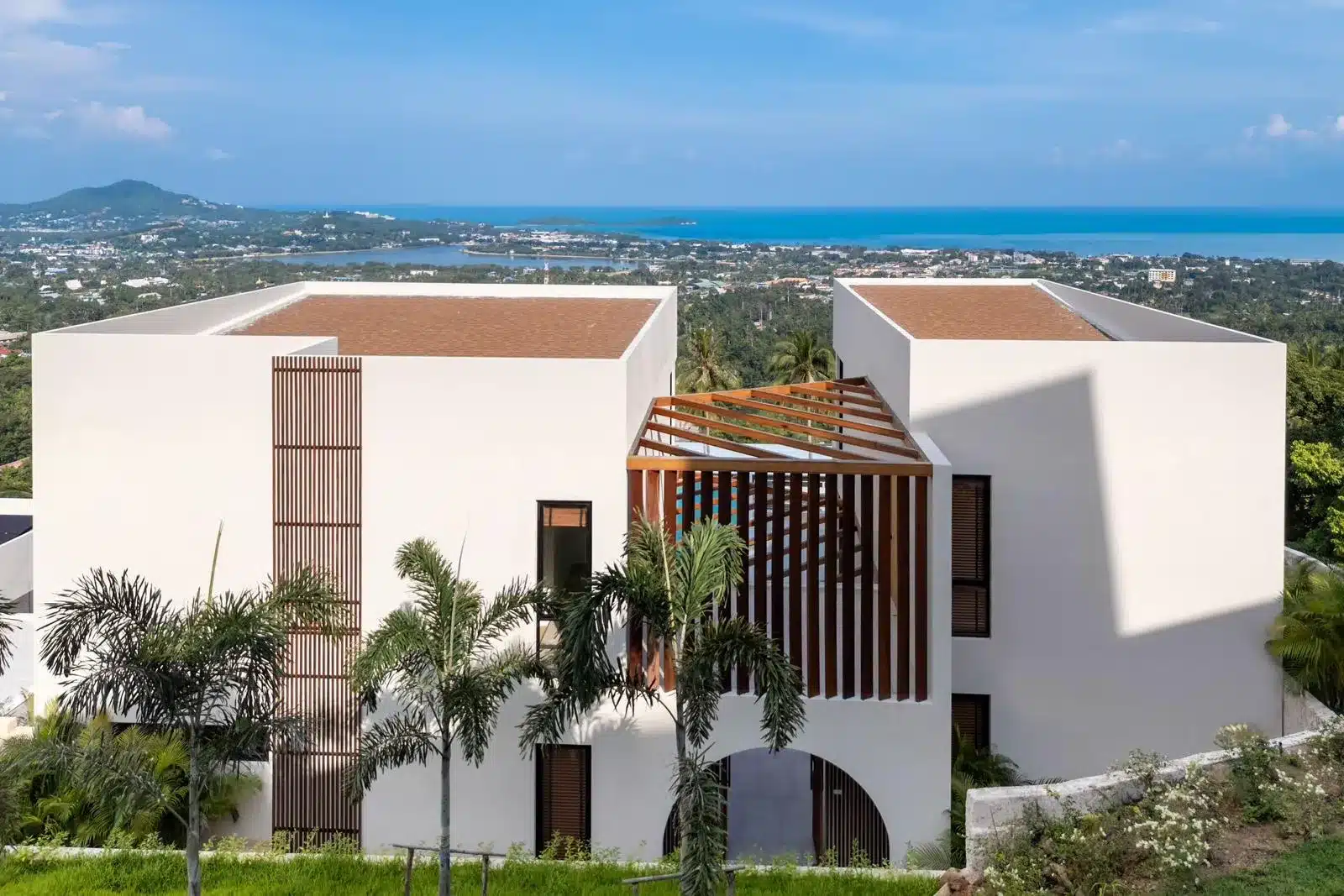
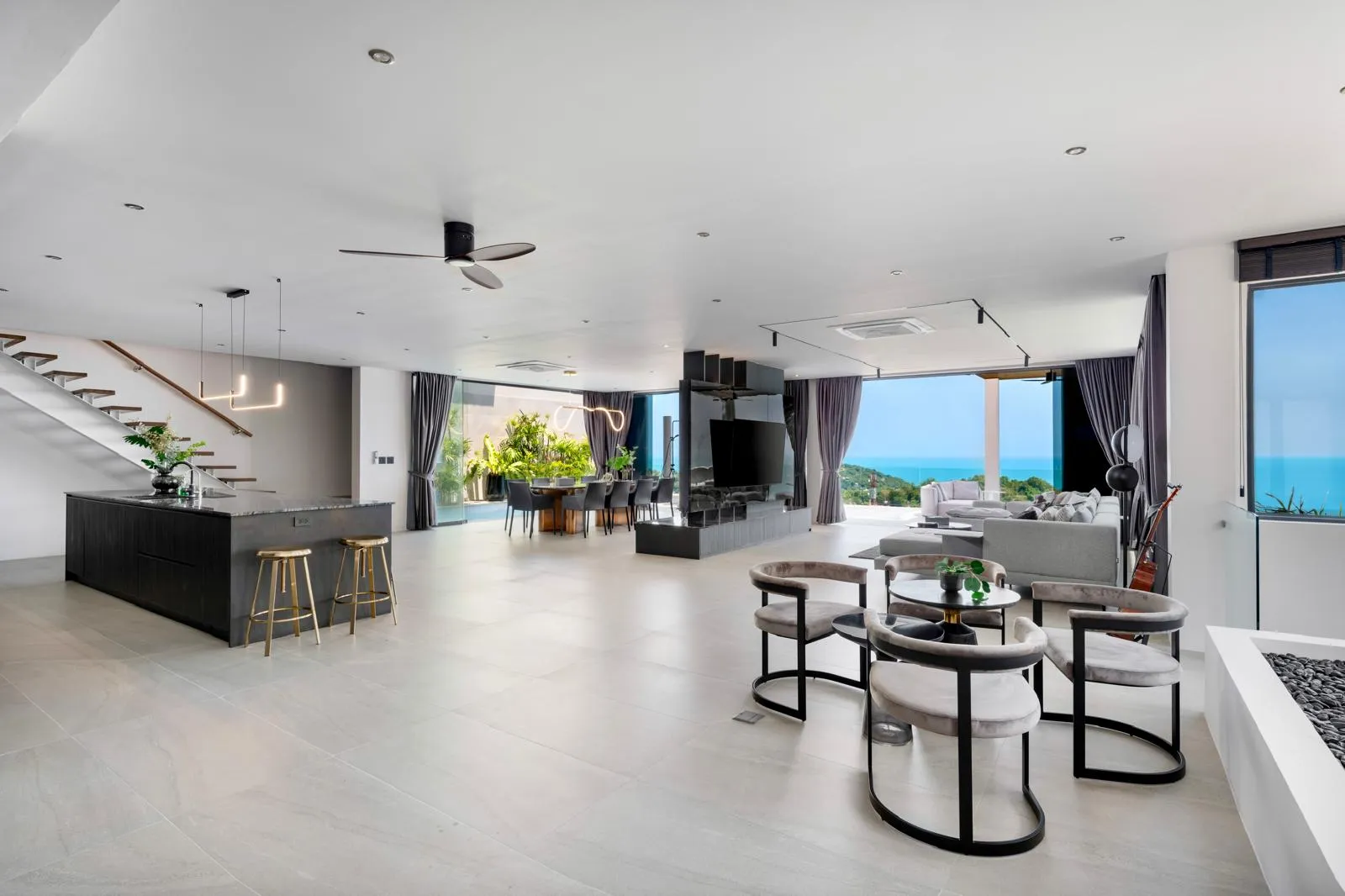
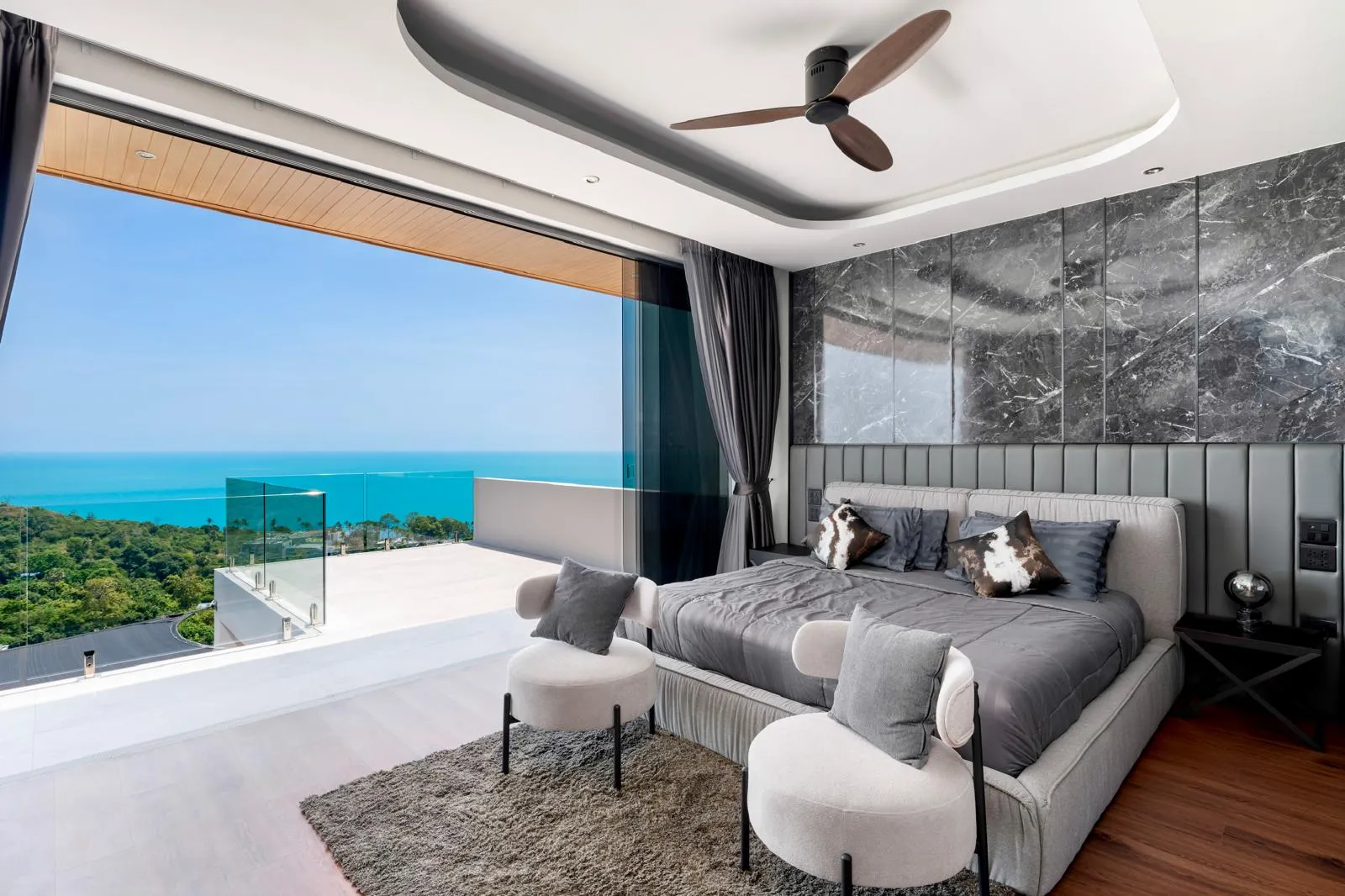
Experience note: Oliver Mayerhoffer managed resort supply chains in Oman and later guided luxury property transitions in Thailand; Natalia Mayerhoffer (DMD) sanity-checks hygiene and family pacing on long stays. The Mayerhoffer family is currently traveling Southeast Asia.
Is Koh Samui a practical base for a multi-month luxury villa stay?
Yes—for many families and remote workers who plan transport and utilities. Koh Samui offers deep private-villa inventory, fiber along the ring road, and private hospitals long-stayers use in practice. Match villa type to how you move before you sign on a view alone.
After booking safely, use this section for long-stay math. Cross-read our Koh Samui travel guide and Thailand food and travel 2026 for arrival rhythm.
Why Koh Samui works for villa-led long stays—and what you trade
How the island compares: Koh Samui often gives more stand-alone villa stock per month than condo-heavy coasts—if steep sois, landlord per-kWh rates, and seasonality are accepted. Fiber and clinics are part of that package; patience for scooters and storms is too.
Infrastructure
Many villas advertise 500/500 Mbps plans suitable for video calls; still run speed tests after rain. Bangkok Hospital Samui is JCI-accredited and the name most long-stayers keep for escalation.
The villa culture
Unlike Phuket condo-heavy segments, Samui was built on private villas—more space, a private pool, and garden privacy per monthly baht when length and shoulder-season timing are negotiated.
Visa routes (confirm live)
Thailand runs LTR, DTV-style visits, retirement, and family routes in parallel. Rules shift—verify on the official immigration portal before sizing a decade-long plan on a blog paragraph.
5 villa archetypes: which one fits your lifestyle?
Daily life is shaped less by marble brands than by elevation, driveway gradient, and whether a management office answers at 9 p.m. Match the category to movement before falling for a drone still.
1. Hillside panorama (sea view)
Best for privacy and views. Chaweng Noi or Bophut hills—unbeatable sunsets; steep driveways and cancelled Grab runs are the trade. Budget a car; four-wheel drive is wise in monsoon.
2. Beachfront estate
Best for families. Lipa Noi, Maenam, Taling Ngam—direct sand access and flat circulation. Salt air punishes laptops; premiums run high at the top of the market.
3. Managed residence (gated estate)
Best for digital nomads. Hybrid resort service with private villas—shared security, gyms, and front desks when leaks happen. Verify SLAs in the lease.
4. Garden pool villa
Best value. Walled gardens in Plai Laem and Maenam—pool yes, sea view often no. High-spec three-bedroom bands often land well below comparable sea-view houses.
5. Multi-pavilion compound
Best for multigenerational groups. Sleeping wings split across salas—count exterior doors, mosquito netting, and shared noise lines before signing.
The neighborhood guide: where to plant roots
Wrong pin, right villa still hurts. Layer these zones on arrival logistics from our Koh Samui travel guide.
Bophut (Fisherman’s Village)
Walkable shophouses and Friday market—excellent fiber where AIS serves the soi. Sample rent band $2,500–$4,500 per month; ~10 minutes to Bangkok Hospital Samui traffic-dependent.
Choeng Mon
Sheltered upscale bay—family-friendly with calmer surf than central Chaweng. Premium villas cluster on the headland.
Maenam
Calm north-coast sand and morning market—where the Mayerhoffer family rented with a newborn. Shallow water and hospital access within fifteen minutes.
Where we caution long leases: Chaweng Center
Central Chaweng long-stay math rarely ages well for families. Chaweng Noi offers elevation and distance from the strip—paired with a real car budget.
The financials: real cost of living (2025–2026 field anchors)
A couple running air conditioning, two scooters, fiber, and comfortable dining often lands near ~102,000+ THB directional monthly—before flights, insurance, and school fees.
| Expense category | Cost (THB) | Cost (USD) |
|---|---|---|
| Luxury villa rental (2–3 bedroom) | 65,000–120,000 | $1,900–$3,500 |
| Electricity (hidden cost) | 6,000–12,000 | $175–$350 |
| Scooter rental (×2) | 6,000–8,000 | $175–$230 |
| Fiber internet | 800–1,200 | $25–$35 |
| Food and dining (comfortable) | 25,000–40,000 | $730–$1,150 |
| Total estimate (directional) | ~102,000+ THB | ~$3,000+ USD |
Electricity trap: Government bands near ~4.2 THB per unit rarely match private meter invoices after landlord markup. Photograph the meter and model three air-conditioning units overnight at 9 THB—$400+ electric months are real.
Six-month rate: Ask whether low-season pricing can anchor longer bridges. Push pool maintenance and pest control into rent—roughly 2,000 THB of value when bought retail.
The logistics: visas, connectivity and safety
People live on Samui legally across multiple visa categories—the error is picking yours from a blog without reading embassy checklists. Pair fiber optimism with router UPS and a second SIM.
Destination Thailand Visa (DTV)—confirm live
Validity stamps, extension cadence, and embassy bundles have shifted inside 2024–2025. Treat bullet lists as conversation starters with the consulate, not a contract.
Internet speed and reliability
Test wired first, then Wi-Fi. Ping to Singapore or employer VPN matters as much as Mbps. AIS Fiber, 3BB, and True bundles are common—verify the soi before signing.
Healthcare
Bangkok Hospital Samui on the BDMS network is the flagship many insurance cards recognize. Doctor consults, imaging, and emergency triage are English-capable—still not free without cover.
Essential amenities: the long-stay checklist
Five-day guests photograph the infinity edge; five-month tenants live inside water pressure, kitchen honesty, maid cadence, and whether termites already won a closet.
Critical infrastructure
Water: Ask aloud whether the villa uses government pipe or truck season—dry-season stress tests appear March through May.
Power backup: Generator or estate backup plus UPS on the router path so video calls survive brownouts.
Lifestyle support
Kitchen: If baking matters, insist on seeing a built-in oven switched on. Dishwashers remain a flex—open the door and smell the seals.
Maid cadence: Twice-weekly cleans with linen rotation beat one heroic deep clean before checkout photos.
Pest control: Demand an active monthly program—look for dated stickers under sinks.
Enjoying our content? Make Mangoes & Palm Trees a preferred source on Google.
Explore next






Koh Samui villa — questions we get
What is the safest way to book a high-end villa in Koh Samui?
The safest way to book a high-end Koh Samui villa is through a licensed agent or established management company with a written lease, meter photos, and staged payments—not a single wire to an unknown individual. Verify the property on video or in person, take a short protected stay before a long lease, and confirm electricity per-kWh rates in writing.
Is it safe to pay a villa deposit via bank transfer?
Use caution. International wires to individuals are difficult to reverse. Established compounds still deserve document checks; with unknown owners, consider a short protected booking window or escrow-minded agents before sending large sums.
Should you use Airbnb or a direct agent for a 3+ month Koh Samui villa?
Airbnb rack rarely survives a serious six-month conversation. Licensed agents and management companies can anchor shoulder-season pricing, document kWh rates, and pool maintenance in a lease—verify TAT registration and references before signing.
What should be in a Koh Samui villa lease?
A solid lease lists rent, deposit schedule, electricity per-kWh rate, water source, maid cadence, pest control, pool maintenance, notice periods, and inventory photos. Meter baseline photos at handover are non-negotiable for long stays.
Why is villa electricity so high on Koh Samui?
Public electricity bands rarely match landlord surcharges on private meters. Villas quoting 7–10 THB per unit turn heavy air-conditioning nights into 15,000 THB months without trying—negotiate the kWh schedule, not just the rent headline.
Do you need a car on Koh Samui?
Chaweng Noi and Bophut hills punish underpowered bikes in rain—plan a four-wheel drive or a realistic taxi budget. For flat coastal circuits like parts of Maenam, scooters work if road risk is accepted with proper insurance.
Is Koh Samui practical for a multi-month luxury villa stay?
Yes—for many families and remote workers who plan transport and utilities. Koh Samui offers deep private-villa inventory, fiber along the ring road, and private hospitals long-stayers use in practice. Match villa type to daily movement before signing on a view alone.
Meet the Mayerhoffers
“Free-spirited food adventurers, culture-seekers, and the guardians of 15 years of global memories.”

Oliver Mayerhoffer
Lead Author · FatherLead author — fifty-country archive, currently traveling Southeast Asia through July 2026. Oliver brings field-tested recipe structure and honest weeknight notes from family kitchens abroad.

Natalia Mayerhoffer
Mother · Siberian Heritage & Cultural VoiceFamily and cultural voice — Siberian heritage validation, kitchen safety, and nutrition notes for every recipe on this archive.
“Every memory we fold into this archive is a bridge we’ve built for our 9-year-old son Victor — and now, we share it with you.”
Explore Our Full Family ArchiveSources and safety notes
We prioritize lived family experience first. When entry rules, food safety, or heritage context matter, we cross-reference field notes with official references listed below.
Harvard T.H. Chan School of Public Health
nutrition source notes
Read sourceEditorial field notes
Family field notes — Mayerhoffer kitchen testing, July 2026 Southeast Asia season
Koh Samui villa decision matrix
Registry hubs for stays, Thai cooking, Gulf alternates, and trust pages—from our fifty-country archive.
Also browse Koh Chang guide and all destinations.
Evidence vault
Official and operator sources below—warm narrative stays in the sections above.
| Claim | Source type | Reference |
|---|---|---|
| Tourism Authority of Thailand | Official source | Tourism Authority of Thailand |
| Visit Samui | Official source | Visit Samui |
| Bank of Thailand | Official source | Bank of Thailand |
| Provincial Electricity Authority | Official source | Provincial Electricity Authority |
| Thai Immigration Bureau | Official source | Thai Immigration Bureau |
| BOI LTR portal | Official source | BOI LTR portal |
| Bangkok Hospital Samui | Official source | Bangkok Hospital Samui |
| Knight Frank Thailand | Official source | Knight Frank Thailand |
Last updated: 17 July 2026 · Affiliate disclosure
Oliver Mayerhoffer
Managed resort supply chains in Oman and guided luxury property transitions in Thailand. Signed more than twenty long-term Koh Samui contracts—Bophut to Maenam hillside compounds.
Natalia Mayerhoffer, DMD
Clinical guardrails for hygiene and family pacing on long island stays. Victor’s mother—Siberian heritage voice at Mangoes and Palm Trees.