Authority & Disclosure: We are the Mayerhoffer family. This Khai Pham Guide 2026 is built on Oliver’s 16 years of luxury hospitality management and Natalia’s medical background (DMD). Currently conducting a live culinary audit on the ground in Thailand, we test functional ingredients to bridge the gap between regional food science and practical family nutrition. See our Full Disclosure.
Quick Answer: What exactly is Khai Pham (Green Caviar)?
Khai Pham, also known as Wolffia globosa or watermeal, is the world’s smallest flowering aquatic plant. Naturally found in Thailand’s still waters, these tiny green beads are nicknamed “Green Caviar” due to their unique textural resemblance to fish roe. In 2026, it has transitioned from a traditional regional staple to a global functional superfood.
The Superfood Shift: Entering the Value 3.0 Paradigm
During our current 2026 culinary audit here in Thailand, we documented a massive shift in how traveling families approach grocery procurement. We call this the “Value 3.0” paradigm. Health-conscious families are no longer willing to pay inflated premium prices for imported, over-processed wellness powders. Instead, the focus has pivoted to highly affordable, functional nutrition sourced directly from local agricultural systems.
Enter Khai Pham. Once a quiet, regional staple of Northern Thai cuisine, it has rapidly become the “green gold” of Bangkok’s expat community. If you have been following our Bangkok Street Food Guide 2026, you know that the city’s food culture is modernizing fast. This tiny aquatic plant represents the ultimate intersection of authentic street culture and modern, preventative health.
Is Khai Pham the Same as Duckweed?
To utilize an ingredient effectively, you must first understand its botanical structure. Khai Pham belongs to the Lemnaceae family. A common question we receive from families navigating Thai supermarkets is whether Khai Pham is just ordinary duckweed.
The technical answer is no. While it is related to common duckweed, Wolffia globosa is completely rootless. This lack of a fibrous root system is what gives Khai Pham its superior, popping texture in the mouth—earning it the nickname “Green Caviar.” Because it lacks a distinct, overpowering bitter flavor, it easily ranks among the best Thai ingredients for beginners and children who are otherwise sensitive to heavy leafy greens.
The Value 3.0 Nutritional Powerhouse: Bioactive B12
What are the nutritional benefits of Khai Pham?
Khai Pham is a nutritional breakthrough, containing up to 40-50% complete protein by dry weight. Crucially, it serves as a rare plant-based source of bioactive Vitamin B12 and heart-healthy Omega-3 fatty acids. This combination supports brain development and metabolic health, offering families a high-value alternative to expensive imported supplements.
The Medical Audit: Natalia’s Perspective on Wolffia Globosa
As a medical professional with a background in dental medicine (DMD), I am highly analytical when reviewing the term “superfood.” Most aquatic plant-based B12 sources—such as spirulina—contain “pseudo-B12,” an analogue that the human body cannot actually absorb. However, Khai Pham operates differently.
According to the comprehensive DIRECT-PLUS clinical trial published in the scientific journal Nutrients (MDPI), Mankai (a specific cultivated strain of Wolffia globosa) provides highly bioavailable Vitamin B12 that is efficiently absorbed by the human metabolic system. For traveling families relying on plant-based diets, integrating Khai Pham alongside our vegetarian fish sauce substitutes creates a nutritionally complete, authentic Thai meal profile without the premium supplement price tag.
Sourcing & Safety: The “Victor Standard” for Khai Pham
Is Khai Pham safe for children to eat?
To ensure child safety, families should only purchase farm-grown Khai Pham from certified retailers like Gourmet Market or Tops. These cultivated versions meet strict Thai safety regulations for heavy metals. Always wash fresh Khai Pham multiple times or blanch briefly before serving to toddlers to eliminate any risk of microbial contamination.
Because Khai Pham grows naturally in still water, wild-harvested batches can occasionally harbor agricultural runoff or bacteria. Oliver’s hospitality logistics training dictates that we entirely bypass wild-harvested street market varieties when applying the “Victor Standard”—our benchmark for feeding our 9-year-old son.
Instead, we source exclusively from closed-system agricultural farms. You can easily find these safe, premium-grade tubs in the organic produce sections of EmSphere’s Gourmet Market, Tops Fine Food, and major Big C outlets across Bangkok. If you are traveling outside the capital, you can reference our guide on how to get to Hua Hin from Bangkok 2026 to see how regional supermarkets are also stocking this superfood.
Expat Friction Solver: QR Code Grocery Payments
A frequent question from families navigating our Khai Pham Guide 2026 is: “Can I pay for groceries with QR codes in Bangkok?” Yes. Thailand is virtually cashless. At Tops or Gourmet Market, simply open your Thai banking app (or an international app linked to PromptPay) and scan the dynamic QR code at the register. It eliminates currency exchange friction and exact-change hassles instantly.
Visualizing the Khai Pham Agricultural Revolution
To truly understand how this tiny plant is cultivated safely for mass consumption without heavy metal contamination, watch this authoritative breakdown from one of Thailand’s leading agricultural innovators. It visualizes the exact closed-system farming standards that produce the premium grade “Green Caviar” sold in Bangkok supermarkets today.
Picky-Eater Approved: Khai Pham Recipes for the Family
Introducing high-density aquatic plants to a 9-year-old requires strategy. As our ultimate culinary critic, Victor is highly sensitive to the bitter profiles often associated with superfood greens. Fortunately, Khai Pham is nearly flavorless. It provides a subtle, fresh crispness without the overpowering “pond water” taste of wild spirulina. This makes it the ultimate “sneaky” nutrient for traveling families[cite: 43].
The “Victor Standard” Application Methods
Through our live culinary audits here in Thailand[cite: 47], we have developed three fail-proof methods for integrating Khai Pham into a child’s daily diet:
1. The Green Caviar Smoothie
Blend half a banana, fresh mango, pineapple juice, and 2 tablespoons of fresh Khai Pham. The fruit sugars completely mask the plant profile. You can adapt the base using any of our best mango smoothie recipes for guaranteed success.
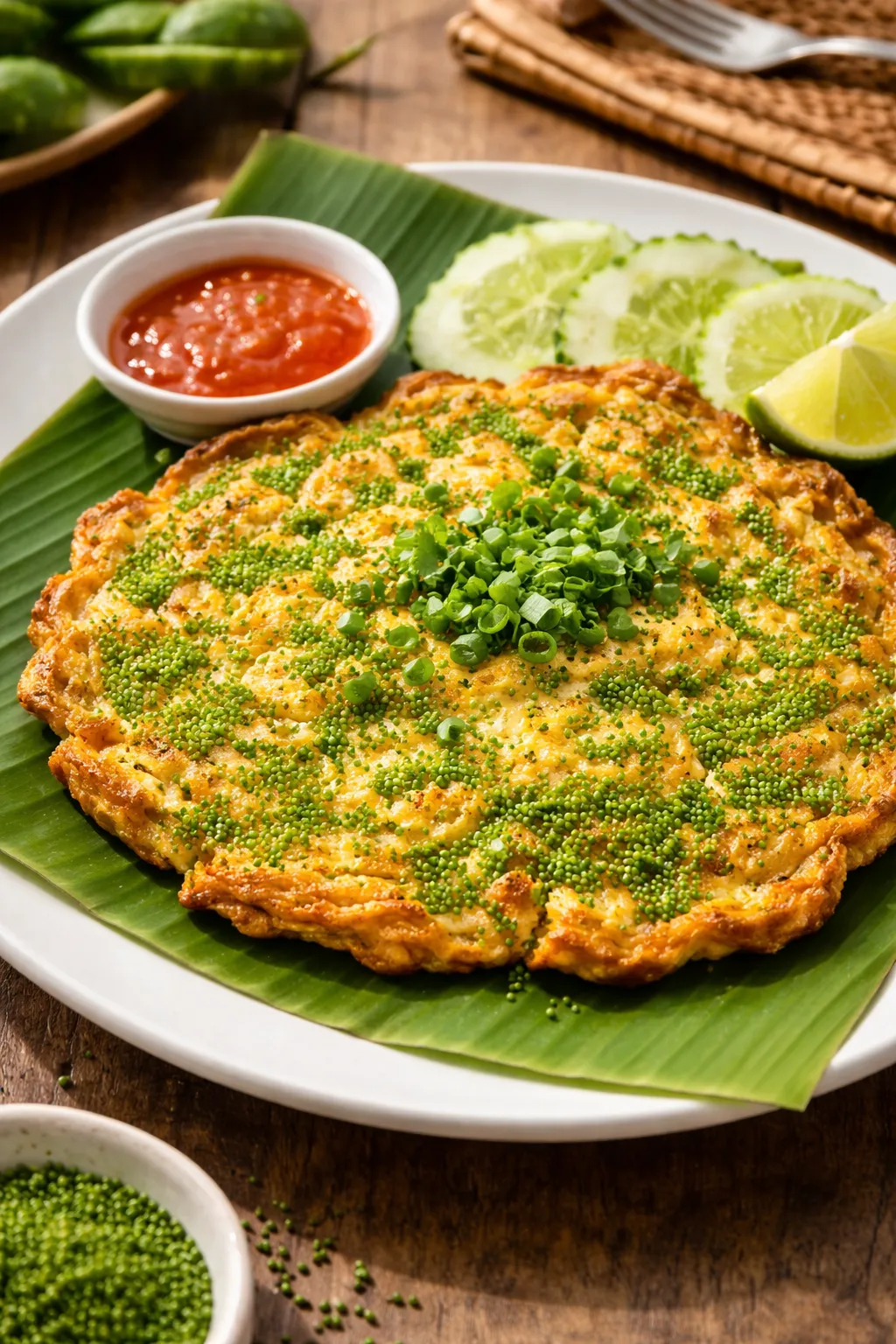
2. Khai Pham Omelette (Khai Jiao)
Whip 3 eggs with a dash of soy sauce and 3 tablespoons of washed Khai Pham. Fry in very hot oil until the edges crisp. The “green caviar” provides a satisfying, crunchy protein core inside the fluffy egg.
3. Superfood Pancakes
If you are utilizing dehydrated Khai Pham powder, fold 1 tablespoon directly into your standard morning pancake batter. It acts as an invisible functional health upgrade—perfect for preparing healthy school lunches without triggering texture aversions.
The 2026 Functional Protein Matrix: Khai Pham vs. Spirulina
To justify Khai Pham’s position as a “Value 3.0” superfood, we must audit its metrics against the established industry giants. Why are traveling families and high-end expat grocers shifting away from traditional soy and spirulina? The answer lies in the combination of bioactive bioavailability and environmental footprint.
| Superfood | Protein (% dry wt) | Bioactive B12 | Iron Content | Eco-Footprint |
|---|---|---|---|---|
| Khai Pham (Wolffia) | 40 – 50% | Yes (Human Absorbed) | High | Extremely Low (Watermeal) |
| Spirulina | 60% | No (Pseudo-B12) | Moderate | Moderate |
| Soybeans | 36% | None | Low | High (Land/Water Usage) |
While Spirulina technically registers a higher raw protein percentage, it fails the medical audit regarding Vitamin B12. Spirulina contains pseudo-vitamin B12, which mimics the structure but provides zero metabolic benefit to humans. Khai Pham bridges this critical gap, offering true bioactive B12 while requiring a fraction of the land and water resources necessary to cultivate commercial soybeans.
6. Frequently Asked Questions: Khai Pham Guide 2026
Sourcing and utilizing functional aquatic plants in a temporary rental kitchen requires logistical foresight. Here are the most common questions we receive from traveling families regarding Thailand’s Green Caviar.
Q: Does Khai Pham taste like seaweed or pond water?
No. Unlike spirulina or wild algae, premium cultivated Wolffia globosa is virtually flavorless. It offers a fresh, clean, crisp “pop” similar to tobiko (flying fish roe) but without the fishy or bitter aftertaste. This neutral profile makes it exceptionally easy to blend into children’s meals.
Q: How do you store fresh Khai Pham in a rental fridge?
Fresh Khai Pham must be kept refrigerated at ≤40°F (4°C) in a sealed container and consumed within 3 to 5 days of purchase. Do not freeze it; freezing destroys the cellular walls, turning the crisp green beads into a mushy paste upon thawing.
Q: Can I just forage for it in Thai lakes?
Absolutely not. Natalia’s medical hygiene standards dictate that we never consume wild-harvested watermeal due to the high risk of agricultural runoff, heavy metals, and parasites. Only purchase farm-grown, closed-system Khai Pham from certified supermarkets like Gourmet Market or Tops.
🛡️ Technical Verification Citadel
We anchor our culinary audits in verified institutional data to ensure absolute food safety and economic accuracy for our global readers.
🔬 Tier 1: Agricultural Safety
-
Mahasarakham University:
Verification of closed-system cultivation standards and the elimination of heavy metal toxicity in premium-grade Thai Khai Pham.
🌍 Tier 2: The Value 3.0 Trend
-
Travel and Tour World:
Validating the 2026 macro-economic shift toward “Grocery Store Tourism,” wherein expats seek functional, local nutrition over imported supplements.
About the Culinary Auditors
Currently conducting live field tests in Bangkok, Thailand (2026)

Oliver Mayerhoffer
Senior Hospitality AuditorWith 16 years of luxury hospitality management across the Austrian Alps and the Sultanate of Oman, Oliver applies strict technical rigor to every culinary guide. He handles the procurement, logistics, and recipe development for our global travels.

Natalia Mayerhoffer
Medical Validator (DMD)Utilizing her Siberian background and formal medical training in dental medicine, Natalia serves as the strict validator for food safety, hygiene protocols, and clinical nutritional claims. If a local ingredient doesn’t pass her medical audit, it doesn’t reach 9-year-old Victor’s plate.