How we work: Mangoes & Palm Trees editorial policy
Khai Pham in Thailand: What It Is, Thai Food Uses & Where to Buy
A practical guide to Thai khai pham (watermeal/Wolffia), the dishes it appears in, what nutrition research can—and cannot—tell us, and where to start looking for it in Thailand.
What is Khai Pham?
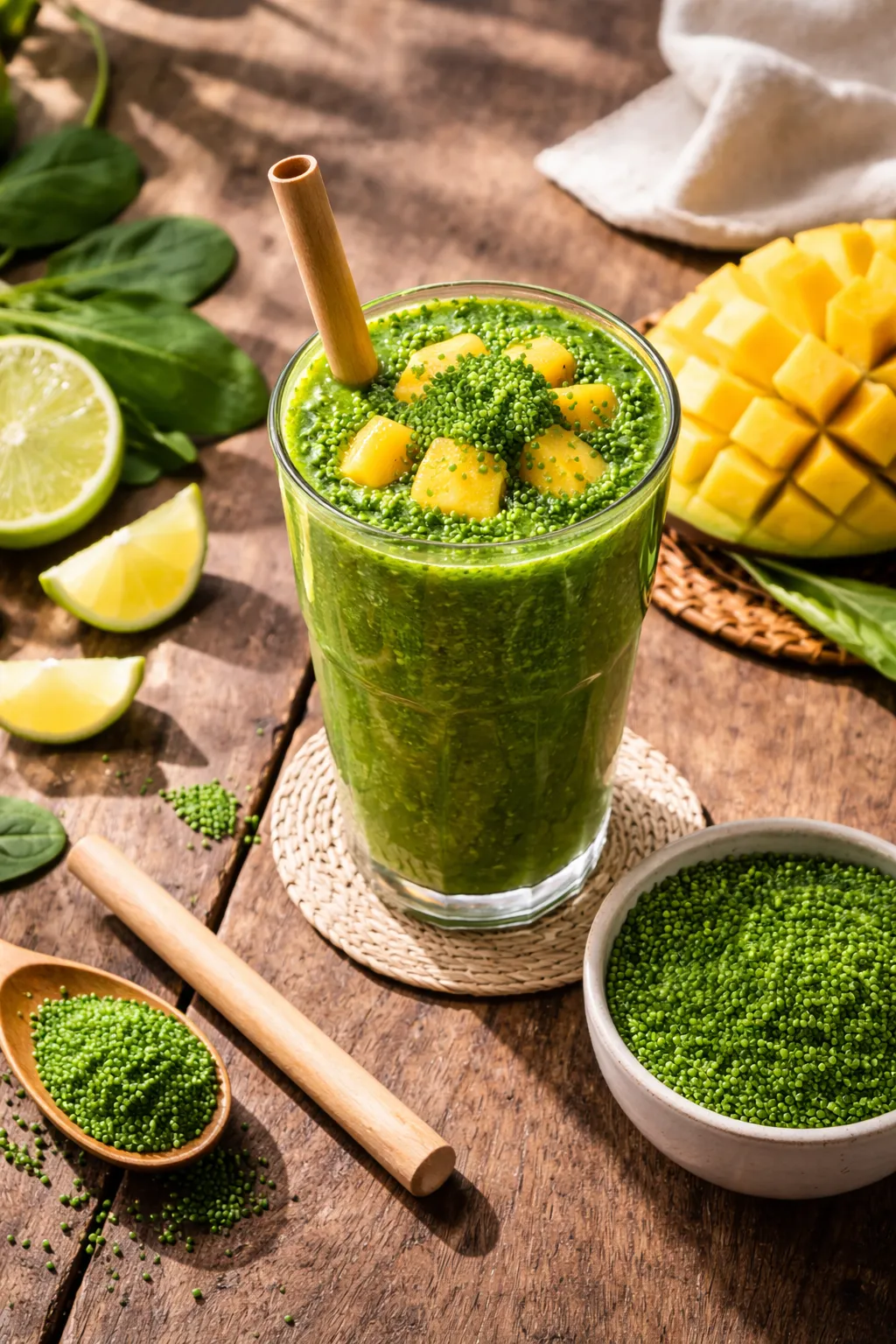
Khai pham (ไข่ผำ) is a Thai food name associated with tiny edible floating freshwater plants commonly sold as Wolffia or watermeal. Thai botanical references document Wolffia globosa under local names including pham, khai nae and khai nam. Regional Thai food references record it in dishes such as khua pham, curries, spicy salads and omelettes. Specialist Thai sellers list fresh and processed forms, but the exact species, pack, stock and handling instructions should be checked with each seller.
The key distinction when buying is to check the product name and ingredients: the local food name does not, by itself, verify the exact species or production method.
Khai Pham at a glance
- English common name: tropical watermeal is used for Wolffia globosa in the JIRCAS botanical record.
- Thai names: botanical and regional food references record names including pham, khai nam, khai nae and khai pham.
- What it is: a minute floating flowering plant in the duckweed group—not seaweed or fish roe.
- Documented Thai uses: khua pham, kaeng pham and other regional curries, spicy salads and egg dishes.
- Buying: supplier websites show fresh Wolffia, powders and blends. Check the listing and batch details before ordering.
Where to buy Khai Pham in Thailand
These examples are supplier-owned listings that were visible when the pages were reviewed. They are included as places to begin your search, not as an MPT ranking, product recommendation, farm audit or safety certification. We have not bought or tested the listed batches. Product availability, formulation, pack size, prices and delivery arrangements can change, so confirm the details directly before paying.
iOrganic Farm — fresh Khai Pham and Wolffia powder
The iOrganic Farm product catalogue displays a fresh product labelled ไข่ผำ (Wolffia) and a 100% Wolffia powder listing in a 60 g pack. Open the individual product detail from the catalogue and confirm the current price, orderability, net weight, dispatch date and delivery conditions. Nutrition and production statements on the seller’s own pages remain seller claims, not independent verification of the batch you receive.
flo Wolffia — fresh and blended product listings
flo Wolffia’s official website displays product cards for Fresh Wolffia and Wolffia & Plant Protein, with online shopping and a “Where to buy” route. Its Wolffia Powder card was marked “pending” in the page capture reviewed, so do not assume that powder is orderable. Confirm the current product, formulation, pack size and delivery or collection options with the seller.
Wolffia Bangkok — powder and blend enquiries
Wolffia Bangkok’s website lists Wolffia Powder, a Wolffia Powder Giftbox and a soymilk powder blend, with price-enquiry buttons. Check the full ingredients, Wolffia proportion, pack weight, minimum order and current orderability. Any cultivation, nutritional or quality statements on the site are supplier statements, not independent MPT verification.
What to check before you order
- Product identity: does the label say Wolffia or ไข่ผำ? If a seller names a species such as Wolffia globosa, ask how that identification is established.
- Product form and ingredients: is it fresh, powder or a blend? For a blend, read the full ingredient list and check the stated proportion of Wolffia.
- Pack and batch details: confirm net weight, lot or batch number, harvest or packing date and best-before/use-by date.
- Handling: for fresh product, ask how it is chilled during packing and delivery, when it was harvested or packed, and what to do when it arrives.
- Storage and preparation: follow the instructions for the exact product and batch. Do not apply one seller’s storage advice to a different product.
- Testing claims: if a seller mentions heavy metals, pesticide residues or microbiological testing, ask for the report for the relevant batch, including the laboratory, date, sample identity and tests covered.
- Total cost: confirm the final product price, pack size, shipping, minimum order and any chilled-delivery fee before checkout.
We do not rank these suppliers. Inclusion means a relevant product or enquiry route was visible on the supplier’s own website during research. It does not mean MPT has visited the farm, purchased the product, tested the batch or verified every seller statement.
What is Khai Pham? Botanical identity and Thai names
Khai pham is one of the Thai food names associated with watermeal, a tiny green plant that floats on the surface of freshwater. The Japan International Research Center for Agricultural Sciences (JIRCAS) records Wolffia globosa under the local names pham, khai nae and khai nam. Its record describes the plant as one of the smallest known flowering plants and documents its use in Thai curries and khua pham.
The names vary by region. Chiang Mai University’s Lanna Food archive records khai nam (Central), khai pham (Northeastern) and khai nae, and describes regional food uses. The local food name is therefore useful when discussing Thai cooking, while Wolffia is the botanical/product name many sellers use. A label using a local name alone does not prove that every pack contains the same species or comes from the same production method.
There is a classification difference across references. Chiang Mai University’s archive and a 2026 nutrition review use the family name Lemnaceae, while Kew’s Plants of the World Online and the JIRCAS species record place Wolffia globosa in Araceae. For the accepted taxonomic record, Kew lists Wolffia globosa (Roxb.) Hartog & Plas in Araceae.
Is Khai Pham duckweed, seaweed or “green caviar”?
Wolffia is part of the duckweed group: tiny floating flowering plants. It is not seaweed, which is a common name for marine algae. “Green caviar” is not a reliable botanical identifier. PROSEA’s record for sea grapes, Caulerpa lentillifera, also lists “green caviar” as an English common name for that marine green alga. If a product is marketed with the nickname alone, check that its label or product description identifies Wolffia or ไข่ผำ.
How Thai cooks use pham
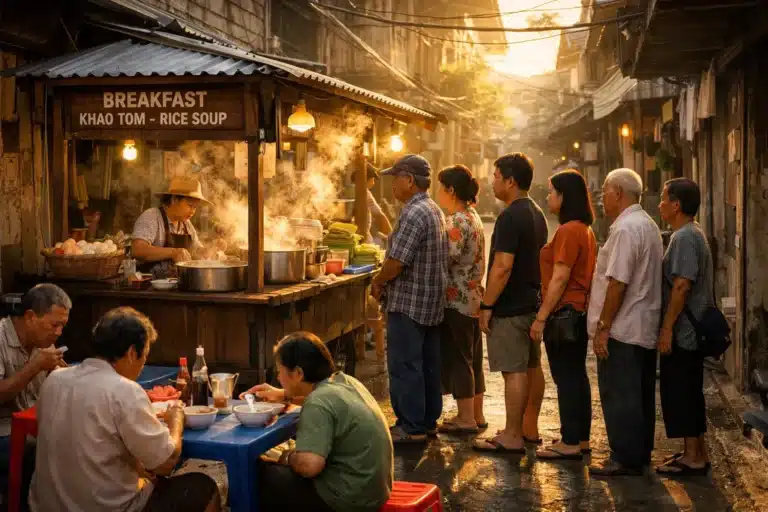
Pham has a place in regional Thai home cooking; it is not only a modern smoothie or powder ingredient. JIRCAS records kaeng pham, a curry made with minced pork or chicken, and khua pham, a Northern-style stir-fry. Chiang Mai University’s Lanna Food archive also records pham in kaeng om, kaeng kai and kaeng nuea, in spicy salads and yam-style dishes, and mixed into an omelette with minced pork.
These are documented dishes and uses, not one standard recipe. Seasonings, proportions and methods can vary between households and regions. The earlier smoothie, omelette and pancake ideas are not presented here as tested MPT recipes: a complete recipe should only be published when the person who prepared it confirms the ingredients, quantities, method, yield and result.
What does the research say about Wolffia nutrition?
Wolffia is being studied as a potential food and plant-protein ingredient, but measured composition varies with the sample, growing conditions and processing. A protein percentage measured on a dry-weight basis is not the same as the protein in 100 g of fresh plant, which contains considerably more water.
A 2025 Scientific Reports cultivation study compared Wolffia globosa grown in four nutrient media. The highest protein result in that experiment was 46.10 ± 0.93% of dry weight under the Chlorella medium. That is a result for a particular experimental growing condition, not a guaranteed value for fresh Thai-market Wolffia or every powder sold under the name.
A 2026 review of Wolffia globosa research describes its potential as a food ingredient but notes that human clinical evidence remains limited and that many proposed functional effects come from laboratory or animal studies. The literature also includes a human study of Mankai, a specific cultivated Wolffia globosa product. That study does not establish the B12 content of every Thai-market species, product or batch.
The 2020 Mankai vitamin B12 study examined a cultivated strain and an 18-month dietary intervention involving 294 participants. Its findings are specific to that Mankai material and study design; they should not be transferred to unrelated fresh Wolffia or powders without product-specific analysis. Do not use a general Wolffia claim as a reason to replace a prescribed or recommended supplement.
For a product-specific nutrition figure, look for a current analysis that identifies the actual product or batch, the test method and whether the result is reported on a fresh-weight or dry-weight basis. Seller marketing statements are not a substitute for that evidence.
Fresh, powdered and blended Wolffia: what is the difference?
- Fresh: check the harvest or packing date, chilled handling, pack weight and seller instructions for delivery and refrigeration.
- Powder: check whether the ingredient is 100% Wolffia or part of a blend. Confirm the net weight, ingredient list, serving guidance and storage instructions.
- Blended products: compare the full ingredient list and stated proportion of Wolffia rather than judging the product by its front label alone.
There is no single shelf-life or storage period that can safely be applied to every fresh or powdered product. Follow the label and seller’s written guidance for the exact pack you receive. If batch details, a date or handling instructions are missing, ask the seller before buying.
Questions about Khai Pham
What is Khai Pham called in English?
JIRCAS uses “tropical watermeal” as the English common name for Wolffia globosa. In Thailand, recorded local names include pham, khai nam and khai nae; regional usage varies.
Is Khai Pham the same as duckweed?
Wolffia is part of the duckweed group. It is a very small floating flowering plant, not seaweed or fish roe.
Is Khai Pham the same as sea grapes?
No. Sea grapes are Caulerpa lentillifera, a marine green alga. The phrase “green caviar” is used for sea grapes as well, so check for Wolffia or ไข่ผำ on the product label.
What Thai dishes use pham?
JIRCAS records khua pham and kaeng pham. Chiang Mai University’s Lanna Food archive also records regional curries, spicy salads, yam-style dishes and omelettes with minced pork.
Where can I buy fresh or powdered Khai Pham in Thailand?
iOrganic Farm’s catalogue lists fresh Khai Pham and Wolffia powder; flo lists fresh and blended products; Wolffia Bangkok lists powder formats and a price-enquiry route. Check the seller’s current listing and confirm stock, pack size, price, batch information and delivery before ordering.
Does all Wolffia contain 40–50% protein?
No universal retail-product figure can be assumed. Some studies report high protein percentages on a dry-weight basis under particular growing conditions. Fresh product and commercial powders may differ. Look for a product-specific analysis and its measurement basis.
Does all Wolffia contain vitamin B12?
Do not assume every species, harvest, fresh pack or powder has the same B12 content. Human research has examined a particular cultivated product called Mankai; the evidence does not establish a universal value for all products labelled Wolffia.
How should I store fresh or powdered Wolffia?
Follow the storage instructions and date on the package for the specific product and batch. Fresh plant and dry powder have different handling needs, and there is no universal shelf-life figure for all sellers’ products.
Sources and further reading
- JIRCAS — Wolffia globosa: botanical identity, Thai names and recorded Thai dishes.
- Kew Science — Plants of the World Online: accepted Wolffia globosa taxonomic record.
- Chiang Mai University Library — Lanna Food: Water algae, regional names and food uses.
- PROSEA — Caulerpa lentillifera: sea grapes and the English common name “green caviar”.
- Scientific Reports (2025) — Cultivation of Wolffia globosa and its application in functional food development.
- 2026 review — Wolffia globosa as an emerging plant-based protein and food ingredient.
- Nutrients (2020) — Mankai-specific Wolffia globosa and vitamin B12 research.
Supplier pages reviewed: iOrganic Farm product catalogue, flo Wolffia and Wolffia Bangkok. These are seller-owned pages, not independent scientific sources.
How this guide was prepared
This is a research-led ingredient and supplier guide, not a report of an MPT farm visit, product purchase or taste test. Botanical and Thai food-culture details are linked to specialist references; nutrition findings are described with their study and measurement limitations. Supplier descriptions are their own statements. Inclusion in this guide is not an endorsement, product test, safety certification or guarantee of current stock, price, quality or delivery.
For more ingredient explainers and practical kitchen guidance, continue to our Food & Cooking Guides.