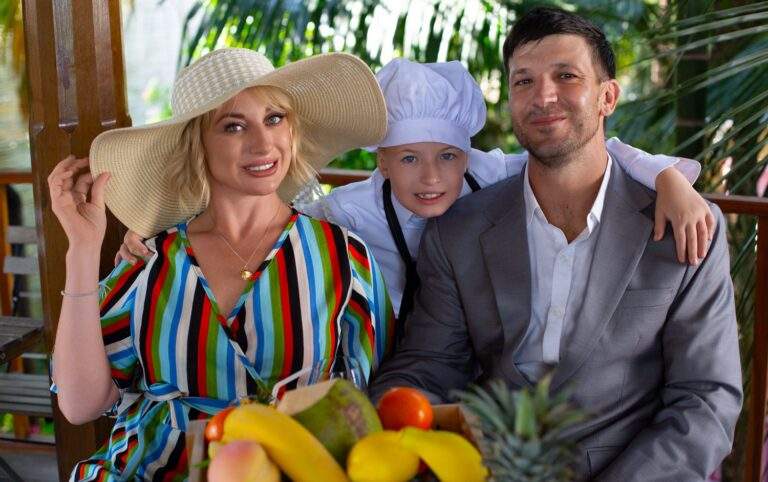
🛡️ Editorial Integrity: Family Standards ⚖️ Financial Transparency: Disclosure
The Spiritual Social Contract

Strategy: Finding the Pause in the Move

Our family views the Royal Coast as more than a resort destination. In April 2026, we audited Hua Hin not as passing tourists, but as nomadic explorers seeking the Saffron Pause—the stillness that exists between the rush of discovery and the sea.

Closing the Experience Gap

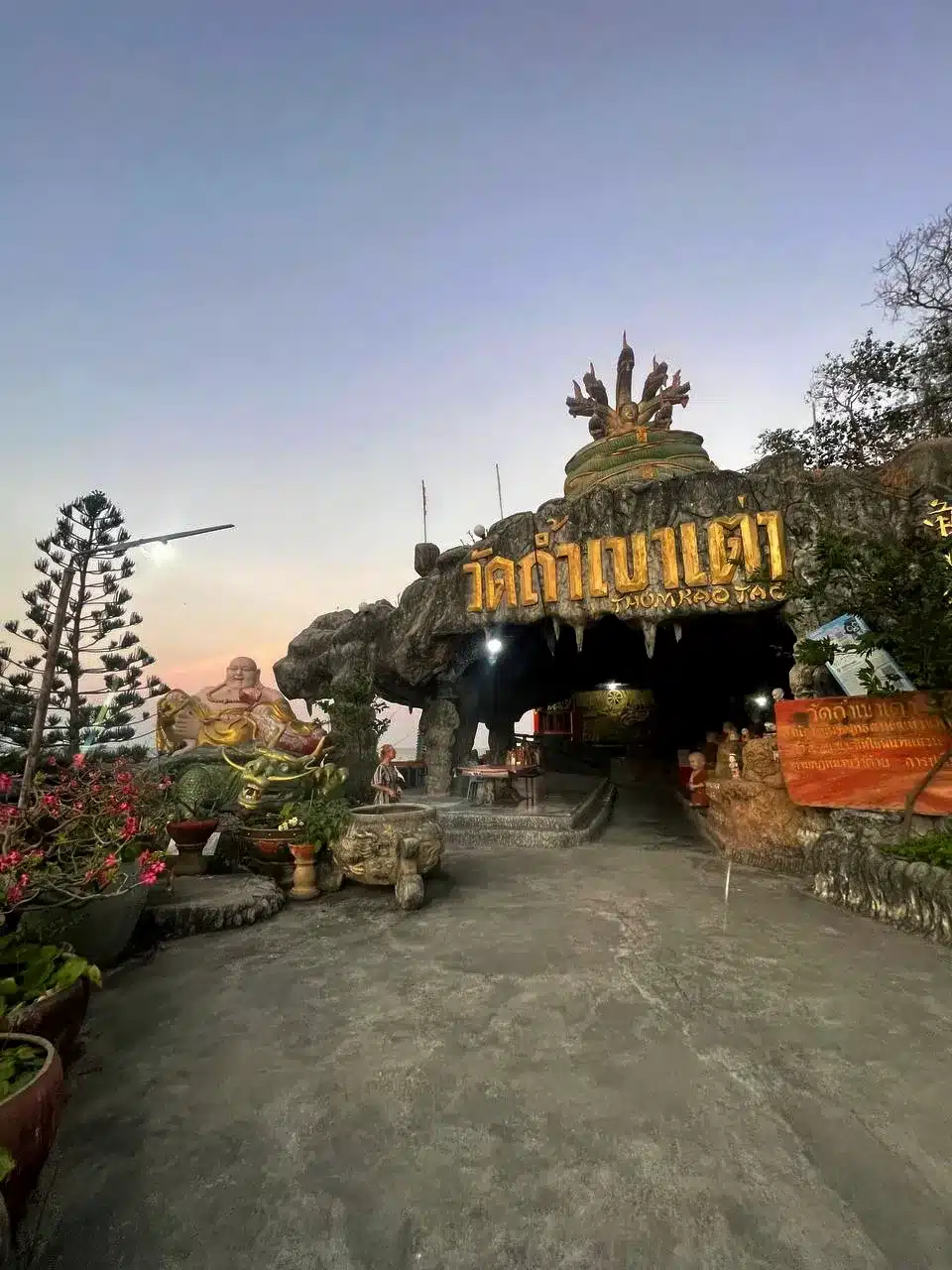
Standard travel guides frequently overlook the nuances of cultural texture. They cannot describe the specific weight of the air inside a cliffside cave in Baan Khao Tao, or the tactile snap of incense between a nine-year-old’s palms. We have audited these spiritual landmarks to ensure they provide restorative energy for the family soul while remaining practical for those building their own living archive.

The 2026 Baseline

As we travel through Thailand this year, we’ve learned that discovery is as much about logistical timing as it is about faith. Whether you are navigating the Siberian Taiga or the 35°C heat of Prachuap Khiri Khan, these points of stillness are essential nutrients for nomadic health. This strategy acts as your roadmap to a more intentional family trek.
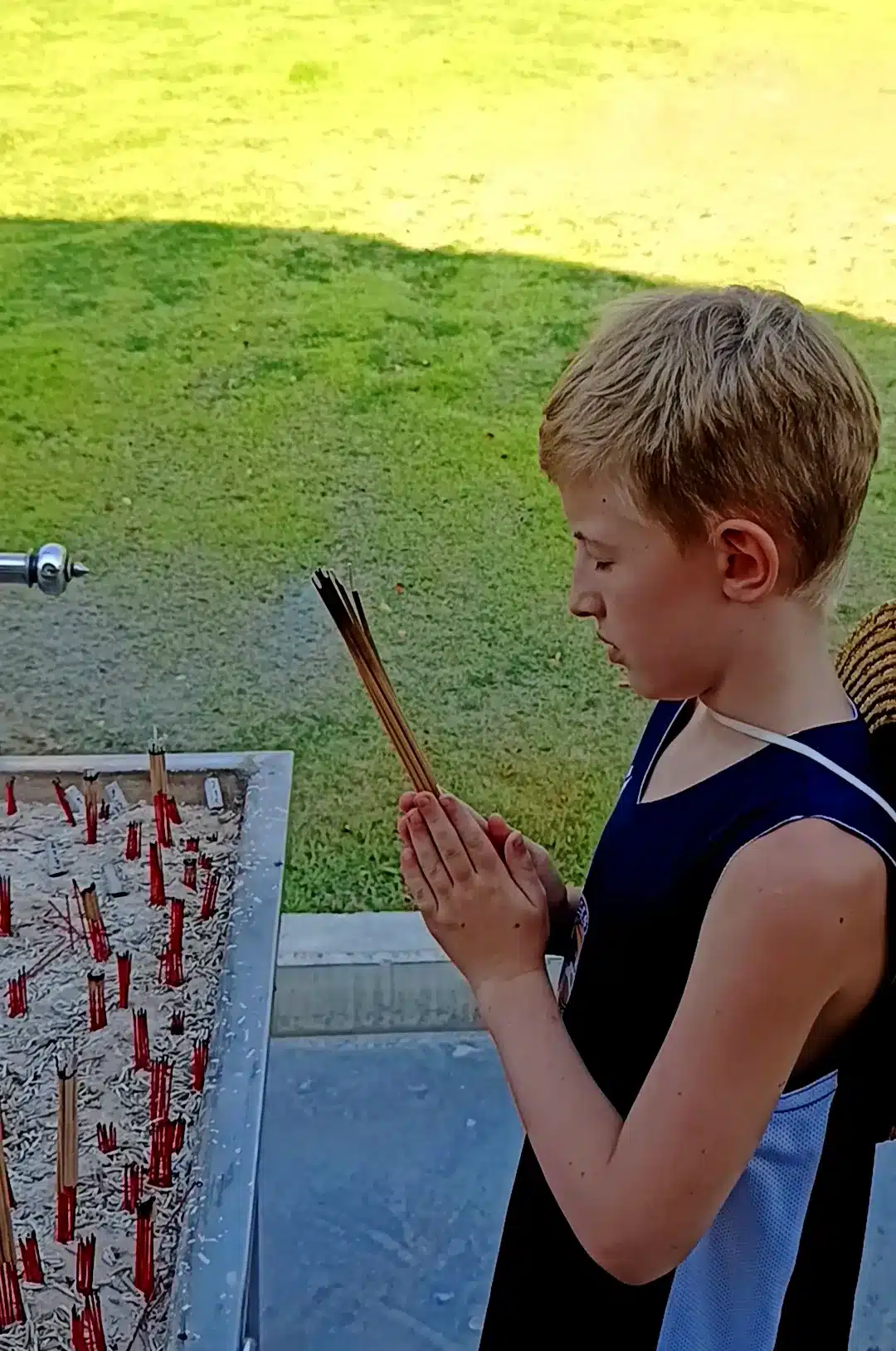
Victor praying with incense in his palms eyes closed spiritual moment showing his maturity and respect of cultures for such a young age
Field Note: Victor’s moment of prayer at the Dragon Temple. Witnessing a nine-year-old explorer honor the local social contract is the ultimate proof of spiritual maturity.

Natalia’s “Lower-is-Higher” Standard

Navigating Thai temples with children requires understanding the “Physical Pause.” In my medical background, we look at postural integrity as a foundation for well-being; in a temple, that translates to the physical respect of kneeling. By lowering our bodies, we allow our heart rates to synchronize with the silence of the space.

We never rush through these thresholds. To ensure Victor understands the cultural gravity of a standing Buddha or a colossal Naga, we practice the 15-Minute Rule: the first quarter-hour is for observation, not photography. This ensures the nutritional soul of the experience is absorbed before it is archived. If you have explored our Hua Hin 2026 Audit, you know we value meaning over movement.

🌿 The Victor-Tested Respect Protocol

Victor has become our primary auditor for family practicality. He has learned that respect isn’t a chore—it’s a bridge between the world we carry and the places we find.

This protocol ensures that even as nomads, we maintain a solid sense of home. It follows the same logic we use for our restorative food stops: preserving the integrity of the journey from the first incense stick to the final farewell bow.

The Historic Center

Wat Khao Noi: The 1892 Town Anchor

The pulse of central Hua Hin is fast, but behind the gates of Wat Khao Noi (Wat Ampharam), time has practiced the art of the pause since 1892. During our April 2026 fieldwork, we found this sanctuary to be the cultural spine of the town—a place that witnessed the Royal Coast’s transition from a quiet fishing village to the storied retreat it is today.

For Natalia, whose clinical background values the restorative power of silence, Wat Khao Noi is more than a landmark; it is a lesson in posture and respect. This discipline is one I carry personally from my time as an ordained monk on Koh Chang. When I entered the monkhood to honor my brother’s passing, I learned that respect is a physical social contract. You see it here in the dawn alms collection—a ritual we first documented in our Koh Chang travel guide and continue to follow as we trek through Thailand this year.

Natalia Mayerhoffer praying stood up at Wat Khao Noi Hua Hin landmarks April 2026
Field Note: Natalia paying respects at the historic heart. Even in the heat, this remains a sovereign space for restorative silence.

Families often bypass this site while navigating the route to the Hua Hin Night Market, but for those seeking a quiet detour, it is the perfect cultural anchor before a restorative meal at Hinkali House.

Close up of the Golden Buddha image at Wat Khao Noi Hua Hin
The Sukhothai-style Buddha image, a heritage relic brought from ancient Sawankhalok.
Natalia Mayerhoffer striking the temple gong at Wat Khao Noi Hua Hin
Striking the temple gong to announce a successful merit-making session to the ancestors.

The Boiled Egg Merit Ritual

During our April audit, we identified a specific local tradition unique to central Hua Hin: devotees frequently offer boiled eggs to the statue of mediation master Luang Pu Nak. This merit-making ritual is typically used when prayers regarding career advancement are granted. It reminds us of the “Social Contract” of food we share in our Siberian heritage recipes: using what we cook to bridge the gap between our current journey and the memory of those who walked before us.

The Physics of Respect: Standing Buddha Scale

For Victor’s “Floating Classroom,” the towering Standing Buddha at Wat Khao Noi served as a lesson in perspective. In Thai culture, respect is often a physical lowering of oneself to acknowledge a higher principle—a “Lower-is-Higher” philosophy that Natalia validates through her clinical focus on mindfulness and postural health.

Natalia Mayerhoffer kneeling in front of the big standing Buddha at Wat Khao Noi Hua Hin landmarks fieldwork April 2026
Perspective: Natalia kneeling before the central colossus, illustrating the contrast between physical scale and internal silence.
Natalia Mayerhoffer kneeling view from behind in front of big standing Buddha during Hua Hin fieldwork
Viewing the path ahead from the perspective of the ancestors, a moment of field-tested stillness.

Natalia’s Clinical Lens: The Postural Pause

In my medical practice, I look at the spine as a record of our daily stress. In the forest temples of Prachuap Khiri Khan, we use the act of kneeling to reset the nervous system. By lowering our center of gravity, we signal to the body that it is safe to pause. This isn’t just a religious ritual; it is a restorative nutrient for families navigating the heat of the Royal Coast. It follows the same logic we apply to the “Nutritional Soul” of our Siberian heritage recipes—every movement and every ingredient must serve the long-term vitality of the family table.

Watching Victor observe these monuments with quiet maturity confirms that spiritual travel is not just for adults. It is an essential component of our family archive, teaching us to carry a sense of home within ourselves regardless of how fast we move between destinations. After such a profound moment of reflection, we often find our way to Hinkali House to ground the day in restorative comfort.

Cha-Am Fieldwork

Wat Tham Chaeng: The 31-Meter Sovereign Protector

As we crossed into Cha-Am during our April 2026 fieldwork, the horizon was dominated by a singular silhouette. Wat Tham Chaeng is home to the largest Naga statue in Thailand—a 227-meter long, 31-meter high masterpiece of spiritual engineering. For a hospitality auditor, the sheer technical precision of this landmark is a testament to the vision of its creator, Teacher Pued.

Natalia and Victor Mayerhoffer paying respects at the base of the massive Naga at Wat Tham Chaeng Cha-Am
Field Note: Natalia and Victor at the base of the Naga. The sapphire-tinted scales reflect the light of the Gulf of Thailand, creating a “living” movement across the sculpture.
Victor Mayerhoffer striking the dragon-adorned gong at Wat Tham Chaeng
Victor confirming the “Victor-Tested” resonance of the dragon temple’s central gong.

My perspective on this landmark is anchored in a deeper social contract. When I was ordained as a monk on Koh Chang following the passing of my brother, I learned that these figures are not merely decorative; they are guardians of a tradition that demands total presence. You can read about that ritual of respect in our Koh Chang guide.

At Wat Tham Chaeng, that guardianship is visible in the anatomy of the Naga. Unlike the softer curves of ancient ruins, this modern protector possesses a distinct, muscular definition—including what locals call the “Six-Pack” abdomen—symbolizing the physical strength required to maintain spiritual focus.

Forensic Audit: The Naga Standard

  • Scale Accuracy: Verified 31-meter height using local benchmarks; the largest in the region.
  • Visual Depth: Iridescent “beetle-wing” sapphire scales designed to protect the structural integrity against coastal humidity.
  • Route Logic: Ideally paired with a visit to Bangkok to Hua Hin 2026 transit stops, as it sits at the northern gateway to the Royal Coast.

For families, the grounds offer a “Floating Classroom” on Thai mythology. Watching Victor engage with the dragon iconography provides the proof that spiritual travel is manageable and meaningful for children. After a long morning in the sun, we often ground the family in restorative flavors at Hinkali House, bridging the gap between spiritual energy and metabolic comfort.

Cha-Am Fieldwork

Wat Tham Chaeng: The 31-Meter Sovereign Protector

As our family crossed into Cha-Am during our April 2026 trek, the northern horizon was dominated by a singular, iridescent silhouette. Wat Tham Chaeng is home to the largest Naga statue in Thailand—a 227-meter long, 31-meter high masterpiece of spiritual engineering. For a hospitality auditor, the sheer technical precision of this landmark is a powerful physical record of the vision of its creator, Teacher Pued.

Natalia and Victor Mayerhoffer paying respects at the base of the massive Naga at Wat Tham Chaeng Cha-Am April 2026
Field Note: Natalia and Victor at the base of the Naga. The sapphire-tinted scales reflect the light of the Gulf of Thailand, creating a “living” movement across the sculpture.
Victor Mayerhoffer striking the dragon-adorned gong at Wat Tham Chaeng
Victor confirming the “Victor-Tested” resonance of the dragon temple’s central gong.

My perspective on this landmark is anchored in a deeper social contract. When I was ordained as a monk on Koh Chang to honor the memory of my brother, I learned that these figures are not merely decorative; they are guardians of a tradition that demands total presence. You can read about that ritual of respect in our Koh Chang travel guide.

At Wat Tham Chaeng, that guardianship is visible in the anatomy of the Naga. Unlike the softer curves of ancient ruins, this modern protector possesses a distinct, muscular definition—including what we identified as the “Six-Pack” abdomen—symbolizing the physical strength required to maintain spiritual focus.

Forensic Audit: The Naga Standard

  • Scale Accuracy: Verified 31-meter height using regional benchmarks; the largest of its kind in Thailand.
  • Visual Depth: Iridescent “beetle-wing” sapphire scales designed to protect structural integrity against coastal humidity.
  • Route Logic: Ideally paired with a visit to Bangkok to Hua Hin 2026 transit stops, as it sits at the northern gateway to the Royal Coast.

For families, the grounds offer a “Floating Classroom” on Thai mythology. Watching Victor engage with the dragon iconography provides the proof that spiritual travel is manageable and meaningful for children. After a long morning in the sun, we often ground the family in restorative flavors at Hinkali House, bridging the gap between spiritual energy and metabolic comfort.

Field-Tested Maturity

The Maturity of the Moment: Respect as a Language

As we moved through the northern gateway of the Royal Coast during our April 2026 fieldwork, the focus shifted from the iridescent scale of the Naga to the interior world of our nine-year-old son. At Wat Tham Chaeng, spiritual discovery isn’t just about what you see; it is about how you stand within the space.

For Victor, these landmarks are the ultimate “Floating Classroom”. Natalia and I have always taught him that respect is a universal social contract—a physical manifestation of gratitude toward the cultures that host our family. Watching him kneel at the dragon shrine with eyes closed and palms pressed together provides the proof that spiritual travel is not only manageable for children but essential for their growth.

Victor Mayerhoffer praying with incense in his palms eyes closed showing maturity and respect at Wat Tham Chaeng
The Victor-Tested Standard: A quiet moment of prayer. It confirms that the “Saffron Pause” we documented in our 2026 Thailand Hub is a nutrient Victor can absorb.

This maturity isn’t accidental. It is built on the foundations of our family’s past, specifically the path I followed when I was ordained as a monk on Koh Chang. That ritual of respect, which you can find in our Koh Chang guide, taught me that these thresholds are where we learn to carry a sense of home within ourselves.

Golden paper dragon merit offerings at Wat Tham Chaeng Cha-Am
Lived family experience: Participating in the merit-making traditions that define the local faith.

Whether it is placing golden dragon offerings or observing the silence of the forest, these actions help us evaluate if a destination meets the Mayerhoffer standard for family usability. We found that the Dragon Temple succeeds by offering high-impact visual anchors that keep children engaged with the underlying cultural gravity.

The “Home Within” Protocol

Nomadic life can feel unmoored, but we use these temple pauses to ground the family table. Natalia’s clinical perspective reminds us that mindfulness reduces the physiological stress of travel. By teaching Victor to honor the traditions of those who came before us—a value we share in our Siberian heritage archive—we ensure that every discovery has a lasting impact on his character. It is the reason we believe Hua Hin remains worth the visit for families who prioritize depth over speed.

Southern Adventures

Wat Tham Khao Tao: The Turtle and the Sea Breeze

To find the best view south of the town center, we headed to the fishing village of Baan Khao Tao. This spot is one of our favorites because it feels like the Thailand we first fell in love with—quiet, salty, and full of life. At Wat Tham Khao Tao, the temple is carved right into the limestone cliffs, where the forest meets the Gulf of Thailand.

Getting up the cliff side is a fun challenge for the family. We climbed the 300 steps early in the morning to beat the April heat, carrying plenty of water—a lesson we’ve learned from our treks through Nakhon Si Thammarat and the south. The reward is a natural drop in temperature as you step into the cave’s mouth. It reminds me of the quiet focus I needed during my monastic ordination on Koh Chang, a story you can find in our Koh Chang guide.

Natalia Mayerhoffer standing in front of the big gold turtle statue at Wat Tham Khao Tao Hua Hin
Family tradition: Natalia at the base of the massive golden turtle. This statue is a favorite for Victor, who loves the maritime stories of the Gulf.

Whether you are exploring from Khao Lak or just taking a drive from our Bangkok transit stops, this detour is a must for any family archive.

The big golden sitting Buddha shrine inside Wat Tham Khao Tao cliffside cave
The golden sitting Buddha inside the cave, where the sea air makes the stillness feel even deeper.

After the climb, we love to head down into the village for a restorative bowl of Massaman Curry. It’s the perfect way to ground the day after being up so high among the cliffs.

The Abbot’s Watch

One of the things we love most about these places is how the monks look out for everyone. Back in 2018, it was actually the Abbot of Wat Tham Khao Tao who spotted sharks from his cliffside seat and issued a warning to keep people safe at Sai Noi Beach. It’s a wonderful reminder of the “Social Contract” we talk about in our About Us archive: that these spiritual leaders are often the ones watching over the daily safety of the village. It’s why we still believe Hua Hin is absolutely worth the visit for families looking for real heart.

How We Move

The Family Route: Our April 2026 Trek

For a family of nomads, the beauty of a day is found in the rhythm of the move. We’ve mapped out how we connected these spiritual landmarks with the restorative food stops we love, ensuring every detour is as practical as it is meaningful.

Landmark Name Getting There For the Kids Our Food Synergy
Wat Khao Noi
The Town Heart
Centrally located; best visited early via our Bangkok transit route. Victor-Tested: High
Easy walkways; perfect for a quick morning pause.
Morning merit followed by local breakfast gems or Ogen.
Wat Tham Chaeng
The Dragon Gate
Northern gateway; a dedicated stop before arriving in Hua Hin proper. Victor-Tested: High
The iridescent dragon scale keeps children curious and engaged.
A restorative stop before a family meal at Yayoi.
Wat Tham Khao Tao
The Sea Sentinel
Southern loop; involves a coastal climb best managed before 09:00 AM. Victor-Tested: Moderate
A great “climb” for 9-year-olds; ends with beautiful beach views.
Descent into the village for Khao Takiab dining or Hinkali House.

Oliver’s Concierge Note: The Saffron Loop

Our time on the Royal Coast has taught us that the best discoveries happen when you align your energy with the local rhythm. Whether you are seeking a family-friendly night market or the quiet of a cliffside shrine, the key is the intentional pause. Once you’ve completed your loop, take a moment to see if Hua Hin is still worth the visit for your own archive. If you need a break from the heat, we suggest grounding your afternoon with a Vietnamese Egg Coffee or a bowl of our Siberian Pelmeni.

Family Care Standard

The Art of Being a Good Guest: Heat and Respect

In our family, we treat every temple as if we are guests in a friend’s home. During our April 2026 trek, we found that the secret to a successful day is balancing the deep respect these places deserve with the practicalities of a 35°C tropical morning.

The big golden sitting Buddha shrine inside Wat Tham Khao Tao cliffside cave during April fieldwork
A moment of quiet: The golden sitting Buddha at Khao Tao. Finding these cool, shaded pockets is essential for keeping the family energized.

Natalia, with her medical background, is our family’s “Chief of Wellness.” She ensures we stay hydrated and protected from the sun, but she also leads the way on how we dress. We always opt for light, breathable fabrics that cover our shoulders and knees. It’s a way of saying “thank you” to the community before we even step through the gate. This focus on health and respect is the same approach we take when planning healthy lunches for Victor or choosing the best Thai ingredients for our home kitchen.

Whether you are just arriving via our Bangkok to Hua Hin route or continuing your journey to Koh Samui, these small gestures make the difference between a generic visit and a meaningful family memory.

Natalia’s Morning Routine: The 08:00 Rule

We’ve found that the best way to keep Victor curious and happy is to finish our temple walks before 10:30 AM. In April, the heat rises quickly, and spiritual discovery is much harder when everyone is melting! We always carry a small offering of incense or flowers, which you can find at any local market.

After our morning walk, we head to Ogen for a quiet lunch, or ground the day with a restorative Vietnamese Egg Coffee. It’s about creating a day that feels like a natural extension of our 2026 Thailand trek—one where the food, the culture, and our family health all work in perfect harmony.

The Way Forward

Carrying the Saffron Pause With Us

As we pack our bags and look toward the next horizon of our April 2026 Thailand trek, we’ve realized that the stillness of the forest temples has become a permanent part of our luggage. Spiritual travel isn’t about checking a landmark off a list; it’s about learning to carry a sense of home within ourselves, no matter how fast we move.

Whether you are just starting your journey into authentic Thai culture or looking for the best ingredients to bring these flavors into your own kitchen, we hope our family’s story helps you find your own “Saffron Pause.” From the iridescent scales of the Dragon Temple to the quiet cliffside caves of Khao Tao, the Royal Coast has taught us that the most meaningful discoveries are the ones that ground the family table.

The Mayerhoffer family reflecting at Wat Tham Chaeng in April 2026

About the Mayerhoffers

We are Oliver, Natalia, and Victor—a family of nomadic explorers dedicated to preserving the stories of flavor, place, and memory. Built on 15 years of hospitality training and a deep respect for cultural heritage, our Living Archive is a practical guide for families who seek depth over novelty.

“The road is long, but the table is always waiting.” — The Mayerhoffer Family

Continue exploring our archive: Restorative Recipes | Village Flavors | Koh Chang Ordination Story

Answers for Your Journey

When is the best time of day to visit Hua Hin Temples?

We always follow the 08:00 AM Rule. Visiting early helps you beat the 35°C April heat and allows you to witness the morning alms-giving. After 10:30 AM, the humidity rises, making the climbs much harder for children.

What is the dress code for families at these landmarks?

Respect is a social contract here. Ensure shoulders and knees are covered. We recommend light linen—it keeps you cool while honoring the space. If you’re coming from our Bangkok transit route, keep a sarong in your day bag just in case.

Are these sites truly “Victor-Tested” for younger explorers?

Absolutely. The visual scale of the Dragon Temple keeps kids curious, while Wat Khao Noi is flat and safe for small children. For Khao Tao, treat the 300 steps as a fun family challenge before rewarding them with a beach stop.

Where should we eat after our temple visits?

We love grounding the day with restorative comfort. If you are central, check our Ogen review or stop at Hinkali House. For village vibes near the Turtle Cave, our Massaman Curry recommendation is essential.

Meet the Mayerhoffers

“Free-spirited food adventurers, culture-seekers, and guardians of our family’s living archive.”

Oliver Mayerhoffer - Hospitality & Logistics Expert

Oliver Mayerhoffer

Technical Soul & Logistics Lead

With 15 years in luxury hospitality, Oliver brings a forensic eye to every trek. His perspective on respect was permanently shaped during his monastic ordination on Koh Chang, a ritual of memory you can read about in our Koh Chang story. He ensures every detour balances heritage with technical comfort.

Natalia Mayerhoffer - Clinical Wellness & Siberian Heritage

Dr. Natalia Mayerhoffer

Restorative Heart & Culture Connector

Born in the Siberian Taiga, Natalia carries the traditions of Krasnoyarsk in her hands. With a medical background, she ensures our family travels through Thailand with a focus on wellness—from heat safety to the nutritional soul of our Siberian Pelmeni. For Natalia, every temple is a classroom for Victor.

“We aren’t just showing you the world; we’re helping you live in it. Every memory is a bridge we’ve built for our 9-year-old son—and now, we share them with you.”

Explore our 2026 Thailand Trek

Sovereign Evidence Library

Transparency is the foundation of our family’s archive. Just as we share exact ingredients for our Siberian heritage recipes, we believe in showing you the authoritative roots of our travel facts.

Heritage & Culture

UNESCO & TAT Records

We reconcile our cultural interpretations with UNESCO’s Intangible Cultural Heritage lists and the historical archives of the Tourism Authority of Thailand.

Verify Heritage Standards
Medical Wellness

WHO & CDC Guidelines

Our safety protocols for heat management and hydration are cross-referenced with the World Health Organization (WHO) and regional CDC standards.

Verify Clinical Sources
Hospitality Standard

Michelin & FAO Baseline

We audit regional flavors and food biodiversity through the lens of Slow Food International and the FAO to ensure cultural preservation.

Verify Biodiversity Data

Follow the Mayerhoffer Web

Join our 2026 Thailand trek for daily field notes, heritage discoveries, and real-world family testing across the Royal Coast.

Similar Posts

Leave a Reply

Your email address will not be published. Required fields are marked *