Editorial standards: editorial policy · Affiliate disclosure: affiliate disclosure · Family-tested archive — updated 2026-07.
Texture, acid, and crunch
What to Eat with Butternut Squash Soup
Crunchy bread, acidic salads, and smoky cheese turn creamy butternut squash soup into a complete meal—family-tested from Austrian winter kitchens through July 2026 rental kitchens across Southeast Asia.
What goes well with butternut squash soup?
Pair butternut squash soup with crunchy textural anchors—garlic sourdough, roasted chickpeas, or peppery arugula—and acidic contrasts like Granny Smith apple or blueberry corn salad. Add a lipid source such as smoked gouda or toasted pepitas so fat-soluble vitamin A absorbs fully. A grilled cheese-and-apple sandwich delivers the classic soup-and-sandwich balance.
Oliver writes from Southeast Asia fieldwork through July 2026; Natalia reviews safety and nutrition notes; Victor is the final vote on family plates.
From Gloucestershire Gardens to Alpine Kitchens
My obsession with “freshness” began in the backyard of my childhood friend, Richard, in Cheltenham, Gloucestershire. Standing in his family garden, I tasted my first sun-warmed tomato—a flavor so vibrant it changed my understanding of ingredients forever. That memory defined my culinary philosophy: incredible ingredients need structure to shine.
Years later, during my kitchen training in the Austrian Alps (ages 15-18), I learned the professional discipline required to elevate these ingredients. In Austria, we never served a smooth soup without a “textural anchor”—a dense rye bread or a crisp garnish. This guide applies those professional Alpine principles to the humble butternut squash soup, ensuring your meal isn’t just “wet on wet,” but a symphony of crunch and cream.
🧪 The Maillard Reaction
Soup is boiled. Your side dish must be browned (toasted bread, roasted nuts) to provide the savory complexity that boiling cannot achieve.
⚖️ Acid Balance
Squash is coating. Acidic sides (like our Blueberry Corn Salad) cut through the fat, cleansing the palate.
🌍 Cultural Context
As noted by UNESCO’s Intangible Cultural Heritage lists, communal meals are about social practice. Serving soup family-style fosters this connection.
The Science: Bioavailability & Satiety
According to the FAO’s State of the World’s Biodiversity report, traditional food systems always relied on diverse crops to provide nutritional balance. We apply this logic to flavor pairing. Butternut squash is high in Vitamin A, which is fat-soluble.
To absorb it, you must pair the soup with a lipid source (cheese, oil, nuts).
When you search for the best method to serve squash, professional chefs consistently recommend adding “textural contrast” to prevent palate fatigue. This concept, known as sensory-specific satiety, explains why a monotextural meal feels “boring” halfway through. Our pairing matrix solves this by ensuring every spoonful has a crunch.
The Ultimate Pairing Matrix: Texture & Acidity
Core Components for a Balanced Meal
| Category | Best Choice | The “Why” (Science) |
|---|---|---|
| Artisan Bread | Garlic Sourdough | Lactic acid in sourdough cuts the sugar of the squash. |
| Topping | Roasted Chickpeas | Adds protein and the necessary “audible crunch.” |
| Salad Green | Peppery Arugula | Bitterness balances the lipid density of cream. |
| Cheese | Smoked Gouda | Smokiness mimics bacon (umami) without meat. |
| Fruit | Granny Smith Apple | Malic acid provides a high-contrast palate cleanser. |
| Protein | Crispy Prosciutto | Salt-cured fat enhances the perception of sweetness. |
Optional Enhancements for Flavor Depth
- Toasted Pepitas: 2 tbsp for earthy, magnesium-rich texture.
- Coconut Bacon: A vegan alternative that provides the necessary smoke flavor.
- Creme Fraiche: A cultured dairy swirl adds tang that heavy cream lacks.
- Chili Oil: Heat receptors (TRPV1) counteract the monotony of sugar.
The “Sandwich Strategy”: Constructing the Perfect Meal
This is guide to the “Soup & Sandwich” combo. We have tested 5 different bread and cheese combinations to find the ones that structurally hold up to dipping while providing the necessary flavor contrast.
How to Execute the “Fall Harvest Melt”
- Select the Foundation (Bread): Use thick-cut Sourdough or Beer Bread. Soft white bread will disintegrate when dipped. The bread must have a crust index high enough to provide an audible crunch.
- Apply the Lipid Layer (Cheese): Layer Smoked Gouda (for savoriness) and Sharp Cheddar (for the oil melt). Avoid mild cheeses like Mozzarella—they get lost against the intense squash flavor. This step is crucial for the “Maillard Counterpoint.”
- Insert the Acid Breaker (Apple): Place thinly sliced Granny Smith apples *inside* the sandwich before grilling. The heat softens the apple slightly, releasing malic acid that cuts through the cheese and soup fat.
- Execute the Grill (The Maillard Reaction): Grill in butter over medium heat until the bread is golden brown. This browning adds the savory “umami” notes that boiled soup physically cannot provide.
- Serve & Dip: Slice diagonally. Serve immediately alongside the soup. The structural integrity of the sourdough allows for aggressive dipping without failure.
Nutritional Synergy: Pairing this soup with healthy fats (Cheese, Avocado, Nuts) increases the bioavailability of the squash’s Vitamin A by up to 400%.
The Art of Garnishing: Texture Engineering
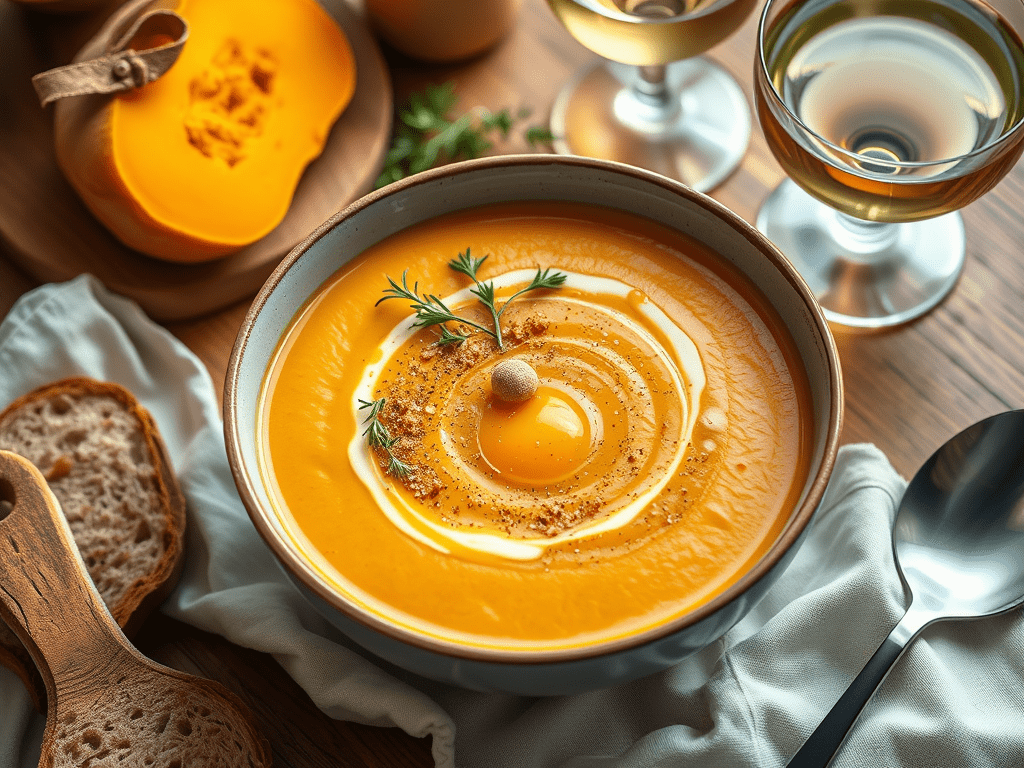
Just as proper layering is critical for Ronzoni lasagna, garnishing is critical for soup. You aren’t just decorating; you are engineering the perfect bite. Follow this 3-step stacking method to ensure every spoonful has texture.
Step 1: The Swirl (Fat)
Start with a drizzle of heavy cream, coconut milk, or high-quality pumpkin seed oil. This prevents the “skin” from forming on the hot soup.
Step 2: The Anchor (Base)
Place heavier items like croutons or roasted chickpeas in the center. They act as a raft for herbs so they don’t sink immediately.
Step 3: The Spark (Color)
Finish with fresh green herbs (Sage, Thyme) or red spices (Paprika). The color contrast (Green on Orange) stimulates appetite.
Pro tip for plating: Never stir the garnish in before serving. Let the diner do it. The visual separation of textures is part of the psychological enjoyment of the dish.
Seasonal Variations: Adapting the Menu
Autumn Harvest Menu (The Classic)
Lean into “Warming Spices.” Pair the soup with our Roasted Persimmon Salad. The tannic skin of the persimmon provides a necessary astringent contrast to the sweet, creamy squash.
Winter Comfort Menu (The Hearty Option)
When temperatures drop, the soup acts as a “sauce course.” Serve it alongside a slice of Meatloaf or Braised Short Ribs. The sweetness of the squash cuts through the rich, heavy meat fats perfectly, acting similarly to a ketchup or glaze.
Tropical Fusion Menu (The Modern Twist)
Play up the sugar profile. Use coconut milk instead of cream in the soup and pair with Curried Shrimp Skewers. The heat of the curry and the snap of the shrimp create a Thai-inspired profile that honors our time living in Southeast Asia.
What Wine Pairs with Butternut Squash Soup?
You need an acidic white wine to cut the creaminess. An off-dry Riesling or a Chenin Blanc is ideal. The stone-fruit notes in these wines echo the squash flavor, while the acid cleanses the palate.
Avoid heavy reds like Cabernet, which can taste metallic against the sweetness.
How Do I Add Crunch Without Croutons?
For a gluten-free crunch, use Roasted Chickpeas, Toasted Pepitas (Pumpkin Seeds), or Crispy Sage Leaves (fried in butter). These provide the necessary texture contrast without the carbohydrates of bread.
Can I Freeze the Soup with Garnishes?
No. Always freeze the soup plain. Add cream, herbs, and crunchy toppings only after reheating. Freezing dairy can cause separation, and crunchy toppings will absorb moisture and turn soggy.
Questions we hear often
What meat goes best with butternut squash soup?
What wine pairs with butternut squash soup?
How do I add crunch without croutons?
Can I freeze the soup with garnishes?
Sources and safety notes
- USDA FoodData Central — butternut squash and side-dish nutrition reference
- FDA — selecting and serving produce safely — squash and apple handling guidance
- FAO — biodiversity for food and agriculture — diverse plate nutrition context
- Family field notes — Mayerhoffer soup pairing tests, July 2026 Southeast Asia season
Meet the Mayerhoffers
“Free-spirited food adventurers, culture-seekers, and the guardians of 15 years of global memories.”

Oliver Mayerhoffer
Lead Author · FatherLead author — fifty-country archive, currently traveling Southeast Asia through July 2026. Oliver brings field-tested recipe structure and honest weeknight notes from family kitchens abroad.

Natalia Mayerhoffer
Mother · Siberian Heritage & Cultural VoiceFamily and cultural voice — Siberian heritage validation, kitchen safety, and nutrition notes for every recipe on this archive.
“Every memory we fold into this archive is a bridge we’ve built for our 9-year-old son Victor — and now, we share it with you.”
Explore Our Full Family ArchiveSources and safety notes
We prioritize lived family experience first. When food safety or heritage context matters, we cross-reference field notes with official references listed below.
USDA Food Safety
safe food handling reference
Read sourceHarvard T.H. Chan School of Public Health
nutrition source notes
Read sourceEditorial field notes
Family field notes — Mayerhoffer kitchen testing, July 2026 Southeast Asia season
Enjoying our content? Make Mangoes & Palm Trees a preferred source on Google.
Explore next

Soup pairing routing
Butternut squash pairings linked to the soup recipe, stock, bisque, beer bread, and Mexican soup roundup.