Editorial standards: editorial policy · Affiliate disclosure: affiliate disclosure · Family-tested archive — updated 2026-07.
350°F fry, wire-rack drain
Sweet Potato Ukoy with Palabok
Sweet potato ukoy fries at 350°F from an ice-cold batter, drains on a wire rack, then crowns bihon in annatto shrimp-pork palabok — four servings in about fifty minutes — cooked on the 2026 Southeast Asia road, using Natalia’s Philippines chapter (2013–2014) as the orange-sauce memory.
What is sweet potato ukoy with palabok?
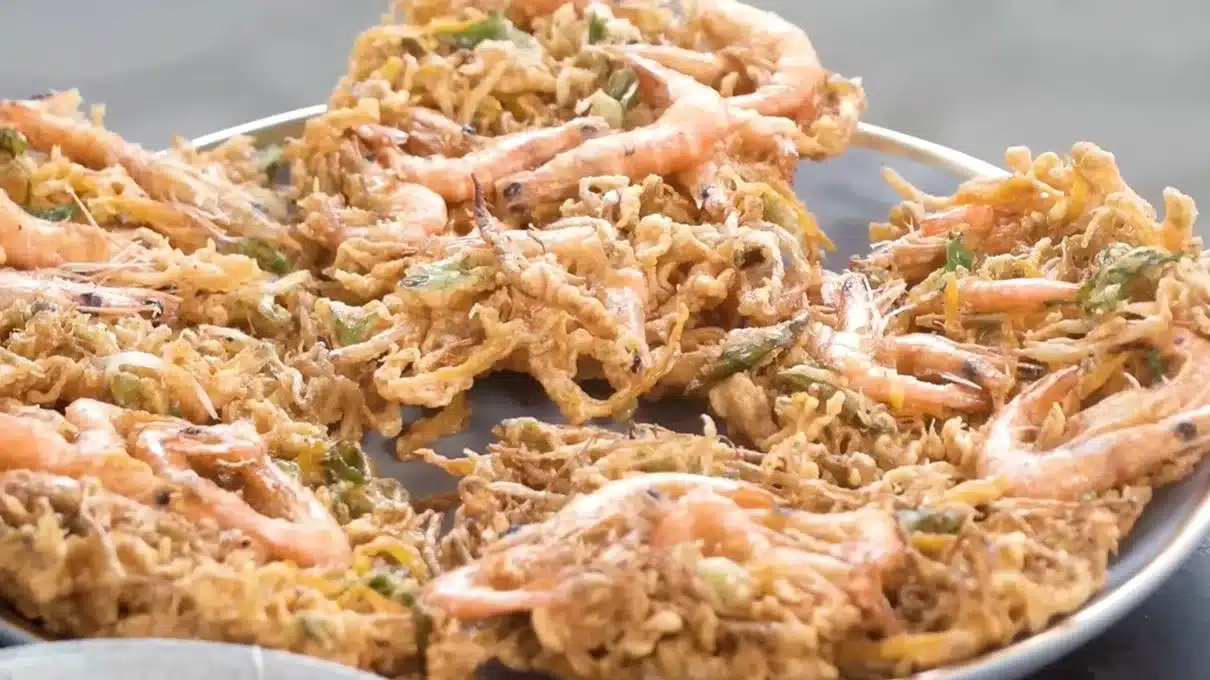
Sweet potato ukoy with palabok pairs shrimp-and-sweet-potato fritters with rice noodles in an orange shrimp-pork sauce. Fry the ukoy at 350°F until amber, drain on a wire rack, then spoon hot palabok over bihon and crown with the fritters. Four servings take about fifty minutes with ice-cold batter for a crisp shell.
Oliver writes from Southeast Asia rental kitchens through July 2026; Natalia reviews safety and nutrition notes; Victor is the final vote on family plates.
What is sweet potato ukoy with palabok?
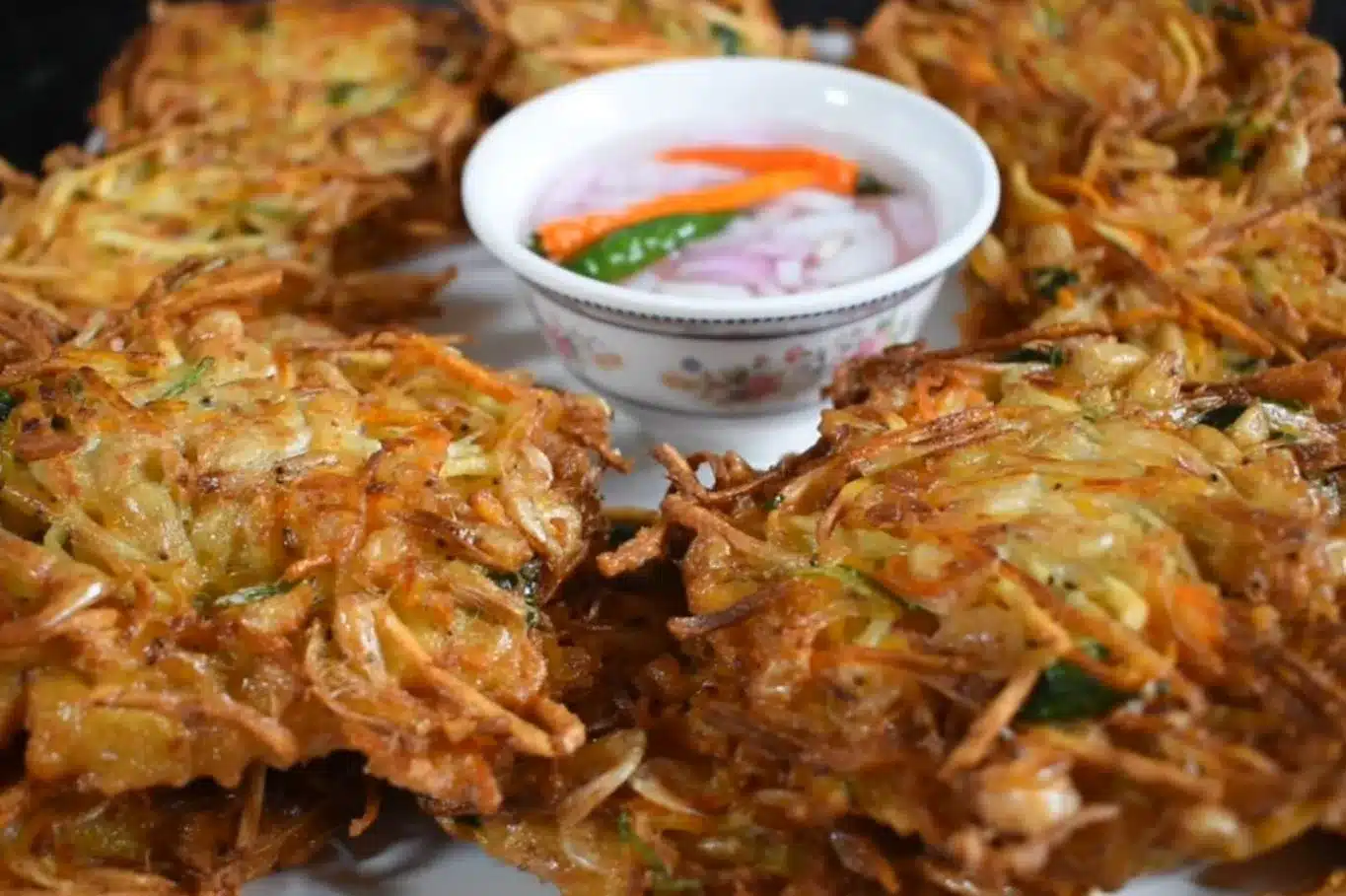
Ukoy (also spelled okoy) is a Filipino shrimp-and-vegetable fritter. Palabok is rice noodles under an orange shrimp-and-pork sauce stained with annatto. This family plate keeps them together: shatter-crisp fritters over saucy bihon, not a single mash.
Natalia’s Philippines chapter (2013–2014, before Koh Chang) is the memory behind the orange sauce. We cook it at the family table while traveling Southeast Asia in 2026.
Victor, born 2016, now claims the job of stirring the annatto broth. For the wider table see authentic Thai recipes for families and the family food travel blog.
What ingredients make crispy ukoy and palabok?
| Part | Benchmark | Why |
|---|---|---|
| Sweet potato | Grated, patted dry | Surface water cools oil; dry shreds brown cleaner than a wet mash — see also russet potato recipes |
| Shrimp | Small, peeled; heads for broth | Check fridge timing in how long shrimp last in the fridge |
| Ice-cold batter | Flour + egg + ice water | Cold batter hitting hot oil drives steam out of the shell |
| Bihon | Rice noodles, rinsed cold | Stops cooking so the sauce does not turn them to paste |
| Annatto | 1 tsp powder in the sauce | The orange colour of palabok, with a mild earthy note |
| Patis | 2 tbsp fish sauce | For a plant plate, route to mushroom garum or vegetarian fish-sauce substitute |
How do you keep sweet potato ukoy from going soggy?
Hold oil at 350°F (177°C), fry 3–4 minutes per side, and drain on a wire rack. Paper towels trap steam against the starch and soften the crust before the fritter ever meets palabok.
Plate the sauce and noodles first; set ukoy on top at the table, not under a lid.
How do you prep shrimp and sweet potato for ukoy?
Pat grated sweet potato dry in a towel. Keep shrimp cold until the batter is mixed; USDA FSIS leftover and handling notes sit in the evidence vault.
Simmer heads and shells 15 minutes for the palabok broth, then strain — that liquid is the sauce, not water plus powder. For another SEA noodle plate see pad kra pao and the Bangkok street-food guide.
Sweet potato ukoy with palabok
Fifty minutes, four servings: ice-cold shrimp-and-sweet-potato fritters at 350°F, then bihon under annatto shrimp-pork sauce.
Ingredients
Ukoy fritters
- 2 cups sweet potatoes, grated and patted dry
- ½ lb small shrimp, peeled and deveined
- 1 cup fresh bean sprouts
- ½ cup carrots, julienned
- 1 large egg, beaten
- ½ cup wheat flour
- ½ cup ice-cold water
- Kosher salt and cracked black pepper
- Canola or peanut oil, for frying
Palabok
- 8 oz rice noodles (bihon)
- 3 cups shrimp broth (from heads and shells)
- ½ lb ground pork
- 2 tbsp fish sauce (patis)
- 1 tsp annatto powder (atsuete)
- 2 tbsp cornstarch, mixed with a splash of water
- Crushed chicharrón, sliced hard-boiled eggs, and green onions, to garnish
Method
- Batter: Whisk egg, flour, and ice-cold water until smooth. Fold in sweet potatoes, shrimp, bean sprouts, and carrots. Season with salt and pepper.
- Heat the oil: Bring canola or peanut oil in a heavy skillet to 350°F (177°C). Cooler oil soaks grease; hotter oil browns the shell before the shrimp cooks.
- Fry: Drop ¼-cup portions, flatten slightly, and fry 3–4 minutes per side until deep amber-gold.
- Drain: Move fritters to a wire rack over a sheet pan. Paper towels trap steam and soften the crust.
- Noodles: Boil bihon until just tender. Rinse under cold water so they do not clump.
- Broth: Simmer shrimp heads and shells in 3 cups water for 15 minutes, then strain.
- Sauce: Sauté garlic and onion, render the pork, then stir in annatto, fish sauce, and shrimp broth. Whisk in the cornstarch slurry until the sauce coats a spoon.
- Plate: Noodles first, hot palabok over the top, ukoy on the crown. Garnish with chicharrón, egg, and green onion.
How do you store and reheat sweet potato ukoy?
| Method | Instructions | Duration |
|---|---|---|
| Fridge | Airtight, fritters separate from sauced noodles | Eat within 3–4 days per USDA FSIS leftover guidance |
| Freeze | Ukoy only, parchment between layers | Up to 30 days |
| Reheat | Oven or air fryer 375°F (190°C), 3–5 minutes | Skip the microwave — it steams the crust soft |
What mistakes make ukoy greasy or palabok dull?
- Wet shreds — water in the batter drops oil temperature and soaks grease.
- Guessing the oil heat — use a thermometer at 350°F; too hot burns the shell before shrimp cooks.
- Draining on paper towels — steam rehydrates the crust.
- Skipping the shrimp-shell simmer — palabok without broth tastes like coloured gravy.
- Leaving ukoy on the noodles under a cover — sauce steam undoes the fry.
What we learned
- Ice-cold batter plus 350°F oil is the crunch; the thermometer matters more than a “hot enough” guess.
- A wire rack beats paper towels every time we fry starch.
- Palabok colour is annatto, not food dye — one teaspoon in the pork-shrimp sauce is enough.
- Victor will stir the orange broth; he will not wait if the ukoy sits under a lid.
- This is a Philippines-memory plate cooked on the 2026 Southeast Asia road, not a domicile claim.
Keep exploring after ukoy
SEA noodles, shrimp handling, potato crunch, and the family archive.
- SEA table: Thai recipes for families · Pad kra pao · Massaman curry
- Street and travel: Bangkok street food · Thailand food travel 2026 2026 · Street food recipes
- Kitchen: Shrimp fridge timing · Russet potato recipes · Cooking tips
- Sauce swaps: Mushroom garum · Thai chili guide · recipe index
- Who we are: Oliver Mayerhoffer · Natalia Mayerhoffer · Editorial policy
Victor tested it. Here is the honest verdict.
What Victor said
Victor stirs the orange annatto broth and wants the ukoy still loud when it hits the noodles — lid off, rack-dry, then on top at the table.
Oliver's honest note
The 350°F reading and the wire rack are the whole crunch. Natalia’s Philippines chapter (2013–2014) is the sauce memory. We cook it on the 2026 Southeast Asia road.
Questions we hear often
How do I keep sweet potato ukoy from going soggy?
Can you freeze sweet potato ukoy?
Is palabok gluten-free?
What oil temperature do you use for ukoy?
Can I skip pork in the palabok sauce?
Meet the Mayerhoffers
“Free-spirited food adventurers, culture-seekers, and the guardians of 15 years of global memories.”
Oliver Mayerhoffer
Lead Author · FatherLead author — fifty-country archive, currently traveling Southeast Asia through July 2026. Oliver brings field-tested recipe structure and honest weeknight notes from family kitchens abroad.
Natalia Mayerhoffer
Mother · Clinical & Family Safety ValidatorClinical and family safety validator — Siberian heritage context and kitchen safety notes in labeled interrupt blocks only, not lead narrative.
“Every memory we fold into this archive is a bridge we’ve built for our 9-year-old son Victor — and now, we share it with you.”
Explore Our Full Family ArchiveSources and safety notes
USDA FSIS — safe food handling and preparation
shrimp and pork handling at the family stove
Read sourceUSDA FSIS — leftovers and food safety
3–4 day fridge window for cooked plates
Read sourceUSDA FoodData Central
sweet potato nutrient reference
Read sourceEditorial field notes
Family field notes — Natalia Philippines chapter 2013–2014; family-table palabok while traveling Southeast Asia 2026; Victor (born 2016) on the orange broth
Enjoying our content? Make Mangoes & Palm Trees a preferred source on Google.
Explore next
Filipino fritters and SEA noodles
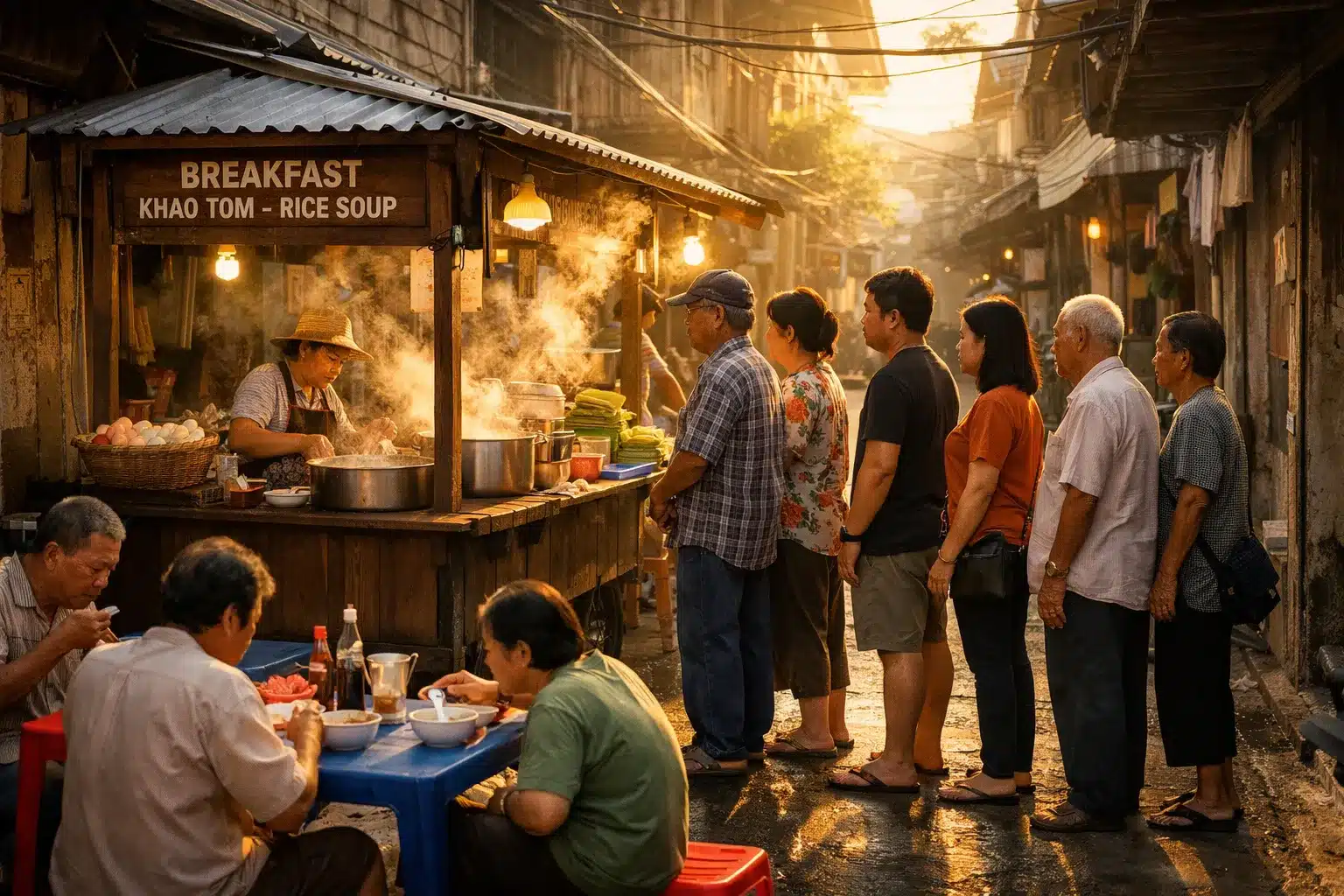
Ukoy routes to Thai family recipes, massaman, chili heat, shrimp-safe fridge notes, and the recipe index.