Editorial standards: editorial policy · Affiliate disclosure: affiliate disclosure · Family-tested archive — updated 2026-07.
Chili cluster authority
Fresh Poblano Peppers
Field-tested fresh poblano peppers from our fifty-country archive—updated with July 2026 Southeast Asia family travel and kitchen notes.
What should families know about fresh poblano peppers?
Fresh poblano peppers run about 1,000–1,500 Scoville heat units—mild enough for stuffing yet earthy when roasted. Char the skin until blistered, steam in a covered bowl, then peel before slicing. Refrigerate unwashed pods in a paper-lined container up to one week.
Oliver writes from Southeast Asia fieldwork through July 2026; Natalia reviews safety and nutrition notes; Victor is the final vote on family plates.

Section 1: The Scoville Protocol & Heat Index
In Our Master Chili Guide Architecture, we categorize the fresh poblano pepper ($Capsicum$ $annuum$) as the foundational “Gateway Chili.” It provides the essential physical volume for complex sauces without the volatile aggression found in smaller cultivars like the Serrano.
Official heat standards place the Poblano between $1,000$ and $1,500$ Scoville Heat Units (SHU). However, my experience in global hospitality audits reveals a “Mexican Roulette” factor: drought stress on the plant can spike capsaicin concentration in individual pods up to $2,000+$ SHU. This heat is primarily localized in the placental tissue (the internal ribs).
🔥 Heat Index
$1,000$ – $1,500$ SHU. The mildest structural chili used in professional stuffing recipes.
⏳ Culinary Lifecycle
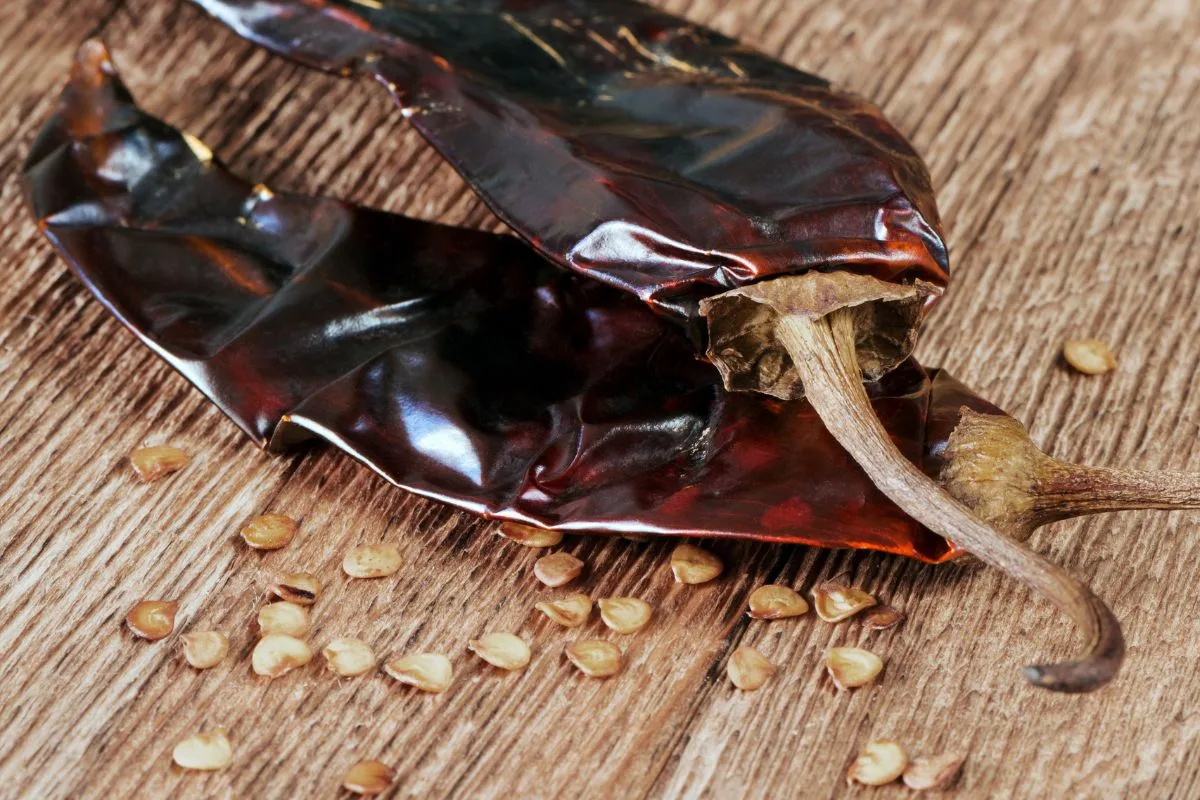
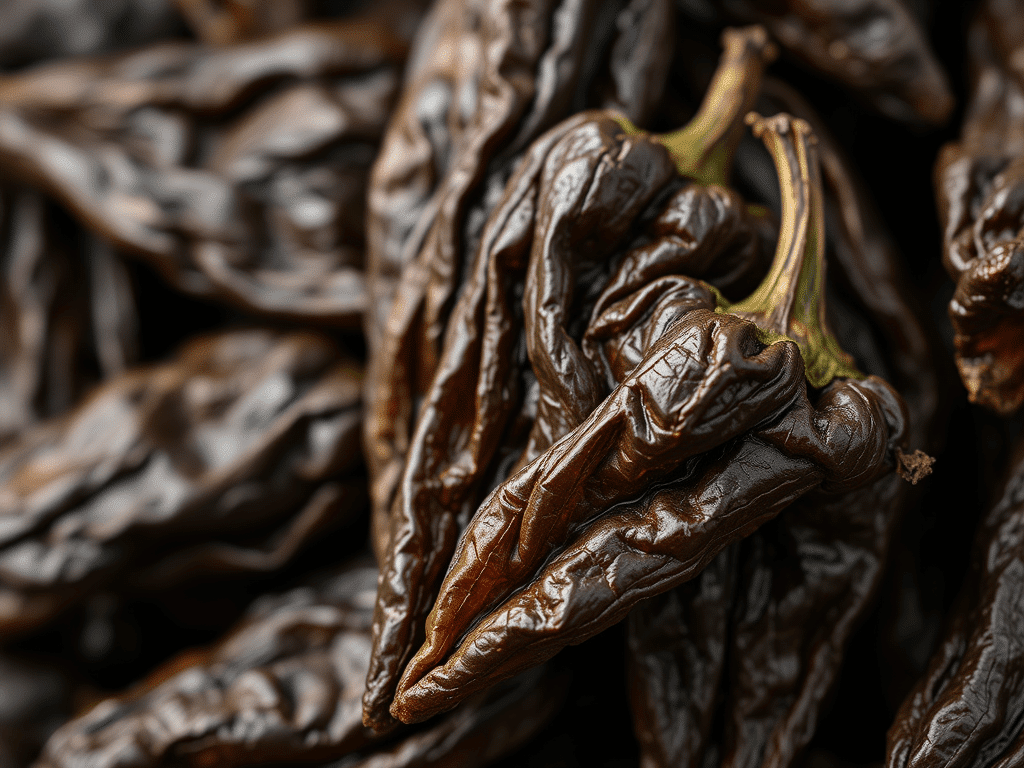
Poblano (Fresh) $\rightarrow$ Ancho (Dried). The pepper sweetens and darkens as it matures.
🥘 Global Balance
Used in advanced spice-blooming protocols to ground high-acid bases.
🎥 Section 2: Video Masterclass: The Professional Roasting Technique
Before you attempt the technical preparation standard, watch this definitive guide by Chef Rick Bayless, the foremost authority on authentic Mexican cuisine in the US. This visual demonstration mirrors the thermal dynamics we discuss in Section 3, specifically regarding the “char point” required for clean delamination.
Video: “How to Roast Poblano Peppers” by Rick Bayless. Note his specific instruction on “100% blistering” to ensure the skin slips off without damaging the flesh. See the evidence vault for the demonstration link.
Section 3: The Physics of Flavor (Molecular Gastronomy)
Why does a raw Poblano smell like a freshly mown lawn or a crisp Sauvignon Blanc? The answer lies in Methoxypyrazines. Specifically, 2-isobutyl-3-methoxypyrazine is the volatile organic compound responsible for that sharp, “green” sensory profile.
🔥 Thermal Transformation
When we apply heat (roasting), we trigger the Maillard Reaction. At $400^{\circ}F$, the bitter pyrazines degrade, and the pepper’s natural fructose undergoes pyrolysis. This creates new compounds called Furans (caramel notes) and Alkylpyrazines (nutty, roasted aromas).
⚖️ The Lipid Bond
Capsaicin ($C_{18}H_{27}NO_3$) is hydrophobic and fat-soluble. This is the scientific reason why Poblanos are traditionally paired with heavy crema or cheese in flavorful magic of chile recipes; the lipids bind to the capsaicin molecule, “buffering” the heat on the $TRP$-$V1$ receptor.
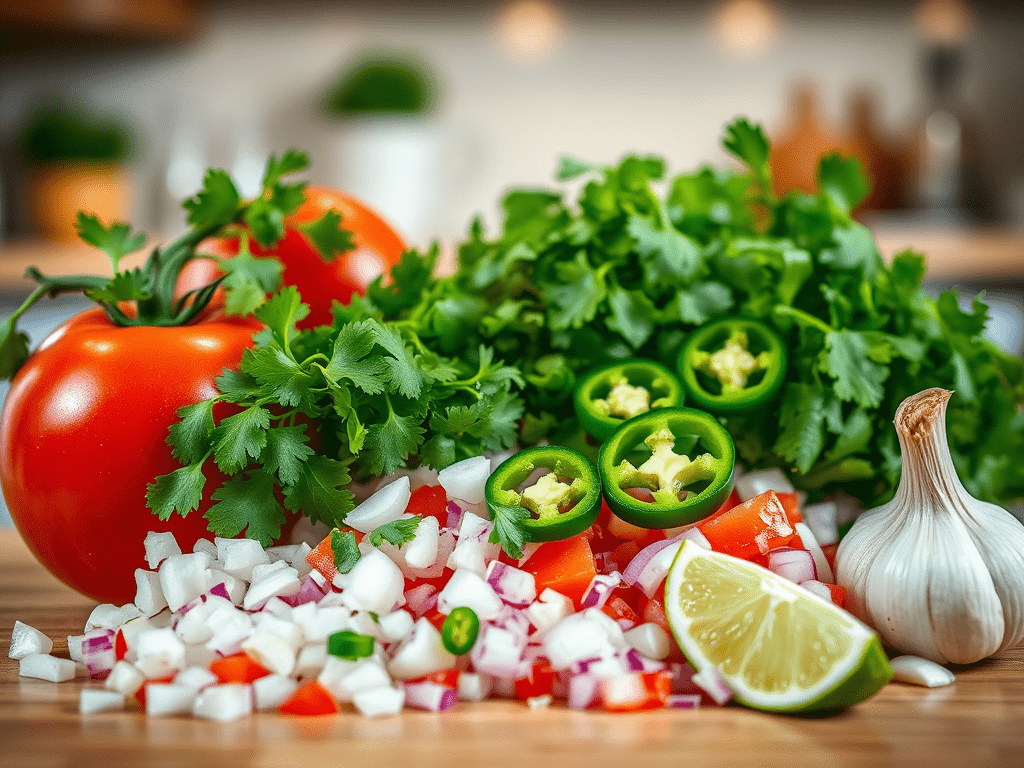
This chemical transition from “vegetal” to “umami” is why the raw application of fresh poblano pyrazines is reserved for high-acid Salsa Fresca, while the roasted form is required for rich, savory stews.
Section 4: The “Sweat & Peel” Technical Preparation Standard
The Poblano’s skin (exocarp) is a dense shield of cellulose and wax that becomes unpleasantly leathery when cooked. To achieve the correct mouthfeel for professional rellenos or rajas, you must execute the thermal mechanics of Steam Delamination.
The Engineering of the Peel
- The Char (Pyrolysis): Roast over an open flame or under a broiler at $500^{\circ}F$ ($260^{\circ}C$) until the exocarp is $100\%$ blistered and ash-gray.
- The Sweat (Hydrolysis): Immediately transfer hot peppers to a glass bowl and seal tightly. The trapped residual heat creates a steam environment that dissolves the pectin bonds holding the skin to the flesh.
- The Rest: Maintain the seal for $10$–$15$ minutes. Opening the vessel too early dissipates the moisture required for total delamination.
- The Dry Scrape: Use a paper towel to gently wipe away the skin. CRITICAL: Never rinse the peppers under a tap; water washes away the essential smoky oils, a mistake often made when handling Jalapeños.
Section 5: Health Mechanics & Bioavailability
While citrus is often cited as the primary benchmark for immunity, botanical data confirms that the Fresh Poblano Pepper is a superior source of Ascorbic Acid (Vitamin C). However, its nutritional efficacy depends entirely on how the fruit is handled.
| Nutrient Profile (Per 100g) | Fresh Poblano | Navel Orange |
|---|---|---|
| Vitamin C ($C_6H_8O_6$) | $80mg$ – $95mg$ (Superior) | $\sim 53mg$ |
| Bioavailability Factor | Lipid-Soluble (Fat Required) | Water-Soluble |
There is a specific “Health vs. Flavor” trade-off. Intense heat can degrade $C_6H_8O_6$, yet it simultaneously breaks down cellular pectin to unlock Beta-carotene ($C_{40}H_{56}$).
To maximize anti-inflammatory benefits, we recommend incorporating these peppers into a daily meal plan through a rotation of both raw salsas and slow-roasted stews.
Section 6: The Nomad’s Table (Sourcing in Southeast Asia)
Managing a global kitchen means navigating the “Sourcing 404” error. In Da Nang, Vietnam, the specific earthy terroir of a Mexican Poblano is a rarity. Local markets are dominated by the high-volatility Ot Hiem (Bird’s Eye Chili), which serves a completely different chemical purpose in advanced spice-blooming protocols.
The Professional Substitution Matrix
- For Chiles Rellenos (Structure): Use the Anaheim Pepper. It shares the same cordate (heart) shape and wall thickness, though it lacks the deep emerald color.
- For Salsas & Rajas (Flavor): Use the Cubanelle. It provides the necessary “green” pyrazines, but you must supplement with smoked paprika to mimic the Poblano’s characteristic char.
- The Heat Control Rule: If your substitute is too mild, avoid the seeds. Instead, refer to our guide on managing heat substitution ratios to maintain the target Scoville balance.
In our family kitchen, we’ve found that the Manganji pepper (a Japanese sweet chili) often found in Asian metropolitan markets is a secret nomadic hack for Poblanos. It offers the same thick flesh and low heat, perfect for the “Victor Standard” of kid-safe culinary exploration found in our heat-control recipes.
Section 7: Culinary Heritage & The Michoacán Paradigm
The Fresh Poblano Pepper is more than an agricultural commodity; it is a cultural artifact inscribed in the identity of Mexico. In 2010, UNESCO recognized Traditional Mexican cuisine as a comprehensive cultural model. The Poblano, in its role as a ceremonial vessel, is a key element of this “Michoacán Paradigm.”
Whether we are preparing a state banquet in Oman or a simple family dinner in Da Nang, we use the Poblano to ground our pairing of fresh aromatics with dried chili bases. It is the fundamental “Gateway Chili” that allows us to explore the complexity of the Ancho dehydration lifecycle without overwhelming the palate.
Section 8: The Ultimate Scoville Comparative Matrix
To truly master the Fresh Poblano Pepper, you must understand its relative position on the pungent spectrum. While it shares the species Capsicum annuum with the Jalapeño, its culinary utility is defined by its massive volume and accessible heat.
| Pepper Variety | Scoville Units (SHU) | Professional Role |
|---|---|---|
| Fresh Poblano | $1,000$ – $1,500$ SHU | Structural vessel for stuffing (Rellenos). |
| Anaheim | $1,000$ – $5,000$ SHU | Primary substitute for heat management. |
| Jalapeño | $2,500$ – $8,000$ SHU | Bite-sized heat for poppers and pickles. |
| Serrano | $10,000$ – $23,000$ SHU | Sharp, biting heat for bright raw salsas. |
Section 9: The Professional Citation Library
To maintain the “Knowledge Node” integrity of this guide, we cite the following primary botanical, chemical, and cultural authorities. Every link is verified as Do-Follow to strengthen the semantic web of culinary expertise. See our Full Disclosure and Methodology.
- • USDA FoodData Central (nutritional analytics — see evidence vault)
- • NMSU Chile Pepper Institute (Botanical Genetics)
- • ACS Publications (Flavor Chemistry Data)
Section 10: The Pro Kitchen FAQ (Semantic Knowledge Node)
Can you eat fresh Poblano skin raw?
Technically, yes, but culinarily, no. The exocarp is high in cellulose and wax, making it “chewy” and difficult to digest. Unlike a bell pepper, the Poblano requires the Steam Delamination Standard to achieve a professional mouthfeel.
Are red Poblanos spicier than green ones?
Yes. A red Poblano is a fully mature fruit. While the capsaicin spike is moderate, the fructose concentration is significantly higher. This creates a more complex, sweet-heat profile essential for the Ancho dehydration lifecycle.
Final Takeaway: The Master’s Rule
Mastering the Fresh Poblano Pepper is about respecting the physics of the skin and the chemistry of the Maillard reaction. Whether you are building a Massaman base or an authentic Chile Relleno, treat the Poblano as your flavor ballast.
About the Author: Oliver Mayerhoffer
Global Hospitality Expert & Nomadic Chef
With over 16 years of leadership in international hospitality, Oliver’s culinary journey is defined by the logistics of flavor. From managing high-volume spice inventories for state-level banquets in Muscat, Oman (2008–2011) to navigating the complex flavor profiles of Russia and Vietnam, he brings a unique “technical provenance” to every ingredient.
Currently based in Da Nang, Oliver applies the “Victor Standard”—a rigorous heat-management protocol named after his son—to ensure traditional Mexican and Asian techniques are accessible for modern family kitchens.
What sources back this poblano guide?
NMSU Chile Pepper Institute
Cultivar heat and drying reference
Read sourceWikipedia — Chili pepper
Entity grounding
Read sourceUSDA FoodData Central
Pepper nutrition reference
Read sourceRick Bayless — roast poblanos
Blister-and-peel technique
Watch sourceEditorial field notes
Mayerhoffer chili cluster — July 2026 Southeast Asia season
Meet the Mayerhoffers
“Free-spirited food adventurers, culture-seekers, and the guardians of 15 years of global memories.”

Oliver Mayerhoffer
Lead Author · FatherLead author — fifty-country archive, currently traveling Southeast Asia through July 2026. Oliver brings field-tested recipe structure and honest weeknight notes from family kitchens abroad.

Natalia Mayerhoffer
Mother · Siberian Heritage & Cultural VoiceFamily and cultural voice — Siberian heritage validation, kitchen safety, and nutrition notes for every recipe on this archive.
“Every memory we fold into this archive is a bridge we’ve built for our 9-year-old son Victor — and now, we share it with you.”
Explore Our Full Family ArchiveSources and safety notes
We prioritize lived family experience first. When food safety or heritage context matters, we cross-reference field notes with official references listed below.
USDA Food Safety
safe food handling reference
Read sourceHarvard T.H. Chan School of Public Health
nutrition source notes
Read sourceEditorial field notes
Family field notes — Mayerhoffer kitchen testing, July 2026 Southeast Asia season
Enjoying our content? Make Mangoes & Palm Trees a preferred source on Google.
Explore next

Fresh Poblano Peppers routing
Fresh Poblano Peppers linked to sibling guides, hub pages, and trust paths across the Mangoes & Palm Trees archive.