Editorial standards: editorial policy · affiliate disclosure



Different chapters on the island · Food, family life and local routines
Koh Samui Travel Guide: Things to Do, Beaches & Food
Koh Samui entered our story in more than one chapter. Across separate periods of travel, we used the island as our main base. At different times, we lived in Maenam, Lamai, Bophut, Chaweng, Lipa Noi, Na Muang, Taling Ngam and Plai Laem—some for much longer than others—and each gave us a different feel for the island beyond a checklist of sights. Our son Victor was born here. We remember Samui through ordinary details as much as landmarks: a bowl of noodle soup before the heat, Friday evenings at Bophut market, beach mornings, temple visits and journeys that look short on a map. This Koh Samui travel guide brings those experiences together with practical help for planning your own trip, using current sources for details that can change.
Sunrise at Hin Ta and Hin Yai (Grandfather and Grandmother Rocks) on Lamai’s south coast, Koh Samui. Photograph by Natalia Mayerhoffer.
What should you know before exploring Koh Samui?
Koh Samui has more than one rhythm. Maenam and parts of the west coast can feel quieter; Bophut lends itself to an evening meal and a walk; Lamai mixes beach and town life; and central Chaweng is busier. We learned that a day works better when you group places nearby: hills, traffic and narrow access roads can turn a short line on the map into a longer journey. Choose your base first, then plan around one or two places you most want to see. Check the day’s weather, sea conditions and opening details before setting out.
What we learned about planning a day on Samui
- Choose a coast, not just a hotel: Bophut suits food and evening walks; central Chaweng is busier; Lamai mixes beach and town life; Maenam often feels quieter. Check the exact property and walking distances.
- Build your day around conditions: Samui’s Gulf rainfall pattern differs from Phuket’s Andaman coast, but climate averages are not a forecast. Check local weather, surf and boat notices on the day.
- Plan transport before you need it: Compare a direct flight to USM with a mainland flight plus bus and ferry. Confirm current routes, pier, transfer and return time with the actual operator.
- Do not treat the island as a quick road loop: Hills, traffic and access roads affect timings. If you do not already ride a motorbike legally and confidently, use a transfer, car or ride option where available.
- Keep practical details close: Confirm market and temple access, check tour cancellation terms, and save Thailand’s emergency numbers before leaving your accommodation.
- Prepare your phone before you need it: Save your accommodation pin, check Grab at your exact pickup point, and compare food-delivery options only after entering the full address. Coverage, riders and opening times vary.
- Carry more than one way to pay: Keep some Thai baht in small notes alongside a payment card. Some visitors can use supported cross-border QR apps or TAGTHAi Easy Pay, but not every foreign banking app can scan every Thai PromptPay QR.
Already on Koh Samui? Check these before heading out
A few things are worth checking on the day—especially beach conditions, boat trips, transport and opening times.
- Before a beach swim: read local flags and warnings, look at the actual surf and currents, and do not swim at night or assume a quiet-looking bay is safe. Keep children within arm’s reach in the water.
- Before a boat trip: reconfirm the departure pier, check-in time, return time, weather cancellation policy and what safety equipment the operator provides. Do not rely on last week’s sea conditions.
- Before crossing the island: check the exact pickup point and journey time. Agree an unmetered taxi fare before the ride; an app’s coverage, price and child-seat availability may differ by location and time.
- Before visiting a market, temple or restaurant: check current opening times or the day’s market schedule, especially if you are travelling across the island.
- Keep emergency contacts: Tourist Police 1155, medical emergency 1669, police/general emergency 191, and fire 199. These are Thailand-wide numbers listed by the Thai government; follow local emergency instructions.
Reference: Thai government tourist-assistance contact numbers and the Tourism Authority of Thailand’s Ko Samui guidance.
Getting to Koh Samui
The easiest arrival for many visitors is a flight into Samui Airport (USM), with schedules and fares checked directly with the airline. A direct flight from Bangkok is around an hour and a quarter in the air, though total travel time depends on your connection, check-in and onward transfer. Koh Samui flights can be more expensive than flying to a mainland airport, so compare the fare with the time, ferry transfer and baggage costs rather than looking at the ticket price alone.
There is also a mainland-and-ferry route, commonly via Surat Thani and Donsak, with arrivals at piers on Samui depending on the operator and service. Ferry timetables, connecting buses, weather disruption and pier locations change; check the Lomprayah timetable or the operator you plan to use and allow a generous connection window. We used ferries for island-hopping, but would not choose a complicated same-day connection with a tired child if a simpler route made sense.
On arrival, a pre-booked transfer can be worth it if you have children, luggage or a villa outside the main roads. The island is compact on a map, but traffic, hills and narrow access roads make door-to-door times vary.
Check airline schedules with Bangkok Airways, ferry times with the operating company and destination guidance with the Tourism Authority of Thailand before booking.
Best time to visit Koh Samui
For Koh Samui weather, start with the island’s Gulf of Thailand rainfall pattern, which differs from Phuket and much of Thailand’s Andaman coast. The Thai Meteorological Department’s 1991–2020 climate normals show February and April among the drier months, while October to December is noticeably wetter, with November the wettest month in the record. That is useful for planning a trip; it is not a forecast and does not guarantee calm sea conditions on a particular day.
We liked the quieter rhythm of Maenam outside the busiest travel periods. The trade-off is that outdoor plans need flexibility. If a boat trip, beach day or waterfall is the reason for travelling, check the local forecast, sea conditions and operator cancellation policy close to the date instead of relying on a single generic “best month” statement.
| Month | Mean rainfall (mm) |
|---|---|
| January | 126.8 |
| February | 64.3 |
| March | 115.8 |
| April | 82.9 |
| May | 131.6 |
| June | 133.6 |
| July | 117.0 |
| August | 102.2 |
| September | 117.5 |
| October | 294.9 |
| November | 444.6 |
| December | 263.1 |
Source: Thai Meteorological Department’s 30-year climate-normal report for 1991–2020, Ko Samui station (48 550). These long-term averages describe rainfall, not surf, currents, boat safety or the weather for your travel dates.
Holiday periods—especially Christmas and New Year—can change both availability and price. Ask for the full cost and cancellation terms for your dates before you book.
For wider seasonal context, consult the Thai government’s beach-season guidance, then check a current Samui-specific forecast close to departure.
Where to stay on Koh Samui
Choosing the right side of the island matters more than a glossy room photo. At different stages of our travels, we stayed in several parts of Samui, and the right base depended on the season of family life we were in. We rented in Maenam when Victor was a baby and toddler; the quieter routine and the beach we knew mattered more to us then than nightlife. A base that worked for a toddler may not suit someone looking for late dinners, a short taxi ride or quick access to a school.
- Maenam: a quieter feel in many stretches, with a long beach and a slower routine. Check how far your accommodation is from shops and the road you will actually use.
- Bophut and Fisherman’s Village: food and evening walks are a draw, though the most popular areas can be busy at peak times. Confirm what is walkable from the exact property.
- Choeng Mon: worth comparing if you want a smaller bay and resort options. Conditions, shade and access differ along the beach.
- Chaweng: more activity, services and nightlife in the central stretch, which can mean traffic and noise. Quieter pockets differ from the main strip.
- Lamai: a lively base with restaurants and its own market rhythm; check the distance from your chosen beach and hillside accommodation.
- Lipa Noi and the west coast: often considered for sunsets and a quieter pace, but there may be fewer services within walking distance in some areas.
Our advice is unglamorous: map your accommodation, the nearest meals, a supermarket and your likely transport option before you pay a deposit. Read the area descriptions in our Koh Samui family stay guide before comparing the broader hotel and resort guides.
Best beaches on Koh Samui: how to choose
Maenam was part of our daily family routine. On the stretch we knew, we could sometimes wade out while the water stayed around knee depth at roughly 30 metres from shore; that was our experience of one place and set of conditions, not a description of every tide. Bophut meant Friday markets and evening walks, Lamai had a different energy and food scene, and Chaweng felt more like a big resort strip. Lipa Noi and the west coast could feel more spacious. That is the contrast we remember; the water itself must be judged on the day.
Water depth, currents, waves, debris, tide and beach access can change by season and even between nearby stretches. A beach that looks shallow in a photo is not guaranteed to be safe for a child. Check flags and local advice, keep children within reach around water, and never assume there is a lifeguard.
A boat trip to Ang Thong can add a very different day to a beach holiday, but a speedboat crossing is not right for every traveller or sea condition. Before paying, ask what the trip includes, what safety equipment is provided and how weather cancellations work; then check sea conditions close to departure.
The Tourism Authority of Thailand’s Ko Samui guide is a useful destination overview; it does not replace same-day beach, marine-weather or operator advice.
Things to do in Koh Samui: top attractions and day trips
For a first visit, choose a mix rather than trying to do everything: a north-eastern temple stop at the Big Buddha and Wat Plai Laem, Hin Ta and Hin Yai in Lamai, a beach that suits your base, Fisherman’s Village for evening food, and—if conditions allow—one full-day trip to Ang Thong or Koh Tao and Koh Nang Yuan. Add Na Muang Waterfalls or Secret Buddha Garden only when access, weather and transport make them sensible for your day.
If you are comparing Koh Samui attractions, group nearby stops rather than trying to cross the island repeatedly in one day. Wat Phra Yai, usually called the Big Buddha, and Wat Plai Laem are well-known temple stops in the north-east. We visited the Big Buddha more than once during the different periods we spent on Samui, and remember people there treating Victor kindly without making our visits feel like a performance. Dress modestly, remove shoes where indicated, keep voices low and follow site signs. Check current access and opening arrangements before building a timed itinerary around a visit.
Na Muang Waterfalls are an option when you want a break from the coast. We remember Na Muang Waterfall 1 as the easier stop and Waterfall 2 as the steeper walk. Rain changes water flow and footing; check local access, wear proper footwear and do not climb around wet cascades for a photograph.
For a family with a small child, one temple and one outdoor stop can be enough for a day. Leave time for food, shade and the journey between places. That is a better way to experience the island than trying to tick off every attraction. If rain interrupts a beach or boat plan, keep the day flexible: choose a meal, café, market or indoor activity after checking that it is operating, and avoid waterfall paths when heavy rain makes footing or water levels unsafe.
For a more specific shrine visit, read our Guan Yu shrine field report from Hua Thanon. It is a separate Chinese shrine tradition, not part of the Buddhist temple circuit.
Ang Thong National Marine Park day trip from Koh Samui
Ang Thong is a nearby archipelago and one of the best-known full-day boat excursions promoted from Koh Samui. Depending on the operator and sea conditions, an outing may combine island scenery, kayaking, snorkelling or a viewpoint walk; the exact stops and activity level differ by trip. Ask what is included, whether the national-park fee is separate, how long the boat crossing takes, what safety equipment is provided and what happens if weather disrupts the route. Check current park access and operator notices close to departure rather than treating a tour listing as a guarantee that the park is open.
Koh Tao and Koh Nang Yuan snorkelling day trip
A full-day excursion to Koh Tao and nearby Koh Nang Yuan is another option if reef scenery is a priority. It is a separate island trip rather than a quick stop on Samui, so compare the total time on the boat with the time actually spent swimming or on shore. Ask whether transfers, snorkelling equipment, meals and any island entry fee are included; check sea conditions and the operator’s child and swimming requirements. Do not touch coral or marine life, and move the trip to another day—or skip it—if the weather or operator advice makes the crossing unsuitable.
Koh Madsum (Pig Island) and Koh Tan half-day trips
Koh Madsum (also written Ko Madsum or Koh Mat Sum) lies off Samui’s south coast and is often marketed as “Pig Island”; some trips pair it with snorkelling near Koh Tan. The Surat Thani provincial government’s destination note identifies Koh Madsum as one of the islands around Samui. You reach it by boat, not by road. We haven’t taken this exact trip as a family, so we can’t tell you from experience which operator to choose. Before booking, check the departure pier, total journey time, island fees, transfers, meals, snorkelling equipment, child-sized lifejackets and the weather-cancellation policy. Follow the operator’s guidance around animals; do not assume touching or feeding is allowed.
Secret Buddha Garden and the island’s interior
The Secret Buddha Garden, also known as the Magic Garden, offers a change from the coast in Samui’s hill country. It is an inland outing, not a beachside stroll, and the upper roads can be steep or rough—especially after rain. Many visitors will find a suitable car with an experienced driver or an organised trip more comfortable than attempting the climb by scooter. Check access arrangements and any entrance charge locally before setting out.
Hin Ta and Hin Yai Rocks in Lamai
Hin Ta and Hin Yai—Grandfather and Grandmother Rocks—are a distinctive stop on Lamai’s south coast. Natalia took the sunrise photograph at the top of this guide. The rocks and paths can be uneven, so wear shoes with grip, keep children close and resist climbing onto exposed or slippery surfaces for a photograph. You can pair the stop with a meal in Lamai; our Kai Bar Lamai story records a separate restaurant visit, so check the venue’s current details before you go.
Fisherman’s Village in Bophut: markets and evening food
Fisherman’s Village is best enjoyed with time to wander. The old shophouse streets, food stalls and beachfront restaurants feel different from the main resort strip. The market schedule can change, so check which walking street is operating on the evening you plan to go. We describe the rhythm we remember in our markets and street-food section.
Family fishing, snorkelling and other water activities
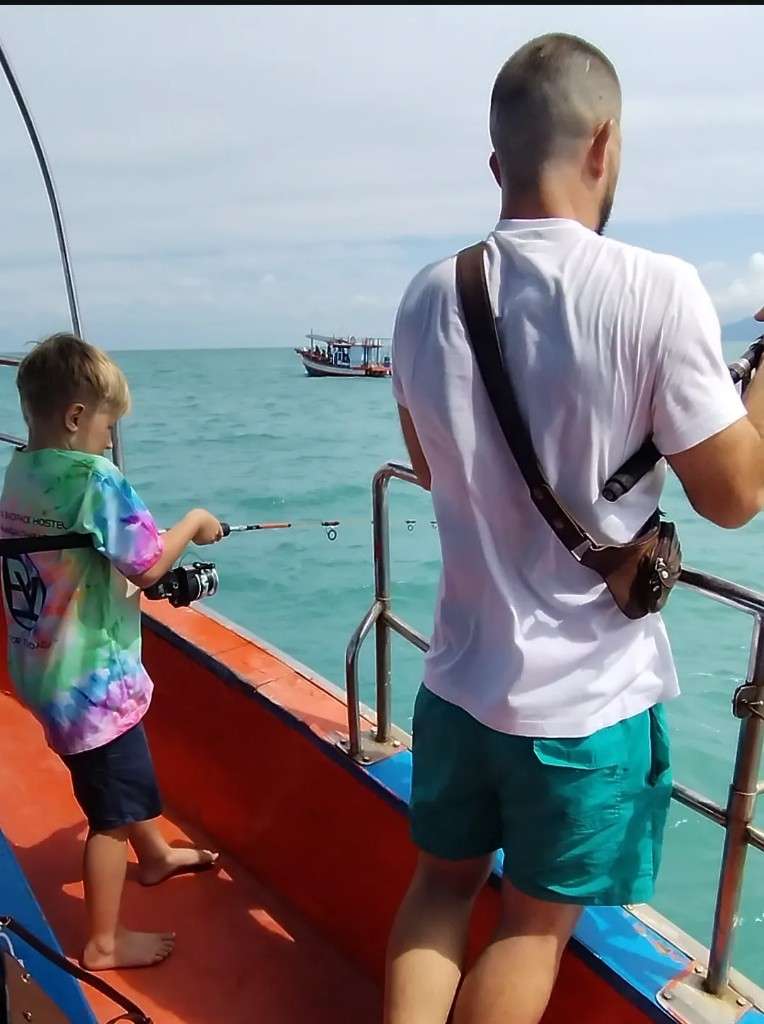
If you’d rather spend time on the water than fit several stops into one day, read our family fishing story with Mr. Tu. It describes one trip we took; contact the operator to check whether the same outing and arrangements are still available. For any boat trip or snorkelling day, ask about lifejackets, equipment, swimming requirements, child policies and weather cancellations, and follow local advice if conditions turn.
Elephant experiences: check welfare practices, not the word “sanctuary”
Elephant encounters may appear in tour listings, but the label “sanctuary” alone is not evidence of good welfare. World Animal Protection’s elephant-friendly tourist guide recommends observation without direct contact; look for space to move and natural behaviour, and avoid rides, bathing, shows or venues that encourage touching. We have not independently assessed every Samui venue, so check its current welfare practices before booking.
Cooking classes, Muay Thai and rainy-day alternatives
Beyond the beach, the Tourism Authority of Thailand’s Ko Samui overview lists experiences such as cooking classes, yoga, Muay Thai training, diving and golf. These can be good alternatives when the sea or weather changes your plans. Some operators also offer zip-lines, 4WD drives and ATV excursions. Before paying, check age and size limits, safety equipment, pickup arrangements, insurance exclusions and cancellation terms; availability alone does not mean an activity suits every child. For us, one main activity and a good meal often made a better family day than crossing the island several times.
What to eat on Koh Samui
Samui is a beach island, but some of our most useful travel memories are tied to ordinary meals. A bowl of noodle soup before the heat sets in; grilled seafood shared at the end of a market walk; rice, stir-fry and soup that everyone at the table can adjust to their own appetite. Eating well here does not require every meal to be an event.
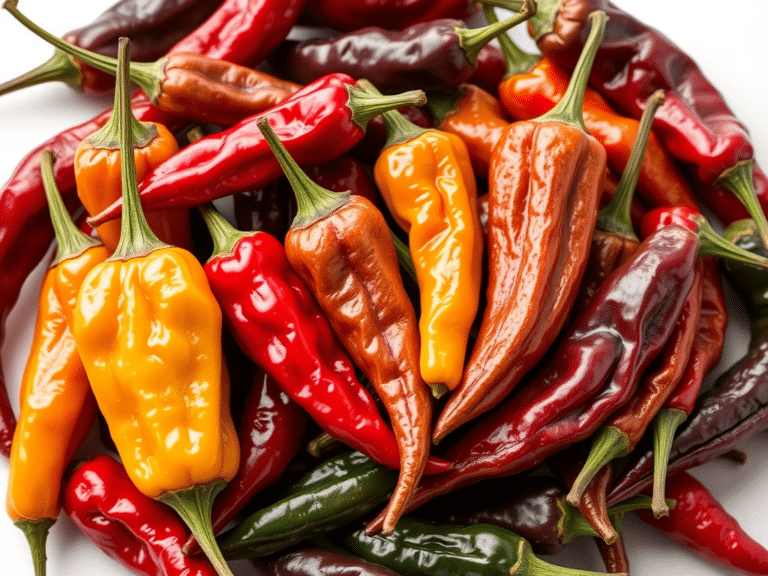
Look for Thai dishes such as tom kha gai, tom yum goong, pad krapao, khao pad, grilled whole fish, som tam and mango sticky rice when it is in season. Ask about ingredients and spice level rather than assuming that “mild” means the same thing at every stall. For children, ask for chilli and condiments on the side where possible.
Tom Yum Goong has a place in Thailand’s food culture beyond a restaurant menu: UNESCO lists the dish in its Intangible Cultural Heritage register. The listing is useful cultural context, not a verdict on a particular bowl. For home cooking, follow our Thai recipes for families, the recently updated pad kra pao recipe, our ba mee kiew moo daeng Thai noodle guide and the Thai ingredients guide.
For us, a good family meal was never just about what arrived on the plate. Could we order without fuss? Was there something everyone wanted to eat? Did we feel like lingering after the plates were cleared? When Victor was very young, a mild yellow curry became one of his early food memories. We often asked for chilli on the side or said mai phet (“not spicy”). Spice levels vary from kitchen to kitchen, so ask the staff and taste before adding more. Menus and opening hours change; check a restaurant’s current details before making a special trip.
Koh Samui markets and street food
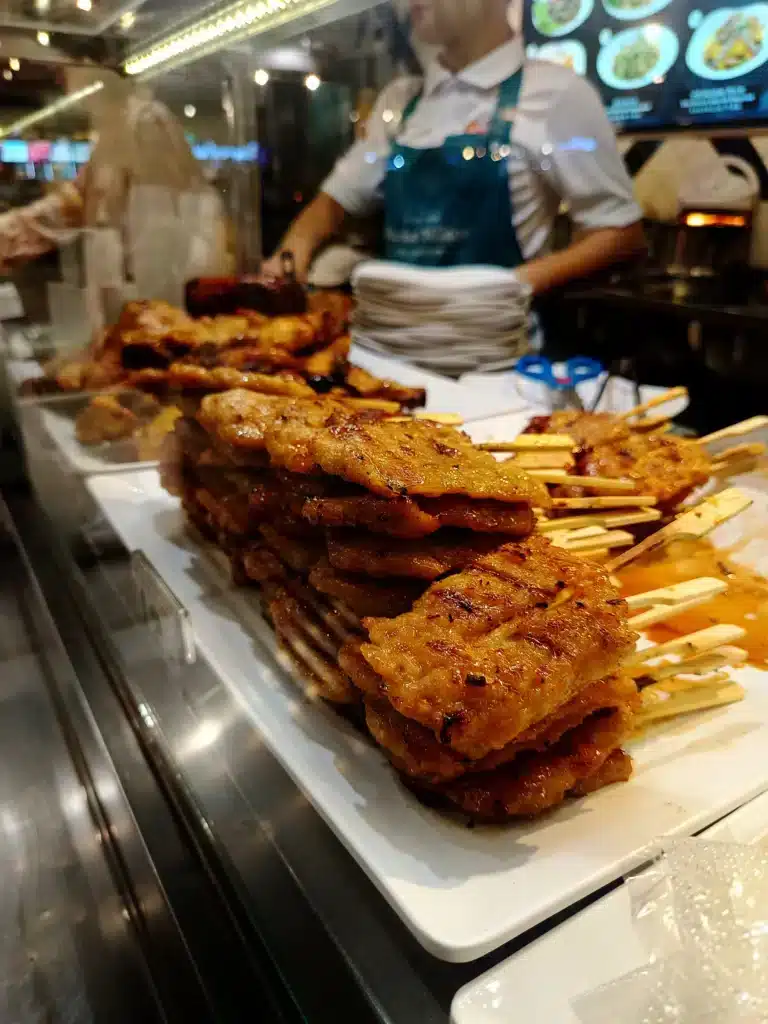
Fisherman’s Village in Bophut was part of our weekly rhythm. We remember the evening unfolding one bite at a time: fruit shakes, grilled seafood, Victor negotiating over snacks, and the promenade getting busier as the night went on. When we still had a stroller with us, we often arrived around 17:30; on those evenings, the promenade felt busier by about 20:00. That is a memory, not a reliable schedule. If you’re looking for a Koh Samui night market, check which walking street or market is operating on the evening you plan to go.
At a market or roadside stall, look for food cooked to order and served hot, and pay attention to basic handling and the turnover of ingredients. Avoid assuming a busy queue makes every item safe. The CDC’s Thailand travel-health guidance recommends care with food and water, including avoiding tap water and being cautious with raw or undercooked items and ice.
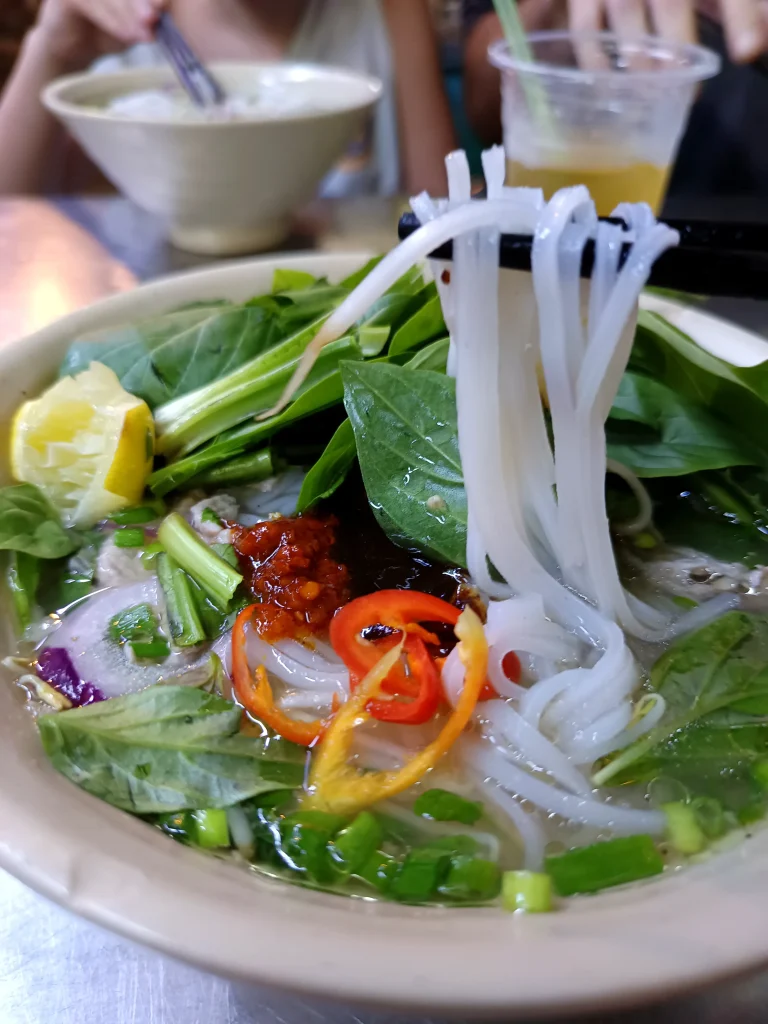
We remember Maenam market noodle soup as one of the easy, everyday meals of our Samui years. Prices from that period would mislead visitors now, so ask the stall for its current price before ordering. For more food ideas, see our Thailand food and travel guide, Bangkok street-food guide and wider restaurant guides.
Plan your bearings
Koh Samui map: places from our stories and practical stops
We’ve pinned the places covered by our own articles, alongside practical arrival points. Use the map to sketch a route, then open the linked guide and check the destination address, current hours and transport before you go.
Map tiles © OpenStreetMap contributors.
- Samui Airport (USM) — arrival and transfer guidance
- Bangkok Hospital Samui — official contact
- Kai Bar Lamai — MPT field note
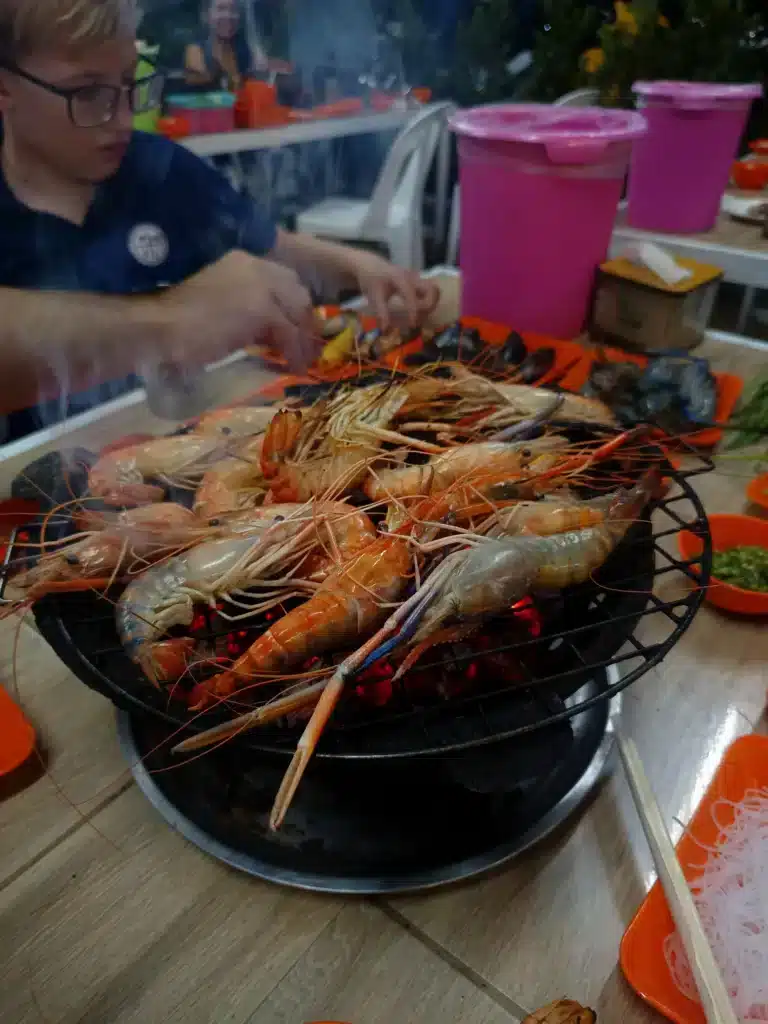
- Mr. Dam Korean BBQ — MPT field note
- Fisherman’s Village — market context
Check local addresses, hours and transport details before travelling.
A gentle first visit
A three-day Koh Samui itinerary
This is a loose route, not a race to tick off every stop. We learned that crossing the island repeatedly can take time away from the beach or the table; let weather, traffic and your family’s energy decide the order.
Getting around Koh Samui safely
On Samui, a trip that looks short on a map can involve a hill, a busy road or a narrow lane leading to a villa. For your first arrival, a hotel transfer or a pre-arranged car can make the day easier. Ride-hailing availability, pickup access and fares may vary by location and time, so check the app and confirm the journey before setting out. If you use an unmetered taxi, agree the fare before you get in.
We did not use a scooter with Victor riding behind us. That is a personal family choice, but it reflects a serious travel risk: motorcycles and scooters are a major source of road injury in Thailand. The CDC advises travellers to avoid riding motorbikes where possible; if you still choose to ride, use a suitable helmet, obey local law and confirm that your licence and insurance actually cover it. A policy that excludes motorcycle use can leave a significant gap.
For families, save the accommodation pin, the hospital you plan to use and the return transport details before an evening out. A child seat may not be available on every local ride; do not assume a booking app guarantees one. Check road and marine conditions and keep passports, insurance information and emergency contacts accessible.
The options we compared in daily life were ride-hailing where available, a hotel transfer for awkward arrival days, a rental car for longer stays and shared pickup trucks (songthaews) when their route suited us. Grab coverage, pickup points, fares and service levels can change, and shared routes are not a fixed door-to-door timetable. With a baby or tired child, we preferred a predictable transfer or car rather than improvising every journey.
For the wider safety picture, the CDC Yellow Book — Thailand covers country-level road-injury risk and practical precautions for travellers.
Local apps, food delivery and paying on Koh Samui
Using Grab for rides
Grab’s official Thailand transport page describes its ride options and fare-preview feature, but the app must confirm whether a driver and vehicle type are available for your exact Samui pickup and destination. Before you confirm, set the pickup pin on the actual road or designated pickup point, check the destination spelling, fare and estimated wait, and compare the offer with a pre-arranged transfer when you are arriving with luggage or children. An app listing does not guarantee that a driver will accept every trip or reach a villa down a narrow lane. If you take an unmetered local taxi, agree the total fare before the journey begins.
Ordering food delivery on Koh Samui
Try GrabFood in the Grab app and check LINE MAN as another option. Enter your exact hotel, villa or address before relying on either service—restaurants, riders, payment methods and delivery zones vary by location and time. Add a precise map pin and nearby landmark, review the total charges and estimated wait, and check the available payment method before ordering. If no riders appear, ask your host or the restaurant whether it can arrange a direct order. Do not rely on foodpanda: its parent company announced that the platform and delivery services stopped operating in Thailand on 23 May 2025.
Cash, currency exchange and ATM withdrawals
Keep some Thai baht (THB) for your arrival transfer, market stalls, small restaurants, shared songthaews and other places where cards may not be accepted. Smaller notes make everyday purchases easier; you do not need to exchange a large amount at the first counter you see. Use a bank foreign-exchange counter or an authorised money changer, compare the displayed rate and commission before exchanging, and count the notes before leaving the counter. Avoid exchanging money with strangers on the street.
Thai ATMs and your own card provider may each add fees, and local charges can change by bank and card network. Read the final fee screen and cancel if you are not happy with it. When an ATM or card terminal offers to convert the charge into your home currency, compare carefully and normally choose to be charged in THB rather than accepting dynamic currency conversion; your card issuer then applies its own conversion rate. A debit or travel card is useful, but it is not a complete replacement for cash on an island trip.
PromptPay QR and tourist payment apps
Thai PromptPay QR is common, but a QR code is not automatically payable through every international banking app. The Bank of Thailand lists cross-border links by country and provider; its current guidance describes supported payment-app links for visitors from specific markets. Check the Bank of Thailand’s cross-border payment list against your own bank or wallet and the merchant before relying on QR payment.
TAGTHAi Easy Pay is another tourist e-wallet option for Thai QR payments. As checked on 29 October 2026, KASIKORNBANK’s current eligibility page says foreign tourists aged 20 or older can apply in person at a KBank foreign-exchange booth with a passport and top up with foreign currency. The bank currently lists a THB 25,000 transaction limit and THB 50,000 monthly limit across wallet transactions; read its latest terms, fees, booth availability and limits before applying because these can change. KBank also displays a notice that older PAY & TOUR E-Wallet users needed to upgrade by 30 September 2026, so do not assume an older wallet still works without confirming its status. Keep Thai baht and a payment card as backups. A Thai SIM by itself does not make you eligible for an ordinary Thai bank account or domestic banking app.
Phone data, maps and translation
Set up roaming, an eSIM or a local SIM before you need to call a driver or message your host. Save the accommodation’s address and map pin, download an offline map, and keep ferry or airline confirmations, emergency numbers and the host’s phone number accessible without a signal. For a fuller checklist, see our family travel field kit.
Hospitals and international schools on Koh Samui
Because we spent extended stretches on Samui as a family, healthcare and schooling became practical questions, not just topics for someone considering a move. For a holiday, keep your insurer and emergency contacts handy; for a longer stay, ask schools and providers directly about the services you need.
Healthcare: check the facility, not just the name
Bangkok Hospital Samui and Wattanapat Hospital Samui publish current contact details on their own sites. Samui International Hospital is also listed in government and insurance-provider healthcare directories; verify the current contact details and services directly. Which provider suits a situation depends on urgency, specialty, cost, insurance and the service available at that time.
- Bangkok Hospital Samui — official contact details
- Wattanapat Hospital Samui — official contact details
- UK Government — healthcare and medical services in Thailand (includes island provider listings) · Tokio Marine — Samui International Hospital listing
| Facility | Reliable starting point | What to confirm |
|---|---|---|
| Bangkok Hospital Samui | Official contact page | Available service, opening/urgent-care arrangements, insurer acceptance and emergency contact procedure. |
| Wattanapat Hospital Samui | Official contact page | Current department, availability, insurer acceptance and emergency contact procedure. |
| Samui International Hospital | UK Government healthcare directory | Current direct contact details, services and insurer acceptance. |
| Koh Samui Hospital (public) | UK Government healthcare directory | Current service, access route, language support and emergency arrangements. |
Before travelling, confirm the provider’s current address, department and contact procedure, and keep your insurer’s emergency number to hand. In an emergency, follow local emergency services rather than relying on a travel article.
Schools: names and admissions change
The International School of Samui (ISS) and PBISS International School are two options families can explore. School names, programmes and admissions arrangements change, so use each school’s current admissions page and ask about available places, fees, curriculum, transport, language support and any documents your family will need.
Koh Samui villas and longer stays
A villa can make sense if you need a kitchen, separate bedrooms, pool privacy or space to work; a resort may be easier for a short holiday if you value housekeeping, reception support and on-site services. Neither is automatically cheaper. Compare the full quote with the details included: electricity, cleaning, deposits, pool maintenance, linen, water, internet, cancellations and transport.
Look closely at access and practical comfort: steep driveways, road noise, shade, mosquito screens, water supply, backup power, pool barriers for young children, and whether bedrooms actually have the air-conditioning described. Ask for current photos and a written inventory before paying.
Before booking, ask for the full amount in writing and check:
- Access and reliability: steep driveways, parking, backup power, water-tank capacity and air-conditioning in each bedroom.
- What’s included: electricity, cleaning, pool maintenance, linen, taxes, service charges, chef packages and transport arrangements.
- Family and weather checks: pool barriers, stairs, mosquito screens, child-safety measures, storm-season maintenance and cancellation terms. Verify any “private jetty” or direct beach-access claim on the exact property map and in writing.
Compare the full cost rather than a headline nightly rate, especially for stays longer than a week or larger groups. Add electricity, cleaning, transfer costs, deposits and any minimum-stay requirements before deciding whether a villa is better value than a managed hotel or resort.
Our Koh Samui villa booking guide goes deeper into booking checks and deposit hygiene. Compare with our hotel and resort guides if you are deciding between a house and a managed stay.
Longer stays: visas, schools and cost of living
Moving to Samui is a different decision from spending two weeks here. Build a month-by-month picture from current quotes for rent and utilities, school fees and transport, insurance, food, healthcare, visa costs and journeys off the island. Use the same currency and date range, check what is excluded, and leave room for deposits, repairs and school holidays.
Visa options depend on nationality, purpose, family circumstances and current Thai rules. The Destination Thailand Visa (DTV) is one official category for eligible purposes such as workcation and specified activities, but it should not be presented as a universal relocation visa or permission to take any kind of local employment. Read the official Thai E-Visa DTV guidance and check with the Thai embassy or consulate responsible for your application before making financial commitments.
We compare island life with other places we have known, including our Da Nang travel and relocation notes and Hua Hin family comparison. Each has different trade-offs; the best choice depends on your work, budget, school needs and how you like to spend an ordinary Tuesday.
Looking for somewhere to eat? Start with our Samui notes.
Our restaurant notes start with what we actually ate and what stayed with us. Use them to find a place that sounds right, then check the restaurant’s current hours and menu before heading over.
Food and trip notes
Choose your next Samui read
Choose one of our Samui restaurant stories or planning pages below. For current opening hours or booking details, check directly with the venue.
Found somewhere to try? Check its current hours and details before setting off.
Keep exploring Koh Samui and Thailand
The island is only one part of a bigger Thailand trip. These are the pages we’d open next for more detail on where to stay, meals we’ve written about, time on the water and other family routes around the country.
Our Koh Samui field notes
- Where to stay on Koh Samui with kids
- Family fishing trip with Mr. Tu
- Kai Bar Lamai field note
- Mr. Dam Korean BBQ field note
- Guan Yu shrine in Hua Thanon
- Koh Samui villa booking guide
Continue planning around Thailand
If Samui is one stop on a longer trip, these guides carry the journey onward—from another island to inland Thailand, Bangkok food and wider Southeast Asia planning.
- Koh Chang travel guide — a different island and ferry-planning context.
- Three-day Nan Thailand itinerary — a slower, inland family route.
- Bangkok street-food guide — food choices before or after the island.
- Budget travel in Southeast Asia — wider trip-budget planning.
- Thailand food and travel guide — the wider Thailand food and destination archive.
- Thai recipes for families — cook some of the dishes you discover.
- Family travel field kit — staying reachable while coordinating travel.
- Da Nang travel guide — another family destination in the region.
- Asia travel guides — browse the regional archive.
Official references for practical checks
The links below are the starting points we use for details that may have changed, including transport, weather, healthcare, schools and entry requirements.
Thai government — tourist emergency numbers
National contact numbers for Tourist Police, ambulance, police/general emergencies and fire, published by Thailand’s government.
Read official contact listTourism Authority of Thailand
Ko Samui destination overview and visitor context.
Read destination guideThai government seasonal guidance
Broad seasonal context for planning Thailand’s beach regions; check a Samui-specific forecast as dates approach.
Read seasonal guidanceCDC Yellow Book — Thailand
Travel-health guidance, including food, water and road safety context.
Read Thailand health guidanceWorld Health Organization
General public-health information on safe drinking water; not a Samui-specific water-quality report.
Read drinking-water guidanceAirline and ferry operators
Use primary operator sites for current route, schedule, fare and disruption information.
Hospital contacts
Check current services and insurer acceptance with the provider and your policy.
Bangkok Hospital Samui · Wattanapat Hospital Samui · UK healthcare guide
School admissions
Current admissions pages, school names, age ranges, curriculum, visa support and fees.
Thai E-Visa
Official current visa categories, eligibility and application process.
Read DTV informationUNESCO — Tom Yum Goong
UNESCO’s cultural-heritage listing for this Thai dish; not an endorsement of any restaurant.
Read the UNESCO listingThai Meteorological Department — Ko Samui climate normals
Monthly mean rainfall figures for the 1991–2020 climate-normal period. These are not forecasts or sea-safety observations.
Read the climate-normal PDFVisit Samui — transport overview
A secondary source for route context. Check carriers, departure points, schedules and fares directly with the company running your service.
Read third-party transport overviewGrab Thailand — transport and service areas
Grab’s official transport information includes Samui among its service areas. App listings and driver availability remain address- and time-dependent.
Check Grab transport detailsLINE MAN Wongnai — official app information
Official information for LINE MAN’s food-delivery and other local services. Use the live app to check coverage for the exact Koh Samui delivery address.
View LINE MAN service informationBank of Thailand — cross-border QR payments
Current overview of Thai cross-border QR payment links. Availability depends on the visitor’s home-country app and participating payment providers.
Check current QR-payment linksTAGTHAi Easy Pay
Official information for a tourist-focused wallet that supports Thai PromptPay QR payments. Confirm current registration, eligibility and funding steps before relying on it.
Read TAGTHAi Easy Pay guidanceKASIKORNBANK — TAGTHAi Easy Pay requirements
Current foreign-tourist application requirements, in-person registration, wallet limits and the bank’s notice about older PAY & TOUR wallets. Check the latest notice before relying on an existing wallet.
Check current eligibility, limits and noticesDelivery Hero — foodpanda Thailand exit
The platform owner announced that foodpanda stopped its Thailand platform, food and grocery delivery services on 23 May 2025.
Read the company announcementWorld Animal Protection — elephant-friendly tourism
Independent guidance on recognising elephant-welfare practices and avoiding direct-contact tourism that may harm animals.
Read the elephant-friendly tourist guideSurat Thani provincial government — Koh Madsum
Provincial destination context identifying Koh Madsum as one of the islands surrounding Samui. Confirm current tour details with the selected boat operator.
Read the provincial destination noteTourism Authority of Thailand — Ko Tao
Official background on the nearby island and its snorkelling and diving context. Check live ferry or excursion arrangements separately.
Read the official Ko Tao guideSecret Buddha Garden access context
A secondary local destination guide for the hilltop garden. It is not an official access notice; verify road and entry details before travelling.
Read the Secret Buddha Garden guideKoh Samui travel FAQs
A few questions come up before and during a Samui trip. We’ve put the short answer first; for details such as ferry times, sea conditions, opening hours or admissions, check the current source before setting out.
Planning your visit
What is the best time to visit Koh Samui?
Samui’s Gulf location gives it a different rainfall pattern from Phuket and much of the Andaman coast. The Thai Meteorological Department’s 1991–2020 normals show February averaging 64.3 mm of rain and November 444.6 mm. These are long-term averages, not a forecast; check the local forecast and sea conditions for your dates.
How long should you stay on Koh Samui?
Three days can cover one beach area, a temple or waterfall, and a few food stops without racing around. Five to seven days gives you time to explore more than one coast and consider a boat trip. Allow extra time for connections, weather changes and slower travel days.
Where should I stay on Koh Samui?
Bophut is useful for food and evening walks; central Chaweng is busier and has more nightlife; Lamai has a mix of beach, restaurants and town life; Maenam often feels quieter; Choeng Mon has resort options around a smaller bay; and parts of Lipa Noi and the west coast suit a slower pace. Check the exact location, walking distances and transfer access before booking.
What are the best beaches on Koh Samui?
Choose by atmosphere and practical needs rather than a universal ranking: Chaweng for activity, Lamai for a mix of beach and town, Bophut for an evening food scene, and Maenam or some west-coast stretches for a quieter feel. Water depth, current, surf, tide and access change locally, so check the conditions on the day and supervise children closely.
Can you get around Koh Samui without renting a scooter?
Yes. Visitors can compare pre-booked hotel transfers, private drivers, ride-hailing where available, rental cars and shared pickup trucks (songthaews) on suitable routes. Confirm pickup points and fares; availability and child-seat options vary. Motorbike and scooter crashes are a major travel risk, and the correct licence, helmet and insurance conditions matter.
What is the best way to get to Koh Samui?
A direct flight to Samui Airport (USM) is usually the simplest route when schedules and fares work for you. A flight to Surat Thani followed by a booked bus-and-ferry connection can cost less but takes longer and requires coordination. Compare the complete journey, including baggage, transfers, departure pier and the time you need to reach your accommodation; confirm schedules directly with operators.
What can I do on Koh Samui if it rains?
Keep the day flexible: take a longer meal, explore Thai food, look for a cooking class, café, spa or indoor activity, or move a beach visit to a clearer window. Check opening arrangements before travelling and do not attempt waterfalls or boat trips when heavy rain or rough seas make conditions unsafe.
Is tap water safe to drink on Koh Samui?
Do not assume tap water is potable. Use sealed bottled water or water you know has been reliably treated, and follow current travel-health advice on ice and food preparation. The CDC’s Thailand guidance recommends safe food and water precautions; this general guidance is not a building-specific water-quality test.
Is it safe to swim or take a boat trip on Koh Samui?
Safety depends on the actual sea, weather, beach access and operator on the day. Follow local flags and warnings, avoid swimming at night, never assume calm-looking water is safe, and choose a boat operator whose credentials, safety equipment and cancellation policy you can check. Postpone a trip if the operator or local authorities advise against going.
Which emergency numbers should visitors save in Thailand?
The Thai government lists 1155 for Tourist Police, 1669 for medical emergencies, 191 for police/general emergencies and 199 for fire. Save them before you need them and follow instructions from local emergency services. For non-emergency tourism questions, the government also lists 1672 for the Tourism Authority of Thailand information centre.
What are the best things to do in Koh Samui?
Start with the experiences that suit your location and the conditions: choose a beach such as Lamai, Maenam, Chaweng or Bophut; visit the Big Buddha and Wat Plai Laem respectfully; see Hin Ta and Hin Yai in Lamai; consider Na Muang Waterfalls only when paths are safe; spend an evening at Fisherman’s Village; and allow a full day for an Ang Thong Marine Park trip if the sea and operator arrangements are suitable. Our three-day itinerary offers a slower order, but opening times and tour availability need checking for your dates.
Can I use Grab on Koh Samui?
Open Grab and enter your exact pickup and destination to see whether it offers a driver for that journey at that time. The app’s result is more useful than assuming island-wide coverage: pickup access, vehicle options, wait times and fares can vary. Review the trip before confirming and keep your accommodation’s transfer or a pre-agreed local taxi as a backup.
Which food delivery apps can I use on Koh Samui?
Try GrabFood and LINE MAN with your exact hotel or villa address; restaurants, riders, delivery zones and payment options vary by location and time. If no service appears, ask your accommodation or the restaurant whether it can arrange a direct order. Foodpanda stopped operating its platform and delivery services in Thailand on 23 May 2025, so older travel advice recommending it is out of date.
Can tourists pay with PromptPay QR in Thailand?
Some home-country banking apps and wallets can scan compatible Thai QR codes through official cross-border links, but not every foreign app works. Check the Bank of Thailand’s current supported-country and app information, and review TAGTHAi Easy Pay’s current eligibility and onboarding if you want a tourist payment option. Keep Thai baht and a payment card as backups because acceptance and connectivity vary.
Should I carry cash on Koh Samui, and where should I exchange money?
Yes. Keep Thai baht in small notes for market stalls, small restaurants and some local transport, even if you also carry a card. Use a bank foreign-exchange counter or authorised money changer, compare the displayed rate and any commission, and count your money before leaving. ATM and card fees vary; read the fee screen and normally choose to be charged in Thai baht rather than accepting an ATM or terminal’s home-currency conversion.
Families and longer stays
Is Koh Samui safe for families?
Koh Samui can work well for families, but safety depends on transport choices, the beach, weather and close supervision. Scooter and motorcycle journeys carry particular risk; use a properly licensed driver or other transport option if you are not an experienced, legally permitted rider. At beaches and waterfalls, check local conditions and do not rely on a general beach recommendation as a safety guarantee.
Which beach is best for families with toddlers?
Maenam, parts of Lipa Noi and the sheltered bay at Choeng Mon are often considered for a quieter family beach day, but no beach is guaranteed shallow or calm at every tide. Check flags, currents, surf and access on arrival, stay within arm’s reach of toddlers near water, and follow local warnings.
Do you need travel insurance for Koh Samui?
Travel insurance is strongly worth considering. Check that the policy covers Thailand, planned activities, motorbike use if relevant, medical treatment, evacuation and cancellations. Confirm the hospital’s current services and your insurer’s requirements directly; costs, cover limits and evacuation arrangements vary by policy and situation.
Is healthcare on Koh Samui good enough for expat families?
Koh Samui has public and private healthcare facilities, including Bangkok Hospital Samui and Wattanapat Hospital Samui. Services, specialists, prices and insurance acceptance vary, so verify the current department and payment arrangements with the provider and your insurer. Some complex cases may need transfer to a larger centre; do not rely on a general guide for emergency decisions.
Are there international schools on Koh Samui?
Yes, the island has international schools including The International School of Samui and PBISS International School. Curricula, age ranges, fees, term dates, transport and places available can change. Contact admissions directly and confirm entry requirements before making a relocation decision.
Is Koh Samui a good place for families to live or visit?
It can suit both holidays and longer stays, but those are different decisions. Holidaymakers should compare beach area, transport, food options and the season; families considering a move should separately verify housing, schooling, healthcare, visa eligibility, insurance and recurring costs before committing.
Why Koh Samui is personal to us
Oliver’s connection with Koh Samui began before he met Natalia: he spent time on the island when he was 23, long before there was a family travel story to tell. Later, as we travelled through Southeast Asia together, Samui became our main base for extended stretches. Across those separate chapters, our time on the island adds up to around five years—not five consecutive years. Living in different parts of Samui taught us how much the mood can change from one coast and neighbourhood to another: market evenings, shared meals, beach conditions and the time it takes to cross the island. Victor was born here, and travelling with a young child changed how we planned a day; shade, snacks, a manageable journey and knowing when enough was enough mattered as much as the sights. That is the experience behind this guide. For present-day transport, weather, health, school admissions, visa and opening information, we check current sources. Memory can give a place texture, but it cannot tell us today’s sea conditions or opening hours.
Oliver Mayerhoffer
Lead author · Hospitality and family travelOliver writes the food and travel stories, drawing on his hospitality background and the family’s time on Samui across different periods. His work connects the pleasures of a place with the practical questions that help a trip go well.
Natalia Mayerhoffer
Mother · Family and cultural voiceNatalia took the sunrise photograph of Hin Ta and Hin Yai at the top of this guide. Her perspective on food, culture and the everyday rhythm of family life is part of how we tell the story of places we know.
Victor Mayerhoffer
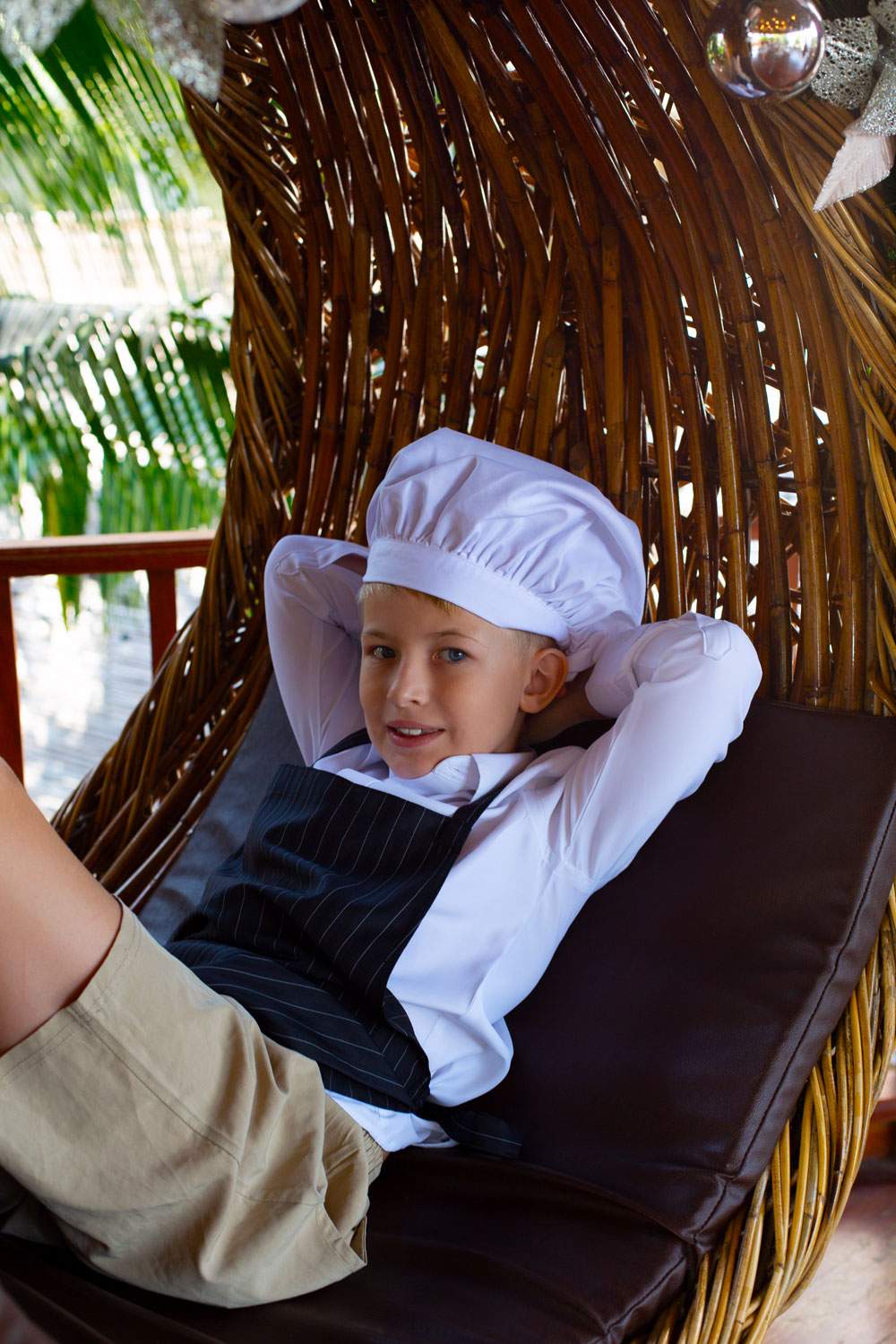
Our son · The reason the practical details matterOur son Victor was born on Koh Samui in November 2016. Travelling through his early years shaped the way we plan as a family: we pay attention to shade, snacks, a sensible distance between stops and whether a beach suits the child in front of us. These memories help explain the advice in this guide, but every family and every day on Samui is different.
Enjoying our content? Make Mangoes & Palm Trees a preferred source on Google.
Explore next
 Kai Bar LamaiA Lamai food note from our island archive
 Guan Yu shrine, Hua ThanonA separate cultural stop south of Lamai
 Thailand food and travelStreet-food habits and regional planning
 Koh Samui villa guideContracts, deposits and property checks
 Family fishing with Mr. TuA day on the Gulf with our family
 Mr. Dam Korean BBQOur Bo Phut mu kratha dinner note