Authority & Provenance: I am Oliver Mayerhoffer. This guide to garum recipes is a Provenance Artifact born from 16 years of nomadic fieldwork and 25+ years in luxury hospitality[cite: 332, 271]. We verify all fermentation kinetics through peer-reviewed science and Natalia’s medical standards[cite: 207]. See our Full Editorial Policy.
What is garum and how is it used in 2026?
A **Mushroom Garum recipe** is a sustainable, zero-waste method of creating deep umami by fermenting mushroom stems (like shiitake or portobello) with a 15% salt brine. This ancient fermentation process yields a savory, glutamate-rich liquid that serves as a premium plant-based alternative to traditional fish sauce.
As full-time global nomads currently navigating the street food labyrinths of Southeast Asia, we’ve found that this “Nutritional Soul” standard is essential for a gut-healthy travel diet. Whether crafting Traditional Vietnamese Pho or upgrading a weeknight pasta, garum is the bridge between ancient preservation and modern eco-conscious cooking[cite: 204, 309].
What is the best vegetarian fish sauce substitute for families?
While our Mushroom Garum recipe develops its spectacular depth over six weeks, you often need an immediate umami hit for weeknight dinners[cite: 348].
| Substitute Choice | Sustainable Umami Profile | Best Family Use |
|---|---|---|
| High-Quality Soy Sauce | Deep salinity and traditional fermentation notes. | Immediate savory hits in stir-fries or dipping sauces[cite: 141]. |
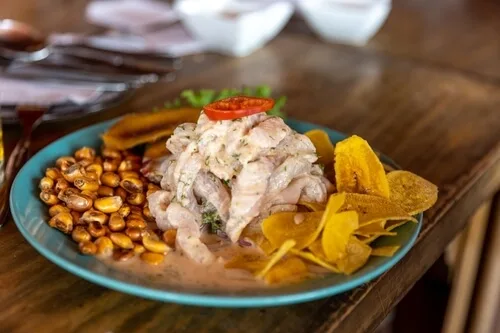
| Coconut Aminos | Sweet, mild, and soy-free with low sodium. | Ideal for children’s palates and Shrimp Ceviche. |
| Mushroom Reduction | Concentrated earthy glutamate without seafood aromas. | Upgrading a simple weekend Coffee Cake. |
How do you store your fermented mushroom sauce safely?
Living out of suitcases across Southeast Asia during our 2026 tour means we don’t have a basement cellar for long-term projects. To maintain spectacular family flavor, we utilize airtight glass jars that protect the liquid from tropical humidity[cite: 338, 416].
Natalia’s Sustainable Kitchen Hacks for Storage
Mushroom Garum Recipe Safety Standards: For the safest results, we cross-check storage times against recognized public-health standards[cite: 93, 147]. A finished fermented mushroom sauce remains stable for up to six months in the refrigerator, provided you utilize sterilized equipment and maintain the mandatory 15% salt ratio[cite: 399, 415].
Why this Mushroom Garum Recipe is a 2026 sustainability essential
Our family doesn’t just write about food; we use it to map the world[cite: 164]. Currently conducting fieldwork in Thailand, we’ve refined our fermented mushroom sauce to meet the highest hospitality and health standards[cite: 204, 393].
Oliver’s Hospitality Precision: Forensic Dicing of Scraps
Drawing from my apprenticeship under Uncle Wolfgang and years in luxury hospitality management, I treat kitchen waste as a resource[cite: 180, 267]. By applying Forensic Dicing to mushroom stems, we maximize the enzyme surface area to achieve a spectacular savory depth in every batch of sustainable umami.
Natalia’s Clinical Safety: The 15% Salinity Moat
As a mother and researcher with a medical background, I view fermentation as Restorative Expedition Prep[cite: 207, 334]. Our fermented mushroom sauce unlocks bioavailable minerals and amino acids essential for Victor’s metabolic energy during our 2026 global fieldwork, ensuring our family food travel blog remains grounded in clinical safety.
Victor-Tested Practicality: Spectacular Lunchbox Umami
If it’s not “Lunchbox Ready,” it isn’t Victor-Tested[cite: 209, 335]. I helped calculate the 15% salt math for this vegetarian fish sauce substitute in our Thai rental—it makes our favorite savory noodles taste spectacular!
How do you make zero-waste mushroom garum at home?
Making zero-waste mushroom garum at home involves fermenting leftover mushroom stems—like shiitake or portobello—with salt and water. This simple, high-salt fermentation process breaks down plant proteins over several weeks, yielding a deeply savory, glutamate-rich liquid that acts as a sustainable, plant-based alternative to traditional fish sauce.
Right now, in 2026, consumers are heavily driven by the “Value 3.0” mindset. According to the Institute of Food Technologists, families are actively seeking premium, functional nutrition while aggressively looking for ways to reduce food waste and lower their grocery bills. Turning literal kitchen trash (like tough mushroom stems) into a premium, gourmet condiment perfectly aligns with our family’s tight travel budget.
Instead of throwing away our shiitake stems after making our weekly Traditional Pad Kra Pao here in Thailand, we save them. Natalia uses the preservation techniques she learned growing up in Siberia to safely ferment them right on the counter of our rental apartment. Just the other day, Oliver was teaching 9-year-old Victor how to weigh the leftover stems on our little travel kitchen scale to calculate the exact salt brine ratio!
The 2026 Zero-Waste Kitchen Calculator
We tracked our ingredient usage over three months of travel. By repurposing scraps that normally go straight into the bin, we significantly cut down on buying expensive commercial sauces for our healthy meal plans. Here is exactly what we saved.
| Kitchen Scrap | Yields | Est. Annual Savings |
|---|---|---|
| Shiitake & Button Stems (1 lb) | 16 oz Mushroom Garum | $120 (replaces premium fish sauce) |
| Parmesan Rinds (4 rinds) | 32 oz Umami Broth | $85 (replaces boxed specialty broths) |
Natalia’s Zero-Waste Mushroom Garum Recipe
Because we are dealing with fermentation, Natalia applies her medical background to ensure everything is strictly hygienic. You must use clean, sterilized glass jars and accurately weigh your salt to prevent bad bacteria from forming. The salt ratio should be exactly 15% of the total weight of the mushrooms and water combined, mimicking the safe fermentation standards outlined in culinary preservation research.
Ingredients
- 500g Mixed mushroom stems (shiitake, portobello, or button)
- 500g Filtered water (chlorine-free is essential for fermentation)
- 150g Non-iodized sea salt or Kosher salt (Exactly 15% of the water + mushroom weight)
- Optional: 1 sheet of dried kombu (seaweed) for an extra savory oceanic kick
The Process
- Chop the Scraps: Finely chop your leftover mushroom stems. The smaller the pieces, the faster the enzymes can break them down.
- Make the Brine: In a sterilized glass mason jar, whisk the filtered water and the sea salt together until the salt is completely dissolved.
- Combine & Submerge: Add the chopped mushroom stems (and kombu, if using) to the jar. The high salt content is what keeps this safe, but the mushrooms must be completely submerged. Use a fermentation weight or a small ziplock bag filled with water to press the stems below the brine line.
- The Waiting Game: Seal the jar loosely (or use a fermentation airlock) to allow gases to escape. Store it in a dark, room-temperature spot (around 70°F/21°C).
- Stir and Strain: Stir the mixture once a week with a clean spoon. After 4 to 6 weeks, the liquid will turn dark, syrupy, and incredibly fragrant. Strain the liquid through a fine-mesh sieve or cheesecloth.
- Bottle It: Pour your finished mushroom garum into a clean bottle. It will easily last in the refrigerator for up to 6 months!
How to make a Mushroom Garum recipe step-by-step
Bypass the “Experience Gap” with our field-tested 2026 protocol. This method ensures your fermented mushroom sauce is biologically stable and spectacular in depth.
Step 1: Forensic dicing of sustainable umami scraps
Finely chop 500g of leftover mushroom stems. As Oliver teaches in our hospitality standards, dicing maximizes surface area, allowing halotolerant enzymes to break down plant proteins with spectacular efficiency. This is the technical foundation of sustainable umami.
Step 2: Calibrating the mushroom garum fermentation brine
Combine stems with 500g of filtered water. Following Natalia’s Clinical Note, add exactly 150g of non-iodized sea salt. You must use a digital scale; guessing the ratio compromises the biological safety moat required for a high-quality fermented mushroom sauce.
Step 3: The airtight submersion and fermentation cycle
Submerge all solids completely in a sterilized jar. Store in a dark area at room temperature for 4–6 weeks. This cycle creates a vegetarian fish sauce substitute that is deep, syrupy, and Victor-Tested for real family meals.
Sustainable Kitchen Hacks for Safe Home Fermentation
Living out of suitcases across Thailand during our 2026 tour means we don’t have a basement cellar to store ongoing fermentation projects. If you are experimenting with sustainable umami in a small apartment or a temporary travel kitchen like ours, you have to be incredibly smart about safety.
Natalia’s “Salt Math” Rule for Mushroom Garum Recipes:
When dealing with room-temperature fermentation, you absolutely cannot guess the salt ratio. Too little salt, and dangerous bacteria grow; too much, and the enzymes cannot break down the mushroom proteins. We always pack a digital travel scale to ensure our salt is exactly 15% to 20% of the total ingredient weight. This is a non-negotiable rule we cover in our wider cooking tips and guides.How to use fermented mushroom sauce in swalty baked goods?
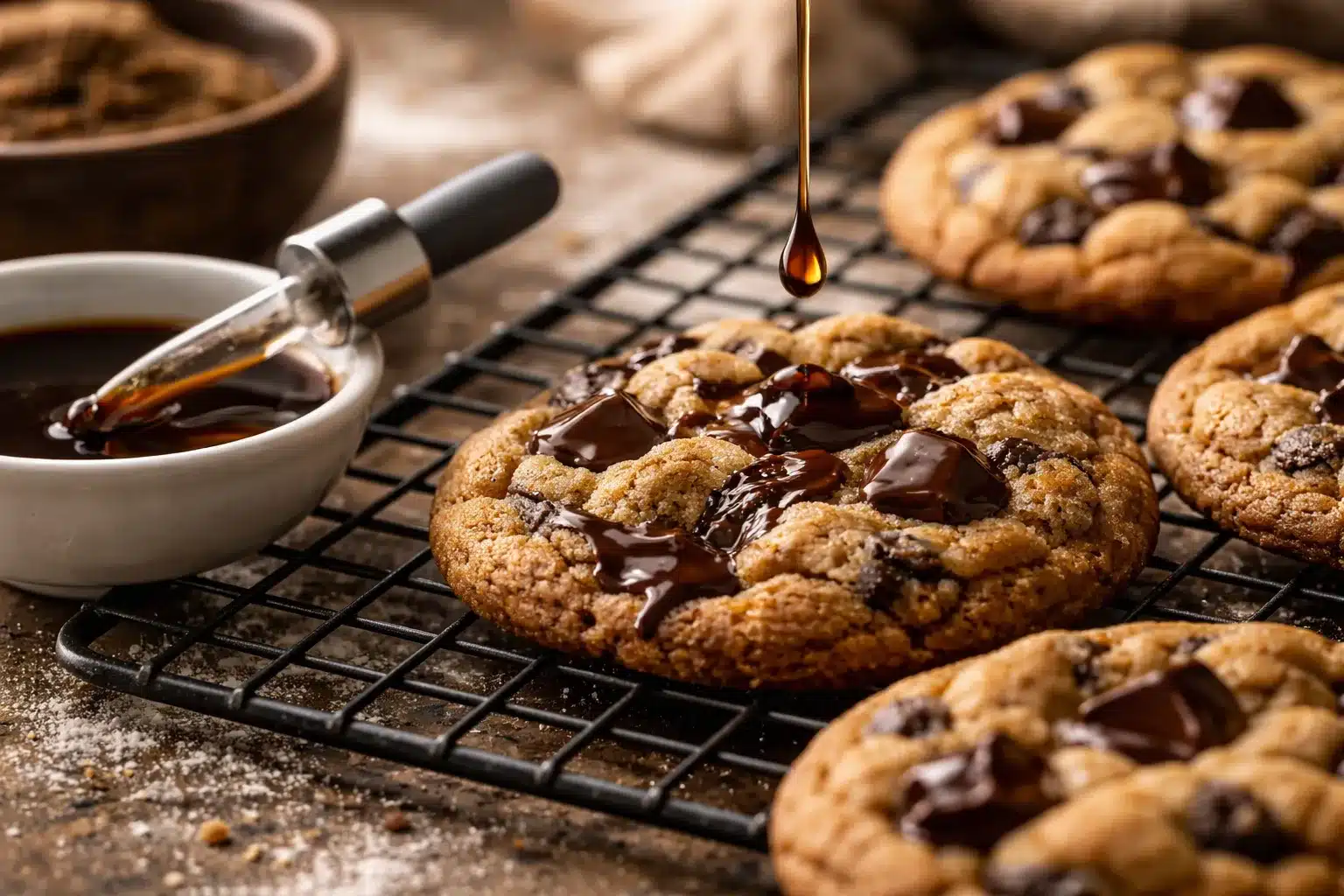
The 2026 **swalty baking trend** has officially dissolved the boundary between savory and sweet. Home bakers are no longer satisfied with simple sugar; they are utilizing microscopic amounts of **fermented mushroom sauce**, white miso, or high-end soy sauce to upgrade buttercreams, cookie doughs, and dark chocolate. This creates a spectacular, funky depth that cuts through heavy sugar and amplifies the complex richness of raw cacao.
My understanding of dough foundations started decades ago in **Great Aunty Gabbi’s** tiny Austrian kitchen. Today, living entirely out of suitcases and adapting to unpredictable Thai rental ovens requires constant innovation. We recently tested the 2026 “treat culture” movement, where families prioritize small, highly complex flavor bombs—like swalty baked goods—over giant, sugary portions.
The Science of Sustainable Umami in Modern Desserts
Adding a drop of **sustainable umami**—like our homemade **Mushroom Garum recipe**—tricks your palate into perceived sweetness. The glutamates amplify the deep, caramel notes of brown sugar and the bitter edge of dark chocolate, making the dessert taste significantly richer without needing extra refined sugar. This is the ultimate zero-waste kitchen hack for health-conscious families.
Tested in our 2026 Thailand Travel Kitchen
Just last week in our Hua Hin fieldwork, 9-year-old **Victor** helped us mix a tiny splash of soy sauce into our favorite chocolate chip cookie dough. He was highly skeptical at first, but the result was incredible! We’ve even started adding a pinch of white miso to the frosting for our chocolate cupcakes with Italian meringue buttercream.
Can you use a vegetarian fish sauce substitute in baking?
Yes! Our **vegetarian fish sauce substitute** (the mushroom garum) is actually superior to commercial options for baking because it lacks the “fishy” finish while providing the exact glutamate profile needed to balance high-fat buttercreams. This is the essence of our family-led, culturally grounded archive.
Mushroom Garum Recipe & Zero-Waste FAQ
Fermenting your own sauces can feel intimidating if you’re used to buying everything off the shelf. Here are the clear, direct answers to the most common questions we get from families making these zero-waste kitchen hacks on the road.
Is this vegetarian fish sauce substitute safe for children?
Homemade Mushroom Garum is perfectly safe for children when prepared using a strict 15% salt brine to prevent harmful bacteria. Its high glutamate content makes it a healthy, natural flavor enhancer for kids’ meals, avoiding the artificial additives found in many commercial sauces. We use it constantly for Victor’s healthy school lunches!
Yes, you can use button mushrooms, portobellos, or any edible culinary mushroom scraps. While shiitake provides the deepest sustainable umami profile, mixing everyday button mushroom stems still yields a rich, savory liquid that reduces food waste effectively.
How long does fermented mushroom sauce last in the fridge?
Once strained and bottled, your fermented mushroom sauce will last up to six months in the refrigerator. The high salinity acts as a natural preservative, keeping the umami liquid safe and intensely flavorful for months of weeknight cooking.
Institutional & Scientific Verification
Our family kitchen standards for pathogentic safety and sustainable umami are benchmarked against these 2026 global authorities.
Clinical Brine Standards
Verification of the salt-to-weight ratios required for safe ambient-temperature fermentation.
Verify StandardHeritage Preservation
Protocols for the historical translation of ancient Roman garum into modern 2026 cooking.
Verify ScienceZero-Waste Logic
Sourcing data for upcycling mushroom stems into high-yield, spectacular flavor bases.
Verify ProtocolWho are the experts behind this Mushroom Garum Recipe?

Natalia Mayerhoffer
Author Profile
Oliver Mayerhoffer
Author Profile
Victor Mayerhoffer
The Victor StandardConclusion: Mastering your Mushroom Garum Recipe for Sustainable Umami
Whether you are reducing waste in your home kitchen, tracking down authentic ingredients in a local Asian market, or trying to replicate the flavors of our travels, adding sustainable umami to your diet changes everything. From the ancient shores of the Mediterranean to our current 2026 rental kitchen in Thailand, this Mushroom Garum recipe has proven to be the ultimate flavor enhancer.
Why this Fermented Mushroom Sauce is the ultimate Vegetarian Fish Sauce Substitute
By utilizing Natalia’s clinical safety standards and Oliver’s hospitality precision, you can transform simple mushroom stems into a spectacular, resort-grade vegetarian fish sauce substitute. Don’t be afraid to experiment with the “swalty” dessert trend or Victor’s favorite savory noodle upgrades.
Join our 2026 Luxury Family Travel Giveaway
Discover the Mayerhoffer Web: where ancient heritage meets modern hospitality precision. Win curated travel guides and zero-waste kitchen tools.
Explore Our Family JourneyEnjoying our content? Make Mangoes & Palm Trees a preferred source on Google.