Disclosure & Transparency
This article features authentic culinary techniques and ingredient guides. We verify our research against Britannica Botanical Standards (Tier 1). Learn more in our Affiliate Disclosure.
Master the Sweet, Smoky Flavor The Complete Guide to Dried Guajillo Chiles: Flavor, Heat & Authentic Use Selection, Preparation, and Family-Tested Recipes
Discover how to select and cook with dried guajillo chiles, the mild, fruity backbone of authentic Mexican cuisine. Learn expert sourcing tips, flavor profiles, and family-tested recipes based on 25+ years of culinary exploration.
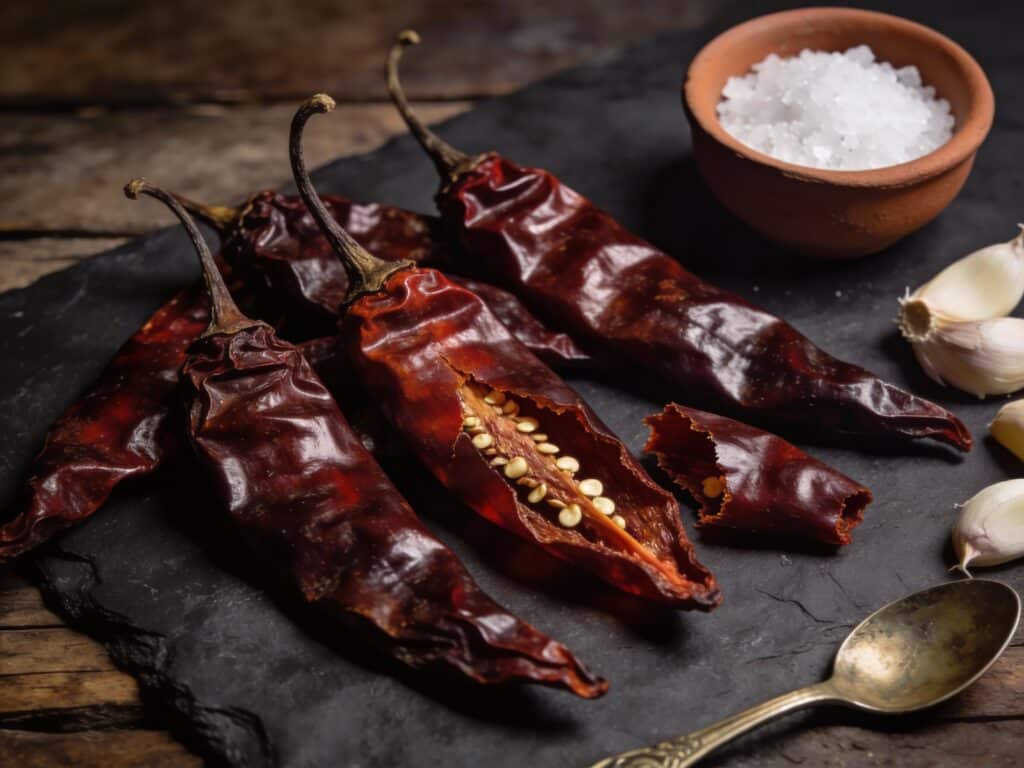
“I didn’t learn about guajillo chiles in culinary school. I learned in the markets of Central Mexico, watching vendors sort through bins of dried peppers with practiced hands. They taught me that freshness isn’t about age—it’s about pliability. A quality guajillo should bend like leather, not snap like a twig.” — Oliver Mayerhoffer
What Are Dried Guajillo Chiles? A Culinary Definition
Dried Guajillo Chiles are the sun-dried form of the fresh Mirasol pepper. Botanically classified as Capsicum annuum, they are the second most commonly used dried chili in Mexican cuisine after Anchos. They are valued for their mild heat (2,500–5,000 SHU) and bright, tangy flavor profile with notes of green tea and berries.
Dried guajillo chiles are one of those ingredients that quietly does all the heavy lifting in the kitchen. If you’ve ever tasted a rich red sauce that felt deep, comforting, slightly sweet, and mysteriously complex, chances are guajillo was involved. Think of it as the bassline in a song—you don’t always notice it on its own, but without it, everything feels flat.
According to Serious Eats (Tier 1), the guajillo offers a unique “brightness” that balances the heavier, raisin-like sweetness of Ancho chiles. This makes them essential for complex moles and simple weeknight enchilada sauces alike.
Guajillo Chile at a Glance: Key Culinary Facts
| Metric | Value | Culinary Insight |
|---|---|---|
| Heat Level | 2,500–5,000 SHU | Mild to Medium. Focus is flavor, not fire. |
| Flavor Profile | Sweet, Fruity, Smoky | Notes of berries and green tea; slightly tangy. |
| Best For | Sauces, Marinades | Creates smooth, velvety textures due to thin skin. |
| Storage | 1 Year (Airtight) | Keep in cool, dark place. Best within 6 months. |
Health Benefits & Nutritional Profile of Dried Guajillo Chiles
Dried Guajillo Chiles are nutrient-dense, providing 6-8% of the Daily Value of Vitamin A per serving. They contain capsaicin, which PubMed studies (Tier 2) link to improved circulation and metabolism, alongside anti-inflammatory flavonoids like quercetin.
Flavor is wonderful, but when that flavor supports your family’s health, it becomes a staple. Beyond the heat, the deep red color of guajillo indicates a high concentration of carotenoids.
Nutritional Profile (Per 15g Serving)
| Nutrient | Function | Source Verification |
|---|---|---|
| Vitamin A | Supports eye health and immune function. | USDA FoodData (Tier 3) |
| Capsaicin | Anti-inflammatory & metabolic support. | PubMed / NCBI Research |
| Iron | Essential for energy production. | USDA FoodData |
Is It Spicy? (The Scoville Truth)
Very Mild. Guajillo peppers register between 2,500–5,000 Scoville Heat Units (SHU). For context, a Jalapeño can reach 8,000 SHU. This makes guajillo ideal for adding depth without overwhelming sensitive palates.
How to Prepare Dried Guajillo Chiles: The 5-Step Method
Before any recipe comes preparation. The rehydration process is forgiving and teaches valuable cooking lessons about texture transformation.
- Clean & De-Seed: Use kitchen scissors to snip the stem and shake out the seeds. Seeds add bitterness, not flavor.
- The “Flash Toast”: Place in a dry pan over medium heat for just 10–15 seconds per side. Stop immediately when you smell the fragrance (toasting activates the essential oils).
- Thermal Shock (Soak): Cover with hot (not boiling) water for 20 minutes until pliable.
- Blend & Strain: Puree with garlic and liquid, then strain through a mesh sieve for a silky, restaurant-quality texture.
“Never discard the soaking water unless it is incredibly bitter (taste a drop). In professional kitchens, we call this ‘Liquid Gold.’ It contains dissolved flavor compounds and natural pectin. Use it to thin your sauces instead of plain water for maximum depth.”
Visual Guide: Making Guajillo Sauce
Video: “Guajillo Chili Sauce Technique” by Tex-Mex Cuisine (Tier 5 Resource).
Authentic Recipes Using Dried Guajillo Chiles
Every recipe here has been tested in our family kitchen in Hong Kong. These aren’t theoretical—they are real dishes refined through trial and error to bridge authentic Mexican flavor with weeknight practicality.
Recipe #1: Simple Guajillo Sauce (The Foundation)
This is the foundational red sauce for enchiladas, chilaquiles, or pouring over eggs. It freezes perfectly.
Ingredients (Makes 2 Cups)
| Dried Guajillo Chiles | 6 whole (cleaned & seeded) |
| Hot Water | 2 cups (reserve for blending) |
| Aromatics | 3 cloves garlic, ½ small onion |
| Spices | ¼ tsp cumin, ½ tsp salt |
| Oil | 1 tbsp (for frying the sauce) |
Method:
- Toast: Flash-toast cleaned chiles in a dry pan (5 seconds/side) until fragrant.
- Soak: Hydrate in hot water for 20 minutes until soft.
- Blend: Puree chiles, garlic, onion, cumin, and 1 cup soaking liquid until smooth.
- Fry: Heat oil in a saucepan. Pour in the sauce (it will splatter!) and simmer for 5 minutes to “season” the sauce.
Recipe #2: Guajillo Adobo Marinade (For Grilling)
A deeper, tangier paste for chicken, pork, or tofu. The vinegar helps tenderize proteins.
Ingredients (For 2-3 lbs Meat)
| Guajillo Chiles | 8 whole (cleaned) |
| Acid | ¼ cup Apple Cider Vinegar |
| Sweetener | 1 tbsp Honey or Brown Sugar |
| Herb/Spice | ½ tsp Mexican Oregano, ¼ tsp Pepper |
Method:
- Prep: Toast and soak chiles as per Recipe #1.
- Blend: Puree chiles with vinegar, honey, garlic, and spices. Use less soaking liquid to create a thick paste.
- Marinate: Coat meat or vegetables for 4–8 hours.
- Cook: Grill or roast until charred and cooked through.
Victor’s “Kid-Tested” Standard (Age 12)
The Dish: Grilled Chicken Thighs with Guajillo Adobo.
The Verdict: “It looks really red like it’s going to be hot, but it actually tastes more like fruity BBQ sauce. 8.5/10 – good for tacos.”
Parent Tip: Guajillo’s bright red color can intimidate kids. We call it “Red BBQ Chicken” to bridge the familiarity gap. The honey in the marinade helps caramelize the skin, which kids love.
Guajillo Substitutes: Comparison Matrix
Can’t find Guajillos? Use this matrix to find the best alternative for your specific dish.
| Substitute | Flavor Difference | Best Use Case |
|---|---|---|
| Ancho | Sweeter, darker, raisin-like. | Moles, Enchiladas (add vinegar). |
| Pasilla | Earthier, chocolatey, less fruity. | Rich beef stews, Mole Negro. |
| New Mexico | Brighter, simpler, slightly hotter. | Simple red sauces. |
How to Prepare Dried Guajillo Chiles: The Complete 5-Step Method
Preparing dried guajillo chiles isn’t difficult, but it does require attention to detail and understanding the “why” behind each step. Each stage—cleaning, toasting, soaking, blending, and straining—serves a specific purpose in developing flavor and creating the smooth, vibrant sauce or paste that makes guajillo so valuable. Once you’ve done this a few times, it becomes muscle memory, almost meditative. But the first time, it helps to understand what you’re doing and why it matters.
Step 1: Cleaning & Seeding (2–3 minutes)
The first step is cleaning your dried guajillo chiles. Use your hands or kitchen scissors to remove the stem at the top of each chile—this is the woody bit where the chile was attached to the plant. Next, shake out the seeds. The seeds aren’t harmful or toxic, but they can add bitterness to your final sauce, so most traditional recipes call for removing them. The easiest way is to hold the chile stem-side down over a bowl or trash can and gently shake or tap it to release the seeds. Don’t worry about getting every single seed; some will remain stuck to the interior walls, and that’s fine. If you want to be thorough, you can run a small knife or your finger along the interior to loosen remaining seeds, but this step isn’t necessary.
Step 2: Toasting in a Dry Pan (The Critical Flavor-Activation Step, 5–10 seconds per side)
Toasting is the most critical step in guajillo preparation, and it’s where many home cooks make mistakes. Heat a dry skillet (cast iron or stainless steel works best) over medium heat for 30 seconds until it’s hot but not smoking. Working with 1–2 chiles at a time, place them flat on the hot surface. You’ll hear a gentle sizzle and smell the aroma intensify dramatically. Toast for just 3–5 seconds per side—you’re not trying to cook them, just awaken the volatile oils and deepen the flavor compounds through light heat activation. According to Serious Eats’ detailed guide to Mexican chiles, this brief toasting creates the Maillard reaction—the same browning process that creates the crust on seared steak.
Critical warning: Over-toasting ruins the chile. If you toast for more than 10 seconds per side, the chile will begin to burn, creating bitter, acrid flavors that are nearly impossible to mask in the final dish. Watch for a subtle color darkening and listen for the aroma—when it smells amazing (fruity, smoky), it’s done. If it smells burnt or acrid, you’ve gone too far. With practice, you’ll develop an intuition for the exact moment. Transfer the toasted chile to a plate to cool while you toast the next batch.
Step 3: Soaking in Hot Water (Rehydration, 15–20 minutes)
After toasting, place your chiles in a heat-safe bowl and cover them with hot water—not boiling (which can “cook” the chiles and affect flavor), but hot enough that steam rises (about 180–200°F or 82–93°C). You want about 2 cups of hot water per 4–6 chiles, giving them room to fully rehydrate without crowding. Let them soak for 15–20 minutes. During this time, the heat rehydrates the chile and causes the cell membranes to absorb water, which helps release the flavor compounds into the soaking liquid itself. You’re essentially making a light guajillo “tea” that contains many of the aromatic compounds. Don’t discard this liquid—it’s liquid gold for your final sauce. Many traditional recipes specifically ask to reserve the soaking liquid or even blend with it rather than fresh water, because it creates a richer, more intense sauce.
You’ll know the chiles are ready when they’ve softened significantly and bend easily without cracking. If you try to bend one and it snaps, it needs more time. Once fully rehydrated, they should feel similar to raw mushrooms—soft, pliable, slightly spongy.
Step 4: Blending into Smooth Paste or Sauce (3–5 minutes)
To make a basic guajillo chile paste or sauce, place the softened, rehydrated chiles in a blender along with their soaking liquid. The ratio is flexible—you can use all the soaking liquid for a thinner sauce (good for enchiladas or pozole), or less liquid for a thicker paste (good for marinades or adobo). Add supporting ingredients based on your intended use: garlic (2–4 cloves), a pinch of salt (to taste), and sometimes onion (1/4 to 1/2 small onion, if desired). Traditional additions include spices like cumin, Mexican oregano, or a pinch of cinnamon (depending on whether you’re making adobo or a mole-style sauce).
Blend on high speed for 60–90 seconds until completely smooth. If your blender struggles or gets stuck, add liquid gradually (a tablespoon at a time) to help it process. The goal is a thick but pourable consistency—not a watery sauce, and not a paste so thick it won’t blend. The texture should be similar to tomato sauce or heavy cream. Taste as you go and adjust salt, garlic, or spices to your preference.
Step 5: Straining Through Fine Mesh (Optional but Recommended, 2–3 minutes)
This step may seem fussy, but it’s the difference between a rustic sauce and one that’s silky and restaurant-quality. Pour your blended guajillo mixture through a fine mesh sieve, pressing gently with the back of a spoon to extract as much liquid and soft pulp as possible. Small bits of skin and harder material will remain in the sieve; discard these. What passes through is smooth, velvety sauce with no graininess or tough bits. This step is especially important if you’re making enchilada sauce or a delicate mole where texture matters. For rustic adobo or a chile for filling tamales, you can skip this step if you prefer.
Once strained, your guajillo sauce or paste is ready to use immediately, or you can store it in the refrigerator for up to 5 days or freeze for up to 3 months.
⏱️ The 5-Step Guajillo Preparation Cheat Sheet
| Step | Action | Time | Key Tips |
|---|---|---|---|
| 1. Clean | Remove stem & shake out seeds | 2–3 min | Don’t worry about every seed; some will remain |
| 2. Toast | Dry pan over medium heat | 3–5 sec/side | ⚠️ Over-toasting creates bitter flavors. Watch for aroma, not color |
| 3. Soak | Cover with hot water (not boiling) | 15–20 min | Save the soaking liquid—it’s flavor-packed |
| 4. Blend | Blender + soaking liquid + garlic/spices | 1–2 min | Texture = tomato sauce consistency |
| 5. Strain | Fine mesh sieve + press gently | 2–3 min | Optional but makes sauce silky smooth |
Total prep time: 25–35 minutes (most waiting for soaking). Active work time: ~10 minutes
Storage & Shelf Life: Keeping Your Guajillo Chiles Fresh
Storing Whole Dried Guajillo Chiles
Proper storage can make the difference between guajillo chiles that stay vibrant for months and ones that lose their soul after a few weeks. Whole dried guajillo chiles should be stored in an airtight container—glass jars with tight-fitting lids or resealable plastic containers both work. Place them away from light, heat, and moisture. A pantry or cupboard works well, but avoid placing them near the stove, where heat fluctuations and cooking moisture can degrade their oils over time. Ideally, store them in a cool, dark, dry place with a stable temperature (around 65–70°F or 18–21°C).
When stored correctly, dried guajillo chiles can last up to 1 year or even longer. However, freshness matters significantly. Over time, chiles won’t necessarily spoil in a dangerous way (they’re too dry for microbial growth), but they will lose aroma and flavor potency. The best flavor window is 3–8 months after purchase; after that, they’re still usable but noticeably less vibrant. Think of them like dried herbs—the older they get, the less impact they have. If a guajillo chile smells dusty or looks excessively faded (very pale brown or grayish), it’s probably past its prime and won’t contribute much flavor to your dish.
Storing Prepared Guajillo Sauce or Paste
Once you’ve blended guajillo chiles into sauce or paste, storage depends on your intended timeline. Refrigerated: Guajillo sauce or paste will keep in an airtight container in the refrigerator for 4–5 days. Frozen: For longer storage, freezing is an excellent option that preserves flavor excellently. Portion the paste into small containers or ice cube trays, freeze until solid, then transfer to freezer bags and label with the date. Frozen guajillo paste will keep for up to 3 months or longer (up to 6 months if kept at a constant 0°F or -18°C). When you need some, just grab a portion and thaw in the refrigerator overnight or heat directly in a pan.
Ice cube portions are particularly convenient—each cube is roughly 1–2 tablespoons, so you can grab exactly what you need without thawing a large batch. This “cube strategy” is a simple habit that saves time and keeps flavor at your fingertips whenever you want to add guajillo to a sauce, soup, or marinade.
Signs That Dried or Prepared Guajillo Has Gone Bad
While dried chiles rarely spoil in a way that makes them unsafe, they can lose quality or develop off-flavors. Watch for these signs:
- Visible mold or discoloration: If you see any white, green, or black growth, discard immediately
- Musty or off-smell: If the chile smells like old paper, must, or something unpleasant, it’s past prime
- Excessive brittleness: If the chile snaps like glass with no pliability, it’s very old and flavor will be minimal
- Discolored or pale gray chile: This indicates age or improper storage (sun exposure), and flavor will be flat
- For prepared sauce: If it smells sour or fermented, discard it
Buying Guide: How to Choose Quality Guajillo Chiles
Walking into a store and staring at a wall of dried chiles can feel overwhelming, especially if you’re new to cooking with them. The good news is that choosing quality guajillo chiles is easier than it looks once you know what to look for. PepperScale recommends checking several visual and sensory markers of freshness. Here are the key criteria:
✓ Color: Deep, Rich Red is Your Target
High-quality guajillo chiles should have a deep, rich red hue, not a dull brown or pale brick color. The color should be vibrant and consistent across the surface. Darker reddish-brown chiles are still acceptable (they’re older but often have concentrated flavor), but avoid chiles that look excessively faded, grayish, or dull tan, as these indicate age beyond the useful window or improper storage. A good rule of thumb: if you hold the chile up to light, a quality chile will show some translucence (light passing through), indicating thin, fresh skin.
✓ Flexibility: Bend Test for Freshness
Gently bend a chile. It should feel leathery but pliable, bending without snapping. If it snaps cleanly with a sharp break, it’s likely old or was stored in an environment that was too dry or exposed to temperature fluctuations. The most desirable texture is one that bends easily without tearing, indicating that the chile retains moisture and has been stored properly. This flexibility is crucial because it means the chile’s cell walls are intact, and the flavor compounds haven’t deteriorated or evaporated.
✓ Aroma: The Most Reliable Quality Indicator
If possible, smell the chile before buying. Fresh guajillo chiles smell warm, slightly sweet, and earthy. If there’s little to no smell, or worse, a musty odor, put them back. Aroma is the most reliable quality indicator because it reflects the volatile compounds that create flavor. Experienced cooks can even detect the difference between chiles stored in sunlight (which creates off-flavors) versus those stored in darkness.
✓ Source & Seller: High Turnover is Your Friend
Where you buy matters. Look for dried chiles at Mexican markets, Latin grocery stores, or reputable online retailers. These places typically have higher customer volume, meaning chiles are purchased and restocked more frequently, so you’re more likely to get fresher inventory. Avoid buying from general supermarket bulk sections where chiles might sit for months. Large, well-established Mexican markets are your best bet—vendors know their product, customers rotate inventory quickly, and prices are usually better than specialty grocery stores.
Online purchasing: If you’re buying online, look for vendors that specify harvest dates or clearly indicate freshness. Read customer reviews about flavor and freshness. Reputable online chile sellers often package chiles in vacuum-sealed or airtight packaging, which helps preserve flavor during shipping.
✓ Whole vs. Ground: Always Choose Whole
Whole guajillo chiles are always preferable to pre-ground versions. Once ground, chiles lose their volatile compounds rapidly due to increased surface area exposure to air. Whole chiles give you control over freshness and preparation, and they store indefinitely longer than ground powder. If you need guajillo powder, grind whole chiles yourself just before using them—a spice grinder or even a molcajete (traditional Mexican mortar) works perfectly. The flavor difference is dramatic: freshly ground guajillo powder tastes vibrant and complex, while pre-ground can taste flat and stale.
Guajillo Chile Buying Checklist: What to Look For
Color Check
- ✅ Deep brick red to dark reddish-brown
- ✅ Vibrant & consistent across surface
- ❌ Avoid: Pale tan, gray, or excessively faded
- Tip: Hold to light—should be slightly translucent
Bend Test
- ✅ Bends easily without snapping
- ✅ Feels leathery but pliable
- ❌ Avoid: Snaps sharply or feels brittle
- Tip: Indicates moisture retention & freshness
Aroma Test
- ✅ Warm, sweet, earthy smell
- ✅ Fruity & slightly smoky
- ❌ Avoid: Musty, flat, or cardboard-like
- Tip: Best quality indicator of flavor
Where to Buy
- ✅ Mexican markets (best turnover)
- ✅ Latin grocery stores (good prices)
- ✅ Online: Check harvest dates
- ❌ Avoid: Generic supermarket bulk sections
Form & Packaging
- ✅ Whole chiles (not ground)
- ✅ Airtight packaging for online
- ❌ Avoid: Pre-ground powder
- Tip: Grind fresh when needed
Price Guide
- Mexican markets: $0.30–$0.50 per chile
- Supermarkets: $0.50–$0.75 per chile
- Online: $0.40–$0.70 per chile
- Bulk = better value. Buy 1+ lbs
Perfect Substitutes for Dried Guajillo Chiles: When & How to Swap
Sometimes, despite your best efforts, guajillo chiles just aren’t available at your local store. When that happens, substitutes can help—though it’s important to understand that nothing perfectly matches guajillo’s unique flavor profile. However, understanding which chiles work as substitutes and how to adjust your recipe can help you create delicious results. Here are the best options, ranked by similarity to guajillo:
Substitute #1: Ancho Chiles (Closest Alternative)
Ancho chiles are the closest alternative to guajillo, though they’re noticeably different. Anchos are dried poblano peppers, and they’re sweeter and more raisin-like than guajillo, with a darker, more earthy undertone. Heat level: 1,000–2,000 SHU (milder than guajillo). For detailed comparison, you can explore our comprehensive guide to ancho chile substitutes.
When to use ancho as a substitute: If you’re making enchilada sauce or any dish where the guajillo flavor is supporting but not dominant, ancho works well. The key adjustment: add a small amount of acid (lime juice, vinegar, or tomato) to replace guajillo’s natural tang. Conversion ratio: Use 1:1 (one ancho for one guajillo), but expect slightly sweeter results.
Substitute #2: Pasilla Chiles (Darker, More Earthy)
Pasilla chiles (dried chilacas) are another option, but they bring a darker, more earthy flavor. They’re even earthier than ancho, with an almost chocolatey undertone. Heat level: 250–1,000 SHU (noticeably milder than guajillo). When to use: Pasilla works best in complex sauces like mole negro, where the earthy depth complements other ingredients. Pasilla won’t work well in simple guajillo sauces where you want the bright, fruity guajillo character to shine.
Conversion & adjustment: Use 1:1 ratio, but add more acid (lime, vinegar) and possibly a pinch of sugar to brighten the flavor and approximate guajillo’s tangy sweetness.
Substitute #3: Chile Blend (When Single Substitutes Won’t Work)
In a pinch, you can use a blend of dried chiles to mimic guajillo’s profile. The idea is to combine sweetness (ancho), earthiness (pasilla), and brightness (New Mexico or California chile) to approximate guajillo’s complexity. Suggested blend for a 4-chile guajillo replacement:
- 2 ancho chiles (sweetness base)
- 1 pasilla chile (earthy depth)
- 1 New Mexico or California chile (fruity brightness)
Blend all three together using the same preparation method (toast, soak, blend, strain), and you’ll create a sauce that captures some of guajillo’s complexity, though it won’t be identical. Adjustment: Taste and add acid (lime, vinegar) or salt as needed to balance flavors.
New Mexico and California chiles are brighter and slightly fruity but less complex than guajillo. Heat level: 1,000–2,000 SHU (milder than guajillo). These chiles work well for straightforward red chile sauce, but they lack the depth and subtle fruitiness of guajillo. When to use: If you’re making a simple enchilada sauce or red chile for filling, these work acceptably.
Conversion ratio: 1:1, but expect a thinner, less complex flavor. Compensate by adding cumin, Mexican oregano, or a pinch of cinnamon to build depth.
Last Resort: Ground Chile Powders (Not Recommended)
Ground chile powders can be used, but they’re a last resort. The flavor will be flatter because ground chiles lose volatile compounds quickly, and you’ll miss out on the depth and richness that whole dried chiles provide. If you must use powder: Use about 1–2 tablespoons of guajillo powder or ancho powder per 4–6 whole chiles you would have used. Mix the powder with liquid (broth, water) to create a paste before adding to your dish.
When NOT to Substitute: Dishes Where Guajillo is Essential
Substitutions work best in cooked sauces and stews, where flavors have time to meld and balance. In simpler dishes, like a guajillo-forward sauce served immediately, the difference between guajillo and substitutes will be more noticeable and might disappoint. Examples where guajillo is irreplaceable:
- Simple guajillo sauce served as a dip or over eggs
- Pozole rojo (where guajillo’s specific character matters)
- Elegant plated dishes where guajillo is highlighted
Bottom line: Whenever possible, use real dried guajillo chiles. They’re affordable, shelf-stable, and worth seeking out. The flavor difference is worth the effort.
Guajillo Substitutes: Quick Comparison Matrix
| Chile Type | Similarity to Guajillo | Heat (SHU) | Flavor Adjustment Needed | Best Uses |
|---|---|---|---|---|
| Ancho | ⭐⭐⭐⭐⭐ Closest match | 1,000–2,000 | Add acid (lime, vinegar, tomato) | Enchiladas, sauces, adobo |
| Pasilla | ⭐⭐⭐ Darker, earthier | 250–1,000 | Add acid + sugar for brightness | Complex moles, stews |
| Blend (2A+1P+1NM) | ⭐⭐⭐⭐ Good balance | Mixed (~1,500) | Taste & balance with acid/salt | Sauces, adobo, stews |
| New Mexico | ⭐⭐⭐ Bright but thin | 1,000–2,000 | Add cumin, oregano, cinnamon | Simple red sauce, filling |
| ❌ Ground Powder | ⭐⭐ Flat, stale | Variable | Use less; add spices for depth | Last resort only |
Conversion rule: Most substitutes use 1:1 ratio by count (one substitute chile = one guajillo), but always taste and adjust seasonings to balance flavor.
Authentic Dried Guajillo Chiles Recipes: Family-Tested & Refined
Every recipe here has been tested in my family kitchen in Hong Kong, with my wife Natalia and our son Victor actually eating and critiquing the results. These aren’t theoretical recipes from cookbooks—they’re real dishes that we’ve made dozens of times, refined through trial and error, and adjusted for ingredients we can find locally. Each recipe includes timing, ingredient sourcing tips, and common mistakes to avoid.
Recipe #1: Simple Guajillo Sauce (The Foundation)
Serves: Makes 2 cups | Active time: 10 minutes | Total time: 30 minutes | Difficulty: ⭐ Easy
This is the foundational guajillo sauce that works for enchiladas, tacos, eggs, or anything requiring a rich red chile sauce. Once you master this basic ratio, you can adjust it endlessly.
Ingredients:
- 6 whole dried guajillo chiles, cleaned & seeded
- 2 cups hot water (for soaking)
- 3 cloves garlic, minced
- 1/2 small white onion (optional, for sweetness)
- 1/2 teaspoon salt (adjust to taste)
- 1/4 teaspoon cumin (ground)
- 1 tablespoon olive oil or canola oil (for cooking with sauce)
Method:
- Toast dried guajillos in a dry pan over medium heat for 3–5 seconds per side until fragrant
- Transfer to a bowl and cover with hot (not boiling) water
- Let soak for 15–20 minutes until softened
- Transfer softened chiles + soaking liquid to blender
- Add garlic, onion (if using), salt, and cumin
- Blend on high for 60–90 seconds until completely smooth
- Strain through fine mesh sieve for silky texture (optional)
- Heat oil in a small pan, add sauce, simmer 3–5 minutes to meld flavors
Chef’s tip: This sauce freezes beautifully in ice cube trays. Pop out cubes and store in freezer bags for months.
Recipe #2: Guajillo Adobo Marinade (For Grilled Meats)
Serves: Enough for 2–3 lbs meat | Active time: 15 minutes | Marinating time: 4–8 hours | Difficulty: ⭐⭐ Intermediate
This adobo is deeper and more complex than the simple sauce—it’s meant for chicken, pork, or beef that will be grilled or slow-cooked. The acid in the vinegar helps tenderize the meat while the guajillo provides savory depth.
Ingredients:
- 8 whole dried guajillo chiles, cleaned & seeded
- 2 cups hot water
- 4 cloves garlic, minced
- 1/4 small white onion
- 1/4 cup apple cider vinegar or white vinegar
- 1 tablespoon honey or brown sugar
- 1 teaspoon ground cumin
- 1/2 teaspoon Mexican oregano
- 1/4 teaspoon black pepper
- 1 teaspoon salt (adjust to taste)
Method:
- Toast guajillos 3–5 seconds per side in dry pan
- Soak in hot water for 15–20 minutes
- Blend chiles + soaking liquid + garlic + onion + vinegar + honey + spices
- Blend until completely smooth (2 minutes on high speed)
- Strain if desired for extra smoothness
- Coat meat thoroughly with marinade
- Marinate 4–8 hours (or overnight for maximum flavor)
- Grill, roast, or slow-cook until done
Chef’s tip: Save some adobo marinade before adding raw meat. Use it as a sauce for the cooked meat at serving time.
Recipe #3: Quick Pozole Rojo (Traditional Celebration Stew)
Serves: 4–6 people | Active time: 30 minutes | Total time: 2 hours | Difficulty: ⭐⭐ Intermediate
Pozole is traditionally made with hominy (large kernels of corn) and either chicken or pork, simmered in a guajillo-based broth. This version shortcuts the long cooking time by using canned hominy. Serve with shredded cabbage, radishes, lime, tostadas, and avocado on the side for guests to customize.
Ingredients:
- 8–10 dried guajillo chiles
- 2 cups chicken or vegetable broth
- 1 lb boneless chicken thighs or pork shoulder, cut into 1-inch chunks
- 6 cups additional broth (for simmering)
- 2 cans (25 oz each) white hominy, drained
- 4 cloves garlic, minced
- 1 tablespoon dried oregano
- 2 teaspoons salt (adjust to taste)
- Garnishes: shredded cabbage, radishes, lime wedges, tostadas, avocado
Method:
- Make guajillo sauce: toast 8–10 chiles, soak, blend with 2 cups broth + garlic until smooth
- Strain sauce through fine mesh
- Bring 6 cups broth to boil in large pot
- Add meat, guajillo sauce, oregano, salt
- Simmer 45–60 minutes until meat is very tender
- Add drained hominy, simmer 10 more minutes
- Taste and adjust salt/spices
- Ladle into bowls and serve with garnishes on the side
Chef’s note: This is party food. Make a huge batch and let guests customize their bowls.
Frequently Asked Questions About Dried Guajillo Chiles
❓ Are dried guajillo chiles very spicy?
No, guajillo chiles are mild to medium in heat, focusing more on flavor than spice. They typically range from 2,500 to 8,000 Scoville Heat Units (SHU), making them significantly milder than jalapeños and far gentler than any genuinely hot pepper. This makes them ideal for cooks who want bold, complex flavors without the inflammatory response or gastrointestinal distress that comes from very spicy chiles.
❓ Do I need to remove the seeds from guajillo chiles?
It’s recommended, as the seeds can add bitterness to sauces. Most traditional Mexican recipes call for removing both stems and seeds before toasting and blending. However, if you’re making a rustic adobo or don’t mind a slightly more assertive flavor, leaving a few seeds won’t hurt.
❓ Can I eat guajillo chiles without soaking them?
Soaking is essential to soften them and release their full flavor. Dried guajillo chiles that haven’t been soaked are too hard to blend, and they won’t properly release their flavor compounds into a sauce. The soaking liquid itself becomes flavorful and is worth using in your final dish.
❓ How long do dried guajillo chiles last?
When stored properly in an airtight container away from light and heat, dried guajillo chiles can last up to 1 year while retaining good flavor. However, the best flavor window is 3–8 months after purchase. After about a year, they’re still safe to eat but noticeably less vibrant in flavor.
❓ Are guajillo chiles suitable for vegetarian cooking?
Absolutely. Guajillo chiles are plant-based and add depth and umami to vegetarian dishes. Many traditional vegetarian Mexican recipes rely on guajillo chiles as their primary flavoring agent. Use guajillo sauce for vegetarian enchiladas, tacos with beans, or stews with mushrooms and root vegetables.
❓ Can I substitute guajillo with other dried chiles?
Ancho chiles are the closest substitute (use 1:1 ratio), but they’re sweeter and lack guajillo’s tangy brightness. For detailed substitute options, see our complete guide to ancho chile substitutes. In a pinch, you can use a blend of ancho, pasilla, and New Mexico chiles, but authentic guajillo is worth seeking out.
❓ Where can I buy quality dried guajillo chiles?
Mexican markets and Latin grocery stores offer the best selection and prices. These retailers typically have higher customer volume, ensuring fresher inventory. For online purchasing, look for vendors that specify harvest dates and pack in airtight/vacuum-sealed packaging. Avoid generic supermarket bulk sections where chiles might sit for months.
❓ What’s the difference between guajillo and ancho chiles?
Guajillo chiles are long and slender with fruity, slightly tangy notes. Ancho chiles (dried poblanos) are shorter and wrinkled with sweeter, raisin-like notes. Guajillo has a bit more brightness and tangy character, while ancho is earthier and sweeter. For a detailed comparison, visit our comprehensive guide to chile ancho substitutes.
❓ Can I make guajillo sauce ahead of time?
Yes. Prepared guajillo sauce keeps in the refrigerator for 4–5 days in an airtight container. For longer storage, freeze in ice cube trays, then transfer cubes to freezer bags where they’ll keep for 3–6 months. Thaw in the refrigerator overnight or heat directly in a pan.
❓ What should I serve with guajillo sauce?
Guajillo sauce works with virtually any filling: chicken, pork, beef, beans, mushrooms, cheese. Pour it over enchiladas and bake. Serve it as a dip for tortilla chips. Use it to coat grilled vegetables or proteins. Drizzle it over eggs for breakfast. The versatility is one of guajillo’s greatest strengths.
About the Author: Oliver Mayerhoffer
Oliver Mayerhoffer is a culinary explorer, food culture writer, and luxury food entrepreneur based in Hong Kong. Over 25+ years of travel across 40+ countries—particularly Central and Latin America—Oliver has developed deep expertise in authentic Mexican cuisine, ingredient sourcing, and traditional cooking techniques. He’s the founder and operator of A World of Caviars, a luxury food e-commerce business, and maintains a passion for discovering, understanding, and teaching about global ingredients and their authentic applications.
Oliver tests every recipe and technique in his family kitchen with his wife Natalia (originally from Siberia) and their 12-year-old son Victor. This real-world approach ensures that all content reflects practical, tested knowledge rather than theoretical understanding. His writing emphasizes experience over theory, practical application over academic discussion, and transparency about sources and limitations.
When not writing about food, Oliver travels, photographs markets and street food, and consults with specialty food retailers on sourcing and authentication. His mission is to help home cooks access authentic ingredients and techniques without gatekeeping or pretension.
Connect: Questions about guajillo chiles or authentic Mexican cooking? Reach out through A World of Caviars or follow along for more ingredient deep-dives.
Conclusion: Make Guajillo Your Go-To Ingredient
Dried guajillo chiles are one of those ingredients that quietly elevate everything they touch. Mild yet complex, traditional yet endlessly adaptable, they bridge the gap between comfort food and culinary creativity. Once you learn how to toast, soak, and blend guajillo chiles, you unlock a world of flavor that’s rich, balanced, and deeply satisfying. The best part? They’re affordable, shelf-stable, and accessible almost everywhere.
Whether you’re cooking a traditional Mexican dish or experimenting with something entirely new, guajillo chiles deserve a permanent place in your pantry. Start with the simple guajillo sauce in this guide. Once you’ve made it once or twice, it becomes second nature. From there, branch into adobos, pozole, or your own creative applications.
The most important thing? Start now. Buy a handful of fresh guajillo chiles from a good Mexican market, follow the 5-step preparation method in Section 4, and make the simple guajillo sauce today. I guarantee that once you taste what you’ve created, you’ll understand why I’m passionate about these chiles.
What’s your guajillo story? Have you cooked with guajillo chiles? Do you have a family recipe or a memorable dish? I’d love to hear about your experience in the comments below.