In July we left Bangkok’s street nights for Hua Hin’s beach mornings, cooking breakfast in a small rented kitchen so the day began with fruit and coffee instead of a hotel bill. When we can, we take the train or bus between cities rather than stacking short flights — and we try to travel outside the busiest holiday weeks. That rhythm keeps our family near US$40–70 a day; the country chapters below come from those weeks, not from brochure prices.
How can families stretch a Southeast Asia travel budget?
Outside peak holiday weeks, tickets and rooms usually cost less. Trains and buses between cities often beat short flights for a family. Apartments or guesthouses with a small kitchen let breakfast stay cheap. Pairing a beach week with nights cooking in cuts resort food spend; July 2026 notes for Thailand, Vietnam and Malaysia put a careful family day near US$40–70.
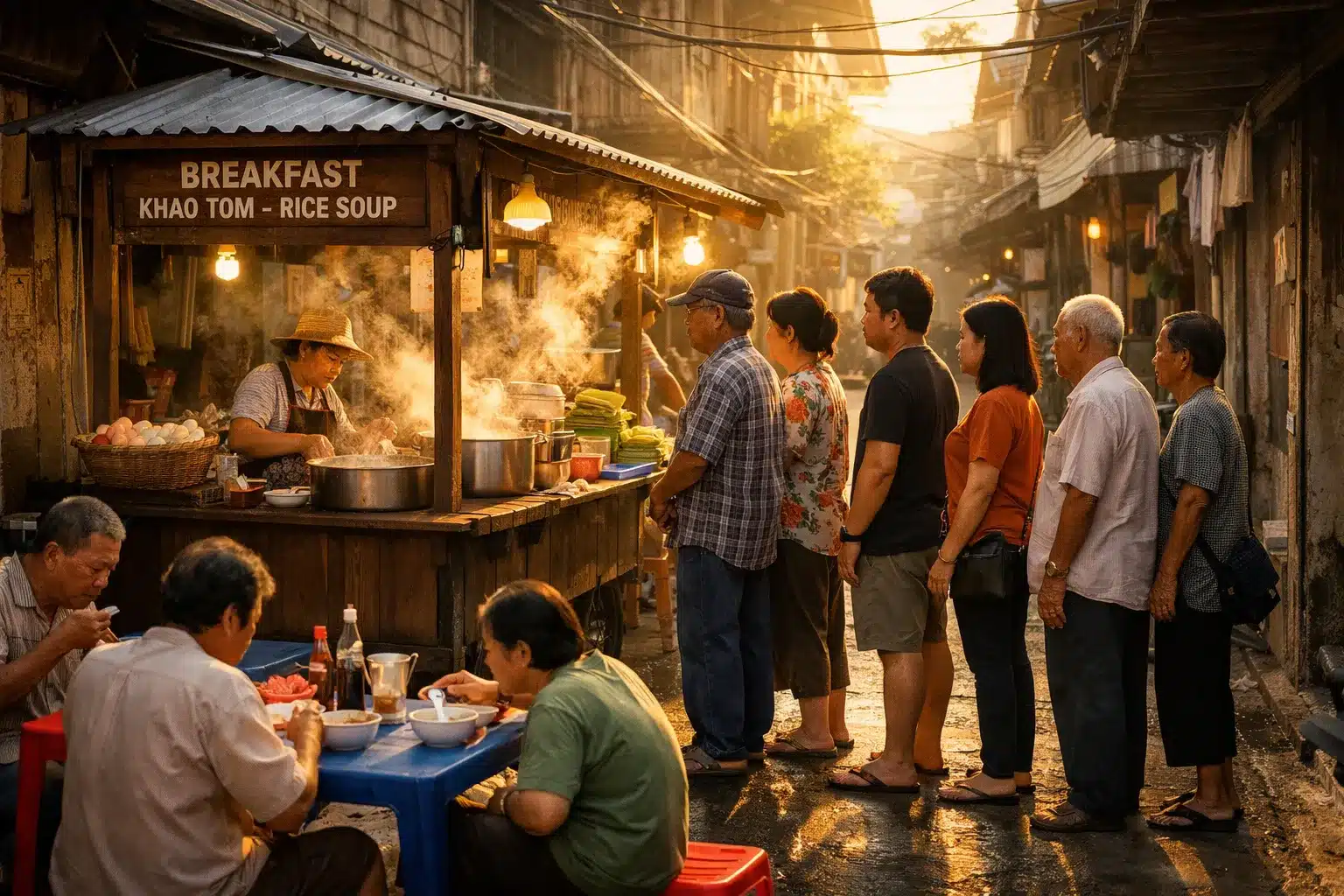
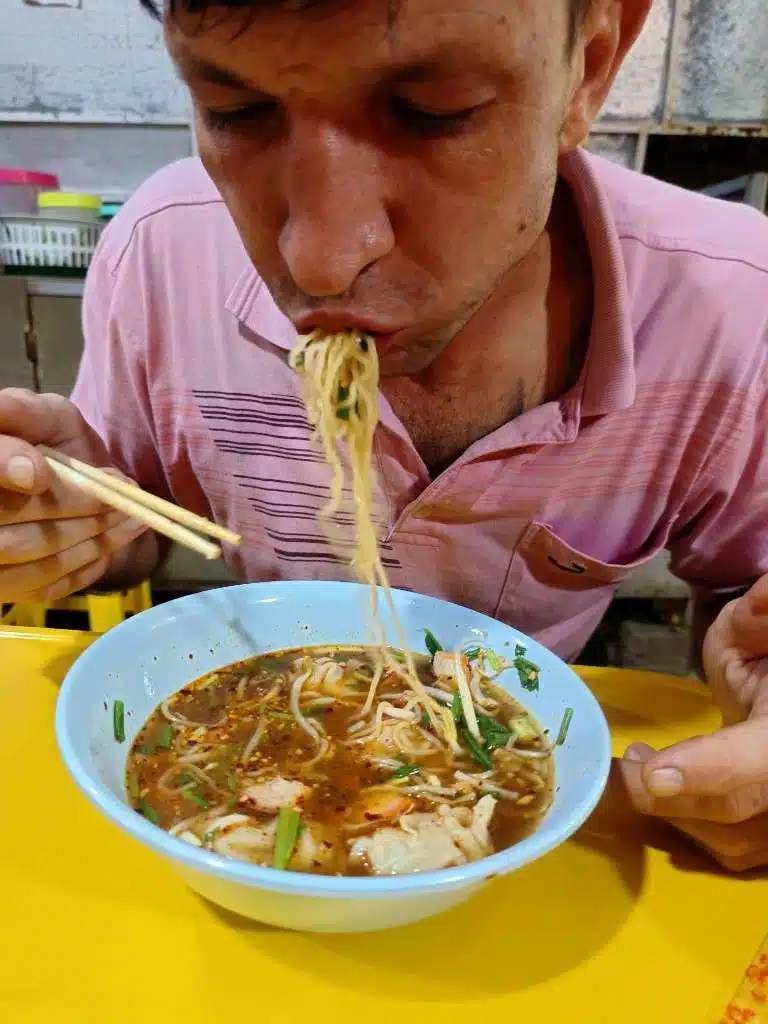
Bangkok street nights into Hua Hin beach mornings — July 2026; Natalia on safety notes; Victor on the plates.
What should families remember from this guide?
Daily band: US$40–90 for a family of three depending on country — see comparison table below.
Islands:Koh Chang guide for Gulf routing on a lean stay budget.
On this page
Affiliate disclosure: This guide contains affiliate links to guesthouses and tours we have used. Booking through these links supports our travel archive at no cost to you.
View our full affiliate disclosure. Recommendations follow personal receipts, not paid partnerships.
Why does Southeast Asia set the family budget benchmark?
Thailand, Vietnam, Cambodia and Laos stay within reach for a travelling family because everyday costs — wages, rent, a plate of noodles, a short ride across town — sit lower than in most Western cities. When we cook breakfast ourselves, eat where locals eat, and skip resort markups, a careful day lands near US$40–70.
What follows comes from December 2024 receipts and from weeks on the ground through July 2026 in Bangkok, Hua Hin and Vietnam. For deeper country reading, start at the Thailand food travel 2026 hub.
What eight months on the ground changed for our family budget math
A lot of travel writing still comes from a hotel after a week on the tourist strip. We spent eight-plus months on Vietnam legs of our Southeast Asia archive — month-to-month flats, wet markets before breakfast, power cuts, and Wi-Fi that dropped mid-call.
That friction belongs in the budget. Seasonal spikes, visa runs and school holidays show up in the daily numbers below because they showed up in our weeks.
Month-by-month living
Eight-plus months spending in local currency and navigating school calendars — living costs, not resort-week pricing.
Market and kitchen rhythm
We notice how street prices move when tourism thickens or thins — and which stalls keep quality when the queue grows.
Local recognition
Vendors begin to recognise repeat faces. Natalia keeps the safety notes; Victor decides whether a plate earns a second visit.
Honest friction
We say when we have not tested something — outages, heat, weak upload — instead of writing as if every week ran smoothly.
Why the numbers matter: When we quote ฿250 a night in Chiang Mai, we stayed there and timed Wi-Fi for work calls. When we point to a Hanoi market, Victor walked it with us — and he will leave a bowl the second the broth tastes wrong.
The Victor Standard (Age 8)
“I only like the budget guesthouses if the pool is clean or the mangoes across the street are sweet. In Hanoi, the traffic looks scary but it’s like a game once you know how the bikes move. Don’t go to the expensive places—the street food where the tiny plastic chairs are always tastes better.”
Why is Southeast Asia genuinely affordable?
People often assume budget travel here means someone else is being underpaid. The gap is usually simpler: wages and fixed costs sit lower, so a fair local price still looks cheap when you convert it. The Oman resort lesson below is the same arithmetic in a different currency.
The Oman lesson: fair compensation vs currency exchange
In Muscat I managed luxury resorts where housekeepers earned roughly 325 OMR a month ($844 USD). Locally that covered a private apartment, healthcare and savings for family back home — the Rial’s purchasing power matched the wage.
A Chiang Mai guesthouse paying staff ฿15,000 a month ($430 USD) works on the same logic. You are paying a fair market rate in an economy where rent and supply chains cost less, not buying a discount on exploitation.
Location
Avg. commercial rent (USD)
Sustainable guest price
Infrastructure
Chiang Mai, TH
$150–$240 /mo
$9–$12 /night
Mature / high Wi-Fi
Bangkok, TH
$450–$750 /mo
$25–$40 /night
Premium mega-city
Hanoi, VN
$300–$600 /mo
$12–$18 /night
Emerging / high value
Travel truth: the 40% break-even rule
Guesthouses in the budget Southeast Asia niche break even at roughly 40–50% occupancy because fixed costs stay low. Shoulder-season rates still cover wages and maintenance. Paying local fair prices keeps owners from cutting corners.
Victor noticed the same pattern in Chiang Mai when our friend Khun’s family restaurant charged more on the tourist strip — their rent there was triple the neighbourhood rate. Once you see local versus tourist pricing, family travel math on any continent starts to make sense.
Which country should your family visit in 2026?
Choosing between Thailand, Vietnam, Cambodia, and Laos is not about the cheapest flight — it is about matching infrastructure tolerance to each country’s strengths. Our archive legs across all four look very different at the border.
We planned two months in Thailand and stayed eight because infrastructure worked with a young child. Later we shifted Vietnam archive legs when Victor could handle rougher transit and we wanted street-level food culture.
Medical context: microbiome shifts
Moving from Thailand’s sanitized tourist zones to Vietnam’s street-food intensity can trigger digestion issues. For sensitive stomachs, see our gut-healthy strategies — context only, not medical advice. WHO travel health notes sit in our evidence vault below.
The Victor Standard (Age 8)
“Thailand is best for playing because the pools are good and there is a 7-Eleven on every corner. Vietnam is best for the food because I like the Pho and the way the traffic is like a game of Frogger. If you go to Cambodia, you need to bring a fan because the temples are very hot!”
Match your tolerance
Remote work critical?
Choose Thailand or Vietnam. Major cities deliver 5–15 Mbps in coworking hubs. Skip Laos if Zoom is your livelihood.
Young kids (0–5)?
Thailand leads on hospitals, transit, and Western-style amenities for picky eaters.
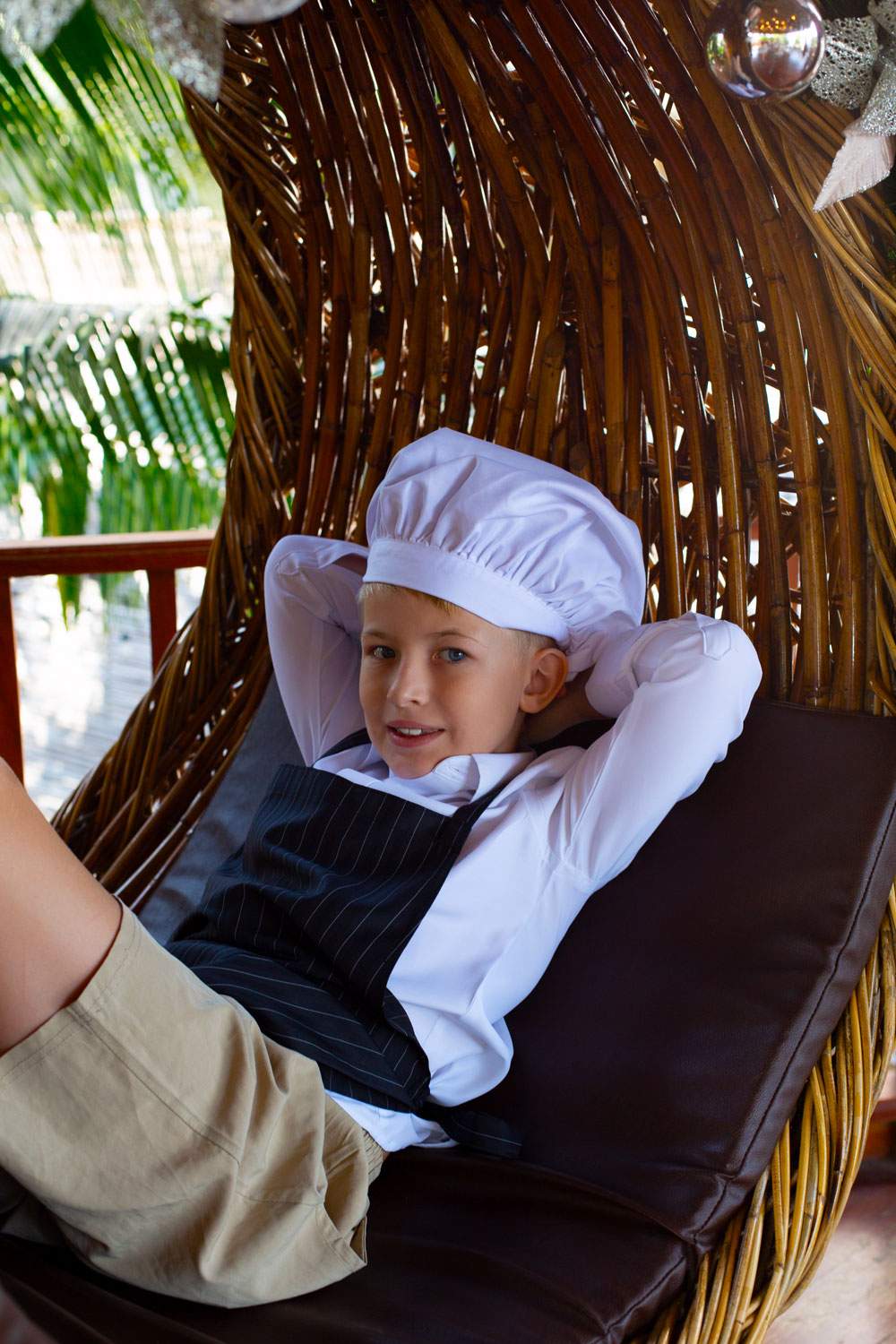
Kitchenette breakfasts in Hua Hin — one cooking night in cuts resort food spend on Thailand archive legs.
Thailand: family budget exploration baseline
We planned two months in Thailand and stayed eight. Functional transit, clinic access and kid-tolerant guesthouses mattered more than the sticker prices alone — and December taught us how fast those stickers climb when the crowds arrive.
Bangkok: where 2026 economics show on the receipt
BTS Skytrain and MRT still beat sitting in heat and traffic — tickets run ₿17–₿62 a trip. For a family of three, Grab often lands between ₿150–₿400 ($4–$12 USD) with the fare shown before you climb in. Our Bangkok street food 2026 loop covers the stalls we actually returned to.
Peak season warning: December doubles room rates — ₿350 in May becomes ₿800+ in December. Volume triples while staffing grows slower; service slips are arithmetic, not negligence.
Chiang Mai: remote-work testing ground
Quality guesthouses bottom out around ฿250/night ($7.50 USD) on our stays. Old City Wi-Fi in 2026 still tests 3–5 Mbps upload — adequate for video calls if you verify the provider before booking.
Medical context: clinic access
Thailand’s private clinics remain a safety net for traveling families. Victor’s ear infection visit ran $30 total with antibiotics — faster than our Western GP queue. Not medical advice; check WHO travel health before departure.
Thailand’s three-season cycle
Cool (Nov–Feb)
Peak tourism. Prices triple; book three to four months ahead.
Hot (Mar–May)
40°C heat. Lodging drops 30–50% if you tolerate humidity.
Rainy (Jun–Oct)
Daily two- to four-hour storms. Lowest crowds and costs.
Thailand is the training ground before Vietnam or Cambodia — confidence first, then rougher roads. Island routing: Koh Chang and Hua Hin 2026 notes.
Vietnam: high-value travel on the ground
Through July 2026 our Vietnam weeks moved us out of Thailand’s polished tourism layer into street-level living — louder, denser, and better value if your family can handle the sensory load.
Hanoi: street food anchor
A large pho bowl in the Old Quarter now averages 40,000–55,000 VND ($1.60–$2.20 USD), up a little from 2024 as vendors protect broth quality instead of racing to the floor. Victor ranks the stalls that have worked the same corner for twenty years; the best bowls still arrive on tiny plastic chairs at dawn, before the tourist buses find them.
2026 digital nomad infrastructure
Average 5G speed: 447 Mbps down / 99 Mbps up (national reports)
Da Nang matches Hanoi pricing with less traffic noise. Victor needs two-week reset cycles after Hanoi intensity — we document the full loop in our Da Nang family guide. Beach access plus fiber makes it the default buffer city in 2026.
Medical context: street food hygiene
Official travel health guidance recommends Typhoid and Hepatitis A updates before heavy street-food exposure. We use a hot-and-cooked rule for the first 72 hours — context only, not medical advice.
The Victor Standard (Age 8)
“The overnight sleeper bus to Da Nang is the best because you get a little cabin with your own light and it’s like a spaceship. Hanoi is louder than Bangkok, but the Banh Mi is better because the bread is crunchy like the bread my Dad’s family makes in Austria!”
Vietnam teaches adaptability Victor did not get in Thailand’s tourism bubble — fair exchange in a fast-growing economy, not undervalued labor.
Cambodia: temples, heat, and infrastructure gaps
Cambodia separates families who enjoy problem-solving travel from those who need predictable plumbing. We use Siem Reap as a high-value temple base — budget travel here is dialogue with history, not resort week pricing.
2026 Angkor Wat strategy
The three-day pass ($62 USD) still beats daily tickets — usable non-consecutively across ten days so kids recover poolside between temple blocks.
30-day tourist visa
$30 USD cash or e-visa
Angkor pass (kids under 12)
Free with passport proof
Tuk-tuk full day (inner circuit)
$15–$25
Private English guide
$35–$45 per day (worth it with kids)
Infrastructure and uncertainty
Outside Siem Reap, roads roughen and outages happen. Victor treated unmarked routes as exploration — exciting until legs turn to jelly on five-temple days.
Medical context: thermal load
Dry season (March–May) tops 40°C (104°F). Limit temple blocks to 5:30–9:30 AM; siesta by 11 AM with oral rehydration salts for kids. Context only — see WHO travel health in our vault.
The Victor Standard (Age 8)
“The ‘Tomb Raider’ temple (Ta Prohm) is the coolest because the trees are growing out of the walls like giant octopus tentacles. But don’t let your Dad take you to five temples in one day—your legs will turn into jelly! The iced coconut from the lady outside the gate is the only thing that saves you.”
Enjoy problem-solving? Cambodia delivers.
Need full predictability? Base in Thailand and sprint Siem Reap for three days.
Laos: slow travel and ultra-budget trade-offs
Laos is the cheapest stop in the region — not “Thailand but cheaper.” You gain serenity and low nightly rates; you trade Wi-Fi reliability and clinic density.
Kip economy and digital entry (2026)
The Lao kip hovered near 21,425 LAK per USD in February 2026 — strong purchasing power for families. The Lao Digital Immigration Form (LDIF) is mandatory before arrival; missing it means border delays.
Visa on arrival
$35–$45 USD (nationality dependent)
Kuang Si waterfall entry
25,000 LAK (~$1.15 USD)
Guesthouse (Luang Prabang)
$10–$20 /night
LDIF digital form
Mandatory for 2026 entries
Infrastructure and work trade-offs
We skip long-term Laos bases because upload speeds and outages break remote work. The China–Laos railway helps Vientiane–Luang Prabang hops; rural provinces still brown out.
Medical context: healthcare scarcity
Clinics outside Vientiane stay basic. Serious pediatric issues in Luang Prabang often mean evacuation to Udon Thani or Bangkok — carry insurance with medical evacuation coverage. Context only, not advice.
The Victor Standard (Age 8)
“Laos is the quietest country. The river is big and brown and the monks walk very early in the morning. But the internet is slow, so you have to bring your own books. My favorite part was the waterfall because the water is bright blue and there were rescued bears!”
Plan one to two weeks to reset between louder neighbors — lowest costs in Asia if you accept off-grid reality.
Bangkok street nights on July 2026 archive legs — market breakfasts beat resort F&B for predictable daily spend.
What family logistics actually work in 2026?
Country chapters stay theoretical until you handle visas, packing, and payment rails with kids in tow. These systems survived our budget Southeast Asia archive legs.
Packing: the one-week rotation rule
Overpacking “just in case” was our biggest mistake. Retail infrastructure is solid — pack seven days. Victor lived in three quick-dry shorts and five shirts for months.
Verified 2026 packing essentials
Linen/rayon clothing: synthetics stay wet at 90% humidity
Universal adapter: Thailand A/B/C; Vietnam A/C
Multi-currency card: Wise or Revolut — saves FX fees monthly
Reef-safe sunscreen: local SPF often includes whitening agents
Money and payments: the cashless leap
QR payments (PromptPay, VietQR) cover most vendors in 2026. Plastic-chair street food still wants cash — carry small notes.
Destination
Entry protocol
Cost (approx)
2026 requirement
Thailand
Visa exemption (30 days)
Free
Proof of 20,000 THB per family
Vietnam
E-visa (30–90 days)
$25 USD
Apply ~1 week before entry
Laos
Visa on arrival
$35–$45 USD
LDIF form mandatory
Medical context: travel stomach
Digestive issues interrupt many long trips in the region. Pack oral rehydration salts; use private clinics in Ho Chi Minh or Bangkok ($20–$30 consult) rather than guessing in rural towns. Context only — not medical advice.
Communication tip: WhatsApp and Telegram book guesthouses and Grab rides — email rarely works locally.
Will traveling for months ruin my children’s education?
Depends on your philosophy. Hybrid models combine travel with academic credit. We unschooled Victor on Vietnam archive legs, prioritizing market math and cultural adaptation over classroom pace.
Is it actually safe to travel through Southeast Asia in 2026?
Standard urban precautions apply as in any major city. Check WHO travel health and official advisories before entry; biometric and digital arrival cards now streamline borders in Laos and Singapore.
Can we really travel on $60 to $90 a day for a family of three?
Yes, with documented receipts: budget guesthouses ($15–$25/night), street food ($30–$40/day for three), and no mid-cycle flights. Thailand and Vietnam archive legs tracked this band in 2024–2026.
Meet the Mayerhoffers
“Free-spirited food adventurers, culture-seekers, and the guardians of 15 years of global memories.”
Lead author — fifty-country archive, currently traveling Southeast Asia through July 2026. Oliver brings field-tested recipe structure and honest weeknight notes from family kitchens abroad.
Routing and safety context come from the official references below — paired with Mayerhoffer family travel notes from July 2026 Thailand and Vietnam weeks.
Skip to main content Transparency: This guide includes affiliate links and contains our family’s authentic travel experiences. We’ve tested every recipe in our kitchen with Victor. When you book through our links, we earn a small commission at no extra cost. Learn more. ????️???? Oliver & Natalia’s Balkan Journey The Soul of a Peninsula Authoritative…
Explore top January destinations with Mangoes and Palm Trees! Japan’s snowy wonders, Australia’s beaches, and more—start your year with unforgettable travel!
Editorial standards: editorial policy · Affiliate disclosure: affiliate disclosure · Family-tested archive — updated 2026-07. Hua Hin · Yayoi family guide Yayoi Hua Hin Guide Set meals, lunch timing, and mall-crowd tactics from July 2026 Hua Hin restaurant notes. By Oliver Mayerhoffer & Natalia Mayerhoffer · Fieldwork updated July 2026 Is Yayoi in Hua Hin…
Join me, Oliver, for our family’s Vietnamese Coconut Coffee recipe, a creamy delight from Da Nang’s secret cafes. Learn how to make it at home, explore top Vietnam spots, and savor tropical vibes with this easy recipe!
Websites store cookies to enhance functionality and personalise your experience. You can manage your preferences, but blocking some cookies may impact site performance and services.
Essential cookies enable basic functions and are necessary for the proper function of the website.
Name
Description
Duration
Cookie Preferences
This cookie is used to store the user's cookie consent preferences.