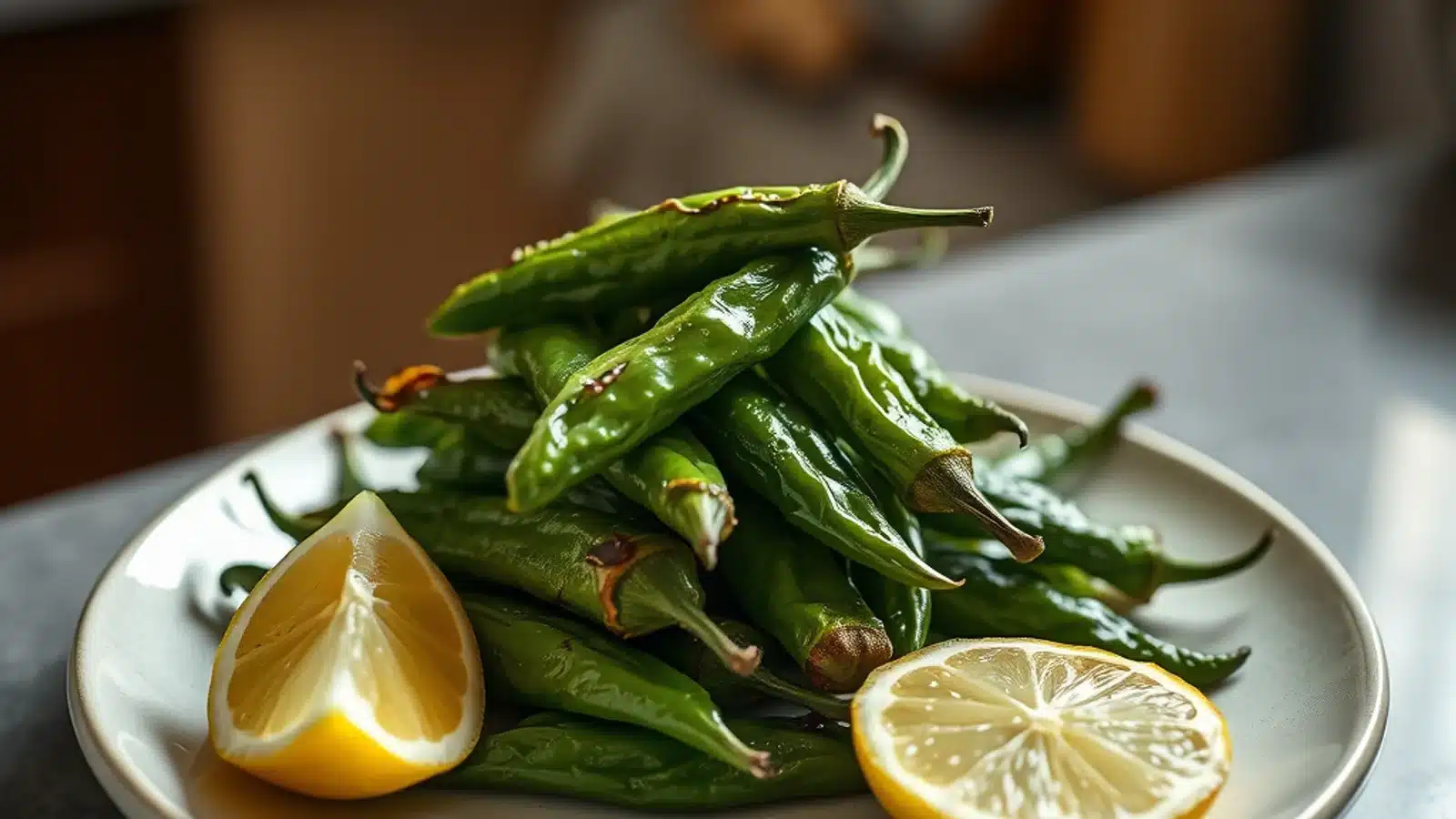
Hot skillet · mottled blistering · lemon and salt
Shishito Pepper Recipe: How to Cook Perfectly Blistered Shishitos
A hot pan, dry peppers, a little oil: about 5 minutes later the skins are mottled and the plate is salty and bright. Shishitos came onto our radar during a long weekend in South Korea. This is our source-researched home skillet, not a reconstructed meal.
How do you cook shishito peppers?
Cook thoroughly dried shishito peppers in a hot skillet with a small amount of oil, leaving room around each pepper. Turn them as the skin blisters until they are tender but still green in places, then season immediately with flaky salt and lemon. Most batches take about five minutes.
What are the key points for cooking shishito peppers?
Dry shishito peppers thoroughly, cook them in a hot uncrowded skillet, and stop when brown blisters sit on still-green skin. Season immediately with flaky salt and lemon. Heat is variable, so treat each pepper as a small possibility rather than a fixed percentage.
- Dry first — wet peppers steam and spit instead of blistering.
- Hot pan, one layer — leave the first side long enough to mark.
- Stop at mottled — tender green skin with brown blisters, not uniform black.
- Season immediately — flaky salt and lemon while the peppers are still hot.
- Heat varies — most pods are mild; treat each one as a small possibility.
Mangoes original finish · source-researched technique
What is the skillet shishito pepper recipe?
Dry 225 g of shishito peppers and cook them in one hot skillet layer with a little oil until skins are mottled, tender, and still green in places. Season immediately with flaky salt and lemon. Soy-sesame goes on off heat; quantities remain source-researched pending a cook test.
Ingredients
For the peppers
- 225 g (8 oz) shishito peppers
- 2 tsp neutral high-heat oil
- 1/4 tsp flaky salt, plus more to taste
- 1/2 lemon, cut into wedges
Optional soy-sesame finish
- 1 tsp soy sauce or tamari
- 1 tsp toasted sesame seeds
- 1/2 tsp toasted sesame oil
Step-by-step method
- Dry the peppers. Rinse only when needed, then dry every pepper very well. Water makes the pan spit and steals the heat that should be blistering the skin.
- Heat the pan. Warm a large heavy skillet over medium-high heat, then add the oil. The oil should look fluid and shimmer without smoking.
- Blister in one layer. Add the peppers and leave them for 30–45 seconds so the first side can mark. Turn or toss at short intervals for another 3–4 minutes, until brown blisters appear and the peppers feel tender but still green in places.
- Season while hot. Slide the peppers onto a warm plate, season with flaky salt and squeeze over lemon. For the soy-sesame variation, add the soy and sesame oil off heat, then scatter sesame seeds.
What are shishito peppers?
Shishito peppers are slender green frying peppers from Japan, usually harvested and cooked while green. Their thin walls blister quickly over high heat, giving them a soft, lightly sweet interior and a scorched skin. They work as a snack, side dish or small plate because they cook whole in minutes.
Bite through the whole pepper. A little resilience near the stem is fine; a collapsed, uniformly black skin is too far. Oregon State University Extension groups shishitos with frying peppers and notes their similarity in appearance and use to Spanish Padrón peppers.
Are shishito peppers spicy?
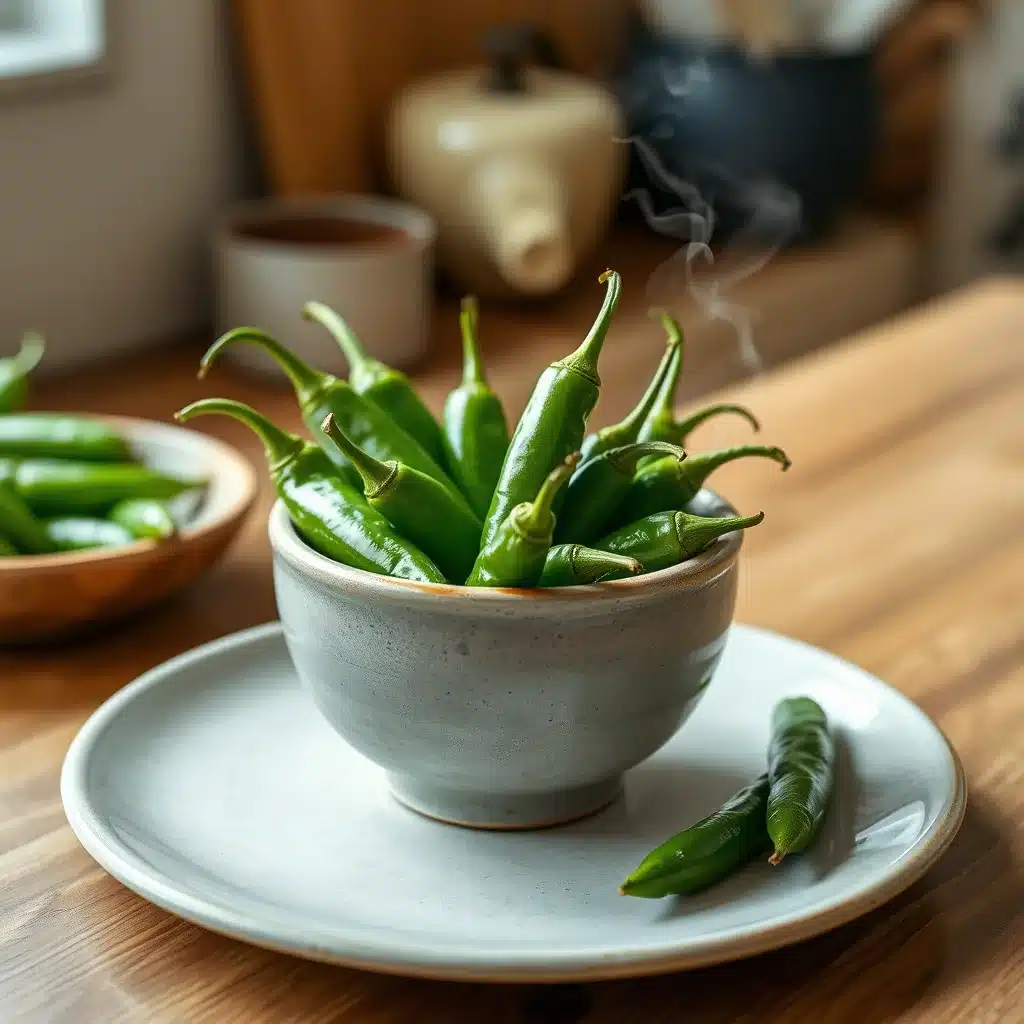
Shishito peppers are usually mild, but individual pods can be noticeably hot. Their heat is variable rather than reliably predictable: research links capsaicin concentration in shishito fruit with growing conditions and seed formation. Treat each pepper as a small possibility, not as a fixed heat percentage.
Skip the one-in-ten promise. A controlled-environment study linked lower seed formation with higher capsaicin in shishito fruit, and broader pepper research shows water, light and temperature can change capsaicinoid production. Taste as you go.
Do you pierce shishito peppers?
Piercing shishito peppers is optional for skillet cooking. A tiny slit can give steam an exit and reduce popping in a very hot pan, but it also lets seasoning and juices escape. Leave dry, intact peppers whole for the fastest snack; vent a few only when splatter concerns you.
Oregon State’s pepper-preservation guidance recommends piercing or slashing when roasting or preserving whole peppers. That is useful if you are packing heat into a jar. A small skillet snack does not need every pod punctured.
How do you blister shishito peppers perfectly?
Blister shishito peppers in a preheated, heavy skillet with enough oil to coat them lightly. Keep the pan uncrowded, leave the first side long enough to colour, then turn until brown blisters alternate with green skin. Pull them while tender; blackened, collapsed peppers taste bitter and lose their lively texture.
Leave them still at first. Constant stirring makes them sweat before they blister. Once the first side has colour, turn just enough to share the hot spots around the pan.
How blistered should shishito peppers be?
| State | What you see | What to do |
|---|---|---|
| Too early | Glossy green skin, firm flesh and little colour. | Give the peppers another 30 seconds before turning. |
| Perfect | Mottled brown blisters, green patches and a tender but intact body. | Season and serve immediately. |
| Too far | Mostly black skin, collapsed flesh and a dry or bitter edge. | Lower the heat slightly next time and shorten the final toss. |
Which shishito cooking method should you choose?
Use a skillet for the fastest, most controllable blistering. Choose a grill for smoke and larger batches, an air fryer for a drier finish with little oil, or a broiler when the pan is occupied. Every method benefits from dry peppers, space between pods and seasoning after cooking.
| Method | Typical time | Oil | Result | Best use |
|---|---|---|---|---|
| Skillet | About 5 min | Small amount | Fast, mottled blistering | One small bowl now |
| Grill | About 4–6 min | Light coating | Smokier, firmer skin | Cooking outdoors |
| Air fryer | About 6–8 min | Light spray or toss | Drier, less deeply blistered | Low-mess batches |
| Broiler | About 4–7 min | Light coating | Top-side char; turn once | When a wide tray is useful |
Can you air fry, grill or broil shishito peppers?
Air fry dry, lightly oiled shishitos in one basket layer and shake once; grill them over direct heat, turning as the skin marks; or broil them on a preheated tray, turning after the first side blisters. These methods change the texture, so none is an exact skillet copy.
Use the skillet when you want control. The grill adds smoke. An air fryer dries the skin more than it blisters it, which is fine if mess is the constraint.
Which flavour finish should you use?
Finish shishito peppers after cooking so their skin stays dry and blistered. Lemon and flaky salt keep the pepper’s flavour clear. Soy with sesame, ginger-soy, miso, honey-soy, ponzu and shichimi each add a different balance of salt, acidity, sweetness or heat without changing the base cooking method.
| Finish | How to use it | What changes |
|---|---|---|
| Lemon + flaky salt | Squeeze lemon over hot peppers and salt. | Bright and clean; the default Mangoes finish. |
| Soy + sesame | Toss with 1 tsp soy, 1/2 tsp sesame oil and seeds off heat. | Rounder, nutty and saltier. |
| Ginger-soy | Add finely grated ginger to the soy finish. | Sharper aromatic warmth. |
| Miso | Thin white miso with warm water and a little sesame oil; drizzle sparingly. | Savoury depth; use less salt. |
| Honey-soy | Use a very light brush after blistering. | Sweet-salty glaze; can burn if added to the pan. |
| Ponzu | Serve a small dish beside the peppers. | Citrusy soy dip without softening the whole batch. |
| Shichimi | Dust over lemon-salted peppers at the table. | Additional aromatic heat. |
Lemon and salt is our default because it leaves the pepper itself in charge. The other finishes are Mangoes options, not a claim that Japanese kitchens always dress shishitos this way. Japan’s agriculture ministry listing them among tempura ingredients is culinary context, not a finish recipe.
What is the difference between shishito and Padrón peppers?
Shishito and Padrón peppers are similar thin-skinned frying peppers, but they are not identical. Both blister well and have occasional hot pods. Use Padróns as the closest fresh substitute when shishitos are unavailable; expect a different shape, flavour and heat pattern rather than a perfect match.
Cook Padróns the same way, then taste before adding extra heat. A small sweet frying pepper gives the shape if neither is available, without the same occasional hot pod.
What can you substitute for shishito peppers?
Padrón peppers are the closest substitute for shishitos because they are thin-skinned and meant for high-heat blistering. Small sweet frying peppers work when Padróns are unavailable, but they are usually milder. Replace ponzu with a light mix of citrus juice and soy, and use tamari for a gluten-free soy option.
Bell peppers need longer and lose the whole-pepper rhythm. Slice them if that is what you have, and treat the result as a different side dish.
What should you serve with shishito peppers?
Serve shishito peppers as a quick starter or side with rice, noodles, grilled fish, grilled meat or tofu. Their salty, charred edge also works beside a Japanese-inspired meal, a mild curry or a simple Western grill. Keep the rest of the plate restrained so the peppers stay distinct.
They sit well beside crisp fried tofu and rice. For a wider pepper map, use the chili pepper guides and recipes hub, then the ultimate chili pepper guide.
How do you troubleshoot shishito peppers?
Most blistering failures come from a crowded pan, wet peppers, or moving the peppers before the first side marks. Preheat longer and cook in batches if there is no colour, and dry the peppers thoroughly if they steam. Stop at mottled brown, not uniform black, and season as soon as they leave the pan.
| Problem | Likely cause | Correction |
|---|---|---|
| No blisters | Pan was not hot enough or peppers were crowded. | Preheat longer and cook in batches. |
| Steam and spitting | Peppers were wet. | Dry them thoroughly; venting is optional. |
| Soft without colour | Too much motion too soon. | Leave the first side in contact with the pan. |
| Bitter skin | Peppers were over-charred. | Stop at mottled brown, not uniform black. |
| Seasoning slides off | Peppers cooled before seasoning. | Salt and finish as soon as they leave the pan. |
How should you store shishito peppers?
Refrigerate cooked shishito peppers promptly in a shallow covered container and use them within three to four days. Reheat them in a hot skillet or air fryer for a drier finish. They lose their just-blistered texture in storage, so cook only the amount you expect to serve.
USDA FSIS advises prompt refrigeration of cooked leftovers and a three-to-four-day refrigerator window. Eat these from the pan when you can. Stored shishitos still keep; they just lose the just-blistered snap.
How are shishito peppers used in Japanese cooking?
Shishito peppers are a Japanese frying pepper, usually cooked while green, and Japan’s agriculture ministry lists them among tempura ingredients in a regional-cuisine record. That is evidence of culinary use, not a single traditional method. This page’s skillet recipe and flavour finishes are Mangoes work, not a claim about how Japanese kitchens always cook them.
Japan’s agriculture ministry listing them for tempura is culinary context, not a rulebook for this skillet. Encountering them in South Korea does not make the pepper Korean.
What is Mangoes’ first-hand connection to shishito peppers?
Shishito peppers came onto Mangoes & Palm Trees’ radar during a long weekend in South Korea. That is the only first-hand note on this page. The skillet method is source-researched, not a reconstructed meal or Korean dish, and no further encounter details are recorded here.
Is this recipe Victor-tested?
Not yet Victor-tested. We are not adding a child’s spice or texture verdict until the exact batch has been served and recorded. The occasional hot pepper makes that restraint more useful than a made-up family reaction, so that verdict remains unrecorded.
Can you eat shishito peppers whole?
Yes — eat cooked shishito peppers whole, including the thin skin and seeds, and discard the stem if you prefer. The pepper is normally served intact because its walls soften quickly and the stem provides a convenient handle. Small slits are optional and do not change how the pepper is eaten.
Where can you find more Mangoes recipes?
Use the recipe index for a wider table of Mangoes dishes. Fresh poblanos behave differently from thin frying peppers. Recipes with chile peppers is the next heat branch, and Japanese eggplant recipes is another vegetable plate nearby in the archive.
The recipe index opens a wider table. Fresh poblanos behave differently. Recipes with chile peppers is the next heat branch, and Japanese eggplant recipes is another vegetable plate from the same kitchen neighborhood.
The people behind this recipe
Written by Oliver Mayerhoffer for Mangoes & Palm Trees, with editorial review by Natalia Mayerhoffer. Read our editorial policy for how first-hand observations and researched information are distinguished.
Sources and editorial method
The South Korea note is a travel encounter. The links below support ingredient and storage facts. The skillet wording and flavour finishes are original Mangoes work.
Oregon State University Extension
Pepper preparation, venting and blistering context.
Shishito pungency research
Light, temperature, seed formation and capsaicin concentration.
Japanese regional cuisine
Shishitos as an identified tempura ingredient.
USDA FSIS
Leftover refrigeration and storage guidance.
Enjoying our content? Make Mangoes & Palm Trees a preferred source on Google.
Explore next


Shishito peppers and the chili cluster
From this skillet into the chili hub, a tofu pairing, and the recipe index.