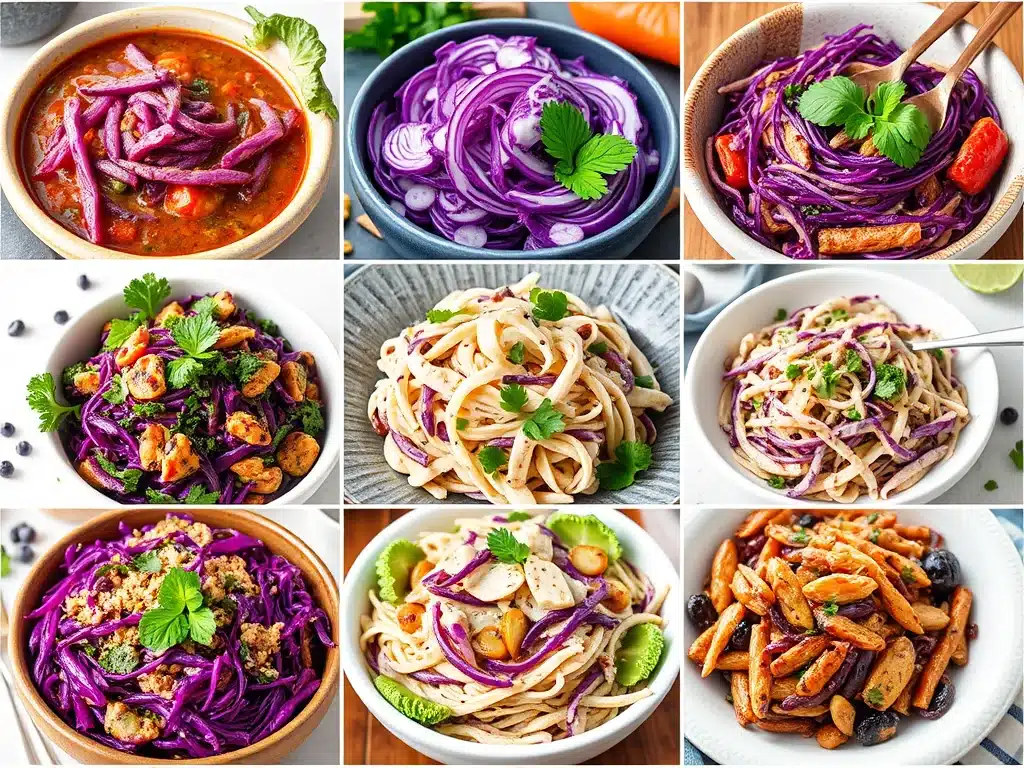
Ingredient guide · cooking methods · recipe ideas
Purple Cabbage Recipes: 15 Ways to Cook, Serve and Preserve It
A whole head of purple cabbage can do more than wait in the fridge to be shredded for slaw. Raw, it has a clean crunch; cooked slowly with onion, apple and a little acidity, it turns mellow and sweet. Roast it in thick wedges, toss it through a hot pan, or bring it to the table in soup, sandwiches and pickles. Here are fifteen ways to make the most of it, with practical notes on preparation, colour and cooking.
What are the best ways to cook purple cabbage?
For crunch, shred purple cabbage finely for slaw or salad. For browned edges, roast thick wedges with olive oil and seasoning. For a softer side, cook it slowly with onion, apple, vinegar or wine. It also holds its own in stir-fries and soups, while pickling and fermentation bring sharper, more developed flavours.
At a glance
- For crunch: shred it finely and dress close to serving.
- For the oven: cut thick wedges, keep the core intact and leave room around each slice.
- For the pan: pair it with onion, apple, vinegar, wine or warm spices.
- For colour: its anthocyanin pigments respond to acidity, so the shade can move from violet towards pink or red.
- For safe cooking: keep raw cabbage away from raw meat and use a thermometer for poultry and ground meat.
A practical guide to purple cabbage
What many shops call red cabbage is often closer to violet than red. Either way, it is a dense, sturdy brassica with leaves that hold their shape under a knife and stand up to a hot pan. Raw shreds bring a clean crunch; slow cooking draws out a mellow sweetness. Pair it with onion, apple, vinegar, wine or warming spices, or keep it lively with a quick stir-fry. BBC Good Food’s red cabbage guide is a useful reference for several familiar ways of cooking it.
The secret is to treat the cut as part of the cooking. Fine shreds are ready for a sharp dressing; thick wedges need space and time in the oven; broad pieces are better suited to soup, braises and stuffed leaves. Choose the shape first and the cabbage will do the rest.
How to prepare purple cabbage
Peel away any loose or damaged outer leaves, then rinse the whole cabbage under cool running water. Soap and household detergent have no place on produce. Dry the outside, cut the head into quarters, remove the hard central core and slice or shred the leaves to suit the dish. Keep cabbage destined for the salad bowl away from raw meat, poultry and seafood, using clean boards and utensils. That is the practical advice in the FDA’s fresh-produce guidance.
Choose the cut for the cooking method
- Fine shreds: useful for slaw, salad, quick pickles and fast stir-fries. Aim for even strands so the cabbage dresses or cooks at a similar rate.
- Thick slices: keep the core attached when cutting steaks or wedges so the leaves hold together on the tray.
- Broad pieces: useful for soup, braises and stuffed leaves, where the cabbage will soften during cooking.
- Separate raw and meat preparation: use clean boards and utensils for salad vegetables, and wash surfaces and tools with hot soapy water after handling raw meat or poultry.
For more kitchen preparation and technique guidance, browse the Cooking Tips and How-To Guides.
Why purple cabbage changes colour
There is a little kitchen chemistry behind that striking colour. Purple cabbage gets its red-violet tones from anthocyanins, pigments that respond to pH. The Australian National University’s red-cabbage indicator demonstration shows the shift clearly: acidic conditions move the colour towards pink and red, neutral conditions leave it purple, and alkaline conditions can take it towards blue or green. Vinegar does not simply “lock in” purple; it changes the balance of the colour.
So add vinegar or citrus for the brightness it brings to the dish, not to protect a particular shade. A slaw may turn pinker after dressing, and that is part of the same chemistry at work.
Read the Australian National University explanation of red-cabbage anthocyanins for the underlying colour chemistry.
15 ways to enjoy purple cabbage
There is no need to stop at slaw. Purple cabbage is just as comfortable beside roast meat, folded into a warm supper, tucked around a savoury filling or left to develop a sharper edge through pickling and fermentation. Some of these dishes are quick; others reward a slower hand. The pleasure is in finding the right treatment for the meal in front of you.
Moo Shu-Style Chicken with Purple Cabbage
A quick wok supper inspired by the sweet-savoury balance of moo shu, with thinly sliced chicken, cabbage, carrot and egg brought together with soy and hoisin.
Ingredients
- 450 g (1 lb) boneless chicken breast, thinly sliced against the grain
- 2 cups finely shredded purple cabbage
- 1 cup carrot, cut into thin matchsticks
- 2 large eggs, beaten
- 3 tbsp soy sauce
- 1 tbsp hoisin sauce
- 1 tsp sesame oil
- Optional garlic and ginger
Method
- 01Prepare and measure the vegetables, eggs and sauces before heating the pan. Keep the raw chicken and its utensils separate from the prepared vegetables.
- 02Heat a large wok or skillet over medium-high to high heat. Add the chicken in a single layer, working in batches if needed. Stir-fry until browned and cooked through; check the thickest pieces with a food thermometer and make sure poultry reaches 74°C (165°F).
- 03Transfer the cooked chicken to a clean plate. Add the beaten eggs to the pan and scramble until just set. Remove and keep with the chicken.
- 04Add garlic and ginger, if using. Stir-fry the carrot for about 2 minutes, then add the shredded purple cabbage for about 1 minute.
- 05Return the chicken and egg to the pan. Add the soy sauce, hoisin sauce and sesame oil, then toss until everything is evenly coated and hot.
- 06Serve at once with steamed rice or thin pancakes. Keep any raw-chicken plate and utensils away from the finished food.
Kitchen noteChicken pieces do not all cook at the same speed. Thickness and how much you put in the pan both matter, so check the thickest piece with a thermometer: poultry should reach 74°C (165°F). The FDA’s safe food-handling guidance gives the same minimum.
Purple Cabbage and Carrot Slaw
A creamy, tangy slaw built around finely shredded purple cabbage and carrot, with honey, cider vinegar and Dijon mustard in the dressing.
Ingredients
- 3 cups finely shredded purple cabbage
- 1 cup shredded carrot
- ½ cup mayonnaise
- 2 tbsp apple cider vinegar
- 1 tbsp honey
- 1 tsp Dijon mustard
Method
- 01Whisk the mayonnaise, apple cider vinegar, honey and Dijon mustard in a bowl until smooth.
- 02Put the shredded cabbage and carrot in a large bowl. Add the dressing and toss until the vegetables are evenly coated.
- 03Cover and refrigerate for at least 30 minutes so the dressing can settle into the vegetables.
- 04Toss once more before serving and serve chilled alongside grilled fish, barbecue, roast chicken or pulled pork.
Kitchen noteThe cabbage softens as it stands in the dressing. For a firmer texture, keep the vegetables and dressing separate until closer to serving.
Roasted Purple Cabbage Steaks
Thick slices of cabbage are brushed with olive oil and seasoned with garlic and smoked paprika before roasting until tender with browned edges.
Ingredients
- 1 medium head purple cabbage
- 3 tbsp extra-virgin olive oil
- 1 tsp garlic powder
- 1 tsp smoked paprika
- Sea salt and black pepper, to taste
- Balsamic reduction or herb oil, optional for serving
Method
- 01Heat the oven to 220°C (425°F). Line a sturdy baking tray with baking paper if desired.
- 02Remove any damaged outer leaves. Cut the cabbage from top to base into slices about 2.5 cm (1 inch) thick, keeping the core attached so each steak holds together.
- 03Arrange the slices on the tray. Brush both sides with olive oil and season with garlic powder, smoked paprika, salt and black pepper.
- 04Roast for 25–30 minutes, turning once halfway through. Check tenderness with the tip of a knife; thick slices or a crowded tray may need longer.
- 05Serve hot, with a little balsamic reduction or herb oil if wanted.
Kitchen noteKeep the core intact while slicing and turning. If a steak separates, roast the pieces alongside it; the loose leaves will brown more quickly.
Apple and spice-braised purple cabbage
For a sweet-savoury side, let sliced onion soften in butter before adding shredded cabbage, apple and a pinch of warm spice. A splash of cider vinegar and red wine brings brightness; a little stock helps the leaves relax into the pan. Cover and cook gently until tender, then taste before adding brown sugar, salt and pepper. Apple brings its own sweetness, so the final balance is better judged at the stove than assumed at the start.
Quick-pickled purple cabbage
Finely sliced cabbage makes a bright, crunchy pickle for tacos, sandwiches, grain bowls and grilled food. Pack the shreds into a clean jar and cover them with a brine from a tested refrigerator-pickle method. The vinegar strength and the balance of vinegar, water and salt are doing important work here, so resist the temptation to guess. A quick refrigerator pickle is not the same as a shelf-stable preserve: the National Center for Home Food Preservation advises against changing the proportions in tested preservation recipes.
Stuffed purple cabbage rolls
Large cabbage leaves make handsome little parcels around a savoury filling of beef, rice, onion and herbs. Soften the leaves until they bend without tearing, spoon the filling towards the base, fold in the sides and roll snugly. Set the rolls seam-side down in a baking dish or heavy pan and cook gently in sauce until the rice is tender and the filling is hot throughout. If the filling contains ground beef, check its centre with a thermometer and bring it to 71°C (160°F); colour alone is not a reliable guide.
Crunchy purple cabbage salad
This salad is all about contrast: fine shreds of cabbage, cool cucumber, toasted walnuts and a lemon dressing. Slice the cabbage as evenly as you can, cut the cucumber close to serving time and add the dressing a little at a time. You want the leaves lightly coated, not swimming. The walnuts bring a warm, savoury note against the clean crunch of the vegetables.
Purple cabbage sauerkraut
Purple cabbage makes a striking sauerkraut, and a little beetroot can deepen its colour and earthier sweetness. Fermentation is less forgiving than a quick slaw: weigh the prepared cabbage, calculate the salt carefully and keep the leaves submerged beneath the brine. Colorado State University Extension’s method uses salt at 2–2.5% of the prepared cabbage weight, a clean non-reactive vessel and a fermentation temperature of about 20–22°C (68–72°F). Its guide describes a typical fermentation period of around 7–14 days.
The National Center for Home Food Preservation’s sauerkraut method is another dependable reference, but its directions and timing are not identical to the CSU process. Choose one complete method and follow it from weighing the cabbage through to storage; do not mix instructions from different recipes or reduce the salt.
One-pan kielbasa, potato and purple cabbage
Potatoes, sliced kielbasa and purple cabbage make a sturdy one-pan supper. Give the potatoes a head start, then add the cabbage nearer the end if you want it to keep some shape rather than collapse into the tray. Let the sausage guide the final cooking time: kielbasa may be sold raw, fully cooked or smoked, so follow the handling and reheating directions on its packaging.
Red wine-braised purple cabbage
For a deeper, less sweet side, keep the flavours spare: shredded cabbage, softened onion, red wine, a little vinegar and a few herbs. Let it cook slowly until the leaves are tender and the wine has lost its raw edge. Taste near the end and adjust the acidity and seasoning; the aim is a glossy, savoury side, not a pan of cabbage swimming in liquid.
Hot-and-sour cabbage soup
Ginger, sesame oil and rice vinegar give this soup its direction: warm, savoury and pleasantly sharp. Start with a well-seasoned broth, then add the cabbage according to the texture you want. Let it simmer longer for soft, yielding leaves; add it nearer the end if you prefer a little bite. A final splash of rice vinegar can lift the bowl just before serving.
Thai-inspired peanut quinoa salad
Quinoa gives this salad a satisfying base; finely shredded cabbage brings the crunch. A dressing of peanut, lime and soy balances sweet, sour and savoury notes, while fresh herbs and chilli keep the bowl lively. It is a flexible, modern salad with Southeast Asian flavours rather than a traditional dish tied to one place or recipe.
Rainbow vegetable pinwheels
A little finely shredded cabbage gives tortilla pinwheels a crisp edge and a flash of colour among the cream cheese and other vegetables. Spread the filling in a thin, even layer, leave a small border at the far edge and roll firmly. Chill the rolls before slicing so the spirals hold their shape on the plate.
Pulled pork and purple cabbage slaw sandwiches
This is where the cabbage earns its place beside rich, slow-cooked pork. Spoon the warm meat into a soft roll and finish with a generous layer of the cabbage and carrot slaw. Its cool crunch and gentle acidity cut through the richness, so the sandwich feels balanced rather than heavy.
Purple cabbage, apple and ginger juice
Purple cabbage, apple, carrot and ginger make a vivid, earthy juice. Apple rounds off the cabbage’s more vegetal edge, carrot brings sweetness and ginger gives the finish a little heat. Start with a small piece of cabbage and adjust the balance to your taste; wash all the produce under running water before cutting and juicing. Serve it freshly made, while the ginger still has a lively finish.
Which cooking method should you choose?
Think about the cut before you choose the heat. Fine shreds cook in minutes and keep some bite; thick wedges need room to roast; broad pieces soften into soups and braises. The same head can give you a crisp salad at lunch and a mellow, slow-cooked side by supper.
| Method | Good for | What to expect |
|---|---|---|
| Raw and finely shredded | Slaw, salad, sandwich topping | Crunch and a fresh, peppery cabbage bite; dressing softens it as it stands. |
| Stir-fried | Chicken, noodles and quick meals | Fast cooking with some texture left in the leaves. |
| Roasted | Steaks and wedges | Soft centres with browned edges when the slices have room on the tray. |
| Braised | Apple, onion, wine and spice combinations | A softer, more cohesive side as the cabbage cooks in liquid. |
| Pickled | Tacos, sandwiches and bowls | A sharp, crunchy condiment; use a tested brine formula. |
| Fermented | Sauerkraut and fermented sides | A sour preserved cabbage made with controlled salt and fermentation conditions. |
| Soup | Broths and blended vegetable soups | Colour can transfer into the cooking liquid; season and acidify to the recipe. |
For another look at traditional ways with the vegetable, BBC Good Food’s guide to cooking red cabbage is a useful companion.
Practical techniques for better cabbage
Keep raw cabbage crisp
Slice evenly and avoid dressing the cabbage too far ahead if you want a firm bite. Creamy slaw can rest in the refrigerator to soften slightly and let the dressing settle; a lighter salad is often best dressed closer to serving. If the cabbage releases liquid, drain or lift it from the excess before serving.
Soften shreds when the dish calls for it
A light salting can draw moisture from finely shredded cabbage and soften its raw bite. This can suit some slaws and salads, but it is optional: dress raw cabbage without salting when you want a firmer crunch, and drain excess liquid before serving if needed.
Give roasted slices space
Arrange steaks in a single layer with gaps between them. If the tray is crowded, moisture collects and the cabbage steams rather than browns. Turn carefully so the core keeps the leaves together.
Let flavour lead, not colour
Acidity affects anthocyanin colour, but the final shade depends on the overall recipe. Use vinegar or citrus to balance the flavour. Do not add baking soda to a dish simply to chase a blue or green colour; it changes the food’s pH and flavour.
Choose equipment for the job
- A sharp chef’s knife: useful for cutting wedges and slicing even shreds.
- A mandoline: can produce very fine, consistent slices; use its hand guard and follow the manufacturer’s safety instructions.
- A wide skillet or wok: gives vegetables room to stir-fry without crowding.
- A rimmed baking tray: keeps roast slices in one layer and catches juices.
- A clean glass or food-grade fermenting vessel: appropriate for sauerkraut when used with the correct cover and weight; follow the extension guidance.
You do not need a drawer full of gadgets to prepare cabbage well. A sharp knife and a sound chopping board will take you a long way. A mandoline is handy when you want very fine, even shreds, but use its guard every time. For cooking, choose a pan or tray wide enough to give the cabbage room; crowding is a quicker route to steaming than browning.
Common cabbage problems and useful adjustments
| What you notice | What may be happening | A practical adjustment |
|---|---|---|
| The colour shifts towards pink, red or blue | Anthocyanin pigments respond to the pH of the dish. | Expect the shade to change with the ingredients. Add vinegar or citrus for flavour rather than as a colour-preservation guarantee. |
| Slaw becomes watery | Salt and dressing draw moisture from shredded cabbage as it stands. | Dress closer to serving for a firmer result, or drain excess liquid before plating. |
| The flavour tastes too sharp or bitter | The balance of cabbage, acid and seasoning may be too pronounced. | Adjust the finished dish gradually; apple or a little sweetness can balance acidity where it suits the recipe. |
| The cabbage cooks unevenly | Pieces may be different sizes or the pan/tray may be crowded. | Cut pieces to a similar thickness and cook in batches or leave space around them. |
| Roasted slices soften but do not brown | Too much moisture may be trapped on a crowded tray. | Use a single layer with space between slices and turn once during roasting. |
Food safety, pickling and storage
Start with clean hands and sound produce. Rinse the cabbage under running water before cutting; soap and household detergent are not recommended. Remove damaged sections and keep raw vegetables separate from raw meat, poultry and seafood. Washing helps remove dirt and some surface contamination, but it does not make cross-contamination impossible. The FDA’s fresh-produce guidance sets out the basics.
For chicken dishes, use a food thermometer and cook poultry to at least 74°C (165°F). For ground beef fillings, the FDA safe food-handling guidance lists 71°C (160°F) as the safe minimum internal temperature. Avoid using colour alone to decide whether meat is cooked.
Pickling and fermentation are different processes. A quick pickle relies on a measured acid brine; a fermented cabbage relies on salt and controlled fermentation. Do not substitute one method for the other, dilute a tested pickling brine, or reduce the salt in a fermented sauerkraut formula. The National Center for Home Food Preservation specifically advises using tested ingredient proportions and not cutting back the salt required for fermented sauerkraut.
Keep cut cabbage in a clean, covered container in the refrigerator at 4°C (40°F) or colder. Mayonnaise-based slaw and cooked dishes should not sit out for long, particularly in hot weather. The FDA’s guidance is to refrigerate perishable food within two hours, or within one hour when the temperature is above 32°C (90°F). For sauerkraut, follow the storage directions of the fermentation method you used; the Colorado State University Extension method includes refrigeration instructions.
Questions about purple cabbage
Is red cabbage the same as purple cabbage?
Yes. The same vegetable is sold under both names. Its leaves usually sit somewhere between red and violet, with the shade shifting according to variety and the acidity of the dish.
Can you eat purple cabbage raw?
Absolutely. Finely shred it for slaw or salad and rinse it under running water before cutting. Use clean equipment and keep it away from raw meat and poultry while you prepare it.
Why does purple cabbage turn pink or blue?
The anthocyanin pigments in the leaves respond to pH. Acid pushes the colour towards pink or red, neutral conditions tend to leave it purple, and alkaline conditions can shift it towards blue or green. The Australian National University’s red-cabbage indicator shows the changes.
What is the best way to cook purple cabbage?
For a quick meal, shred it into a slaw or stir-fry. For deeper sweetness, roast wedges or braise it slowly with onion and apple. Pickling and fermentation are worth doing too, but use a tested method with the right proportions.
Can purple cabbage be fermented into sauerkraut?
Yes. Colorado State University Extension’s sauerkraut guide explains how to calculate salt by the weight of the prepared cabbage, keep the leaves submerged and manage fermentation and refrigeration.
Does adding vinegar keep purple cabbage purple?
Not necessarily. Vinegar lowers the pH and can move the cabbage colour towards pink or red. Add it because the flavour needs brightness, and let the final shade take care of itself.
Further reading
Good kitchen advice should stand up to more than habit. These references are the useful authorities behind the guidance on fresh produce, meat temperatures, cabbage colour and safe fermentation.
U.S. Food and Drug Administration
Fresh-produce washing, avoiding soap on produce, hand hygiene and separation from raw meat, poultry and seafood.
Selecting and Serving Produce SafelyU.S. Food and Drug Administration
Safe minimum internal temperatures for poultry and ground meat.
Safe Food HandlingAustralian National University
Anthocyanin colour changes in red cabbage indicator under acidic, neutral and basic conditions.
DIY Red Cabbage pH TestColorado State University Extension
Salt by weight, equipment, brine coverage, fermentation temperature and refrigeration for sauerkraut.
Understanding and Making SauerkrautNational Center for Home Food Preservation
Tested sauerkraut instructions and general warnings about changing salt, vinegar and water proportions in preservation recipes.
Sauerkraut recipe · General information on fermentingBBC Good Food
A practical overview of preparing red cabbage and using it in braises, salads and pickles.
How to cook red cabbageNational Center for Home Food Preservation
A tested sauerkraut formula, with cabbage-to-salt proportions, brine coverage, fermentation guidance and storage instructions.
Sauerkraut recipeEnjoying our content? Make Mangoes & Palm Trees a preferred source on Google.