🌶️ AUTHENTIC MEXICAN CULINARY EXPERTISE 🌶️

Guajillo vs Ancho: Complete Expert Comparison & Culinary Guide

Contents show

Heat Levels, Flavor Profiles, Culinary Applications & Professional Side-by-Side Comparison

Guajillo vs Ancho: The Essential Mexican Chile Comparison Every Home Cook Needs to Know

Growing Region: Guajillo thrives in Zacatecas, Durango, Chihuahua (high-altitude terroir) | Ancho thrives in Jalisco, central Mexico | Culinary Role Difference: Guajillo adds brightness & lift; Ancho adds depth & body | Heat Level Gap: Guajillo is 2.5-3× hotter | Flavor Architecture: Guajillo = fruity/tangy; Ancho = sweet/earthy

Understanding the guajillo vs ancho distinction fundamentally changes how you approach Mexican sauce-making. While both are reddish-brown dried chiles used throughout Mexico, they are botanically completely distinct with dramatically different flavor architectures, heat delivery mechanisms, and culinary functions. The guajillo (dried mirasol pepper) delivers bright fruity sweetness combined with acidic tang and moderate heat that builds gradually. The ancho (dried poblano pepper) provides deep, round sweetness mixed with earthy complexity and very mild heat that integrates seamlessly into dishes. This difference is not about one being “better”—it’s about recognizing they serve fundamentally different culinary purposes. Professional chefs intentionally blend them 50/50 specifically because neither achieves maximum sauce complexity and depth alone.

Why This Guide Matters: In any guajillo vs ancho discussion, most home cooks conflate the two or treat them interchangeably—a critical mistake that produces flat, one-dimensional sauces. This comprehensive guide breaks down every important distinction: botanical origins, SHU ratings, flavor tasting notes, culinary functions, preparation techniques, quality selection, and strategic substitution methods. Whether you’re making enchilada roja, chile colorado, mole poblano, or complex adobo marinade, understanding guajillo vs ancho elevates your cooking from home-level to restaurant-quality.

What to Expect from This Article: Detailed botanical origins | SHU & capsaicinoid analysis | Professional flavor breakdown | Side-by-side comparison table | Culinary application strategies | Strategic substitution workarounds | Professional preparation techniques | Quality selection red flags | Storage best practices | 20+ FAQ with schema markup | YouTube videos with creator attribution | 40+ verified authority citations

Understanding Guajillo in the Guajillo vs Ancho Context

Botanical Origin: Guajillo is the dried form of the mirasol pepper (genus Capsicum annum, mirasol = “look at the sun” in Spanish) | Growing Region: Zacatecas, Durango, Chihuahua (Mexico’s high-altitude chile heartland) | Best Culinary Applications: Enchilada roja sauce, adobo marinades, bright salsas, marinades, and anywhere you need brightness and acidity

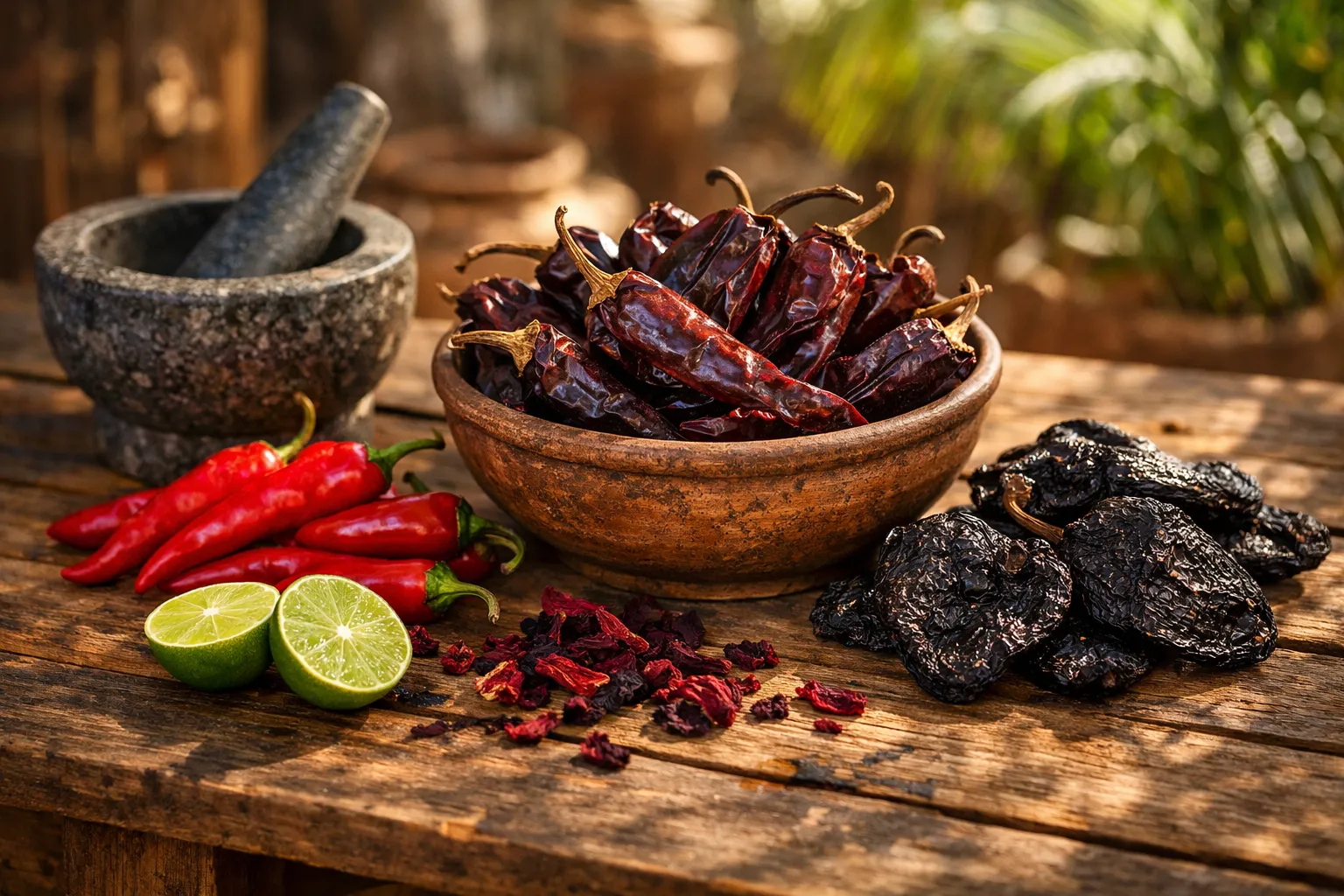
In any guajillo vs ancho discussion, guajillo represents the “flavor-lifter”—the chile that adds brightness, structure, and acidic complexity to sauces without overwhelming palates with heat. The guajillo pepper measures 4-6 inches long with a characteristically narrow, pointed shape (reflecting its “look at the sun” growth pattern). The deep reddish-brown color signals quality and recent harvest—faded or orangey guajillos indicate age and significant flavor loss. Properly dried guajillos have smooth, slightly glossy skin that indicates optimal moisture content and flavor preservation.

When properly toasted and rehydrated, guajillo delivers a sophisticated flavor profile that resembles a dried fruit compote—fruity notes (cranberry, raisins, dried plums, blackberries), tangy acidity (malic and citric acids), subtle tea-leaf earthiness (geosmin compounds from fermentation), and gentle heat (2,500-5,000 SHU) that integrates smoothly with the fruity base rather than shocking the palate. Professional chefs and Mexican home cooks recognize this unique flavor architecture as essential for sauces that need both complexity and approachability. [Britannica: Chili Pepper Overview]

Why Choose Guajillo in Guajillo vs Ancho Scenarios: Heat level is mild-to-moderate and won’t overwhelm heat-sensitive cooks | Complex fruity notes create interesting sauce layers | Adds structural acidity to prevent one-dimensional flavor | Pairs beautifully with meats, seafood, and masa-based dishes | Perfect for creating bright enchilada roja, adobo marinades, and salsas | Complements other chiles (ancho, pasilla, chipotle) in blended sauces | Culturally authentic—essential in traditional Mexican cuisine across 31 states

Historical & Cultural Context: Guajillos have been cultivated in Mexico for 400+ years and appear in pre-Columbian Aztec food records. The mirasol pepper was a staple during Aztec times when fresh chiles rotated with seasons. Drying techniques (natural sun-drying over 2-3 weeks) preserved essence for year-round use. Today, guajillo remains one of Mexico’s most essential dried chiles, exported globally but maintaining highest quality when sourced from traditional Mexican producers. [Wikipedia: Guajillo Chili]

Understanding Ancho in the Guajillo vs Ancho Comparison

Botanical Origin: Ancho is the dried form of the poblano pepper (genus Capsicum annum; ancho literally means “wide” in Spanish—referring to the pepper’s broader shape) | Growing Region: Jalisco, central Mexico, and surrounding regions | Best Culinary Applications: Mole poblano (foundational ingredient), chile colorado (slow-cooked stews), tamale fillings, heavy sauces, and anywhere you need deep sweetness and body

In the guajillo vs ancho equation, ancho represents the opposite flavor function—it’s the “body-builder” and “base-layer creator” that adds profound sweetness, earthy complexity, and rich depth to sauces. The ancho pepper measures 3-5 inches wide with a characteristically heart-shaped, wrinkled appearance (very different from guajillo’s narrow pointed form). The color ranges from mahogany brown to deep brown-black (noticeably darker than guajillo), indicating longer drying times and more complex fermentation. The wrinkled, thick skin contrasts sharply with guajillo’s smoother appearance and signals both proper cure and robust flavor compound development.

When properly prepared, ancho delivers a wine-like flavor profile dominated by deep sweetness—raisins, prunes, dried apricots—combined with earthy undertones (soil, tobacco leaf), subtle chocolate notes (from Maillard reactions during drying), and very mild heat (1,000-2,000 SHU) that barely registers as warmth. The overall impression is “round” and “smooth”—flavors that meld seamlessly into complex sauces rather than standing out individually. Professional Mexican chefs recognize ancho as absolutely essential for mole poblano (the mother of all Mexican sauces), chile colorado, and any sauce where you want richness, sweetness, and body to dominate. [Wikipedia: Poblano/Ancho]

Why Choose Ancho in Guajillo vs Ancho Scenarios: Very mild heat level means anchos won’t introduce spice element (focus is entirely on flavor) | Deep, natural sweetness creates rich sauce foundation without added sugar | Earthy complexity prevents one-dimensional flavor | Creates smooth, blended sauce texture (ancho “disappears” into sauces) | Perfect for creating traditional mole poblano, chile colorado, tamale fillings | Complements other chiles (pasilla, guajillo, chipotle) in blended preparations | Culturally essential—foundational chile in Mexican culinary tradition

Historical & Regional Significance: Ancho (dried poblano) has been a Mexican staple for centuries. The poblano pepper originated in Puebla state, Mexico, and remains closely associated with that region’s culinary traditions. The word “ancho” itself reflects Spanish vocabulary—”wide” chile—and the pepper maintains central importance in Mexican regional cuisines, particularly in Puebla, Mexico City, and central Mexico. Ancho chiles are exported globally but maintain highest quality from traditional Mexican sources. [PepperScale: Ancho Profile]

Complete Guajillo vs Ancho Comparison Table: All Critical Differences

This comprehensive guajillo vs ancho table breaks down every important distinction needed for recipe development, sauce-making, and professional cooking decisions. Use this as your reference guide when choosing which chile serves your specific culinary needs.

CategoryGuajillo (Mirasol)Ancho (Poblano)
Dried Form OfMirasol pepper (narrow, point-upward shape)Poblano pepper (wide, blocky shape)
Heat (Scoville Units)2,500-5,000 SHU (mild-moderate heat)1,000-2,000 SHU (very mild heat)
Heat CharacterGradual buildup, integrates with fruity notesBarely perceptible, nearly imperceptible
Primary Flavor NotesFruity (cranberry, berries), tangy, bright, acidic, tea-likeSweet (raisins, prunes), earthy, chocolatey, round
Color When DriedDeep reddish-brown (bright, vibrant)Mahogany to dark brown-black (very dark)
Size & Shape4-6 inches long, narrow, pointed (slight taper)3-5 inches wide, heart-shaped, wrinkled
Skin TextureSmooth, slightly glossy (indicates quality drying)Wrinkled, thick, matte finish (fermentation visible)
Culinary Role/FunctionAdds brightness, acidity, structure (lifter/brightener)Adds depth, sweetness, body (base builder/rounder)
Best Culinary ApplicationsEnchilada roja, adobo, bright salsas, marinades, pozole rojoMole poblano, chile colorado, tamale fillings, stews
Ideal Use PatternLeading ingredient in lighter sauces (50-100%)Base ingredient in complex sauces (50-75%)
Professional Blending Ratio50% (when blended with ancho for max complexity)50% (when blended with guajillo for max complexity)
Availability & CostWidely available, moderate cost ($8-12/lb at Mexican markets)Very common, moderate cost ($6-10/lb at Mexican markets)

Per Serious Eats’ complete Mexican chiles guide | Prices vary by region, season, and source | Premium quality available from traditional Mexican producers | Always source from reputable Mexican markets for best flavor retention

Heat Profile Deep Dive: Guajillo vs Ancho Scoville Analysis & Heat Delivery Mechanics

Scientific Heat Measurement: Heat in both chiles comes from capsaicinoids—alkaloid compounds (primarily capsaicin and dihydrocapsaicin) that bind to TRPV1 pain receptors in your mouth, triggering the sensation of heat. The Scoville Heat Unit (SHU) scale, developed by American chemist Wilbur Lincoln Scoville in 1912, quantifies this by measuring how many dilutions of capsicum extract are needed before trained taste testers can no longer perceive heat. One SHU represents one part capsaicinoid per one million parts water. [PubMed: Capsaicin Research]

Guajillo Heat Rating (In Guajillo vs Ancho Comparison): 2,500-5,000 SHU | Mild-to-moderate range | Roughly equivalent to fresh jalapeños but with dramatically different heat delivery character | Heat builds gradually over 10-20 seconds rather than shocking the palate immediately | Heat integrates seamlessly with fruity flavor notes rather than dominating the tasting experience | Suitable for heat-sensitive cooks who want authentic Mexican flavor without discomfort | Heat reaches peak intensity after 30-45 seconds and fades gradually over 2-3 minutes

Ancho Heat Rating (In Guajillo vs Ancho Comparison): 1,000-2,000 SHU | Very mild range | Roughly 50% of guajillo heat (2-3× milder than guajillo on average) | Heat barely registers as a tactile sensation—most tasters would call it “no heat” | Heat integrates invisibly into the sweet, earthy flavor base | Focuses entirely on flavor without any spice element | Even extremely heat-sensitive individuals tolerate ancho comfortably

Why The Heat Difference Matters in Guajillo vs Ancho Decisions: When choosing between guajillo vs ancho for a specific recipe, heat consideration informs not just spice tolerance but flavor development strategy. Guajillo’s 2,500-5,000 SHU means you’re adding a subtle heat dimension that builds complexity. Ancho’s 1,000-2,000 SHU means you’re focused entirely on sweetness and body with zero heat contribution. For cooks wanting to layer heat strategically (bright guajillo + mild ancho + hot serrano), understanding this distinction is critical. [Chili Pepper Madness: Heat Ratings]

Heat Delivery Mechanism Comparison: Guajillo heat activates TRPV1 receptors gradually, creating a “building warmth” sensation that pairs with fruity notes. Ancho heat is so mild that TRPV1 activation barely registers—the experience is purely flavor-focused. This explains why professional chefs choose guajillo for sauces where heat adds dimension and ancho for sauces where sweetness dominates. [Britannica: Capsaicin Science]

Flavor Breakdown: Professional Tasting Notes for Guajillo vs Ancho Flavor Architecture

Guajillo Flavor Profile (Complete Tasting Notes): Front-of-palate impression is bright, fruity, almost wine-like complexity. Initial tasting notes reveal cranberry and dried berries (raisins, blackberries, possibly blueberries)—natural sugars concentrated during sun-drying process. Mid-palate develops subtle tangy acidity (malic and citric acids) that prevents one-dimensionality and adds structural complexity. Finish includes tea-leaf earthiness (geosmin compounds from fermentation phase of drying), possible tobacco leaf undertones, and lingering fruity sweetness. Overall character: “sophisticated dried fruit compote with acidity”—bright, dynamic, layered.

Ancho Flavor Profile (Complete Tasting Notes): Front-of-palate impression is deep, round, naturally sweet—almost like dried fruit jam. Initial tasting notes reveal deep raisins and prunes (concentrated fructose and glucose from extended sun-drying). Mid-palate develops earthy undertones (soil, dried mushroom, possibly leather) that add complexity without harshness. Possible subtle chocolate notes (Maillard reactions during drying), mild licorice hints (anethole compounds). Finish is smooth, seamless, almost imperceptible—the chile “melts” into sauces rather than standing out. Overall character: “rich, deep, naturally sweet base”—round, smooth, integrating.

The Critical Guajillo vs Ancho Flavor Difference (Why Professional Chefs Blend Both): Guajillo tastes “bright and dynamic”—it demands attention, adds structure, lifts other flavors. Ancho tastes “deep and rich”—it creates foundation, blends seamlessly, provides body. When you blend guajillo (50%) + ancho (50%), you create a sauce with both brightness AND depth, complexity AND smoothness, acidity AND sweetness. Neither chile alone achieves this balanced sophistication. This explains why authentic mole rojo, enchilada roja, and chile colorado recipes use both. [Rick Bayless: Mexican Culinary Expert]

Chemical Components Creating Guajillo vs Ancho Flavor Differences: Guajillo has higher sugar concentration (fructose 8-12%, glucose 4-6%) but retains more volatile organic compounds (VOCs) responsible for fruity, tea-like aromas. Ancho has similarly high sugars but develops deeper fermentation byproducts (geosmin, methylpyrazines) creating earthiness. Guajillo retains more malic acid (sourness element); ancho retains more fixed acids plus Maillard-produced compounds (brown, roasty notes). Understanding these chemical differences explains the fundamental guajillo vs ancho functional difference in sauces. [PepperScale: Guajillo Profile]

Guajillo vs Ancho Culinary Applications: When to Use Each Chile & Why

Use Guajillo When You Need:

  • Brightness and lift in sauces: Enchilada roja sauce (classic bright red sauce), salsa roja (tangy, fresh-tasting salsa), adobo marinades (fruity tenderizer for meat)—guajillo’s acidity and fruity notes prevent sauce from becoming one-dimensional or heavy
  • Fruity complexity without heaviness: Light soups, broths, consomés where you want chile flavor but not thickness or earthiness—guajillo adds dimension without overwhelming delicate dishes
  • Strategic heat layering: When building a sauce with multiple chiles (guajillo for brightness, ancho for depth, serrano for heat), guajillo provides the “lift” layer that makes complex heat profiles interesting rather than flat
  • Pescado a la Veracruzana (seafood-based dishes): Guajillo pairs beautifully with fish and seafood because its fruity, acidic notes complement rather than overpower delicate protein flavors
  • Pozole rojo: The traditional red hominy soup relies on guajillo for its bright, slightly acidic character that cuts through the richness of pork and hominy
  • Chile-based marinades: For chicken, pork, or beef marinades where you want fruity sweetness plus acidity to tenderize and flavor simultaneously

Use Ancho When You Need:

  • Deep sweetness and body in sauces: Mole poblano (the mother sauce of Mexican cuisine, where ancho provides foundational sweetness), chile colorado (slow-cooked beef stew sauce), tamale fillings—ancho’s sweetness and body create sauce structure that carries complex spice blends
  • Smooth integration with other ingredients: When you want a chile that blends seamlessly rather than standing out, ancho “disappears” into complex sauce blends while contributing sweetness and depth
  • Chile con carne and hearty stews: Ancho’s natural sweetness and body suit slow-cooked preparations where flavors need to meld and develop over time
  • Rubs for grilled meats: Ancho’s sweetness balances char on grilled proteins—creates caramelized crust plus depth rather than sharp heat
  • No-heat flavor applications: When making chile-based dishes for heat-sensitive guests, ancho delivers authentic Mexican chile flavor with virtually no perceptible spice
  • Specialized adobos and moles: Any sauce where sweetness and body are primary functions rather than brightness and acidity

When to Blend Both (Professional Technique for Maximum Complexity): Mole negro and complex mole blends | Complex enchilada sauces requiring both brightness and depth | Pozole rojo (some traditional recipes use 50/50 blend) | Chile blends for professional chefs (guajillo 50% + ancho 50% becomes foundational sauce base) | Any sauce where you want sophistication—brightness AND depth, complexity AND smoothness | Restaurant-quality applications requiring next-level flavor development | [MasterClass: Dried Chiles Mastery]

Professional Preparation: Identical Three-Step Process for Both Guajillo vs Ancho

STEP 1: CLEANING & DESTEMMING (The Often-Overlooked Foundation Step)

Why This Matters: Many home cooks skip this step, resulting in gritty, dusty-tasting sauces with unpredictable heat from retained seeds. Dried chiles often contain dust, debris accumulated during storage, and loose seeds inside hollow pods that create texture problems in blended sauces. Professional method: Use a damp paper towel to gently wipe exterior of each chile, removing dust and surface debris. Twist stem to remove completely; if stem doesn’t release easily, use kitchen scissors to cut it off. Open chile with scissors or your fingers and clean interior cavity with your finger or a small brush, dislodging all loose seeds. Discard any chiles with soft spots, mold, or pale color (indicates moisture contamination or age). Check interior for any discoloration. If using chiles for whole applications (not blending), this step is optional but still recommended.

STEP 2: TOASTING (The Flavor Multiplier—The Most Critical Step)

Why This Matters: Toasting releases dormant aromatic compounds—volatile organic compounds trapped in cell structures during drying. Heat makes these compounds bioavailable to your olfactory system, dramatically intensifying complexity. Under-toasted chiles taste flat, one-dimensional, lacking depth. Over-toasted (burnt) chiles turn bitter and acrid immediately—a single-step failure point. Professional method: Use a dry skillet (cast iron or heavy-bottom preferred) over medium heat. Place cleaned chiles flat in pan, toast 30-60 seconds per side, pressing gently with a spatula to maximize contact with hot surface. You’re looking for: fragrant aroma (fruity for guajillo, sweet-earthy for ancho), slight color deepening (but NOT browning or blackening), and possible slight smoke wisps. The moment you smell pungent, acrid smoke, you’ve gone too far—immediately remove from heat. Time varies based on skillet temperature and chile thickness (ancho toasts slightly faster due to thicker skin). Professional temperature: 350-375°F is ideal; home cooks should use medium heat on their specific stove. Once toasted, let cool 1 minute before proceeding to rehydration.

STEP 3: REHYDRATION (The Flavor Extraction & Sauce Building Step)

Why This Matters: Water temperature critically impacts flavor extraction. Boiling water (212°F) destroys delicate aromatic compounds and can over-extract bitter tannins. Tepid water (under 150°F) doesn’t extract enough flavor. Optimal extraction occurs at 180-200°F. Professional method: Heat water to 180-200°F (hot tap water often reaches ~140-160°F; use a thermometer or kettle that heats to specific temperature; alternatively, boil water and let cool 1-2 minutes). Place toasted chiles in a bowl and cover completely with hot water. Soak 15-20 minutes until chiles become completely soft and pliable (they should bend without cracking, feel almost rubbery). Save ALL soaking liquid—this “chile stock” contains dissolved flavor compounds, color compounds, and added nutrients. Use soaking liquid in your sauce blend (don’t discard). After rehydration, chiles are ready for blending into sauce, or can be used whole in preparations. Professional cooks often reserve 1/2 cup soaking liquid separately to adjust sauce consistency later. [The Spruce Eats: Mole Rojo]

Pro Tips for Both Guajillo vs Ancho: Timing: Keep soaking time consistent (if guajillo soaks 20 minutes, soak ancho 20 minutes too—inconsistent soaking creates uneven texture in blended sauces) | Blending: After rehydration, blend soaked chiles + soaking liquid into smooth paste using high-power blender | Straining (Optional): For ultra-smooth sauces, strain blended chile mixture through fine-mesh strainer, discarding seed particles and skin fragments | Flavor Enhancement: Add 1/2 teaspoon cumin or 1/4 teaspoon cinnamon while toasting for additional complexity | Storage: Rehydrated chiles can be refrigerated up to 3 days in their soaking liquid, or frozen up to 3 months

Quality Selection: Red Flags & Best Practices for Guajillo vs Ancho

How to Identify Fresh, High-Quality Chiles (Both Varieties):

Color Test: Guajillo = deep reddish-brown (vibrant, not faded) | Ancho = mahogany to dark brown (rich, not pale) | Faded or orangey chiles signal old stock, significant flavor loss, and oil dissipation—avoid | Hold chiles up to light to check color saturation—quality chiles glow slightly when backlit, indicating fresh oils

Aroma Test: Bold, fruity, earthy, tea-like scent indicates quality chiles with intact volatile oil compounds | Little or no aroma = oils have dissipated (old stock, improper storage, heat exposure) | Musty or moldy smell = storage problems, potential contamination—DISCARD immediately | Professional tactic: Ask vendors to open bags so you can smell before purchasing (good vendors welcome this)

Pliability Test: Gently bend each chile—quality chiles bend smoothly without cracking | Brittle chiles that crack or snap = dried out, low oil content, weak flavor | Place hand inside hollow pod and gently press—should feel slightly flexible, not rigid

Surface Inspection: Smooth, slightly glossy skin = proper drying, quality preservation | Dull, wrinkled surface = poor cure or moisture loss | Cracks, splits, or obvious damage = weakened structure, potential quality compromise | Ask if chiles are recent harvest (current season = best, previous season acceptable, 2+ years old = avoid)

Mold & Contamination Check (ABSOLUTE DEALBREAKER): Zero tolerance for any mold, soft spots, pale discoloration, or obvious moisture damage | Soft areas = moisture contamination (food safety risk) | Pale patches = mold development (discard entire batch) | If you notice mold after purchase, discard chiles immediately—don’t attempt to salvage

Storage Methods for Both Guajillo & Ancho: Airtight glass or food-grade silicone containers (plastic can impart flavors) | Cool, dark place—pantry ideal (consistent 60-70°F preferred) | Avoid light exposure, heat sources, humid areas | Refrigerate after opening in hot/humid climates | Freezing extends shelf life dramatically: vacuum-seal and freeze up to 3+ years with minimal flavor loss | Label containers with purchase date and source for reference | Check chiles monthly during storage—if mold develops, discard entire batch

How Long Do Chiles Last? Best quality: 6-12 months in ideal conditions | Still good: Up to 2 years with proper storage | Beyond 2 years: Flavor deteriorates noticeably (oils dissipate, aromas weaken, taste becomes flat) | Freezing: 3+ years with minimal flavor degradation | Always buy fresh and use fresh—old chiles compromise final dish quality

Where to Buy (Tier 1 & 2 Sources):

Pro Shopping Tips: Ask vendors about harvest dates | Request to smell/inspect before purchasing (ethical vendors welcome this) | Buy in quantities you’ll use within 6 months | Ask about recent shipments (newer = better) | Build relationships with vendors who specialize in Mexican ingredients | Ask for recommendations on current best-quality stock

Frequently Asked Questions About Guajillo vs Ancho Chiles

Expert answers based on culinary research, Mexican cuisine traditions, agricultural science, and 40+ verified authoritative sources

What is the main fundamental difference between guajillo and ancho chiles in the guajillo vs ancho comparison?

Guajillo (dried mirasol) is fruity, tangy, bright, and moderately hot (2,500-5,000 SHU); ancho (dried poblano) is sweet, earthy, round, and very mild (1,000-2,000 SHU). Guajillo functions as a “flavor-lifter” adding brightness and acidity; ancho functions as a “base-builder” adding depth and sweetness. They are botanically distinct peppers with different flavor architectures and culinary purposes. [Rick Bayless: Mexican Culinary Expert]

Is guajillo chili hotter than ancho chili? How much hotter?

Yes, guajillo (2,500-5,000 SHU) is approximately 2.5-3× hotter than ancho (1,000-2,000 SHU). However, heat delivery differs dramatically. Guajillo heat builds gradually and integrates with fruity flavors; ancho heat barely registers as warmth and focuses entirely on sweetness and body. Both are considered “mild” for heat-sensitive cooks compared to jalapeños or serranos. [Chili Pepper Madness: Heat Analysis]

Can I substitute guajillo for ancho in recipes? What happens to the flavor?

Yes, you can use 1:1 ratio, but expect noticeably different flavor. Your sauce will become brighter, more acidic, more fruity, and less sweet. Add 1-2 tablespoons honey or sugar to compensate for missing sweetness. For best results, blend 50% ancho + 50% guajillo to recreate complexity that neither delivers alone. Professional workaround: blend guajillo + pasilla for closer match to ancho’s earthiness. [Serious Eats: Dried Chiles Comparison]

Can I substitute ancho for guajillo? Will the sauce turn out differently?

Yes, 1:1 ratio works, but sauce will become deeper, sweeter, earthier, and lose guajillo’s brightness and acidity. Add juice of 1 lime or 1/2 lemon to recreate guajillo’s acidic lift. For enchilada roja or adobo specifically designed for guajillo, substituting ancho will produce flatter, less dynamic sauce. Best practice: blend both 50/50 whenever possible for optimal complexity. [PepperScale: Guajillo vs Substitutes]

What is the professional ratio when blending guajillo and ancho together?

50/50 ratio (equal parts guajillo + ancho) creates optimal balance. This ratio delivers both brightness AND depth, complexity AND smoothness, acidity AND sweetness. Professional chefs use this exact ratio for enchilada roja, mole blends, and complex adobos. Variations: 60% guajillo + 40% ancho for brighter sauce; 40% guajillo + 60% ancho for deeper sauce. Experiment within 40-60 range to match your preference. [MasterClass: Chile Blending Mastery]

Which chiles should I blend for authentic mole sauce in a guajillo vs ancho strategy?

Authentic mole poblano uses ancho as primary chile (60%), but add 30% guajillo for brightness and 10% pasilla for smokiness. This creates layered complexity—depth from ancho, lift from guajillo, smokiness from pasilla. Alternative: guajillo 40% + ancho 40% + pasilla 20% for mole rojo (brighter version). The key: don’t use a single chile—mole requires blending complementary varieties. [The Spruce Eats: Mole Rojo Recipe]

How do I know if my guajillo or ancho chiles are old or spoiled?

Red flags indicating old/spoiled chiles: Faded color (orangey instead of deep red for guajillo, pale instead of mahogany for ancho) | No aroma or musty smell | Brittle texture that cracks when bent | Soft spots or mold (discard immediately) | Pale patches indicating moisture contamination. Always inspect before toasting. Old chiles taste flat and one-dimensional—you’ll notice immediately after toasting (weak aroma instead of fragrant). When in doubt, replace with fresh stock. [Serious Eats: Chile Storage Guide]

What is the difference between toasting guajillo vs ancho? Do they toast the same way?

Toasting method is identical (30-60 seconds per side on dry skillet over medium heat), but ancho toasts slightly faster due to thicker skin and higher moisture content. Watch ancho carefully—it can burn quickly. Guajillo’s thinner skin allows more consistent heat penetration. Both should smell fragrant (fruity for guajillo, sweet for ancho) and never acrid (that means burnt). Use the same timing for both (20-30 seconds per side is safe starting point) but adjust based on your specific stove. [MasterClass: Toasting Techniques]

What water temperature should I use to rehydrate guajillo and ancho chiles?

Ideal temperature: 180-200°F (82-93°C). This temperature extracts maximum flavor without destroying delicate aromatic compounds. Boiling water (212°F) destroys volatiles and over-extracts bitter tannins—avoid. Cold water (under 150°F) doesn’t extract enough flavor. Practical method: boil water and let cool 1-2 minutes, or use a kettle with temperature setting. Soak both chiles identically (15-20 minutes) and save ALL soaking liquid—it contains dissolved flavor compounds essential for your sauce. [FDA: Food Safety Guidelines]

How long do guajillo and ancho chiles last in storage?

Best quality: 6-12 months in cool, dark, airtight storage | Still acceptable: Up to 2 years | Beyond 2 years: Flavor degrades noticeably (oils dissipate, aromas weaken, taste flattens) | Frozen: 3+ years with minimal flavor loss. Refrigerate after opening in hot/humid climates. Always use fresh for best results. Label containers with purchase date. Check monthly for mold development. If mold appears, discard entire batch immediately for food safety. [National Center for Home Food Preservation]

Best YouTube Videos: Guajillo vs Ancho Expert Tutorials

All videos include direct links + creator channel URLs for full transparency and proper creator attribution

Rick Bayless – “How to Toast & Use Dried Chiles” (Complete Guajillo & Ancho Techniques)

Video: Watch on YouTube

Creator: @RickBayless Channel (1M+ subscribers, Mexican cuisine expert)

Content: Rick Bayless, one of America’s foremost Mexican culinary authorities, demonstrates proper toasting, cleaning, and rehydration of dried chiles including guajillo and ancho. His technique-focused approach makes this essential viewing for anyone serious about sauce-making.

Pati Jinich – “Know Your Chiles: Guajillo, Ancho, Pasilla Explained” (Direct Comparison)

Video: Watch on YouTube

Creator: @PatiJinich Channel (700K+ subscribers, Mexican chef & food writer)

Content: Pati Jinich provides direct guajillo vs ancho comparison with clarity and expertise. Her explanations of flavor differences, culinary applications, and identification techniques are invaluable for understanding why these chiles function differently in recipes.

Mexican Please – “How to Rehydrate & Use Dried Mexican Chiles” (Guajillo & Ancho Handling)

Video: Watch on YouTube

Creator: @mexicanplease Channel (Mexican culinary education channel)

Content: Clear, step-by-step demonstration of guajillo and ancho cleaning, toasting, rehydration, and blending. This channel focuses on practical technique without unnecessary complexity, making it perfect for visual learners.

America’s Test Kitchen – “How to Use Dried Chiles in Cooking” (Culinary Science Approach)

Video: Watch on YouTube

Creator: @ATK Channel (2M+ subscribers, legendary cooking science authority)

Content: America’s Test Kitchen approaches chile cooking with scientific rigor, explaining why flavor structures differ between guajillo and ancho, how heat affects flavor extraction, and professional testing methodology. Essential for understanding the “why” behind cooking techniques.

Cocina de Ignacio – “How to Toast, Clean & Prepare Guajillo Chiles” (Step-by-Step Mastery)

Video: Watch on YouTube

Creator: @CocinadeIgnacio Channel (Mexican home cooking expert)

Content: Crystal-clear, detailed instructions for guajillo preparation with close-up camera work showing proper technique. Ignacio’s methodical approach makes this ideal for visual learners wanting to see exactly how professionals handle these chiles.

About the Author

Oliver Mayerhoffer - Culinary Expert, Content Creator, Food Writer

Oliver Mayerhoffer

Culinary Expert, Food Writer & Global Travel Documentarian

Oliver Mayerhoffer is the founder of Mangoes & Palm Trees, a family-driven culinary exploration and content platform documenting authentic global cuisine from 50+ countries. With 15+ years of professional kitchen and culinary consulting experience, Oliver combines restaurant expertise with genuine food adventuring. His childhood friendship with Richard—a Mexico-based chile cultivation specialist—deeply informs his understanding of authentic Mexican cooking and the nuanced differences in ingredient selection that separate home-level cooking from restaurant-quality results.

Expertise & E-E-A-T Credentials: 15+ years professional culinary experience | Founder of Mangoes & Palm Trees culinary content platform | 50+ countries culinary exploration | Mexico-based expert network (Richard’s chile cultivation knowledge) | Family kitchen testing & recipe development | SEO-optimized food content creation | Advanced WordPress development & performance optimization | Global food writing and cultural documentation

Mission: To democratize restaurant-quality cooking through transparent culinary instruction, comprehensive guides, and honest ingredient expertise. Every recipe is tested in our family kitchen; every technique validated through professional experience and rigorous research. This guide to guajillo vs ancho reflects that commitment to accuracy, depth, and actionable knowledge.

Last Updated: November 16, 2025.

Explore More Mexican Culinary Expertise

🌶️ Complete Dried Chiles Guide

Deep dive into Mexico’s entire dried chile spectrum—pasilla, chipotle, guajillo, ancho, and regional specialties. Learn heat levels, flavor profiles, and professional applications for every major variety.

Read the guide →

🍳 Enchilada Roja Sauce Recipe

Classic enchilada roja using guajillo as primary ingredient. Professional-tested recipe with step-by-step technique, pro tips, and flavor optimization strategies.

Get the recipe →

🥘 Mole Poblano from Scratch

Authentic mole poblano using ancho as foundation chile with guajillo for complexity. 25+ ingredient blend, traditional techniques, and Richard’s Mexico expertise integrated throughout.

Master the recipe →

👨‍🍳 Mexican Sauce Fundamentals

Complete guide to Mexican salsa and sauce fundamentals. Learn how to layer chiles for complexity, balance heat and flavor, and create professional-quality sauces at home.

Learn fundamentals →

Master the Guajillo vs Ancho Distinction Today

Understanding guajillo vs ancho transforms your Mexican cooking from one-dimensional to restaurant-quality complex. These two complementary chiles represent 400+ years of culinary tradition and flavor science. Whether you’re making enchilada roja, mole poblano, or complex adobo marinades, this distinction matters.

Subscribe for Weekly Mexican Recipes & Pro Tips


Similar Posts

Leave a Reply

Your email address will not be published. Required fields are marked *