Editorial policy: our editorial standards · affiliate disclosure
Small potatoes · Side dishes · Six cooking approaches
Best Baby Potato Recipes: Roast, Smash & More
Six ways to cook baby potatoes, from crisp roasting and herb-butter smashing to lemon-salt potatoes, with tips on choosing small potatoes and storing leftovers.
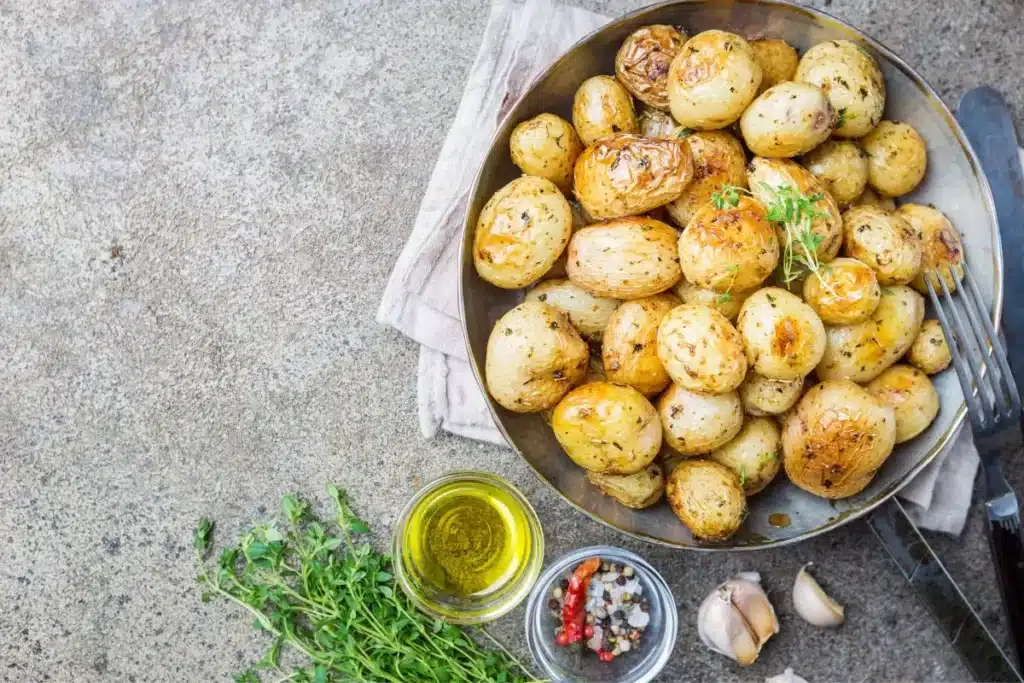
Roasted baby potatoes with herbs — one of the simple sides in this guide.
What are the best ways to cook baby potatoes?
Roast small potatoes whole, parboil them first for crisper edges, boil and smash them with herb butter, or serve them warm with lemon and salt. Small red potatoes also work well as a boiled salad base. The best method depends on the potato’s size, skin and texture, not the word “baby” on the pack alone.
Baby potato cooking at a glance
- Roast: Choose potatoes of a similar size, dry them well and spread them in one layer.
- For extra-crisp edges: Parboil, drain and let the surface steam-dry before roasting.
- For smashed potatoes: Boil until fully tender before pressing and finishing with high heat.
- Know the label: “Baby” describes size in many markets; “new” refers to potatoes harvested before full maturity.
- Leftovers: Cooked potatoes keep three to four days when safely refrigerated at 40°F (4°C) or below.
Start with the potato, not the label
What are baby potatoes?
“Baby potato” is not the name of one particular variety. It is commonly used for small potatoes selected or marketed for their size. A 2024 review in Potato Journal describes baby potatoes as small tubers that can come from varieties naturally producing smaller potatoes, growing practices or size grading; very small potatoes can also come from fully mature crops. The label alone therefore does not tell you exactly how the potato was grown or how starchy it will be.
The 2024 review of baby potatoes is useful background, but the practical distinction for a home cook is this: new potatoes are harvested before full maturity, while “baby” is often a broader size description in retail. Purdue Extension explains the early-harvest meaning of new potatoes. The terms sometimes overlap on packaging, so look at the variety and the condition of the potatoes rather than relying on the name alone.
Some small potatoes have thin skins and a waxy texture that helps them keep their shape when boiled. Others may be small examples of a variety with a different balance of starch and moisture. That is why the same method does not give identical results with every bag.
| Label or type | What it tells you | Useful cooking direction |
|---|---|---|
| Baby potatoes | A small size or market category; not one single cultivar. | Whole roasting, boiling, smashing or salads, depending on the actual variety and texture. |
| New potatoes | Harvested before their skins have cured, so the skins are more delicate. | Good for boiling and serving whole; handle gently and do not assume they store like mature potatoes. |
| Mature russets | A larger, starchier baking type with a different texture from many small salad potatoes. | Better suited to fluffy mash, baked potatoes and other methods that benefit from a drier, starchier interior. |
The kitchen guide
Six ways to cook baby potatoes
This is a methods guide, not six separate ingredient-and-quantity recipe cards. The notes below describe the approaches used in our family kitchen; exact cooking time changes with the potato’s size, variety, starting temperature and the equipment you use. Check tenderness rather than treating one time as universal.
| Method | Best when you want | The detail that matters |
|---|---|---|
| Roast whole | Golden skins and creamy centres | Dry the potatoes and keep their size even on the tray. |
| Parboil, then roast | More textured, crisp edges | Drain and steam-dry before adding oil and roasting. |
| Boil and smash | Craggy edges with a soft centre | Cook fully before pressing; finish with herb butter after the high heat. |
| Lemon and salt | A simple warm side dish | Dress while the potatoes are still warm so the seasoning clings. |
| Honey Gold roast | A sweeter, golden potato with a sharper finish | Our kitchen note pairs the roast with Dijon or vinegar. |
| Red Bliss potato salad | Small potatoes that hold their shape | Boil until just tender and drain thoroughly before dressing. |
1. Roast baby potatoes whole
For a straightforward roast, choose potatoes that are close in size, scrub them and dry them thoroughly. Toss with oil and seasoning, then arrange them in one layer with a little room around each potato. Turn once as they cook. They are ready when the skins are browned and a knife slides into the centre without resistance.
If the bag contains a mixture of very small and much larger potatoes, halve the larger ones so they finish at a similar time. Wet skins and crowded trays encourage steaming rather than the dry, browned surface you want.
2. Parboil before roasting for crisp edges
Parboiling is optional, but it gives the outside a head start. Boil the potatoes until the surface begins to soften, then drain them well. Leave them in the colander for about two minutes so steam can escape before you toss them with oil and put them in the oven.
The slightly softened, rougher surface gives the roast more edges to colour. Do not skip the steam-drying step: adding wet potatoes to the roasting tray makes it harder to brown them properly.
3. Boil, smash and finish with herb butter
For smashed potatoes, boil until the centres are completely tender. Drain and let them steam-dry briefly, then press each one gently until the skin splits and the potato flattens without falling apart. Roast or air-fry until the broken edges turn crisp.
Herb butter is best added at the end, while the potatoes are hot. It coats the surface and brings the herbs forward without making the tray wet before the edges have crisped.
4. Make lemon-and-salt boiled potatoes
Boil the potatoes until tender, drain them carefully, then toss with salt and lemon while they are still warm. This is the simplest of the six ideas: it keeps the flavour clean and gives you a side that can sit beside grilled fish, vegetables or a more richly seasoned main course.
Use the lemon gradually. A little brightens the potato; too much can overwhelm its mild flavour.
5. Roast Honey Gold potatoes with Dijon or vinegar
One of the original July 2026 kitchen notes was to roast Honey Gold potatoes at 425°F (220°C), then serve them with Dijon mustard or a little vinegar. The sharper note balances the sweeter flavour we notice in this potato. Keep the potatoes in a single layer and judge doneness by tenderness and browning, not the temperature setting alone.
6. Use small Red Bliss potatoes for potato salad
Small Red Bliss potatoes are the ones we reach for when the plan is a boiled potato salad rather than a tray of roast potatoes. Their red skins and firmer feel make them a useful option when you want pieces that keep their shape. Boil until just tender, drain well and let excess steam leave before adding the dressing.
As with any potato salad, handle the cooked potatoes gently. Stirring too hard while they are hot can break them up and turn a bowl of distinct pieces into mash.
A visual demonstration
Watch a baby-potato cooking demonstration
The video below is from another creator and is included as a visual companion to the written methods. It is not an MPT production, and the article remains complete without playing it.
Shop with the method in mind
How to choose baby potatoes for the method you want
Look for firm potatoes without soft patches, deep bruising or extensive green areas. Choose a bag with reasonably consistent sizing if you plan to roast them whole. If the potatoes are labelled with a variety, use that information as a better guide than the word “baby” by itself.
For a boiled side or potato salad, a waxier potato that holds its shape is useful. For a crisp roast, even size and a dry surface matter as much as the label. If the pack says “new potatoes”, remember that these are immature tubers with more delicate skins; handle them gently and do not assume they will keep as long as mature potatoes.
Scrub under running water and dry before roasting. Peeling is usually unnecessary when the skins are sound. Remove eyes and sprouts; cut away small green patches generously, including the skin around them. A potato that is extensively green, spoiled or noticeably bitter should be discarded rather than used. Green areas can be associated with increased natural glycoalkaloids, including solanine, so do not taste-test a bitter potato. USDA FSIS explains how to handle green potatoes, and the Canadian Food Inspection Agency advises discarding potatoes with pronounced greening.
Food safety and leftovers
How long do cooked baby potatoes last?
USDA Food Safety and Inspection Service guidance says cooked potatoes and other cooked vegetables can be kept in the refrigerator for three to four days. Keep the refrigerator at 40°F (4°C) or below. This is an official storage window for cooked potatoes, not a home test of this particular dish.
Refrigerate cooked potatoes within two hours of cooking, or within one hour when the surrounding temperature is above 90°F (32°C). Divide a larger amount into shallow containers so it cools more quickly, and label the container with the date. Freeze portions you will not use within the refrigerated window.
Raw potatoes are a different storage question. Their keeping quality depends on variety, maturity, skin condition and how they were handled after harvest. This guide does not assign a tested pantry-life number to every type sold as a baby potato.
Keep exploring the kitchen archive
More recipes and cooking ideas
When you are planning the rest of the plate, browse the Mangoes & Palm Trees Recipe Index for the wider collection of family recipes, ingredient guides and cooking notes. This baby-potato guide stays focused on the small potatoes themselves rather than sending you through unrelated recipe roundups.
Baby potato recipes: common questions
Do baby potatoes need to be peeled?
Usually not. When the skins are sound, scrub the potatoes well and cook them unpeeled. Remove any damaged areas or eyes before cooking.
Are baby potatoes the same as new potatoes?
Not always. Baby potato is commonly used for small potatoes sold by size, while new potatoes are harvested before their skins have cured, so their skins are more delicate. Retail labels sometimes use the terms loosely.
Should I boil baby potatoes before roasting?
No, it is optional. Roasting them whole works well when they are small and similar in size. Parboiling first softens the outside; drain and steam-dry them before roasting for rougher, crisper edges.
How long do cooked baby potatoes keep in the fridge?
USDA FSIS guidance says cooked potatoes can be refrigerated for three to four days. Keep the refrigerator at 40°F (4°C) or below and refrigerate perishable leftovers within two hours, or within one hour when the temperature is above 90°F (32°C).
Are baby potatoes good for potato salad?
Yes. Choose firm small potatoes that hold their shape when boiled, cook them only until tender, then drain well before dressing. Small red-skinned potatoes can be a useful choice when their texture suits the salad.
Enjoying our content? Make Mangoes & Palm Trees a preferred source on Google.