Editorial standards: editorial policy · Affiliate disclosure: affiliate disclosure


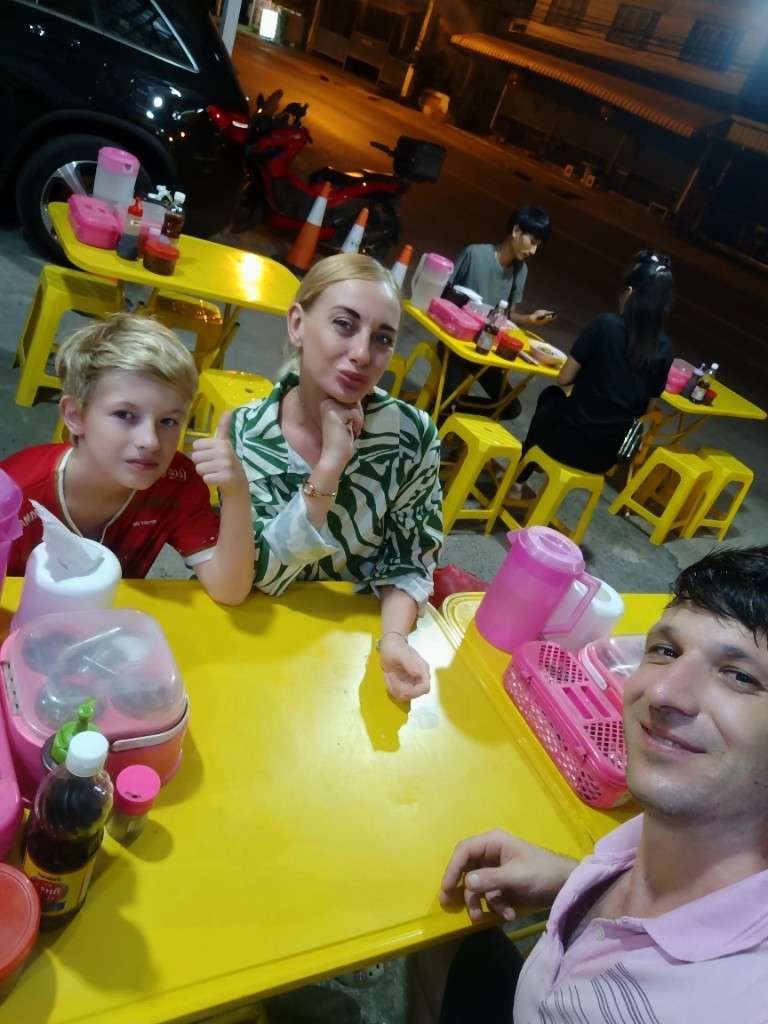
Thailand Street FoodBa Mee Kiew Moo Daeng: Thailand Pork & Wonton Noodle Soup
The 30-baht bowl that taught me how Thailand actually eats — noodles, pork dumplings, and roasted red pork in a broth you finish yourself.
What is ba mee kiew moo daeng?
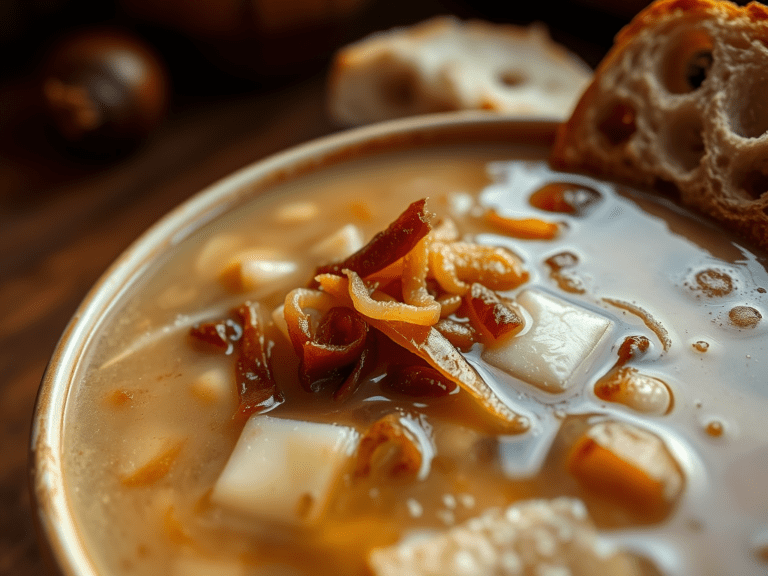
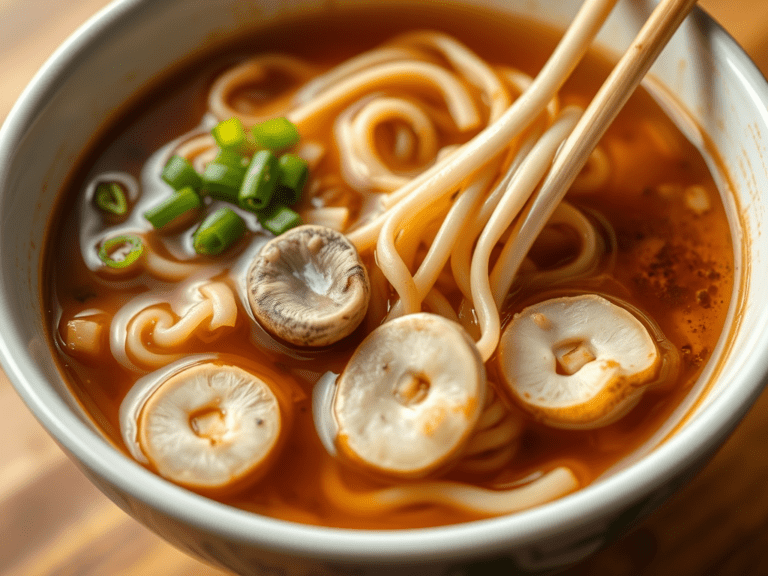
Ba mee kiew moo daeng (บะหมี่เกี๊ยวหมูแดง) is a Sino-Thai street food dish of springy yellow egg noodles, pork wontons, and roasted red BBQ pork in a clear, slow-simmered pork bone broth. Diners season each bowl themselves with chili vinegar, fish sauce, dried chili, and sugar. Street carts charge 30 to 60 THB a bowl.
Key takeaways
- Ba mee kiew moo daeng pairs yellow egg noodles, pork wontons, and roasted red pork in a clear pork-bone broth.
- The bowl arrives unseasoned — you add chili vinegar, fish sauce, dried chili, and sugar from the table caddy.
- My first bowl cost 30 THB on Soi Khao Noi in Pattaya; our best bowl in Koh Samui runs 40–60 THB near Mae Nam.
- Teochew and Hainanese immigrants brought the noodles, wontons, and roast pork; Thailand added the sour-sweet-salty-spicy balance.
- Victor eats his bowl mild, straight from the pot — no added chili.
Part of our Thailand food and travel 2026 archive and street food recipes cluster.
The 30-Baht Bowl That Taught Me How Thailand Eats
I grew up on soup that filled a table for a week — beet-red borscht, dense with cabbage and dill, simmered until the whole kitchen in Krasnoyarsk smelled like winter. That was my baseline the day I sat down at a plastic stool on Soi Khao Noi in Pattaya, a bowl of thin yellow noodles and pale dumplings in front of me. Nothing about it looked like soup to me.
I was staying at Chok Chai Home Garden 2, a short walk from the village market, and I could not yet speak a word of Thai. Every day I passed the same cart — always ringed by motorbikes and plastic stools, the air thick with simmering pork bone and roasted garlic oil. Curiosity finally won.
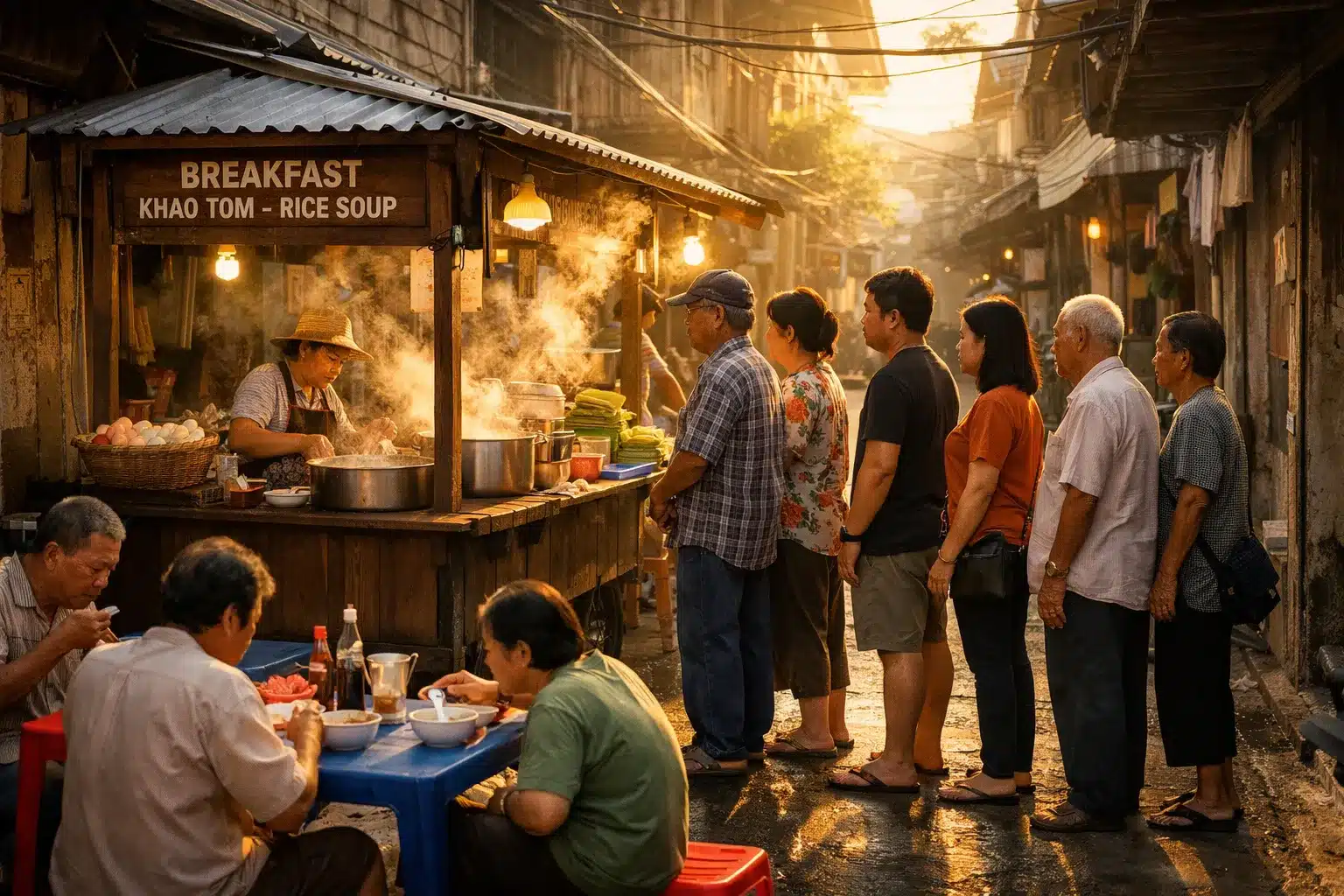
The vendor did not speak English and I did not speak Thai, so I watched the table beside me instead — how much chili vinegar they spooned in, how they left the sugar for last. I copied them, bowl after bowl, until the balance made sense on my own tongue. At 30 THB a bowl, it became the cheapest lesson I ever learned about this country.
More on the everyday cost of eating well in our Thailand food and travel guide and Bangkok street food guide.
The Sino-Thai Origins of Ba Mee Kiew
Ba mee kiew moo daeng did not begin in Thailand. Teochew and Hainanese immigrants carried the noodles, the wonton wrappers, and the technique for roasting pork in a sweet-dark glaze from southern China generations ago. Alkaline egg noodles, wonton dumplings, and glazed roast pork are Chinese in origin — Thailand kept the structure and changed the flavor.
Over decades in Thai kitchens, the broth lightened and the seasoning shifted toward the country’s four-point balance — sour, sweet, salty, and spicy — added at the table rather than in the pot. What survived the crossing intact was the format itself: noodles, dumplings, and roast pork sharing one bowl, meant to be eaten often and fast. It is why the dish reads as unmistakably Thai even though almost none of its parts started there.
How to Eat It Like a Local
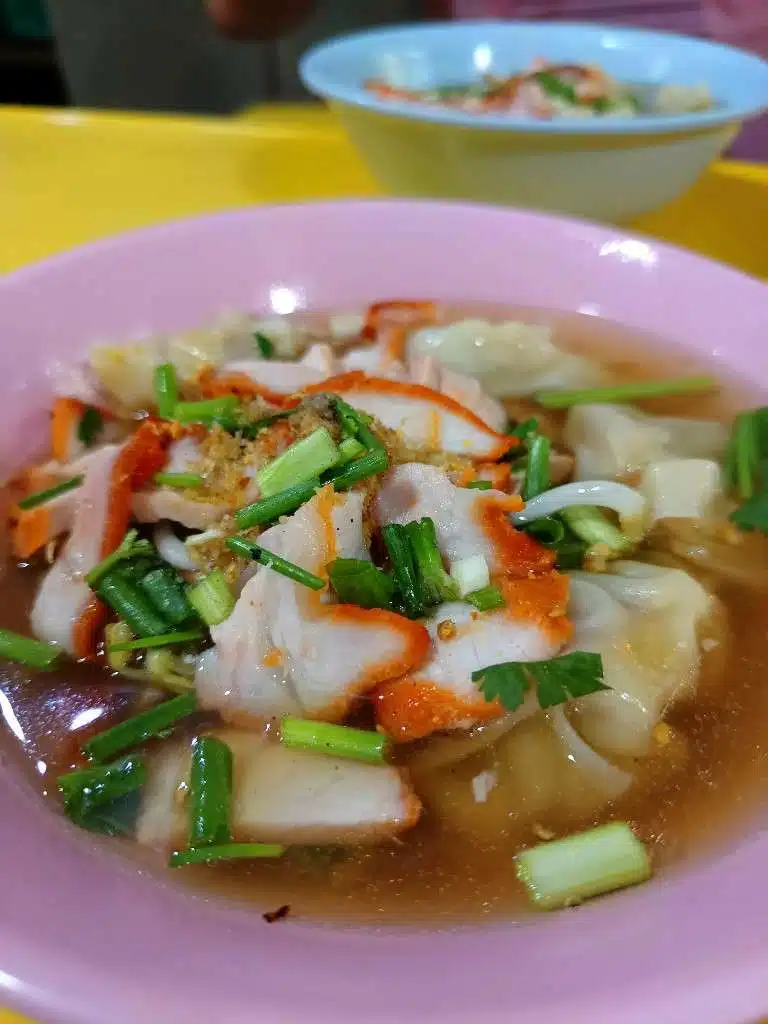
When your bowl arrives, it is not finished. The broth is deliberately plain until you season it yourself, using the puang prik — the four-glass condiment caddy on every table.
Here is exactly how we balance a bowl, the same way that first cart on Soi Khao Noi taught me by example alone.
The Puang Prik: How to Season Your Bowl
| Condiment | Thai Name | Flavor Profile | How to Use It |
|---|---|---|---|
| Chili Vinegar | Nam Som Sai Chu | Sour | Add 1–2 teaspoons to cut the richness of the pork broth. |
| Fish Sauce | Nam Pla | Salty (umami) | Dash lightly — taste first, the vendor’s stock may already be salty enough. |
| Dried Chili Flakes | Prik Pon | Spicy | Start with a small pinch; roasted Thai chili flakes are highly potent. |
| White Sugar | Nam Tarn | Sweet | A small scoop balances the sharp vinegar and fiery chili. |
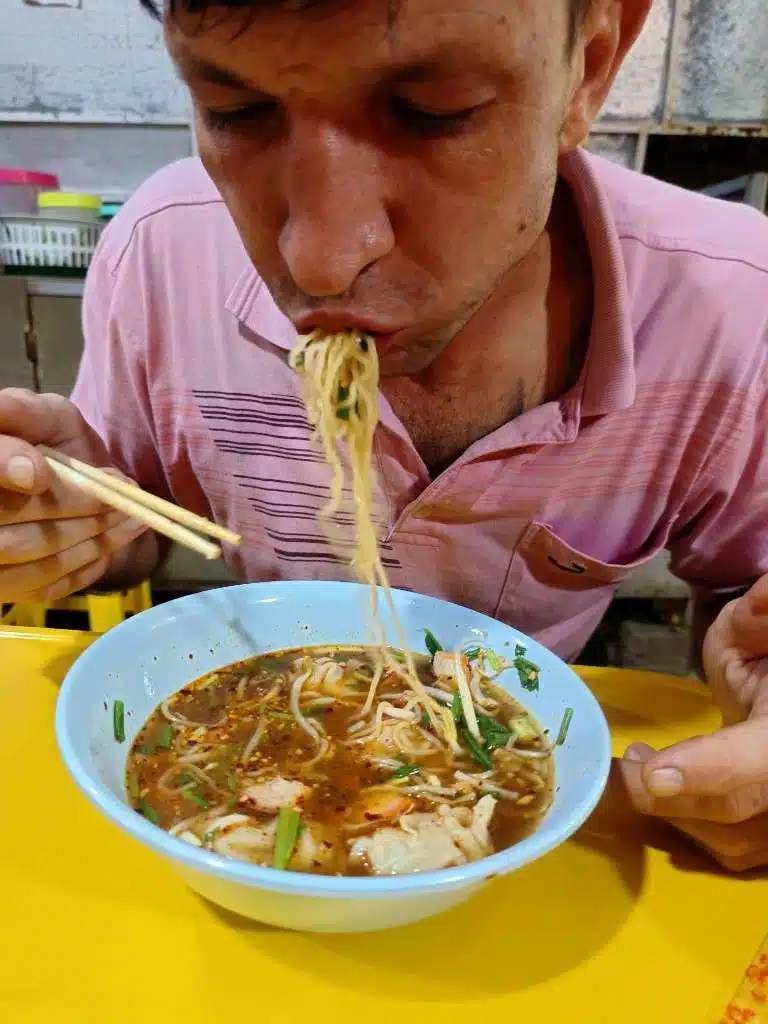
Taste your broth once before you touch the caddy. Every cart’s base stock is a little different, and the four condiments are there to finish a bowl — not to rebuild it from scratch.
The Family Care Standard
A bowl of ba mee kiew moo daeng is already seasoned with fish sauce and often a background of soy, so I taste before adding extra salt at the table. That habit matters more for a family managing sodium, and it costs nothing to do.
Roasted red pork should look glossy and firm, not tacky, and a busy cart with steady turnover is safer than one holding meat under a warm lamp for hours — the same street-food hygiene lens we use in our Cambodian street food field notes and the USDA FSIS + WHO cards in our evidence vault below.
Because the chili sits in a caddy instead of the pot, Victor has eaten this dish mild since he was small — the same bowl, the same broth, just without the pinch of prik pon the rest of us add.
Field-tested map
Where we eat ba mee kiew on Koh Samui
Editorial pins from our July 2026 Mae Nam field visits and linked Samui reviews. Not live stall hours, bookings, or an MPT restaurant database.
Map tiles © OpenStreetMap contributors.
- Mae Nam food market area — ba mee kiew field notes
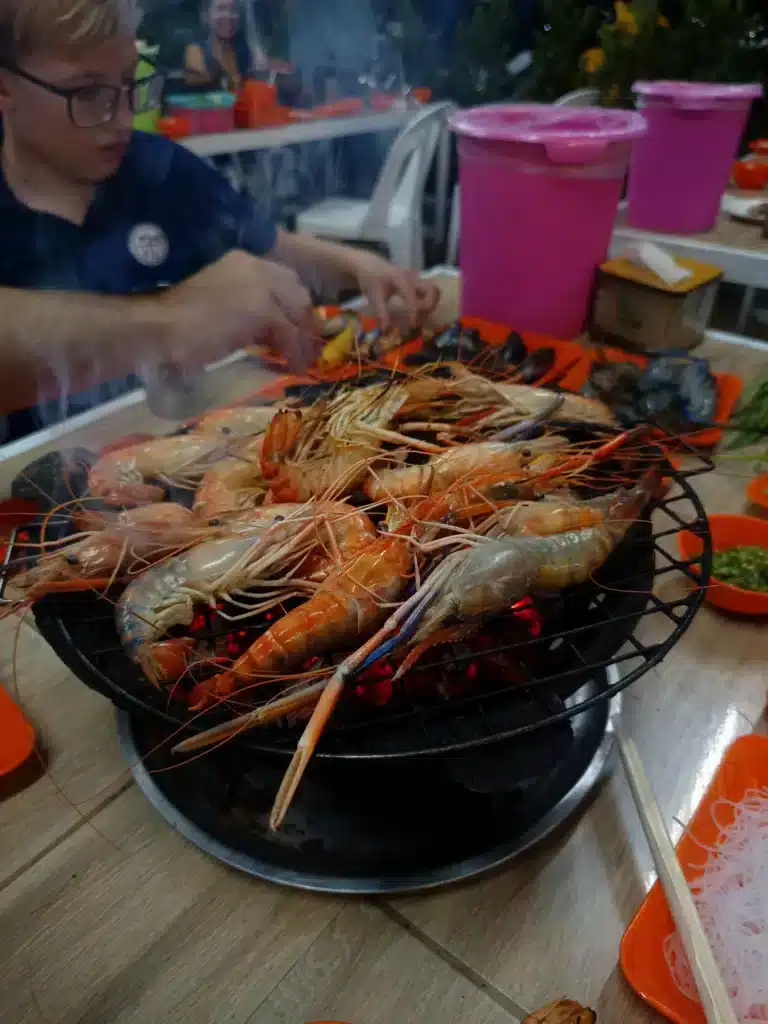
- Mr. Dam Korean BBQ — Bo Phut
- Kai Bar Lamai — Lamai
- Koh Samui travel guide — island pacing
Pins link to our reviews and guides — not live availability.
Where can you eat ba mee kiew on Koh Samui?
Use the north-shore map for Mae Nam market-area pins linking to our ba mee kiew field notes, linked Samui restaurant reviews, and the Koh Samui travel guide. Pins are editorial only from family visits — not live stall hours or an MPT restaurant database. Tap a pin or list link to open our reviews.
Finding the Best Bowl in Koh Samui
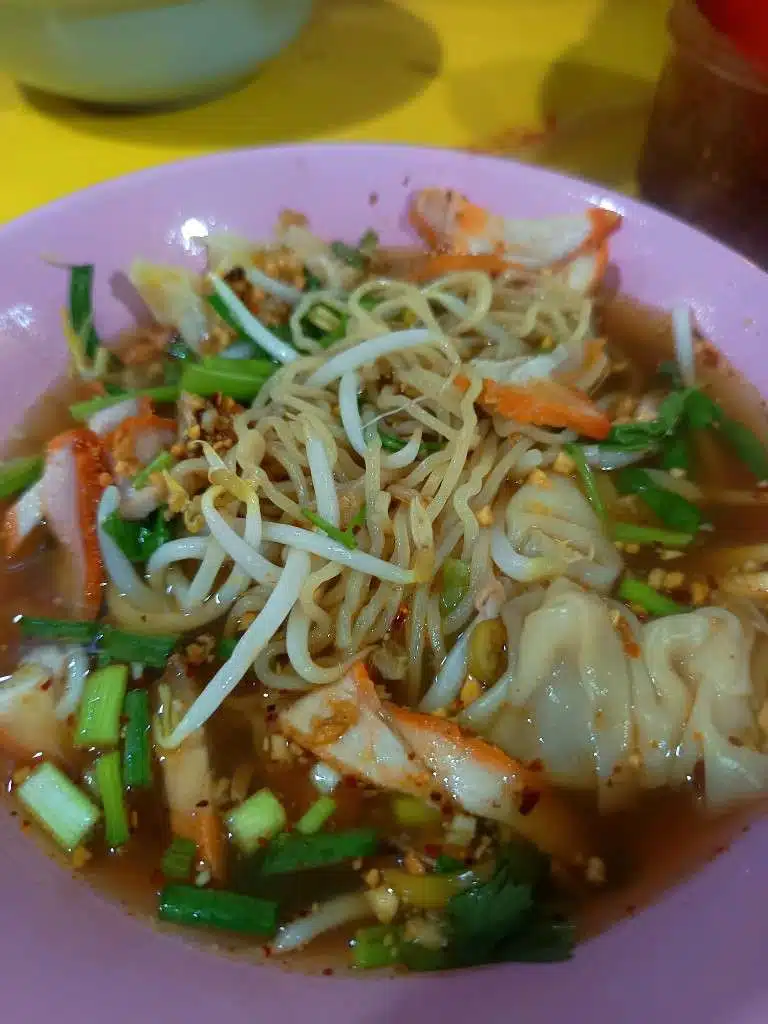
Exploring street food together became one of the things Oliver and I do best as a pair, long after that first cart in Pattaya. We have eaten ba mee kiew moo daeng across the country, but the best bowl we have found is right here on Koh Samui, tucked into the Mae Nam area near the local food market.
The vendor has the ratios exactly right — a broth that runs clear instead of cloudy, pork with a real caramelized edge, and wontons packed generously rather than stretched thin. A bowl costs 40 to 60 THB, proof that the most complete flavors on this island rarely come from a restaurant with a menu in English.
For more of our Mae Nam field notes, see our Koh Samui travel guide, or compare it against the same week’s dinners at Mr. Dam Korean BBQ and Kai Bar in Lamai. Browse our full restaurant guides hub when you are planning the rest of the island.
The Victor-Tested Verdict
What Victor said
Victor calls it “soup with dumplings you can pick up,” and he eats his bowl completely mild — no chili, extra bean sprouts, wontons first. At nine, he can order it himself now: “mai sai phrik” (no chili) was one of the first phrases he learned in Thai.
Oliver’s honest note
Structurally, the dish holds up on a plastic stool or a proper table — the broth stays hot, the noodles do not clump, and the pork keeps its glaze even after ten minutes of family conversation.
If curries and Pad Thai are what visitors order first, ba mee kiew moo daeng is what keeps this country fed every single day. Explore more of our street food recipes, lemongrass chicken noodle soup, and soup and stew recipes when you want to bring a version of it home.
Enjoying our content? Make Mangoes & Palm Trees a preferred source on Google.
Explore next
 Koh Samui travel guideBeaches, schools, ferries, family pacing
 Mr. Dam Korean BBQMu kratha night in Bo Phut, Koh Samui
 Kai Bar in LamaiTen years of family meals on Samui
 Thailand food and travel 2026Live field archive from this season
 Street food recipesCart-tested dishes from our archive
 Pad kra pao recipeThailand’s other everyday plate
Ba Mee Kiew Moo Daeng — questions we get
What is ba mee kiew moo daeng?
It is a Sino-Thai street food dish consisting of yellow egg noodles, pork dumplings, and roasted red BBQ pork, traditionally served in a clear pork bone broth.
Is Thai pork noodle soup spicy?
No, ba mee kiew is served mild. Diners customize their own heat level by adding roasted dried chili flakes provided at the table.
How much does ba mee kiew cost in Koh Samui?
A standard bowl of ba mee kiew at a local street food cart in Koh Samui costs between 40 and 60 THB, depending on portion size and added ingredients.
Does Mangoes & Palm Trees list ba mee kiew stalls or live hours?
No. Our Koh Samui map shows editorial pins from family field notes with links to our reviews — not live stall hours, bookings, or an MPT restaurant database.
Meet the Mayerhoffers
“Free-spirited food adventurers, culture-seekers, and the guardians of 15 years of global memories.”
Natalia Mayerhoffer
Mother · Siberian Heritage & Cultural VoiceFamily and cultural voice — first-person field notes on this street food story, with kitchen safety and nutrition context for every family reading along.
Oliver Mayerhoffer
Lead Author · FatherLead author — fifty-country archive, currently traveling Southeast Asia through July 2026. Oliver reviewed this piece and joined the Koh Samui bowls in Mae Nam.
“Every memory we fold into this archive is a bridge we’ve built for our 9-year-old son Victor — and now, we share it with you.”
Explore Our Full Family ArchiveEvidence vault
WHO — Food safety
General food-safety guidance for prepared meats and broths eaten while traveling.
WHO — food safety fact sheetUSDA FSIS — Safe food handling
Reference for safe handling and temperature guidance on prepared pork.
USDA FSIS — safe handling and preparationCDC food safety for travelers
Street-cart and buffet hygiene reminders for family travel kitchens.
CDC — food and water safetyPrices and vendor details from our own July 2026 field visits in Pattaya and Koh Samui; condiment names cross-checked against family use over multiple street-food seasons.
Where ba mee kiew fits in our Thailand archive
Street noodle carts sit beside Koh Samui dinners, soup recipes, and the family standards we carry everywhere we eat.