Skip to restaurant finder Skip to recipe
Find a Shish Taouk Plate Near You
Search your area, open Google or Apple Maps, then use our plate checklist below.
Type a dish and a city, or tap a cuisine chip — we open live results in Google or Apple Maps. Free, no account.
- Search nearby
- Open Maps
- Check authenticity
Tap Use my location or Show map links to open Google or Apple Maps.
Your location stays in your browser — we open third-party maps, not an MPT restaurant list.
Third-party maps listings  not MPT editorial reviews.
Maps finds Arabic and Lebanese restaurants near you — this guide helps you judge whether the kitchen serves a real shish taouk plate before you order. Field notes from Oman and Levantine kitchens we have actually cooked in.
- Quick comparison
- What we learned
- Restaurant finder
- Plate checklist
- Lebanese cues
- Shawarma vs tawook
- Marinade
- Jump to recipe
- Field-tested
- FAQ
Editorial standards: editorial policy · Affiliate disclosure: affiliate disclosure · Updated 24 August 2026.
How do I find an Arabic restaurant near me for shish taouk?
Use the Arabic Restaurant Finder above: tap a cuisine chip or type shish taouk, allow location or search by city, then open Google Maps or Apple Maps. Mangoes & Palm Trees does not list restaurants — the checklist below helps you judge the plate after Maps shows options.
Shawarma vs shish tawook — quick comparison
| Feature | Chicken shawarma | Shish tawook |
|---|---|---|
| Origin | Levant / Ottoman vertical spit | Levantine grilled skewers |
| Marinade | Vinegar and warm dry spices | Yogurt, garlic, tomato paste |
| Cooking | Vertical spit, thin shavings | Horizontal skewers, direct flame |
| Flavour | Crispy edges, warm spice bark | Creamy interior, garlic-lemon char |
| Typical bread | Pita wrap or flatbread plate | Garlic toum, pita, or rice plate |
Cook at home via our Middle Eastern chicken hub, chicken kabsa, or Lebanese shawarma guides.
What we learned
- Yogurt marinade on tawook cubes is enzymatic tenderizing — lactic acid breaks down the lean breast fibers so the meat stays soft under direct flame, the cue we watch for when judging a restaurant plate.
- Shawarma arrives as thin shavings with warm-spice bark from the vertical spit; tawook should come as distinct cubes with garlic-lemon char — if it is shaved, it is not tawook.
- On shared platters in Oman and Levantine kitchens, bread and toum matter as much as the protein — a real shish taouk plate includes both, not wrap-only shawarma service.
How does shish tawook differ from chicken shawarma?
Chicken shawarma is thermal engineering: fat-glistening thigh stacked on a turning spit, self-basting as the fat renders, shaved into crisp-edged ribbons. Shish tawook is charcoal precision: breast cubes marinated overnight in a full-fat yogurt, lemon, and garlic emulsion, the lactic acid keeping the meat soft under direct flame. Use the finder above to locate a plate, then the scorecard to judge whether the kitchen understands the cut — not only “chicken on a stick.”
Cook tawook at home with the recipe atlas further down, or the full kitchen notes on our chicken shish tawook recipe. Shawarma stays a wrap path: Lebanese chicken shawarma. Browse the Middle Eastern chicken hub.
Best shish taouk near me: what to order

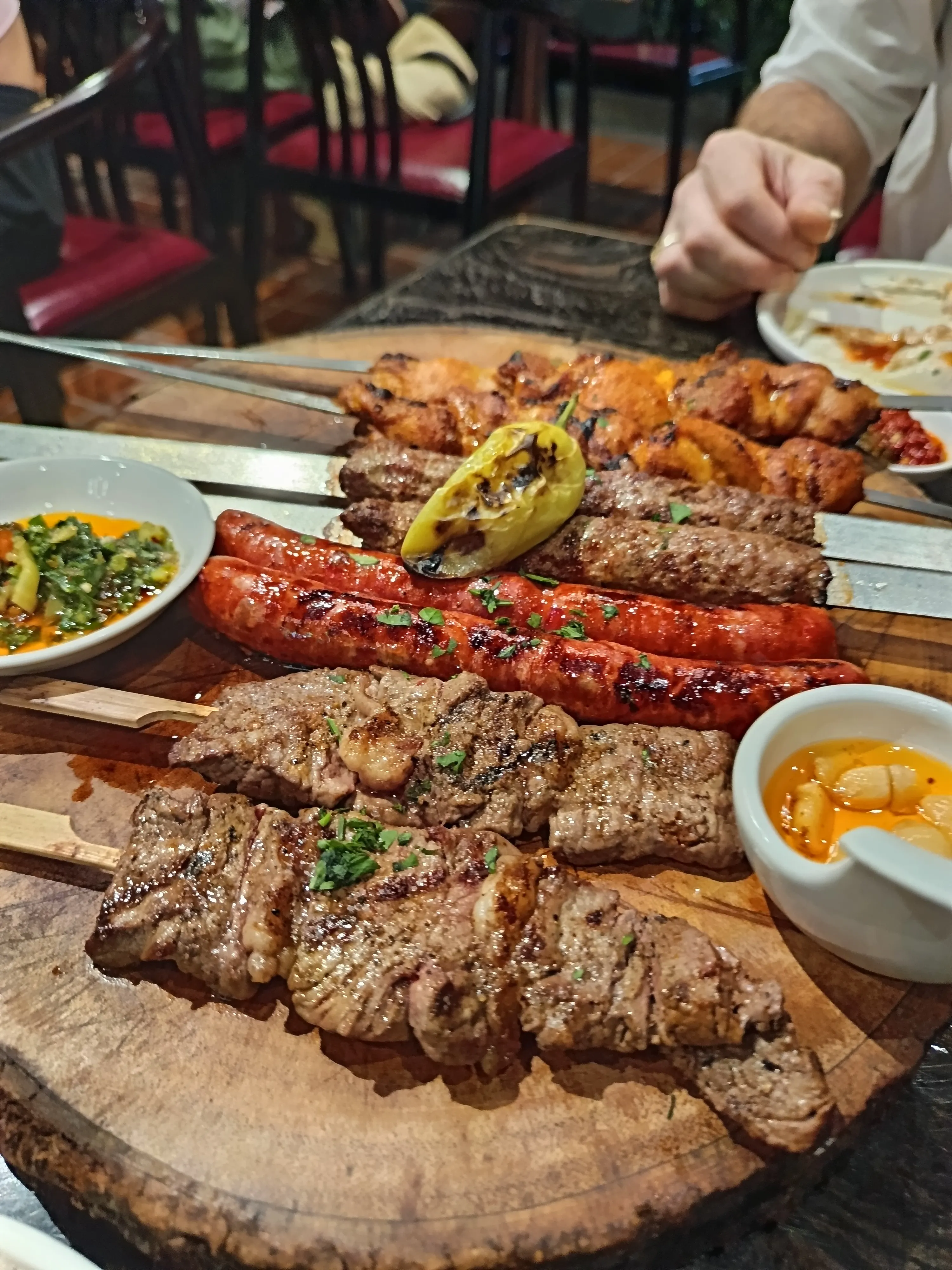
Search “shish taouk plate near me,” open Maps from the finder above, and here is what should actually end up on your table if the kitchen knows what it is doing. Use the scorecard below to judge the plate — char, toum, bread, acid — before you order.
What should a shish taouk plate look like at a restaurant?
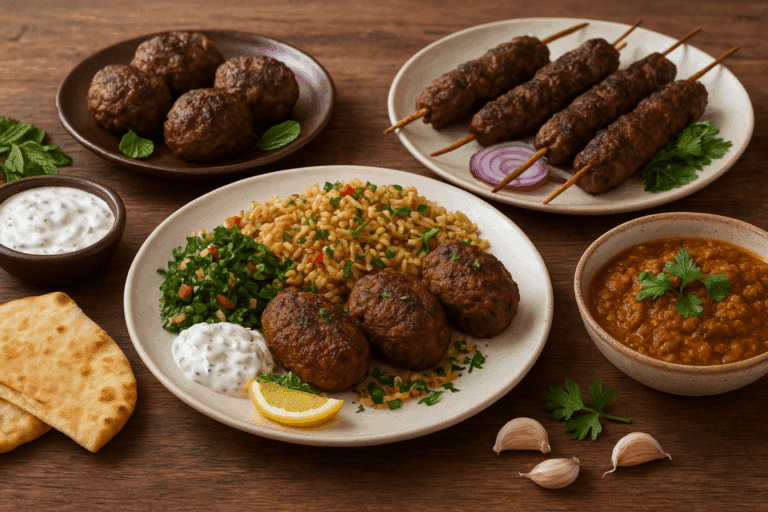
Take this scorecard with you after you find a restaurant. It tells you whether the kitchen understands authentic shish taouk.
MPT Plate Finder
Authentic Shish Taouk Checklist
Save or screenshot this list — judge the plate after Maps, before you order.
- Charcoal-grilled chicken cubes — about 1.5-inch pieces with grill char outside and juice inside.
- Yogurt and garlic marinade — you should smell garlic depth; pale unseasoned cubes fail.
- Fresh toum — Lebanese garlic sauce on the side, not a mayo smear.
- Warm pita or flatbread — soft enough to wrap or scoop.
- Pickles and salad — acid balance beside the meat.
- Proper grill char without dry meat — color on the outside, moisture in the center.
- Shawarma contrast — if the meat is shaved from a vertical spit, you ordered shawarma.

What goes into an authentic shish taouk marinade?
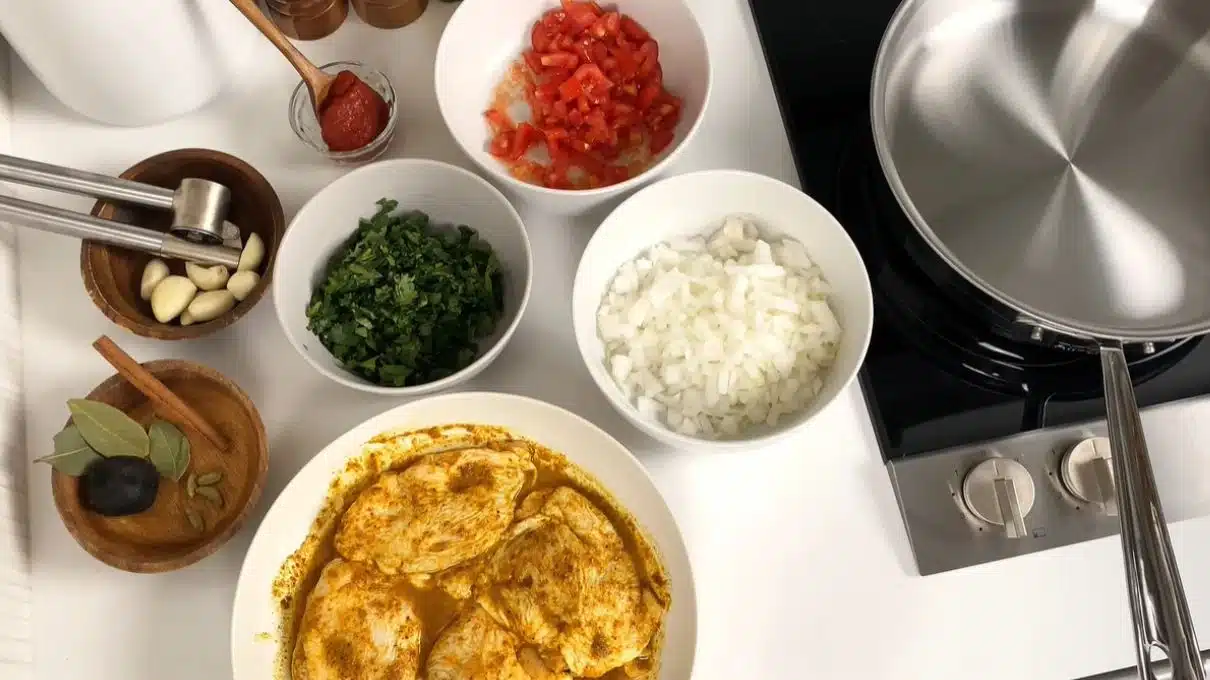
Restaurant tawook should smell garlic and yogurt before you taste any char. The marinade that works is a full-fat yogurt, lemon, and garlic emulsion — lactic acid does the tenderizing, so breast cubes stay soft as the charcoal sears, without the harsh bite vinegar gives shawarma.
- Yogurt — about 1 cup (240 ml) full-fat; carries spice color and keeps cubes moist on direct flame.
- Garlic — 4–6 cloves minced; you should smell depth at the table, not a faint hint.
- Lemon juice — 2 tbsp; bright acid without replacing yogurt as the main tenderizer.
- Tomato paste — 1–2 tbsp; paprika-red color without food dye — the Oman kitchen tell Oliver still checks.
- Olive oil — 2 tbsp; helps spices cling during skewering.
Full home protocol: chicken shish tawook recipe.
What makes a great shish taouk plate?
A great plate balances yogurt-garlic marinade, charcoal char, and juicy cubes that cut clean. Toum should taste sharp, white, and emulsified — the garlic engine of the plate. Sides bring acid and starch, from pickles to warm bread, so the garlic does not stand alone.
How to spot authentic Lebanese garlic sauce
Toum is not a side dip — it is the raw, emulsified garlic engine of garlic, oil, lemon, and salt that holds the Levantine grill together. The real thing is bright white, sharp, and fluffy; mayo-forward dips read flat and sweet. Ask for toum on the side and smell the garlic first.
Why do some restaurants get shish taouk wrong?
Cubes cut too small dry out before the char builds. A weak yogurt marinade never tenderizes, bottled garlic mayo poses as toum, and under-charred meat has no grill perfume. Menus that call any grilled chicken “shish taouk” without yogurt-garlic depth usually miss the dish.
Best side dishes on a shish taouk plate
Look for warm pita or rice, a green salad or fattoush, and pickles. Hummus or garlic potatoes pair well when the kitchen already understands Levantine plates. Skip heavy cream sauces that bury the marinade.
What should a shish taouk plate cost?
Prices vary by city, but a full plate with sides should land near other grilled-chicken mains on the menu. Extremely cheap cubes often mean thin marinade or small portions. Family platters usually cost less per person than two solo plates.
Family-sized portions — what to order
For a family of three to four, order a shared platter of skewers plus toum, one salad, and bread or rice. Confirm spice level for children before the kitchen seasons the plate. Keep one wrap option if Victor-style picky eaters need a softer path in.
The names behind the heat
“Shawarma” adapts the Turkish çevirme — “turning” — for the vertical rotisserie.
“Shish tawook” pairs Turkish şiş (skewer) with tavuk (chicken) for the horizontal grill.
Menus settle the debate by texture: shaved crisp edges versus juicy charred cubes.

Lebanese restaurants near me: plate cues
Lebanese plates lean charcoal skewers, sharp toum, and fattoush or pickles. Gulf and Oman kitchens often add rice, hummus, and milder garlic dips for family tables. Turkish tavuk şiş shares the skewer but may skip tomato paste — menus still list it as tawook when cubes are thick and yogurt-marinated.
- Lebanon Charcoal cubes, toum, pickles, warm pita — the reference most diaspora restaurants aim for.
- Syria / Jordan Similar skewer plates; garlic depth and bread service vary by neighborhood grill.
- Gulf / Oman Rice or bread platters, shared toum, milder heat — the field context behind our Oman journal notes.
- Turkey Horizontal şiş cuts; watch for shaved spit meat mislabeled as taouk on bilingual menus.
From Oliver’s journal: the Oman years
I was living in Al Khuwair, Muscat, when shish taouk stopped being a menu item and became a ritual. My chef Lars and I would come in from an evening out and stop at Al Jood, a Lebanese place near our block — grilled fish that made me slow down, hummus and salads that arrived like they mattered, bread warm and endless. The plate I still measure every shish taouk against came from that room, and it is where I fell in love with Lebanese food.
There was a second place too — a late-night Turkish grill in Muscat that never closed, packed at two in the morning, packed at six, whenever you showed up. What I still taste is their lahmacun: thin, crackling, dressed with spiced minced meat. I sometimes had their esh al-bulbul as well — the Turkish cheese-and-honey flatbread — but one night I wanted the honey on my lahmacun instead.
I asked for it. The cook’s face said everything: sweet on a classic felt like butchery to him. He did it anyway, and I loved it — sour spiced lamb, hot crackling bread, that sweet edge cutting through.
After many visits we became friends. By the end he knew my order and reached for the honey jar before I said a word. I never asked whether it was tradition; it was ours.
Then I fell in love with Muscat, then with Oman. We still have friends there today. I cannot wait to go back.
Shish tawook was the grill plate: enzymatic yogurt marinade that Natalia still checks for family practicality at home.
We treat heat as structure, the same way we compare chili varieties in our chili library.
Shawarma vs shish tawook at a glance
| Feature | Chicken shawarma | Shish tawook |
|---|---|---|
| Marinade key | Vinegar and dry warm spices | Yogurt, garlic, and tomato paste |
| Texture goal | Thin shavings with crispy edges | 1.5-inch cubes, creamy inside |
| Cooking axis | Vertical spit (self-basting) | Horizontal skewers (direct flame) |
Four steps that settle heat and texture
- Enzymatic tenderization: Yogurt softens lean tawook cubes; shawarma uses vinegar and warm spice for bark.
- Cut for the axis: Cube tawook evenly; keep shawarma thighs whole before shaving.
- Heat contact: Grill tawook over direct flame; mimic spit physics for shawarma on a high-heat rack.
- Victor finish: Shawarma shaved thin; tawook tender enough for a pita pull. Poultry to 74°C / 165°F internal.
Full recipes: chicken shish tawook · authentic Lebanese shawarma.
Where to eat authentic shish taouk
Separate from the restaurant finder above. These links go to restaurants and hubs we visited on our travels—not a live near-me directory or MPT restaurant database.
Ogen Hua Hin
Resort kitchen where we audited Levantine grill standards during Thailand fieldwork.
Read the reviewRestaurant guides
Field-tested eats from trips we took — not a Maps directory.
Open the hubEat & stay
Parent archive for restaurants and stays filed by continent.
Browse eat & stayMiddle Eastern chicken
Recipe cluster for shawarma, tawook, and related plates.
Enter the kitchenShish tawook at home
Yogurt marinade and skewer protocol we cook before we publish.
Cook the recipeChicken kabsa
Gulf rice platter when you want spiced roast chicken instead of skewers.
Cook kabsaLemon sumac roast
Sheet-pan Levantine chicken when you are cooking at home, not ordering out.
Cook sumac roastChicken Shish Tawook
Yogurt-lemon marinated breast cubes on skewers, grilled until charred, with tropical mango-yogurt garlic dip—shish tawook from Oman field kitchen notes.
Ingredients
- 2 lbs chicken breast, boneless skinless, 1-inch cubes
- 1 cup plain yogurt (full fat or Greek)
- 1/4 cup lemon juice, freshly squeezed
- 3 tbsp olive oil, extra virgin
- 4 cloves garlic, minced
- 2 tsp paprika
- 1 tsp ground cumin
- 1 tsp ground coriander
- 1/2 tsp turmeric
- 1 tsp sea salt
- 1/2 tsp black pepper
- 1/4 cup mango puree (for sauce)
- 1/2 cup plain yogurt (for sauce)
- 1 tsp garlic paste (for sauce)
Step-by-step method
Prepare the Marinade
Whisk together yogurt, lemon juice, olive oil, garlic, paprika, cumin, coriander, turmeric, salt, and pepper in a large bowl until smooth.
Marinate the Chicken
Add chicken cubes to the marinade, ensuring every piece is coated. Cover and refrigerate for at least 4 hours, up to 12 hours.
Skewer the Meat
Thread chicken onto skewers, leaving a small gap between pieces for even heat circulation. If using wooden skewers, soak them first.
Grill
Preheat grill to medium-high (375°F). Grill skewers for 10-12 minutes, turning occasionally, until charred and internal temperature reaches 165°F.
Serve
Rest for 5 minutes. Serve with the mango-yogurt sauce (whisked mango puree, yogurt, and garlic).
Tested by Oliver Mayerhoffer and Natalia Mayerhoffer.
This is the locked Oman yogurt-lemon tawook we cook at home when Maps is thin. Full kitchen notes, indoor methods, and storage stay on chicken shish tawook recipe. Shawarma wraps are a different cook path: authentic Lebanese chicken shawarma.
What does Victor dip beside shish tawook?
Chicken on a stick
He rates tawook ten out of ten—garlicky but not spicy, with mango-yogurt dip that tastes like dessert at dinner.
Oman field note
Paprika color comes from Gulf-week marinades; we keep heat mild for family skewer nights and pull cubes at 165°F.
Master FAQ: chicken shawarma vs shish tawook
How do I find a shish taouk plate near me on Mangoes & Palm Trees?
Does Mangoes & Palm Trees list restaurants near me?
What is the difference between chicken shawarma and shish tawook?
What should a shish taouk plate look like at a restaurant?
How do you spot authentic Lebanese garlic sauce?
What should a shish taouk plate cost?
Which is healthier for a family meal?
Is shawarma or shish tawook better for meal prep?
Why does shish tawook use yogurt while shawarma uses vinegar?
How do I cook shish tawook at home if Maps is thin?
Is shish taouk halal?
Evidence vault
- UNE-24 · UNESCO: Intangible Cultural Heritage portal — frame for documenting regional foodways.
- WHO-05 · World Health Organization: Food safety fact sheet — poultry handling context for home cooks.
Meet the Mayerhoffers
“Free-spirited food adventurers, culture-seekers, and the guardians of 15 years of global memories.”

Oliver Mayerhoffer
Lead Author · FatherLead author — fifty-country archive, currently traveling Southeast Asia through August 2026. Oliver brings field-tested recipe structure and honest weeknight notes from family kitchens abroad.

Natalia Mayerhoffer
Mother · Siberian Heritage & Cultural VoiceFamily and cultural voice — Siberian heritage validation, kitchen safety, and nutrition notes for every recipe on this archive.
“Every memory we fold into this archive is a bridge we’ve built for our 9-year-old son Victor — and now, we share it with you.”
Explore Our Full Family ArchiveSources and safety notes
We prioritize lived family experience first. When food safety or heritage context matters, we cross-reference field notes with official references listed below.
USDA Food Safety
safe food handling reference
Read sourceHarvard T.H. Chan School of Public Health
nutrition source notes
Read sourceEditorial field notes
Family field notes — Mayerhoffer kitchen testing, 2026 Southeast Asia season
Archive routing
Family recipes, travel hubs, and trust pages across our fifty-country archive.
Enjoying our content? Make Mangoes & Palm Trees a preferred source on Google.
Explore next