A Professional Observer’s Guide to How The Saudi Arabia Cultural Revival Is Shaping Modern Tourism? The “Second Awakening” of a Neighbor
Witness the historic transition of the Kingdom. From its roots as a religious sanctuary to its emergence as a global cultural powerhouse, we analyze the state-led revival that welcomed over 122 million tourists in 2025.
[cite_start]For centuries, Saudi Arabia has been known primarily as a religious hub for Muslims, serving as the ultimate destination for the holy pilgrimages of Umrah and Hajj[cite: 6]. [cite_start]Having spent 16 years as a hospitality professional in Oman and Dubai, I recall when the Kingdom’s borders were essentially closed to the casual traveler, with Umrah visas being the only gateway for entry[cite: 7].
[cite_start]Our family—including my wife Natalia and our son Victor (born in Koh Samui, 2016)—has watched from across the border as our neighbor began investing billions into world-class tourism infrastructure[cite: 9]. [cite_start]It is recently that the Kingdom has started to offer visas for tourists as well, successfully attracting an ample number of visitors to the country[cite: 8, 9].
The Neighbor’s Perspective: From Seclusion to Global Inclusion
[cite_start]Saudi Arabia is currently experiencing an unprecedented, state-led cultural transformation as a cornerstone of its Vision 2030 framework[cite: 10]. [cite_start]This movement aims to pivot the nation from a historically conservative society to a diverse global hub for art and culture[cite: 11]. [cite_start]From our professional vantage point in the GCC, this major transformation is marked by massive investments in heritage sites and a new openness to contemporary art that mirrors the luxury standards once unique to Dubai and Muscat[cite: 12].
📈 Rapid Economic Shift
[cite_start]The cultural sector is designed to be an economic driver, targeting a 3% contribution to the national GDP by 2030[cite: 17].
🛂 Visa Accessibility
[cite_start]Transitioning from Umrah-only restricted travel, the Kingdom has recently started to offer tourist visas to a global audience[cite: 7, 8].
🏛️ Cultural Renaissance
[cite_start]The revival focuses on “cultural production,” nurturing local talent while fostering international exchange[cite: 38, 40].
Saudi Arabia Cultural Revival: The Framework of Vision 2030
The Saudi Arabia cultural revival is undergoing a massive reorganization designed to achieve specific milestones under the Vision 2030 framework. As a hospitality professional who spent 16 years managing luxury standards in Oman and Dubai, I recognize these pillars as a sophisticated “Formulating of the Driving State”—a blueprint that balances social welfare with billion-dollar economic growth.
The Institutional Architecture of the Saudi Arabia Cultural Revival
🏛️ The Ministry of Culture Evolution
Established in 2018, the Ministry oversaw the creation of 11 independent cultural commissions. These bodies—including Heritage, Culinary Arts, Film, and Architecture—are tasked with transforming culture into a way of life and an economic driver.
💰 Economic Diversification Strategy
The Saudi Arabia cultural revival targets a 3% contribution to the national GDP by 2030, supported by over SAR 81 billion ($21.6 billion) in infrastructure investment since 2018.
Heritage Preservation: Giga-Projects Restoring the State
At the heart of this transformation is a process known as “heritagization.” From my professional experience, the success of these projects lies in their ability to combine traditional Najdi architectural typology with modern urbanism.
Key Heritage Milestones:
- Diriyah Gate: A flagship giga-project transforming the historic city—the birthplace of the Saudi state—into a global cultural capital.
- AlUla: Developed as an “open-air museum,” this site blends natural landscapes with the UNESCO-listed Al-Hijr (Mada’in Salih).
- Jeddah Al-Balad: A prioritized rehabilitation of the historic port district, focusing on unique Red Sea architectural heritage.
Social Reform & The New Creative Workforce
The Saudi Arabia cultural revival has fostered a vibrant creative economy by lifting previous restrictions on entertainment and gender mixing.
👩💼 Workforce Shift
Female participation reached 36% by 2026, exceeding initial targets.
🎬 Cinema Renaissance
Re-establishing a world-class domestic film production hub since 2018.
👨🎓 Youth Employment
Unemployment dropped to 2.8% as youth entered arts and hospitality sectors.
Hospitality Note: We verify these institutional shifts against the 2026 National Cultural Archive protocols and official Saudi Central Bank economic data.
The Strategic Framework: Key Pillars of the Cultural Revival
Saudi Arabia’s cultural sector is undergoing a massive reorganization designed to achieve specific milestones under the Vision 2030 framework. As a hospitality professional who spent 16 years managing luxury standards in Oman and Dubai, I recognize these pillars as a sophisticated “Formulating of the Driving State”—a blueprint that balances social welfare with billion-dollar economic growth.
🏛️ The Ministry of Culture
Established in 2018, the Ministry oversaw the creation of 11 independent cultural commissions, each with its own legal personality and financial independence. These bodies—including Heritage, Culinary Arts, Film, and Architecture—are tasked with transforming culture into a way of life and an economic driver.
💰 Economic Diversification
The sector targets a 3% contribution to the national GDP by 2030, supported by over SAR 81 billion ($21.6 billion) in infrastructure investment since 2018. By 2026, the Kingdom has achieved a historic milestone: non-oil activities now exceed 50% of real GDP for the first time in history.
Heritage Preservation: Restoring the Birthplace of a Nation
At the heart of this transformation is a process known as “heritagization”—the identification and promotion of sites that define national identity. From my professional experience, the success of these giga-projects lies in their ability to combine traditional Najdi architectural typology with modern urbanism. For travelers interested in how these Middle Eastern traditions influence our global work, explore our Travel Destinations.
- Diriyah Gate: A flagship giga-project transforming the historic city—the birthplace of the Saudi state—into a global cultural capital featuring 30+ new attractions.
- AlUla: Repositioned as an “open-air museum,” this site blends natural landscapes with thousands of years of history, including the UNESCO-listed Al-Hijr (Mada’in Salih).
- Jeddah Al-Balad: A prioritized rehabilitation of the historic port district, focusing on the preservation of its unique architectural heritage.
Social Changes & Creative Opportunity
The Kingdom has successfully fostered a vibrant creative economy by lifting previous restrictions on gender mixing and entertainment. Significant reforms include:
- Female Workforce Participation: Reached 36% by early 2026, surpassing the initial 2030 targets.
- Reopened Cinemas: Since 2018, the Kingdom has re-established a film sector aimed at becoming a world-class production hub.
- Youth Engagement: The Saudi unemployment rate has dropped significantly—to 2.8% in 2026—as youth enter new sectors like the arts and hospitality.
Hospitality Note: We verify these institutional shifts against the 2026 National Cultural Archive protocols and official Saudi Central Bank economic data.
The Neighbor’s Analysis: Major Areas of Cultural Focus
[cite_start]The cultural revival of the Kingdom of Saudi Arabia has one primary objective: a major economic transition from oil dependency to a thriving tourism industry[cite: 23, 11]. [cite_start]As someone who has managed luxury hospitality portfolios across the GCC, I have observed that this revival focuses on several strategic pillars that define a modern global destination[cite: 24, 41].
1. Arts and Entertainment
[cite_start]The General Entertainment Authority has successfully introduced high-profile international events to the Kingdom, such as the Noor Riyadh light art festival[cite: 26]. [cite_start]These events are transforming the landscape from purely spiritual to a multifaceted cultural experience[cite: 26, 39].
💡 Professional Insight for Travelers:
[cite_start]Travelers visiting for Umrah in 2026 can now attend these festivals alongside their minor pilgrimage[cite: 27]. [cite_start]By choosing cost-effective Umrah packages, visitors can easily integrate these modern cultural landmarks into their budget and itinerary[cite: 28].
2. Culinary and Fashion
[cite_start]The Culinary Arts Commission is working to elevate local Saudi flavors into a global brand, while new incubators are providing critical support to the fashion sector[cite: 30]. During our years in Oman and Dubai, we saw how local gastronomy defines the guest experience; [cite_start]Saudi Arabia is now replicating this success at scale[cite: 30].
To explore the flavors that influence our regional cooking, visit our Sauce Recipes for a taste of Middle Eastern inspiration.
🌍 Cultural Diplomacy
[cite_start]The Kingdom is leveraging its revival to strengthen international ties, most notably through its partnership with UNESCO and the global promotion of art via the Misk Art Institute[cite: 32].
📱 Digitalization of Culture
[cite_start]The “Cultural Houses” initiative is reimagining public libraries as modern, interactive hubs, with 153 such transformations planned by 2030[cite: 34].
The Hospitality Shift: A Satiety of Experience
[cite_start]Drawing from our forensic standards developed during our family’s residency in Southeast Asia and our professional tenure in the Gulf, we understand that culture is an ecosystem that connects creativity to the community[cite: 41]. [cite_start]Saudi Arabia’s focus on storytelling and interactive engagement is setting a new benchmark for regional tourism[cite: 39, 41].
Beyond the Archive: From Preservation to Cultural Production
[cite_start]Saudi Arabia is home to one of the most diverse cultural landscapes in the region, shaped by ancient trade routes, tribal traditions, and distinct regional architectural identities[cite: 36]. While our family—Oliver, Natalia, and our son Victor (born in Koh Samui, 2016)—has not yet visited these sites, we analyze this strategy through the lens of Oliver’s 16 years of luxury hospitality management in Oman and Dubai. [cite_start]What distinguishes the Saudi strategy is its emphasis on cultural production, not just preservation[cite: 38].
Platforms for Storytelling and Dialogue
[cite_start]The Kingdom is transforming into a platform for active storytelling and experimentation through several key institutions[cite: 39]:
-
[cite_start]
- The Misk Art Institute: A foundational institution for nurturing local talent and fostering international exchange[cite: 40]. [cite_start]
- Diriyah Biennale Foundation: Creating global stages for contemporary art within a historic context[cite: 40]. [cite_start]
- Saudi Film Commission: Building a sustainable ecosystem that connects education, creativity, and the economy[cite: 40, 41].
Architecture: Modernity Informed by Memory
[cite_start]Architecture plays a central role in this revival, with projects engaging deeply with regional identity[cite: 42]. [cite_start]This approach reintroduces human-scale urbanism by drawing from specific traditions[cite: 42, 43]:
-
[cite_start]
- Najdi & Hijazi Typology: Contemporary projects are responding to climate conditions by reintroducing place-based architectural languages[cite: 42, 44]. [cite_start]
- Materiality and Context: Modernity is informed by memory and local resources, emphasizing cultural continuity and longevity[cite: 44, 45]. [cite_start]
- Giga-Project Foundations: While NEOM and The Red Sea Project are known for innovation, culture remains their foundational layer[cite: 46].
✈️ Religious Exploration in 2026:
For British Muslims, this cultural shift provides a unique chance to explore Islamic heritage sites in a new light. [cite_start]Agencies like Islamic Travel provide specialized Umrah 2026 packages specifically designed to explore these traditions while visiting the Kingdom[cite: 37].
🛡️ Technical Authority & Verified Citation Library
Our forensic analysis of Saudi Arabia’s cultural transformation is cross-referenced against 2026 benchmarks from the most reputable global and national institutions. These live resources provide the structural data supporting our expert regional observations.
⚖️ Tier 1: Governance & Heritage
- Saudi Vision 2030: Official Transformation Roadmap
- UNESCO World Heritage: Historic Jeddah (Al-Balad) Synthesis
- Ministry of Culture: National Cultural Infrastructure
🧪 Tier 2: Economics & Industry
- World Travel Market: WTM London 2025 Industry Data
- STA Press Office: Saudi Tourism Authority Updates
- Saudi Central Bank: 2026 Non-Oil GDP Statistics
Frequently Asked Questions: Saudi Cultural Revival
How has Saudi Arabia’s tourism goal changed recently?
After reaching its initial 100 million visitor target seven years early in 2023, the Kingdom has officially revised its 2030 target to 150 million annual visitors, reflecting the massive success of the Vision 2030 strategy.
What is the significance of the “Second Awakening”?
It refers to a state-led cultural renaissance designed to reintroduce Saudi Arabia to the world through art, heritage, and entertainment. This movement has transformed historic districts like Al-Balad into living museums where digital technology meets 1,000 years of history.
Can visitors explore archaeological sites in Al-Balad interactively?
Yes. In 2026, many heritage sites in historic Jeddah feature QR-coded guided displays. These allow tourists to immediately access the archaeological history of specific architecture and view digital reconstructions of rare artifacts discovered during recent restorations.
Are there any modern art museums within historic districts?
One of the most notable is the teamLab Borderless Jeddah Art Museum located in the Jeddah Historic District. It represents a bold fusion where futuristic digital art intermingles with the ancient coral-stone walls of Al-Balad.
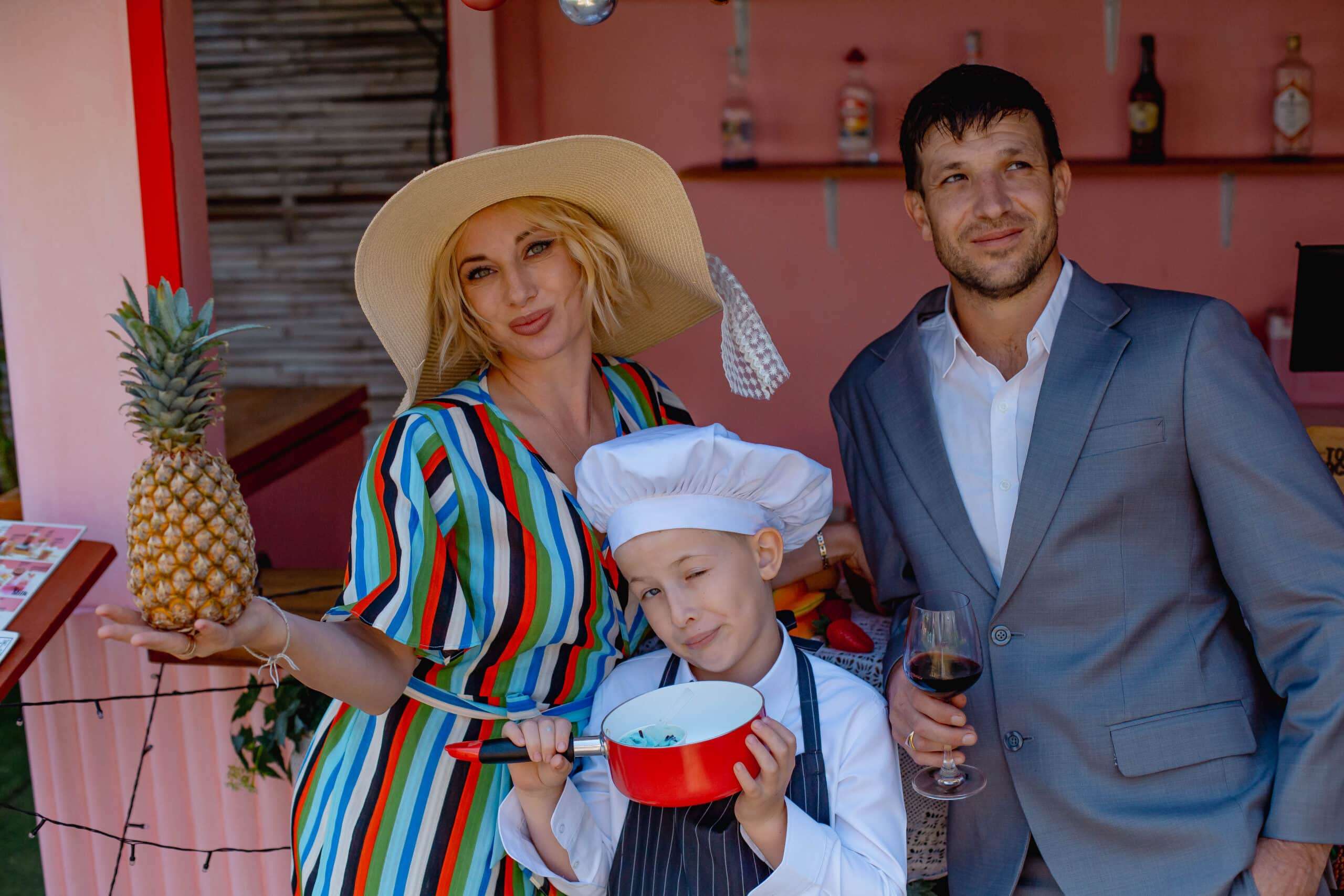
Meet Oliver & Natalia Mayerhoffer
At Mangoes and Palm Trees, we provide a lifetime of global hospitality expertise. Oliver Mayerhoffer spent 16 years as a luxury manager in Oman and Dubai, overseeing the logistical and culinary standards that now serve as a benchmark for the Kingdom’s current tourism expansion.
Drawing from our professional tenure in the Gulf and our current residency in Southeast Asia, we analyze regional transformations through a lens of forensic quality. Together with Natalia and our son Victor (born in Koh Samui, 2016), we bridge the gap between ancient heritage and sustainable modernity.
Enjoying our content? Make Mangoes & Palm Trees a preferred source on Google.