Editorial standards: editorial policy · Affiliate disclosure: affiliate disclosure · Family-tested archive — updated 2026-07.
Fresh pico de gallo in fifteen minutes
How to Make Salsa Fresca
Roma tomatoes, white onion, jalapeño, cilantro, and lime — no-cook salsa fresca we perfected after Koh Samui taco nights in 2018, field-tested across fifty countries through July 2026.
How do you make salsa fresca?
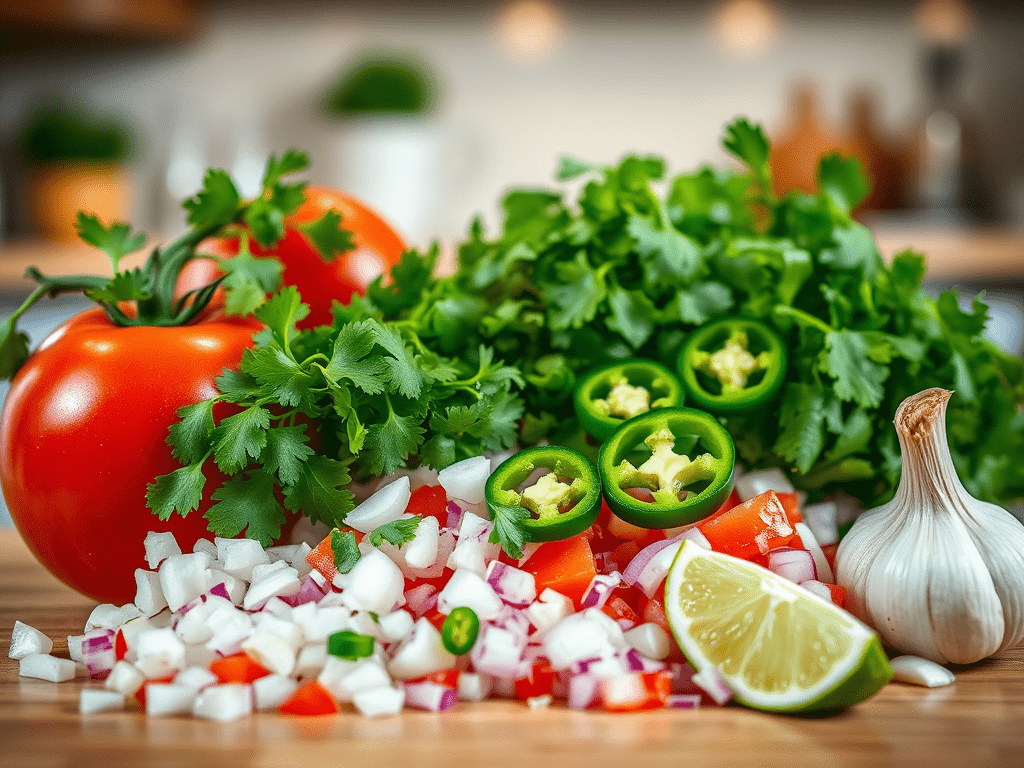
Salsa fresca combines diced Roma tomatoes, white onion, minced jalapeño, cilantro, lime juice, and salt without cooking. Rest fifteen minutes refrigerated so flavors meld. Use firm tomatoes and seed jalapeños for milder heat. Mayerhoffer family recipe from July 2026 rental kitchens.
Oliver writes from Southeast Asia fieldwork through July 2026; Natalia reviews safety and nutrition notes; Victor is the final vote on family plates.

Our Journey: From Koh Samui 2018 to Global Salsa Mastery
Our love affair with how to make salsa fresca began on November 24, 2016, in Koh Samui when Victor was born, followed by our culinary awakening two years later. Natalia and I were planning a tropical taco night in 2018, inspired by the vibrant Mexican markets we’d explored across Central America. We stood in our Thai island kitchen, surrounded by perfectly ripe tomatoes and fresh cilantro from the local market, and decided to make salsa from scratch—no jars, no shortcuts.
That first batch was bland. We’d followed a basic recipe, but something was missing. That’s when Richard’s wisdom from Cheltenham came to mind—Richard, a Scottish mentor from our early hospitality days, who taught us that great food comes from balance, not complication.
He’d always say, “taste as you build,” and that’s exactly what we did. We adjusted the lime juice (more acidity), increased the cilantro (herbaceous brightness), and let it rest in the fridge to allow the flavors to marry.
From 2018 onwards, we’ve made salsa fresca in 50+ countries—from Mexican markets in Mexico City to Hawaiian luaus, Vietnamese street kitchens to UK home kitchens. With fifteen years of kitchen experience and Victor now 8 years old, tasting and approving every batch, we’ve perfected what we believe is the definitive guide to how to make salsa fresca.
What Is Salsa Fresca? Understanding This Fresh Mexican Staple
Before learning how to make salsa fresca, it’s essential to understand what makes it unique. Salsa fresca—which literally means “fresh sauce” in Spanish—is a raw, uncooked Mexican condiment that celebrates the natural flavors and textures of fresh produce. Unlike cooked salsas that blend ingredients into a smooth sauce, salsa fresca maintains a chunky, textured consistency that delivers bursts of flavor with every bite.
- Uncooked Base: All ingredients are raw, preserving vibrant flavors and nutritional value.
- Chunky Texture: Hand-chopped ingredients create satisfying texture contrasts—nothing blended or over-processed.
- Bright & Fresh: Lime juice, cilantro, and chili peppers create a zesty, herbaceous profile that’s both complex and instantly appealing.
- Versatile Use: Works as a dip, topping, garnish, or finishing sauce for countless dishes.
Salsa Fresca vs. Pico de Gallo: These terms are often used interchangeably, but there’s a subtle distinction. Salsa fresca tends to be juicier and more sauce-like, while pico de gallo is chunkier with less liquid.
Both share the same fresh, uncooked foundation, but their end use differs slightly.
Why Make Salsa Fresca at Home? Health, Freshness & Control
Store-bought salsas often contain added sugars, preservatives, and thickeners that dull the natural brightness of fresh ingredients. When you master how to make salsa fresca at home, you gain complete control over every element.
- Peak Freshness: Homemade salsa uses ingredients at their prime, delivering maximum flavor and nutrition. Commercial salsas sit in warehouses and refrigerated sections for weeks, gradually losing their vibrancy.
- Zero Additives: No added sugars, no preservatives, no thickeners—just tomatoes, onions, herbs, and spice exactly as nature provides them.
- Customize to Taste: Adjust spice level by adding more or fewer jalapeños, control salt to your preference, and increase cilantro for more herbaceous flavor.
- Cost-Effective: Fresh ingredients from a farmers market or grocery store cost significantly less than premium jarred alternatives.
- Health Benefits: Tomatoes are rich in lycopene, cilantro aids digestion, jalapeños contain capsaicin for metabolism boost, and lime provides vitamin C.
Serving scaler
Scale this salsa fresca recipe
Adjust servings — quantities update instantly for rental-kitchen batches.
Key Ingredients for Perfect Salsa Fresca: The Foundation
The beauty of learning how to make salsa fresca is that you need just six simple ingredients, all available in any grocery store or farmers market. However, quality matters tremendously.
Core Ingredients Explained
- Roma Tomatoes (4 medium): Roma or plum tomatoes are ideal because they have less water content and fewer seeds than beefsteak varieties. Choose firm tomatoes that are just ripe—not soft or mushy, but with a slight give when gently pressed. Look for deep red color, which indicates higher lycopene content.
- White Onion (1/2 medium): White onions provide the sharp, pungent bite that balances the sweetness of tomatoes. They’re more assertive than yellow onions and add a crisp texture. Alternatively, red onions offer milder, sweeter notes with visual appeal.
- Jalapeño Pepper (1 medium): Fresh jalapeños contribute heat, herbaceous notes, and complexity. The level of spice varies by individual pepper, so taste as you go. Removing seeds reduces heat while keeping the flavor. For milder salsa, use just the ribs and minimal seeds; for heat-lovers, keep everything in.
- Fresh Cilantro (1/4 cup, loosely packed): Cilantro is the signature herb that elevates salsa from basic tomato mixture to vibrant, aromatic condiment. Use both leaves and tender stems—stems add flavor too. Chop just before adding to prevent browning.
- Fresh Lime Juice (1 medium lime): Lime is the acid that brightens all flavors and acts as a natural preservative. Always use fresh-squeezed juice—bottled lime juice lacks the brightness and complexity. Roll limes on the counter before cutting to maximize juice extraction.
- Sea Salt & Black Pepper (to taste): Salt draws out the juices from tomatoes through osmosis, allowing flavors to meld. Add gradually, tasting as you go. Sea salt has more mineral flavor than table salt.
How to Make Salsa Fresca: Complete Step-by-Step Recipe
Classic Salsa Fresca (Pico de Gallo)
Prep Time: 15 minutes | Cook Time: 0 minutes | Total Time: 15 minutes | Yield: 4 servings (about 2 cups)
Ingredients:
- 4 ripe Roma tomatoes (about 1.5 lbs), diced into 1/4-inch pieces
- ½ medium white onion (about ⅓ cup), finely chopped
- 1 medium jalapeño pepper, seeded and minced (adjust to taste)
- ¼ cup fresh cilantro leaves, roughly chopped
- Juice of 1 medium lime (about 2-3 tablespoons)
- ½ teaspoon sea salt, plus more to taste
- ¼ teaspoon freshly ground black pepper, plus more to taste
Instructions:
- Prepare Tomatoes (Step 1): Wash the Roma tomatoes under cool running water and pat dry with paper towels. Slice each tomato in half lengthwise and lay them cut-side down on your cutting board. Optional but recommended: gently scoop out the watery seed pockets with a small spoon—this prevents your salsa from becoming too runny and ensures a crunchier, more textured result. Dice the tomato flesh into uniform 1/4-inch cubes and place them in a medium mixing bowl.
- Prepare Aromatics (Step 2): Slice the white onion in half and peel away the papery skin. Lay the flat side down and slice thinly lengthwise, then turn 90 degrees and make perpendicular cuts to create small, uniform pieces. Aim for pieces slightly smaller than your tomato chunks so they distribute evenly throughout the salsa. Add chopped onion to the bowl with tomatoes.
- Prepare Jalapeño (Step 3): Wash the jalapeño and slice it in half lengthwise. Using a small spoon or knife tip, scrape out the white ribs and seeds—this is where most of the heat concentrates. If you love spice, keep some seeds; for milder salsa, remove them all. Mince the remaining jalapeño flesh into small pieces (about 1/8 inch) and add to your bowl.
- Add Fresh Herbs (Step 4): Roughly chop the fresh cilantro leaves, including tender stems (discard only woody stem bases). The goal is pieces large enough to see and taste distinctly, not minced into tiny specks. Add cilantro to the bowl.
- Finish with Acid & Salt (Step 5): Cut your lime in half and use a citrus juicer or fork to extract all juice, straining any large pulp. Pour the fresh lime juice over the mixture, distributing it evenly. Sprinkle with salt and black pepper, starting with the recommended amounts and adjusting to your preference as you taste.
- Combine Gently (Step 6): Using a wooden spoon or rubber spatula, gently toss all ingredients together with 5-6 full rotations, ensuring the salt dissolves and flavors begin to distribute. Avoid aggressive stirring—you want to maintain the chunky texture, not break down the tomatoes into mush.
- Marinate & Chill (Step 7 – CRITICAL): Let your salsa rest at room temperature or in the refrigerator for 15-20 minutes before serving. This resting period is crucial—the salt draws out juices from the tomatoes through osmosis, creating a light brine that allows all flavors to marry and intensify. The cilantro oils open up, the lime acidity mellows slightly, and the jalapeño heat distributes evenly.
- Taste & Adjust (Step 8): After the resting period, stir gently and taste your salsa. Add more salt if it tastes flat, more lime juice if you want brightness, or more cilantro if you want herbaceous flavor. Remember: a little goes a long way with these adjustments, so add conservatively and taste again.
Pro Tips for Perfect Salsa Fresca Every Time
- Choose Ripe But Firm Tomatoes: If tomatoes are underripe (pale or hard), they lack sweetness and acid balance. If overripe (very soft), they’re watery and fall apart when chopped. The sweet spot is a tomato that gives slightly when gently pressed, with deep red color.
- Remove Seeds for Texture: Tomato seeds and their surrounding gel contain most of the water content. Removing them creates a salsa that stays fresh longer and has better texture. This is optional, but we recommend it for both consistency and flavor concentration.
- Never Use a Blender: A food processor or blender turns salsa into a smoothie-like sauce, destroying the chunky, fresh texture that makes salsa fresca special. Hand-chopping is the only way to achieve restaurant-quality results.
- Let Flavors Meld in Cold: While resting at room temperature works, chilling the salsa in the fridge for 15-30 minutes creates better flavor integration. Cold also helps flavors pop on your palate.
- Taste Constantly During Prep: Since you can’t cook this dish to balance flavors, tasting as you build is your only tool. Taste after adding each major ingredient and adjust accordingly.
- Use Fresh, Quality Ingredients Only: With just six ingredients, each one must carry its weight. Stale cilantro, unripe tomatoes, or bottled lime juice will show immediately.
Tropical Variations: Mangoes, Pineapple & Beyond
Once you’ve mastered the classic how to make salsa fresca, explore these tropical twists inspired by our travels across Mexico, Thailand, Hawaii, and beyond.
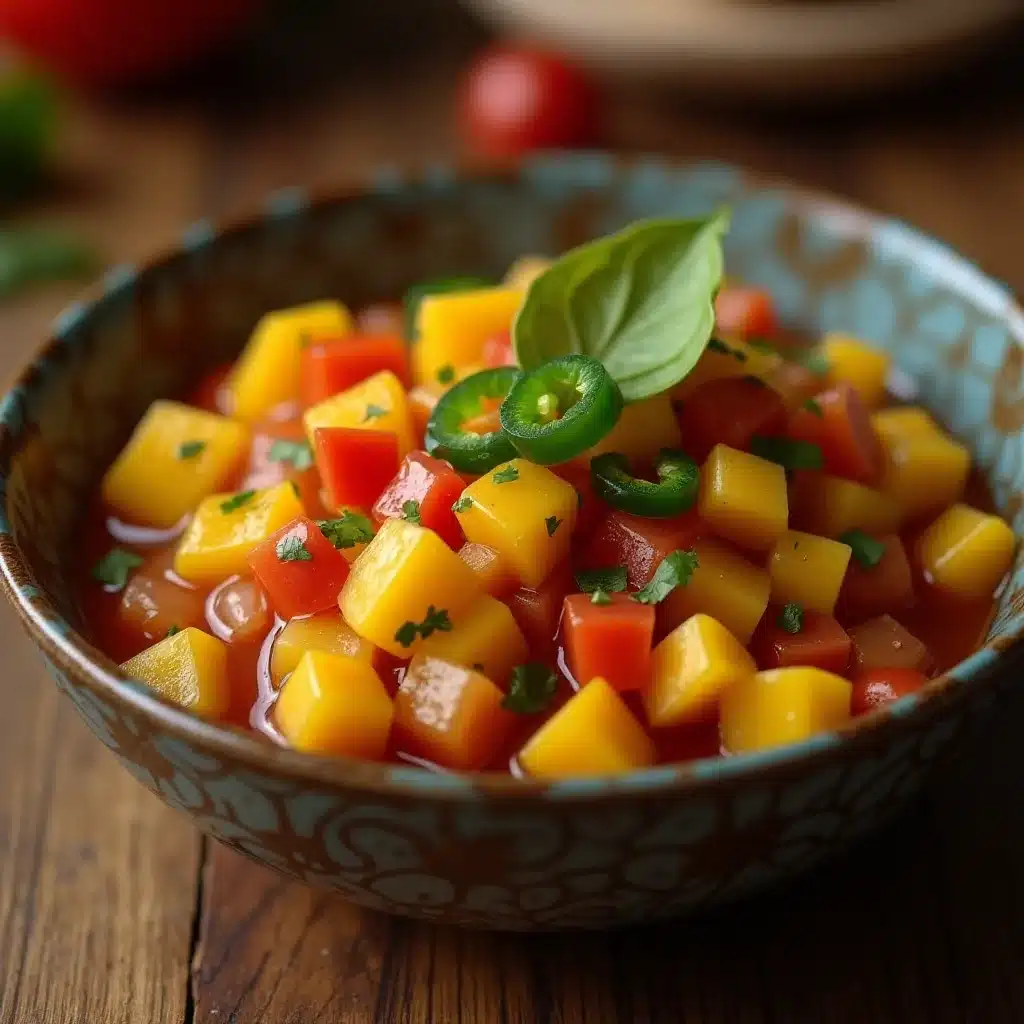
Mango salsa fresca (our signature twist)
This variation was born in 2018 after a market visit in Phuket where Natalia fell in love with perfectly ripe Ataulfo mangoes. The mango’s natural sweetness balances jalapeño heat while adding silky texture.
- Ingredients: 3 Roma tomatoes, 1 cup fresh mango (diced into 1/4-inch pieces—use firm fruit to avoid mushiness), 1/2 red onion (slightly sweeter than white), 1 jalapeño, 1/4 cup cilantro, 1 lime, salt & pepper.
- Method: Follow the classic salsa fresca steps, but use red onion instead of white for additional sweetness harmony. Add mango at the very end after mixing other ingredients—this prevents it from breaking down during the marinating process.
- Uses: Pair with fish tacos, grilled shrimp, or even vanilla ice cream for a sweet-savory dessert twist.
Pineapple-Habanero Salsa Fresca (Caribbean Fire)
While visiting Hawaii and Caribbean markets, we discovered how habanero peppers (100x hotter than jalapeños) paired explosively with tropical pineapple. This version is for heat lovers.
- Ingredients: 3 Roma tomatoes, 3/4 cup fresh pineapple (diced), 1/2 red onion, 1 habanero pepper (start with half and adjust—these pack serious heat), 1/4 cup cilantro, 1 lime, salt.
- Caution: Habaneros are significantly spicier than jalapeños—handle with gloves and seed generously if you prefer milder heat. The pineapple helps counterbalance the heat with natural sweetness.
- Uses: Serve with carne asada, grilled fish, or Caribbean black bean dishes.
Avocado-Lime Salsa Fresca (Creamy Luxury)
This variation adds richness and is best made fresh and consumed immediately to prevent avocado browning from oxidation.
- Ingredients: Complete classic salsa fresca (prepared above) + 1 ripe avocado, diced just before serving.
- Method: Make your classic salsa fresca, let it rest, then fold in fresh avocado pieces just before plating. Add an extra squeeze of lime juice to the avocado to prevent browning.
- Timing: This version doesn’t keep well—consume within 30 minutes of adding avocado, as oxidation quickly browns the fruit.
Charred corn-smoky salsa fresca
This variation bridges Mexican street food traditions with modern cooking techniques.
- Ingredients: Classic salsa fresca base + 1 cup fresh corn kernels (husked from cob or frozen, thawed), charred in a hot cast-iron skillet until edges blacken.
- Method: Heat a cast-iron skillet over high heat until smoking. Add corn kernels and let them char undisturbed for 3-4 minutes, stirring occasionally, until some kernels are deeply browned. Cool slightly, then fold into prepared salsa fresca.
- Flavor Profile: Adds smoky, caramelized depth that pairs beautifully with grilled meats.
Master How to Make Salsa Fresca: Your Fresh Sauce Foundation
Learning how to make salsa fresca is learning a fundamental cooking skill that transcends any single cuisine. This fresh, vibrant condiment teaches you about balance—balancing acid and salt, heat and sweetness, texture and moisture. It teaches you the value of quality ingredients, careful technique, and the magic of resting flavors.
From our 2018 awakening in Koh Samui to today, we’ve made salsa fresca in kitchens across the globe—humble home kitchens, bustling market stalls, beachside bungalows, and refined restaurants. Each iteration taught us something new about the interplay of these six simple ingredients. Victor, our ultimate judge, still declares every batch a success with “spicy yum!”.
Now it’s your turn to explore, experiment, and create. Start with our classic recipe, master the technique, then venture into tropical variations. Serve it at gatherings, share it with family, and watch it elevate every meal.
This is the kind of simple food that nourishes both body and spirit—fresh, honest, and wholly satisfying.
Questions we hear often
How long does fresh salsa fresca last in the refrigerator?
What’s the difference between salsa fresca and pico de gallo?
Why is my salsa fresca too watery?
Sources and safety notes
- Wikipedia — pico de gallo — fresh uncooked salsa definition
- USDA FSIS — leftovers and food safety — refrigerated prepared vegetable storage
- FDA — selecting and serving produce — fresh tomato handling guidance
- Healthline — tomato nutrition — lycopene and fresh tomato benefits
- Family field notes — Mayerhoffer salsa fresca, Koh Samui 2018 through July 2026
The Victor Standard: How to Make Salsa Fresca
What Victor said
Victor (age 9) is the family plate vote — mild seasoning, honest kid verdict, no restaurant theatrics.
Oliver's honest note
We test heat, texture, and repeatability at home before this recipe earns a permanent slot in the archive.
Meet the Mayerhoffers
“Free-spirited food adventurers, culture-seekers, and the guardians of 15 years of global memories.”

Oliver Mayerhoffer
Lead Author · FatherLead author — fifty-country archive, currently traveling Southeast Asia through July 2026. Oliver brings field-tested recipe structure and honest weeknight notes from family kitchens abroad.

Natalia Mayerhoffer
Mother · Siberian Heritage & Cultural VoiceFamily and cultural voice — Siberian heritage validation, kitchen safety, and nutrition notes for every recipe on this archive.
“Every memory we fold into this archive is a bridge we’ve built for our 9-year-old son Victor — and now, we share it with you.”
Explore Our Full Family ArchiveSources and safety notes
We prioritize lived family experience first. When food safety or heritage context matters, we cross-reference field notes with official references listed below.
USDA Food Safety
safe food handling reference
Read sourceHarvard T.H. Chan School of Public Health
nutrition source notes
Read sourceEditorial field notes
Family field notes — Mayerhoffer kitchen testing, July 2026 Southeast Asia season
How to Make Salsa Fresca
Salsa fresca combines diced Roma tomatoes, white onion, minced jalapeño, cilantro, lime juice, and salt without cooking. Rest fifteen minutes refrigerated so flavors meld. Use firm tomatoes and seed jalapeños for milder heat. Mayerhoffer family recipe from July 2026 rental kitchens.
Ingredients
- 4 ripe Roma tomatoes, diced
- 1/2 medium white onion, finely chopped
- 1 jalapeño pepper, seeded and minced
- 1/4 cup fresh cilantro, chopped
- Juice of 1 lime (approx. 2 tablespoons)
- Sea salt and black pepper to taste
Step-by-step method
Step 1
Wash and dice Roma tomatoes into uniform pieces, removing excess seeds if desired
Step 2
Finely chop white onion and mince jalapeño, adjusting to taste for spice level
Step 3
Combine tomatoes, onion, jalapeño, and fresh cilantro in a medium bowl
Step 4
Squeeze fresh lime juice over mixture and season with sea salt and black pepper
Step 5
Gently toss all ingredients together until evenly combined
Step 6
Refrigerate for 15-20 minutes to allow flavors to meld before serving
Tested by Oliver Mayerhoffer and Natalia Mayerhoffer.
Enjoying our content? Make Mangoes & Palm Trees a preferred source on Google.
Explore next

Salsa and taco routing
Fresh salsa linked to mango variation, jalapeño guide, quesadilla cheese, and chili library.