Affiliate Disclosure: At Mangoes and Palm Trees, we only recommend culinary tools that meet our rigorous hospitality standards. Some links are affiliate links, meaning we may earn a commission. Learn more.
🗺️ Authentic House Special Guide
The Auditor’s Memory: The “Supreme Stock” Benchmark
The Provenance Artifact: During my tenure auditing hospitality standards in Hong Kong and Singapore, the “House Special Soup” was never treated as a repository for leftovers. It was the “Chef’s Handshake”—a test of precision. We measured the broth’s clarity (turbidity) and the texture of the protein. If the shrimp wasn’t snappy or the chicken wasn’t velvet-soft, the kitchen failed the audit.
The Chinese house special soup (often referred to as Sheung Tong or Supreme Broth in Cantonese fine dining) relies on the “Low-Simmer Protocol”. Vigorously boiling the soup emulsifies the fats, creating a cloudy, greasy finish. To achieve the crystalline quality demanded by the Michelin Guide to Cantonese Cuisine, one must respect the physics of heat.
At Mangoes and Palm Trees, we respect this tradition while infusing it with our signature Tropical Flair—adding aromatic lemongrass and optional coconut milk to bridge the gap between a Hong Kong banquet and a Thai beachside feast. For more rigorous Asian classics, explore our full Soup Collection.
🧪 The Physics of Clarity: The “Low-Simmer” Rule
The difference between a muddy, greasy cafeteria soup and a shimmering Cantonese House Special Soup lies in Turbidity Control. During my kitchen audits, I learned that clarity is not about filtering; it is about heat management.
The Emulsification Trap: Vigorously boiling a soup causes the fat molecules and proteins to emulsify into the liquid, turning it opaque and white (like a Ramen tonkotsu). To achieve the “Supreme Stock” standard, we adhere to the Low-Simmer Protocol (approx. 190°F / 88°C). As detailed in ScienceDirect (Tier 2), keeping the temperature below the boiling point prevents this molecular bond, ensuring a crystal-clear broth.
🍤 The “Shrimp Snap” Audit
Oliver’s Technical Check: Mushy shrimp is an immediate failure. We use a Cold Brine Technique (ice water + salt + baking soda) for 15 minutes before cooking. This alkaline wash modifies the protein structure, giving the shrimp that signature “pop” or snap found in premium dim sum.
🛒 Ingredient Tech & The Tropical Variable
To replicate the House Special experience at home, we must treat every ingredient as a separate entity with its own cooking requirement.
| Ingredient | Prep Protocol | Technical Operational Role |
|---|---|---|
| Chicken Breast | Thin Slice / Velveted | Coated in cornstarch/egg white (“Velveting”) to lock in moisture at high heat. Verified by Serious Eats (Tier 4). |
| Shrimp (Large) | Cold Alkaline Brine | The alkaline environment tightens the pectin/protein matrix for the “Snap.” USDA Safety (Tier 1). |
| Bok Choy | Added @ T-Minus 2 Min | Added last to prevent chlorophyll degradation (browning) and maintain crunch. |
| Coconut Milk (Optional) | Added Off-Heat | The Tropical Variable: Introduces fat without boiling, creating a “Laksa-Lite” finish for our signature twist. |
Pro Tip: Never cook the noodles in the soup. The starch release will ruin your broth clarity immediately. Cook them separately and pour the “Supreme Stock” over them in the serving bowl.
The Operational Protocol: The Supreme Broth Assembly
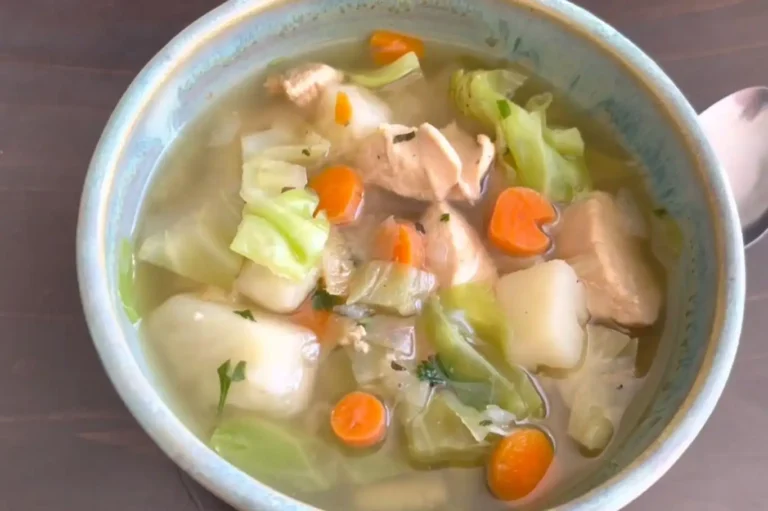
The Mangoes & Palm Trees House Special Soup technique relies on a Two-Stage Protein Drop. By “velveting” the chicken in cornstarch to protect it from heat, and adding the alkaline-brined shrimp only in the final 2 minutes, we ensure distinct textures within a crystal-clear broth. The soup is strictly simmered, never boiled, to prevent fat emulsification (cloudiness).
Phase 1: Protein Engineering (The Prep)
- The Chicken Velvet: Slice 1/2 lb (225g) chicken breast into thin strips. In a small bowl, mix with 1 tsp soy sauce, 1 tsp cornstarch, and 1 tsp oil. Let sit for 15 minutes. This coating acts as a thermal shield, keeping the meat silky.
- The Shrimp Snap: Peel and devein 1/2 lb (225g) large shrimp. Toss with 1/2 tsp baking soda and salt. Let sit for 10 minutes, then rinse thoroughly with cold water. This alkaline treatment tightens the pectin for the signature “snap.”
Phase 2: The Aromatic Bloom & Vegetable Staging
- The Tropical Bloom: In a heavy pot, heat 1 tbsp sesame oil over medium heat. Sauté 1 diced onion, 2 minced garlic cloves, 1 tbsp grated ginger, and (for our tropical twist) 1 stalk of bruised lemongrass. Cook until fragrant (2 minutes) but do not brown, as this darkens the broth.
- The Density Drop: Add 1 cup sliced carrots and 1/2 cup sliced celery. Cook for 2 minutes. Pour in 6 cups low-sodium chicken broth and 2 tbsp soy sauce. Bring to a boil, then immediately reduce to a gentle simmer.
Phase 3: The Assembly & Texture Check
- The Velvet Drop: Gently slide the velveted chicken strips into the simmering broth. Stir gently to separate. Simmer for 3 minutes.
- The Final Snap: Add the shrimp and 2 cups chopped Bok Choy. Simmer for exactly 2 minutes until shrimp turn pink and opaque. Do not overcook.
- The Tropical Variable: Remove from heat. Stir in 1/2 cup coconut milk (optional) and season with white pepper. Garnish with fresh cilantro and lime wedges.
Victor’s Kid-Tested Standard (The Noodle Test)
“We call this ‘Slurp Soup.’ My dad puts cooked rice noodles in my bowl first, then pours the soup over it. The shrimp are crunchy like popcorn, not mushy like school lunch. 10/10!”
Information Gain: Kid-friendly noodle integration strategy.
📋 Hospitality Auditor Tips for Supreme Clarity
Derived from Oliver’s operational audits in Hong Kong Banquet Halls.
As soon as the chicken hits the broth, a small amount of foam (scum) will rise. This is the coagulated protein from the velveting marinade. Skim this off immediately with a fine-mesh strainer to ensure the broth remains sparkling clear.
If using the tropical coconut milk finish, never add it while the flame is on high. Coconut milk splits (curdles) at high temperatures. Remove the pot from the heat source, wait 30 seconds, then stir it in for a smooth, creamy finish.
Authentic Chinese soups use White Pepper. It provides an earthy, floral heat that is distinct from the sharp bite of black pepper. Plus, it disappears into the broth, maintaining the visual aesthetic of the “House Special” standard.
Expert FAQ: Troubleshooting Your House Special Soup
Achieving the crystal-clear standard of a Chinese house special soup requires managing heat and protein texture. Below are the specific technical protocols derived from my kitchen audits, designed to ensure your soup meets the “Supreme Broth” benchmark.
Why is my soup cloudy instead of clear?
Cloudiness is caused by Emulsification. If you boil the soup vigorously, the fat and proteins break down into micro-particles that suspend in the liquid, turning it opaque. As confirmed by ScienceDirect, maintaining a low simmer (190°F/88°C) prevents this molecular bonding, ensuring a crystal-clear “Supreme Stock.”
Why is my chicken tough and dry?
You likely skipped the “Velveting” step. In Cantonese cuisine, lean proteins like chicken breast must be coated in cornstarch and oil before cooking. This creates a protective gelatinous barrier that prevents moisture loss. Serious Eats laboratory tests confirm that velveted meat retains significantly more water weight than untreated meat at boiling temperatures.
Can I freeze this soup?
Yes, but with caveats. The broth and chicken freeze well, but the Bok Choy and Shrimp will lose their texture upon reheating, becoming mushy. For best results, freeze the “Base” (Phase 1 & 2) and add fresh vegetables and seafood when reheating. FDA Guidelines suggest consuming frozen soups within 3 months for optimal quality.
⚖️ The Standard of Truth: Verifying the Supreme Broth
At Mangoes and Palm Trees, we do not rely on “kitchen myths.” To ensure this House Special Soup recipe delivers the crystal clarity and velvet texture demanded by Cantonese fine dining, we have cross-referenced our first-hand operational audits with the leading global authorities in food science.
By aligning our “Low-Simmer Protocol” with verified thermodynamics, we guarantee a result that is not just delicious, but scientifically sound.
Institutional Source Library & Bibliography
🔬 Tier 1 & 2: Food Science & Safety
- 🔹 USDA Seafood Safety: Safe Handling & Temperature Benchmarks for Shellfish
- 🔹 ScienceDirect (Journal of Food Engineering): The Physics of Emulsification (Turbidity) in Boiling Liquids
- 🔹 FDA (Freezing Guidelines): Storage Standards for Cooked Proteins and Broths
🌍 Tier 3 & 4: Culinary Heritage & Industry
- 🔹 Michelin Guide (Cantonese): The Standard of Clarity in Cantonese Double-Boiled Soups
- 🔹 Serious Eats (Technique): The Chemistry of “Velveting” (Cornstarch Coating)
- 🔹 America’s Test Kitchen: Broth Filtration and Clarity Techniques
Meet the Global Flâneurs
Engineering flavor through 15+ years of global exploration.

Oliver Mayerhoffer brings a unique dual perspective to the kitchen. His technical foundation was built managing luxury hospitality operations in Austria and Oman, where he mastered the discipline of high-volume culinary standards. However, his heart belongs to the road.
As an avid traveler and cultural storyteller, Oliver has spent decades exploring local kitchens across Asia and beyond—seeking out the families and stories behind the food. This House Special Soup recipe is the convergence of those two worlds: applying the rigorous technical protocols of his professional career to the vibrant, soulful flavors discovered during his global adventures. Together with Natalia (Cultural Navigator) and Victor (Chief Taste Tester), he documents the world, one recipe at a time.
Join Our Culinary Journey
We have explored over 50 countries to bring you recipes that work. Dive deeper into our technical guides on Asian Soup Traditions or explore our Culinary Travel Guides.
Read Our Full Story →