Editorial policy: our editorial standards · affiliate disclosure
Noodle supper · Toasted almonds · Garlic and lemon
Noodles Almondine Recipe with Toasted Almonds & Lemon
Make noodles almondine with toasted almonds, garlic, lemon and soy sauce. This four-serving recipe includes vegan and gluten-free options, plus practical cooking and storage tips.
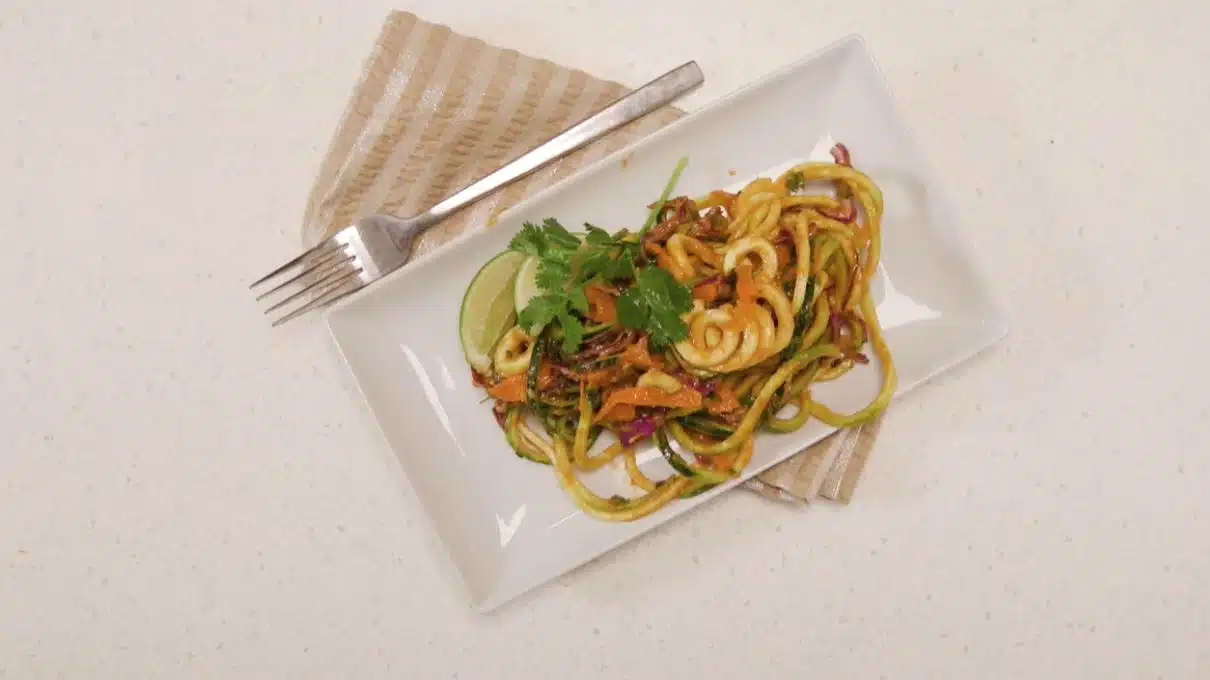
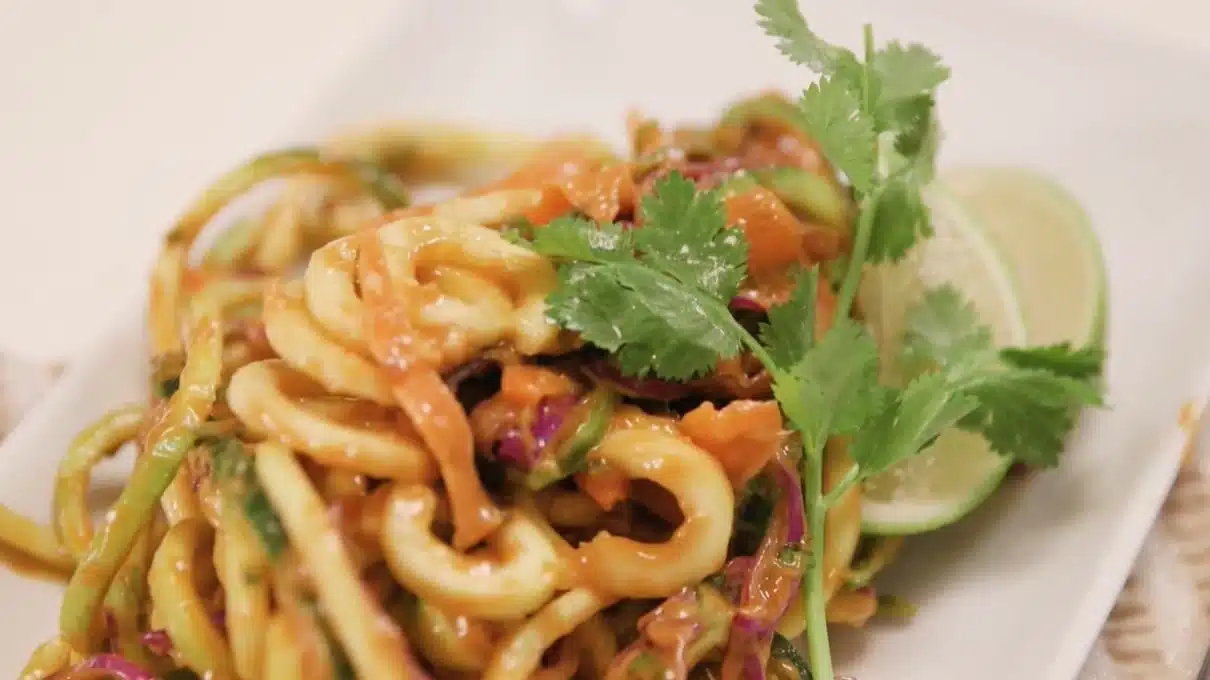
Noodles almondine served with fresh cilantro and lime wedges.
How do you make noodles almondine?
Cook the noodles, then toss them with sliced almonds toasted in butter, garlic, soy sauce, lemon juice and a little reserved pasta water. Finish with parsley or red pepper flakes. The original recipe makes four servings and is estimated at about 20 minutes, although noodle cooking times vary by brand and type.
Noodles almondine at a glance
- Base: 8 oz egg noodles, with rice noodles as an alternative.
- Almond finish: 1/4 cup sliced almonds toasted in 2 tablespoons butter or olive oil.
- Seasoning: garlic, soy sauce, fresh lemon juice, black pepper and parsley or chilli flakes.
- Yield and timing: 4 servings · about 10 minutes prep and 10 minutes cooking, depending on the noodles.
- Adaptations: olive oil and rice noodles for a vegan variation; labelled gluten-free noodles and sauce for a gluten-free version.
The name and the idea
What does almondine mean in this noodle recipe?
Amandine, also written almondine in English, describes food cooked or served with almonds. It is a finishing idea rather than a single fixed recipe: fish, vegetables and other dishes can all be served with almonds. This version brings that nutty garnish to noodles, with garlic, soy sauce and lemon for a savoury, bright finish.
That distinction is worth making. Noodles almondine is not being presented as a historic French noodle dish. It is a modern noodle preparation built around the simple contrast of tender noodles and sliced almonds toasted in butter or olive oil. Cambridge Dictionary defines amandine as cooked or served with almonds.
Choose the base
Which noodles work best?
The original ingredient list uses 8 oz egg noodles. Their soft, slightly springy texture works well with the sliced almonds and light butter, soy and lemon coating. Cook them just until tender, following the packet directions, so they keep their shape when tossed in the skillet.
Rice noodles are the alternative in the original recipe. They can work well, but they do not all cook in the same way: some are soaked, while others are briefly boiled. Use the method printed on the package and drain them well before adding them to the sauce.
For a gluten-free version, choose rice noodles labelled gluten-free and use a soy sauce or tamari product that is also specifically labelled gluten-free. Buckwheat itself is naturally gluten-free, but many commercial soba noodles contain wheat flour, so the word soba alone is not enough to establish that a packet is gluten-free. The Celiac Disease Foundation’s gluten source guide explains the distinction.

Texture and timing
How to toast sliced almonds without burning them
Toast the almonds in the butter before adding the garlic or noodles. Keep the skillet over medium heat and stir for about two to three minutes, watching for a pale golden colour and a warm, nutty aroma. Sliced almonds are thin, so they can darken quickly once they begin to colour. Lower the heat or lift the pan off the burner if they are browning too fast.
Utah State University Extension also notes that roasting brings out the flavour of almonds. Its oven-roasting directions are for whole nuts rather than this quick skillet method, so use them as general context, not as the timing for this recipe.
Once the noodles are added, use the reserved pasta water gradually. The small amount of starch in the liquid helps the butter or olive oil and seasonings coat the noodles. You may not need every drop of the reserved quarter cup.
The complete recipe
Noodles Almondine Recipe with Toasted Almonds & Lemon
Make noodles almondine with toasted almonds, garlic, lemon and soy sauce. This four-serving recipe includes vegan and gluten-free options, plus practical cooking and storage tips.
Yield: 4 servings · Prep: about 10 minutes · Cook: about 10 minutes · Total: about 20 minutes
These are the original published timing estimates. Actual cooking time depends on the noodle type and the directions on its package; this editorial update does not claim a new kitchen test.
Ingredients
- 8 oz egg noodles (or rice noodles; follow the package cooking directions)
- 1/4 cup raw sliced almonds
- 2 tablespoons unsalted butter (or olive oil for the dairy-free variation)
- 1 garlic clove, minced
- 1 tablespoon soy sauce (or tamari labelled gluten-free, if needed)
- 2 tablespoons fresh lemon juice
- 1 tablespoon salt for the pasta water
- Additional salt and black pepper, to taste
- Up to 1/4 cup reserved pasta cooking water
- Fresh parsley or red pepper flakes, to finish
Method
- Cook the noodles. Bring a large pot of water to a boil and add 1 tablespoon salt. Cook the egg noodles until just tender, following the package directions. If using rice noodles, follow the package soaking or cooking method instead. Before draining, reserve up to 1/4 cup of the cooking water.
- Toast the almonds. While the noodles cook, melt the butter in a wide skillet over medium heat. Add the sliced almonds and stir for 2 to 3 minutes, until lightly golden and fragrant. Keep them moving and lower the heat if they colour too quickly.
- Add the garlic and seasoning. Add the minced garlic to the skillet and cook for about 30 seconds. Stir in the soy sauce and lemon juice, then add black pepper. Taste before adding any extra salt because the soy sauce is already salty.
- Toss the noodles with the sauce. Add the drained noodles to the skillet. Pour in a little reserved pasta water and toss until the butter, lemon and soy mixture lightly coats the noodles. Add more water gradually, up to the reserved 1/4 cup, only as needed.
- Finish and serve. Scatter over chopped parsley or red pepper flakes and serve straight away, while the almonds still have some crispness.
Allergen note: This recipe contains almonds (a tree nut) and soy. The egg-noodle option may also contain wheat and egg. Check the ingredient and allergen information on the noodle and sauce packages you use. The FDA lists almonds and soy among the major food allergens in the United States.
Adapt the finish
Noodles almondine variations
A dairy-free or vegan version
Replace the butter with 2 tablespoons olive oil and use rice noodles whose ingredients suit your diet. Check the soy sauce label and choose a vegan product. The original variation also suggests adding sliced bell peppers and fresh mango; these are optional additions, not part of the base recipe quantities.
A little ginger and chilli
For a warmer variation, add 1 teaspoon grated ginger with the garlic and finish with 1/2 teaspoon chilli flakes. The original notes also suggest 1 teaspoon honey to soften the heat; leave it out if you prefer a savoury finish or are preparing a vegan version.
Mango or coconut
The original recipe mentions 1/4 cup diced mango or a small splash of coconut milk as optional additions. Mango brings sweetness and texture; coconut milk makes the coating softer and creamier. Coconut milk was not assigned a measured amount in the original recipe, so add it sparingly to taste rather than treating it as a fixed ingredient.
Keep and reheat
How to store and reheat leftover noodles almondine
For food safety, refrigerate leftovers within two hours in a shallow covered container and keep them at 40°F (4°C) or below. Use refrigerated leftovers within three to four days. The USDA recommends reheating leftovers to 165°F (73.8°C) throughout.
When reheating, add a small splash of water and stir gently in a skillet or microwave-safe dish to loosen the noodles. The almonds will soften after storage, so the original crisp contrast is best just after cooking. Read the USDA leftover-storage guidance and USDA reheating guidance for the full recommendations.
Keep exploring
More from the Mangoes & Palm Trees kitchen
Browse the wider recipe archive for another dish, an ingredient guide or a practical cooking note.
- Explore the Recipe Index — browse recipes, ingredient guides and practical kitchen notes.
Noodles almondine: common questions
Can I use rice noodles instead of egg noodles?
Yes. Rice noodles work as an alternative, but different brands and widths use different soaking or cooking methods. Follow the packet directions, drain well and add the reserved liquid gradually when tossing.
What does almondine mean?
Amandine, also written almondine in English, describes food cooked or served with almonds. This recipe applies that almond garnish idea to noodles; it is not presented as a traditional French noodle dish.
How do I make noodles almondine vegan?
Use olive oil instead of butter and choose rice noodles whose ingredients are suitable for your diet. Check the soy sauce and any garnishes as well, since packaged products can vary.
Can I make noodles almondine gluten-free?
Use rice noodles labelled gluten-free and a soy sauce or tamari product specifically labelled gluten-free. Do not assume all soba is gluten-free: many soba noodles contain wheat, and cross-contact can also matter.
How do I stop the sliced almonds from burning?
Toast them over medium heat and stir continuously for about 2 to 3 minutes. Take the pan off the heat as soon as they are lightly golden and fragrant; they continue to colour briefly in the warm pan.
How long do leftover noodles almondine keep?
Refrigerate leftovers in a shallow covered container within two hours and keep the refrigerator at 40°F (4°C) or below. Use within three to four days, and reheat leftovers to 165°F (73.8°C) throughout.
Sources for the terminology, ingredients and storage guidance
These references support specific definitions, allergen and gluten-free notes, and food-storage advice. They do not represent a test, endorsement or nutritional analysis of this recipe.
Cambridge Dictionary
Defines amandine as food cooked or served with almonds.
Read the amandine definitionUtah State University Extension
Practical background on roasting almonds and bringing out their nutty aroma.
How to roast nuts and seedsU.S. Food and Drug Administration
Food-allergen labelling guidance relevant to almonds and soy.
FDA food-allergy guidanceCeliac Disease Foundation
Explains gluten sources, including wheat in some soba noodles, and the importance of label checking.
Sources of glutenUSDA Food Safety and Inspection Service
Guidance on cooling, refrigerating and storing leftovers.
How to handle leftovers safelyUSDA Food Safety and Inspection Service
Guidance on reheating leftovers to 165°F (73.8°C).
How to reheat leftovers safelyThe people behind Mangoes & Palm Trees
A family-led food and travel publication sharing recipes, ingredient guides, food culture and practical travel stories.

Oliver Mayerhoffer
Lead Author · PublisherOliver leads writing and publishing at Mangoes & Palm Trees, covering food, hospitality, travel, people and family life. His work distinguishes personal experience from information that needs research or a current check.

Natalia Mayerhoffer
Co-founder · Contributing AuthorNatalia contributes writing, family perspective and cultural context to the publication’s food and travel stories, including relevant food traditions and cooking.
Read our family food and travel story, editorial policy and affiliate disclosure.
Enjoying our content? Make Mangoes & Palm Trees a preferred source on Google.