
Our approach: MPT editorial standards · Our family food and travel story

Family travel · Hotel websites · Digital experience
How Mobile Tech and Smart Web Design Help Families Discover Hidden Gem Resorts
How mobile-friendly hotel websites, useful room details and genuine photography help families assess accommodation and discover resorts that suit the way they travel.
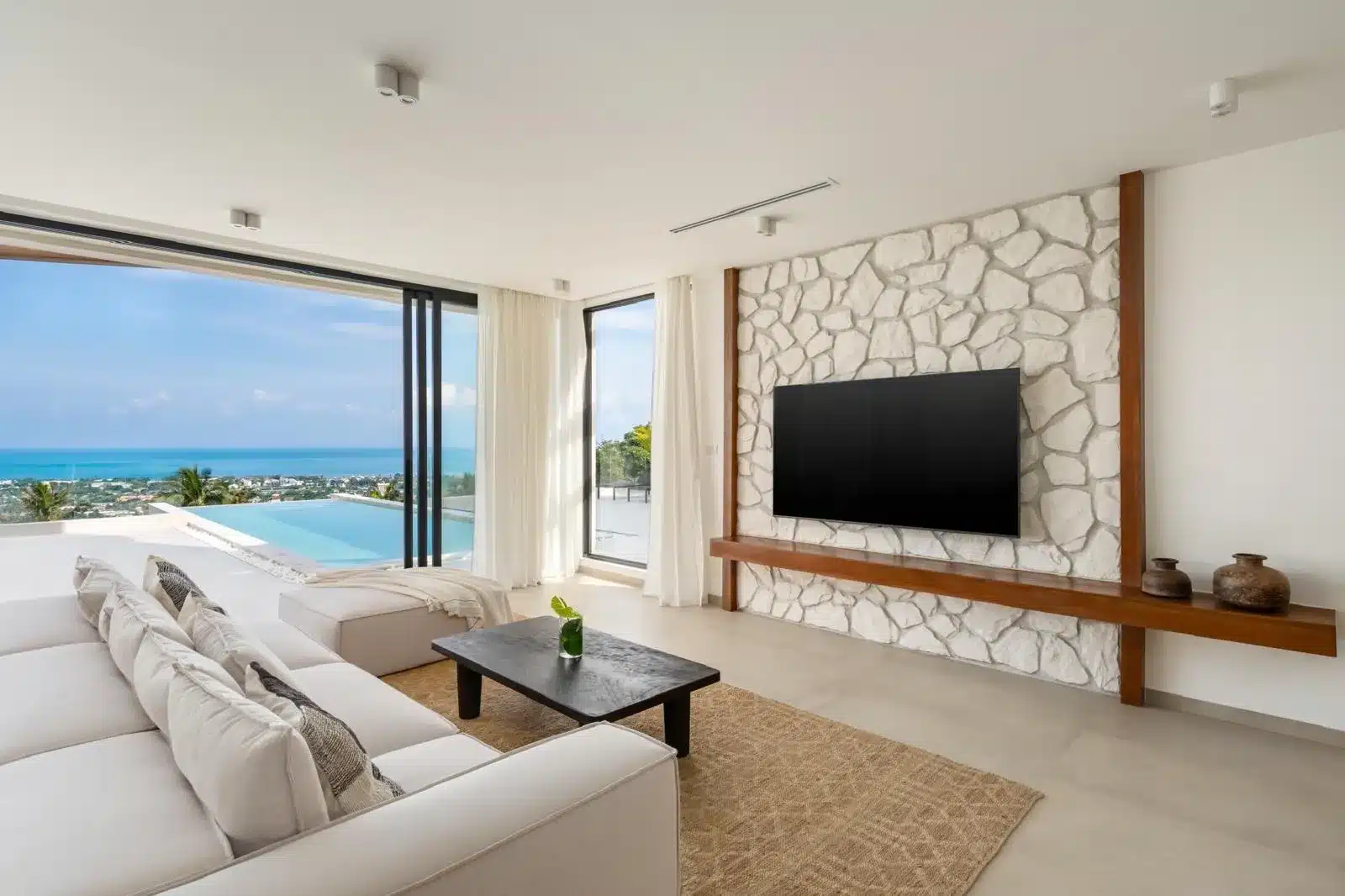
A sea-view living room at a private villa resort on Koh Samui, Thailand.
When I was working in hotels in the Middle East, I saw first-hand how closely a hotel’s online presence was tied to its business. My work in hotel operations gave me one view of the day-to-day realities; a separate role in hotel marketing brought me into the world of the hotel website and online booking channels. I could see how the way a property presented itself online influenced the enquiries it received, the bookings that came through and, ultimately, occupancy. A hotel might have beautiful rooms and a great deal to offer, but none of that meant much if people looking online couldn’t see it, understand it or find an easy way to book. That experience has stayed with me, and it’s one of the reasons I wanted to explore how technology and thoughtful web design can help families discover places they might otherwise miss.
Planning a holiday with children requires a tremendous amount of coordination, patience, and meticulous research. Gone are the days of relying solely on heavy guidebooks, high-street travel agents, and word-of-mouth recommendations to find the perfect accommodation. Today, discovering an idyllic boutique hotel in Thailand or uncovering a quiet coastal retreat across Southeast Asia relies heavily on advanced digital tools. Parents are increasingly turning to their smartphones to seek out unique destinations that cater specifically to their family’s unique needs. The modern travel planning experience is entirely digital, and the way properties present themselves online directly dictates whether a family decides to book a stay for their next great adventure.
The Power of First Impressions Online
When browsing for a tropical getaway, the initial digital experience can quickly make or break a family’s decision to commit to a property. Recent industry data indicates that over 70% of online traffic for travel and hospitality websites originates from mobile devices. Families often start their research on a smartphone while commuting, waiting at the school gates, or relaxing in the evening. They are looking for immediate visual confirmation that a property offers the right atmosphere and facilities for their children.
This is where targeted visibility becomes a crucial factor. Behind every seamless online discovery is effective digital marketing for resorts, ensuring that exceptional boutique properties actually reach the specific travellers actively searching for them. Without a strong online presence and search optimisation, even the most beautiful hidden gems remain virtually invisible to the modern, tech-savvy family.
Furthermore, the visual appeal of a platform plays a direct role in securing a reservation. According to a comprehensive study published in Tourism and Hospitality, there is a significant statistical association between a hotel’s website aesthetic dimensions and its direct booking share. The research, which analysed over 200 hotel websites, confirmed that high-quality photography and clear, descriptive text have the strongest influence on increasing direct bookings over third-party platforms.
Navigating Complex Multigenerational Travel
The digital experience is especially vital for the rising trend of multigenerational holidays, which present their own distinct logistical challenges. Data from the 2025 Family Travel Survey highlights that 92% of parents plan to travel with their children in the coming year. Even more notably, 57% of those surveyed are planning trips that include both children and grandparents. These complex group dynamics require significantly more detailed accommodation research before finalising any plans, as the property must comfortably accommodate diverse age groups with varying mobility and interests.
When planning these larger family escapes, parents need to know if a resort has adjoining rooms, accessible ground-floor facilities for older relatives, and engaging supervised activities for active toddlers. Often, we find that the easiest way to plan is by sharing insights from firsthand experiences. Whether you are reading through our own family travel guides or researching independently, you quickly realise that a well-designed, informative website saves hours of frustration. Having instant access to high-resolution property maps and detailed amenity lists provides unparalleled peace of mind.
While many families use smartphones for initial research, industry data shows they frequently switch to desktop platforms to finalise these complex group bookings. Therefore, properties must provide a fluid, responsive transition across devices. Ensuring that no critical information is lost when moving from a mobile phone screen to a laptop gives families the confidence to complete their reservations.
What Makes a Family-Friendly Hotel Website Stand Out
To capture the attention of busy parents, accommodation providers must focus heavily on the user experience. The average hotel website loses potential guests rapidly due to friction points during the browsing process. To prevent this booking abandonment before the payment stage, top-tier properties focus on a few critical design elements:
- Fast loading speeds: Busy parents will quickly abandon a site if image-heavy galleries or promotional videos take too long to load on a standard mobile connection.
- Clear room descriptions: Families need exact details about bed configurations, floor plans, and whether there is adequate space for cots or extra beds in the room.
- Intuitive mobile navigation: A clunky, outdated menu can ruin the browsing experience. Mobile menus must be streamlined to help users find child-friendly amenities and dining options effortlessly.
- Direct booking incentives: High-performing boutique hotel websites achieve better conversion rates by offering clear benefits, such as complimentary breakfast for children or flexible cancellation policies, directly on their homepage. This is crucial for resorts, as direct bookings generate the highest value per reservation.
Ultimately, the intersection of mobile technology and smart web design has fundamentally transformed how we discover family-friendly escapes. As Thailand experiences a massive surge in lifestyle tourism and domestic travel, properties that invest in their digital infrastructure are the ones capturing the hearts of modern travellers. By providing an effortless, visually appealing online journey, these tech-forward hidden gems allow families to spend less time stressing over travel logistics and far more time creating unforgettable memories together.
Enjoying our content? Make Mangoes & Palm Trees a preferred source on Google.
