
Homemade sauce · ketchup and fruit jelly · family recipe
BBQ Sauce Recipe with Ketchup and Jelly
A quick stovetop barbecue sauce made with ketchup, grape jelly, apple cider vinegar and smoky seasonings. The original recipe keeps its grape-jelly base; at home, we also make it with apple, plum, strawberry and sloe berry jelly.
How do you make BBQ sauce with ketchup and jelly?
Warm 240 ml ketchup with 120 ml grape jelly until the jelly melts. Stir in apple cider vinegar, Worcestershire sauce, honey, smoked paprika, garlic powder and cayenne, then simmer gently for 10–12 minutes. Season to taste and cool before serving or using as a finishing glaze.
At a glance
- Base: ketchup, grape jelly, apple cider vinegar and savoury seasonings.
- Time: about 5 minutes preparation and 15 minutes on the stove.
- Our other jellies: apple, plum, strawberry and sloe berry; sloe berry is our favourite.
- Where it began: Cheltenham, Gloucestershire, before the recipe travelled with our family.
- For grilling: use as a finishing glaze rather than leaving the sweet sauce over direct heat throughout cooking.
A simple homemade BBQ sauce
Barbecue sauce is one of those things that is easy to reach for in a bottle, but it is also straightforward to make at home. This version brings ketchup and fruit jelly together with vinegar, Worcestershire sauce, honey and a few seasonings. It is a useful small-batch sauce for serving at the table or brushing over meat near the end of cooking.
The recipe card below preserves the original grape-jelly version. The variations are part of how we make it at home: apple, plum, strawberry and, most of all, sloe berry.
Ingredients for BBQ sauce with ketchup and jelly
The ingredient list is short and built around familiar pantry staples. Use a ketchup you already enjoy, because its tomato, sweetness and seasoning form much of the finished flavour.
- Tomato ketchup: the tomato base and part of the sauce’s sweetness.
- Grape jelly: the original published recipe uses 120 ml (½ cup). It brings fruit sweetness and body.
- Apple cider vinegar: provides acidity to balance the sweet ingredients.
- Worcestershire sauce: adds a savoury, seasoned note. Check the label if you need to avoid specific ingredients or allergens.
- Honey: rounds out the sweetness. It is included in the original formula.
- Smoked paprika: contributes the smoky seasoning.
- Garlic powder: gives a savoury background without adding fresh garlic pieces.
- Cayenne pepper: adds a little heat; the amount is small, but it can be adjusted to taste after making a separate tested variation.
- Fine salt and black pepper: season the sauce at the end.
Ketchup, jelly and honey all contribute sweetness. Making the sauce at home lets you choose the products and adjust the seasoning, but it does not automatically make the sauce lower in sugar than a shop-bought one.
Equipment and preparation
You only need a medium saucepan, a spoon or heatproof spatula, and a clean container for any sauce you are keeping. Measure the ingredients before starting so the jelly can melt without leaving the pan unattended.
Keep the heat moderate while the jelly melts, then lower it for the simmer. Stir from time to time, especially around the base and edges of the saucepan.
How to make BBQ sauce with ketchup and jelly
The method is simple: melt the jelly into the ketchup, stir in the remaining ingredients, then simmer gently until the flavours come together. These are the same three steps used in the recipe card.
-
Melt the ketchup and jelly
Put the tomato ketchup and grape jelly in a medium saucepan over medium heat. Stir for 2–3 minutes, until the jelly melts and the mixture looks smooth.
-
Add the remaining ingredients
Stir in the apple cider vinegar, Worcestershire sauce, honey, smoked paprika, garlic powder and cayenne pepper until evenly combined.
-
Simmer and season
Reduce the heat to low and simmer gently for 10–12 minutes, stirring occasionally. Taste and adjust with fine salt and black pepper. Remove from the heat and let the sauce cool before using.
Tips for a smooth, balanced sauce
- Let the jelly melt fully: stir until no firm pieces remain before adding the remaining ingredients.
- Keep the simmer gentle: lower the heat after combining everything and stir occasionally so the sauce does not catch on the pan.
- Taste before adjusting: ketchup and different jellies vary in sweetness and acidity, so add salt, pepper or extra vinegar gradually.
- Use it near the end of grilling: the sauce contains sweet ingredients that can darken quickly over direct heat. Brush it on during the final part of cooking, or serve it at the table.
- Keep a clean portion aside: do not return sauce that has touched raw meat or a utensil used on raw meat to the serving container.
Four jelly variations we make at home
Grape jelly stays in the original recipe card because that is the published base formula. It is not the only jelly we use. We have also made this sauce with apple, plum, strawberry and sloe berry jelly. We use the same ½-cup measure as the starting point, then taste as the sauce simmers because fruit spreads and brands can differ in sweetness and consistency.
Apple jelly
Apple jelly is one of the alternatives we use when we want a different fruit note without changing the basic ketchup-and-jelly method. Start with the same measured volume as the grape jelly and adjust the finished seasoning only after tasting.
Plum jelly
Plum jelly is another version we make. It gives the sauce a distinct fruit direction while keeping the same short stovetop method. The sweetness and thickness depend on the particular jar, so the final taste matters more than assuming every plum jelly behaves alike.
Strawberry jelly
We have also used strawberry jelly. Taste the sauce after simmering before adding extra honey or vinegar, as the sweetness and acidity of the jelly will affect the balance.
Sloe berry jelly — our favourite
Sloe berry is the variation we like best. Sloes are the blue-black fruits of blackthorn (Prunus spinosa), a thorny shrub familiar in Gloucestershire hedgerows and woodland edges. The Gloucestershire Wildlife Trust’s blackthorn guide describes the shrub and its autumn and winter fruits.
That makes sloe berry a particularly meaningful choice for us: this sauce began in Cheltenham, Gloucestershire. Blackthorn is not unique to the UK, so we do not describe it as an exclusively British plant. The connection is our own family story and the hedgerow landscape familiar from where the recipe began. The Woodland Trust’s blackthorn reference provides further information about the plant and its fruit.
Other ways fruit appears in barbecue sauces
Fruit-based barbecue sauces take several forms. Cooks.com uses apple jelly with ketchup; PBS Food makes a strawberry-jam barbecue sauce; From the Larder builds a plum BBQ sauce from fresh fruit; and Food Network combines ketchup with orange marmalade.
Those recipes use their own ingredient ratios and methods. They are useful examples of the different ways cooks bring fruit into barbecue sauce, but they are not tests of our formula and do not establish that every preserve can be substituted in the same way.
How to use this homemade BBQ sauce
Serve it alongside grilled or roasted chicken, ribs and pork, or use a clean brush to glaze meat towards the end of cooking. It also works as a dipping sauce at the table. Set aside a clean portion before handling raw meat; the FDA’s barbecue food-safety guidance advises against reusing marinade that has touched raw meat unless it is boiled first.
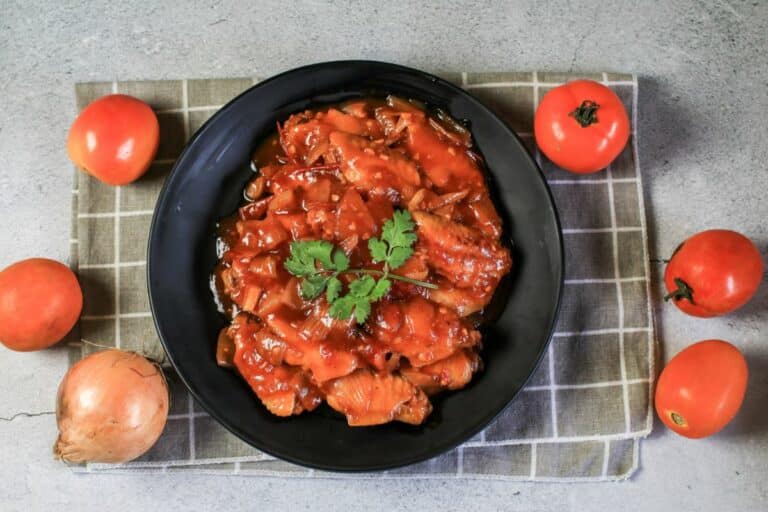
We make barbecue chicken wings with BBQ sauce, too. For another wing recipe with a different glaze, try our honey and garlic chicken wings. That is a separate flavour and method, rather than a claim that the wings use this ketchup-and-jelly sauce.
How to store homemade BBQ sauce
This is a freshly prepared sauce, not a tested shelf-stable preserve. Transfer any unused sauce to a clean, covered container and refrigerate it promptly. Do not leave it at room temperature for more than two hours.
As general leftover guidance, the USDA advises refrigerating leftovers at 4°C (40°F) or below, chilling them promptly and using refrigerated leftovers within 3–4 days. This is general food-handling guidance, not a laboratory-tested shelf-life study of this exact sauce. See the USDA Food Safety and Inspection Service guidance on leftovers.
Do not store or reuse sauce that has touched raw meat, poultry or utensils used on raw meat. Set aside a clean portion before serving.
BBQ Sauce Recipe with Ketchup and Jelly
A quick homemade barbecue sauce made with ketchup, grape jelly, apple cider vinegar, Worcestershire sauce, honey and smoky seasonings. The original published yield is approximate and can vary with the pan and amount of reduction.
Prep: 5 minutes
Cook: 15 minutes
Total: 20 minutes
Yield: approximately 360 ml (1½ cups)
Ingredients
- 240 ml tomato ketchup (1 cup)
- 120 ml grape jelly (½ cup; approximately 160 g)
- 30 ml apple cider vinegar (2 tablespoons)
- 15 ml Worcestershire sauce (1 tablespoon)
- 20 g honey (1 tablespoon)
- 2 g smoked paprika (1 teaspoon)
- 1 g garlic powder (½ teaspoon)
- 0.5 g cayenne pepper (¼ teaspoon)
- Fine salt and black pepper, to taste
Step-by-step method
- Melt the ketchup and jelly. Put the tomato ketchup and grape jelly in a medium saucepan over medium heat. Stir for 2–3 minutes, until the jelly melts and the mixture looks smooth.
- Add the remaining ingredients. Stir in the apple cider vinegar, Worcestershire sauce, honey, smoked paprika, garlic powder and cayenne pepper until evenly combined.
- Simmer and season. Reduce the heat to low and simmer gently for 10–12 minutes, stirring occasionally. Taste and adjust with fine salt and black pepper. Remove from the heat and let the sauce cool before using.
Variation note: The card keeps the original grape-jelly version. We also make it with apple, plum, strawberry and sloe berry jelly. For those family variations, start with the same 120 ml (½ cup) volume and taste as the sauce simmers; the sweetness and consistency depend on the jelly used.
Storage note: Refrigerate promptly in a clean, covered container. This recipe has not been validated as a shelf-stable preserve; follow the general leftover guidance in the storage section above.
How our BBQ sauce began in Cheltenham
This sauce began in Cheltenham, Gloucestershire. We realised that barbecue sauce was one of the simplest shop-bought staples to make ourselves. Rather than keep buying a bottle, we could bring together familiar ingredients at home, adjust the flavour to suit us and choose what went into it.
As our family travelled and cooked in different kitchens, the sauce travelled with us. Victor enjoys barbecue sauce, as many children do, and BBQ chicken wings are one of the ways we like to use it. It became a practical family recipe that could come along wherever we were cooking.
Making it ourselves gives us more control over the ingredients and sweetness. We do not claim that it is automatically healthier than shop-bought sauce: ketchup, jelly and honey all contribute sugar, and a fair nutritional comparison depends on the specific products and amounts being compared.
The published recipe remains the grape-jelly version shown in the card. The other jellies are variations we have made at home, and sloe berry remains our favourite. Its connection to Gloucestershire gives this otherwise simple sauce a little piece of the place where it began.
Questions about BBQ sauce with ketchup and jelly
Can I use a different jelly instead of grape?
Yes. We have made this sauce with apple, plum, strawberry and sloe berry jelly. Start with the same 120 ml (½ cup) volume as the original grape jelly, then taste as it simmers because different jellies vary in sweetness and consistency.
Which jelly is our favourite for BBQ sauce?
Sloe berry is our favourite variation. It connects the recipe to Cheltenham, Gloucestershire, where we first began making the sauce. The published recipe card still uses grape jelly.
What is a sloe berry?
A sloe is the blue-black fruit of blackthorn, botanically known as Prunus spinosa. Blackthorn is a familiar shrub in Gloucestershire hedgerows and woodland edges, and its fruits ripen in autumn and winter. See the Gloucestershire Wildlife Trust’s blackthorn guide.
When should I brush BBQ sauce onto chicken or ribs?
Use it towards the end of grilling as a finishing glaze, or serve it separately at the table. The sauce contains sweet ingredients that can darken over strong direct heat. Always keep a clean serving portion separate from sauce that has touched raw meat.
How long can I keep homemade BBQ sauce in the fridge?
This exact sauce has not been tested for a defined shelf life. Refrigerate it promptly in a clean, covered container and follow conservative general leftover guidance: keep it at 4°C (40°F) or below and use within 3–4 days. Do not treat it as shelf-stable.
Sources behind the ingredient and handling notes
The family story and jelly variations come from our own account of making this sauce. These external references support the botanical context, general food-handling guidance and examples of other fruit-led barbecue sauces.
Gloucestershire Wildlife Trust
Local reference for blackthorn as a familiar hedgerow and woodland-edge shrub, and for its blue-black sloes.
BlackthornWoodland Trust
Further identification and background on blackthorn and the fruit known as sloes.
Blackthorn (Prunus spinosa)USDA Food Safety and Inspection Service
General advice on prompt refrigeration, refrigerator temperature and safe handling of leftovers. This is not a sauce-specific shelf-life study.
How do I handle leftovers safely?U.S. Food and Drug Administration
Guidance on separating raw and cooked foods, setting aside clean sauce portions and avoiding reuse of marinade that has touched raw meat.
Barbecue Basics: Tips to Prevent Foodborne IllnessCooks.com
A separate quick barbecue sauce that combines apple jelly and ketchup.
Easy Barbecue Sauce for PorkPBS Food
A strawberry-jam barbecue sauce using ketchup, vinegar and seasonings.
Strawberry Barbecue SauceFrom the Larder
A different plum-based BBQ sauce made from fresh fruit rather than jelly.
Plum BBQ SauceFood Network
A ketchup-and-orange-marmalade barbecue sauce, another example of fruit in a quick sauce.
Spicy Orange Barbecue Sauce and DipAbout the authors
Oliver Mayerhoffer is the lead author and publisher of Mangoes & Palm Trees. His writing brings together food, hospitality, travel and family life, while distinguishing first-hand experience from research-led guidance.
Natalia Mayerhoffer is a co-founder and contributing author whose work includes family cooking, cultural perspective and Siberian food heritage where relevant.
Enjoying our content? Make Mangoes & Palm Trees a preferred source on Google.